
 Save 15% on your 1st Autoship learn more

 Email us
 Live Chat
 FAQs
FAQs





Introduction
You finally found a great deal on a twenty-five pound bag of your dog's favorite premium kibble. Perhaps you have a small dog who takes months to finish even a standard bag of food. You want to keep that food fresh and nutritious until the very last scoop. It is a common situation for many of us who shop for quality ingredients but want to avoid waste. This leads to an important question: can dry dog food freeze?
At BaxterBoo, we understand that pet owners want to balance value with the highest standards of nutrition. This post covers whether freezing kibble is safe, how to do it correctly, and why it might be a smart move for your household. If you are comparing options, our dry dog food category is a good place to start. We will also look at the difference between frozen dry food and freeze-dried raw options. Freezing dry dog food is an effective way to preserve freshness and stop the natural breakdown of healthy fats.
Quick Answer: Yes, you can freeze dry dog food. It is an excellent way to prevent fats from going rancid and to extend the shelf life of the food for several months.
Why You Might Consider Freezing Kibble
Dry dog food is not a forever product. As soon as you open a bag, the ingredients begin to interact with oxygen. This process is called oxidation. It specifically affects the fats and oils that provide your dog with energy and skin support. Over time, these fats can turn rancid, which makes the food taste bad and reduces its nutritional value.
Freezing stops this process in its tracks. By lowering the temperature, you slow down the chemical reactions that cause spoilage. It also creates a barrier against pantry pests. Moths and weevils are attracted to grain-based products. If you store your extra food in the freezer, you eliminate the risk of an infestation in your pantry. For more help keeping kibble in good shape, our dog food storage collection offers practical options.
Another reason involves the climate in your home. If you live in a humid or very warm area, kibble can spoil faster. Mold spores thrive in warm, moist environments. Even if you cannot see the mold, it could be present in a bag that has been sitting in a warm garage or kitchen corner. The freezer provides a stable, dry, and cold environment that keeps these issues at bay.
The Science of Oxidation and Rancidity
Most high-quality dog foods use natural preservatives like tocopherols, which are forms of Vitamin E. These are better for your dog than chemical preservatives like BHA or BHT, but they do not last as long. Once the bag is opened, the clock starts ticking.
When fats go rancid, they produce molecules called free radicals. These can cause inflammation in a dog's body over time. If your dog suddenly stops eating a food they used to love, it might not be pickiness. They can smell and taste the rancid fats long before we can.
Freezing keeps those fats stable. It preserves the integrity of the omega fatty acids that keep your dog's coat shiny and their joints moving well. If you are buying premium brands like Orijen or NutriSource, you are paying for those high-quality fats. Freezing ensures your dog actually gets the benefits of those ingredients.
Key Takeaway: Freezing kibble preserves the nutritional value of healthy fats and oils by preventing oxidation and rancidity.
How to Freeze Dry Dog Food Correctly
You cannot just throw a half-open bag of food into the freezer and expect great results. Proper technique prevents freezer burn and keeps moisture out. Moisture is the enemy of dry food storage. If water gets into the kibble and then thaws, it creates the perfect breeding ground for bacteria.
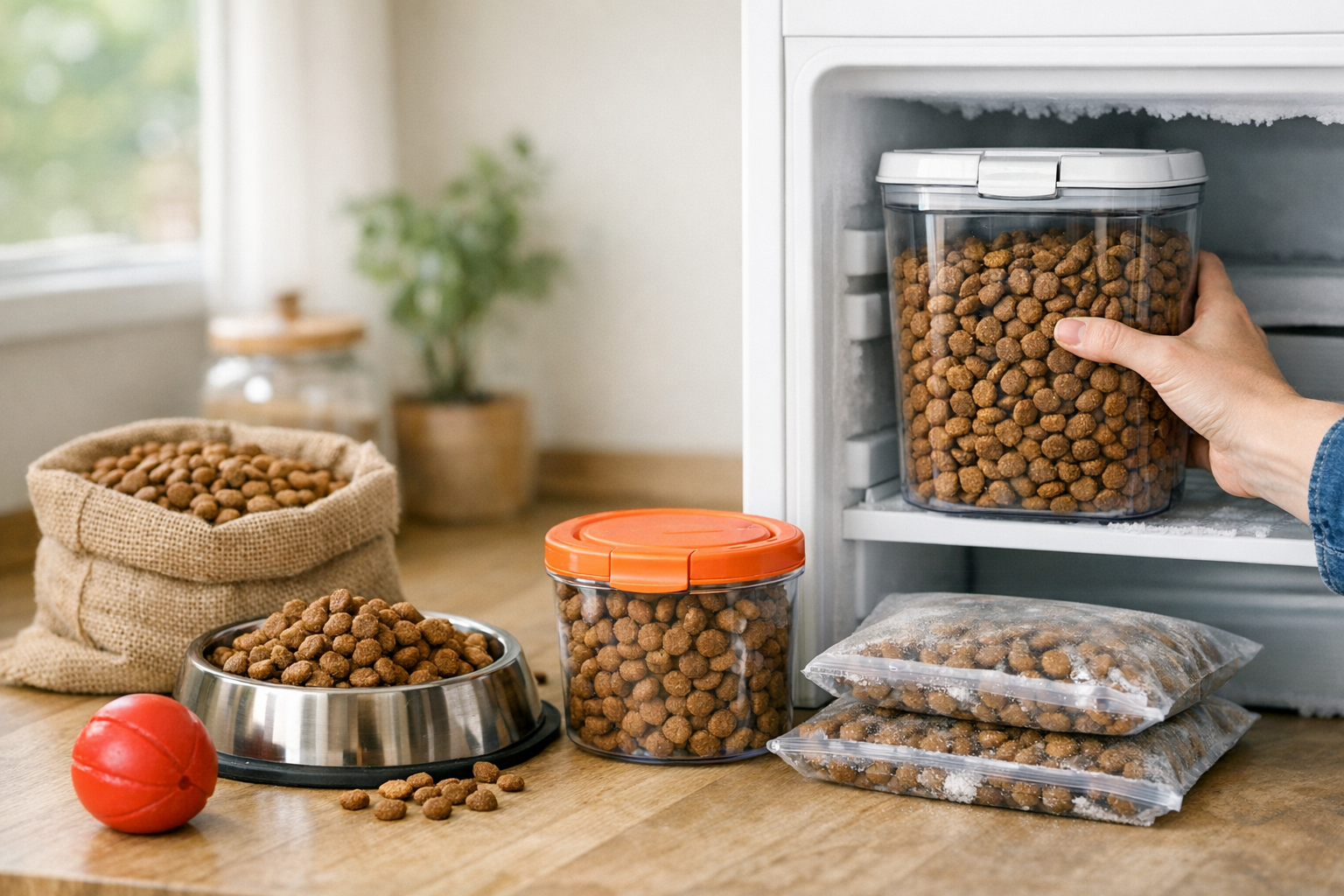
Step 1: Divide the food into portions. / Determine how much food your dog eats in one week. Use small freezer-safe bags or airtight containers for these portions.
Step 2: Remove the air. / If using bags, squeeze out as much air as possible before sealing. If you have a vacuum sealer, this is the perfect time to use it.
Step 3: Keep the original packaging if possible. / You can cut out the UPC and the "best by" date from the bag and slip it into your storage container. This is vital in case there is ever a product recall.
Step 4: Place in the freezer. / Store the bags or containers in a way that allows air to circulate around them. Do not stack them so tightly that the center of the pile takes days to freeze.
Using the Right Containers
Glass jars with rubber gaskets are excellent for freezing small amounts of food. They provide a complete seal against odors and moisture. However, they can be heavy and take up a lot of space. High-quality plastic freezer bags are a more practical choice for most people. Look for bags that are labeled as "heavy-duty" to prevent punctures from the sharp edges of the kibble.
If you have a large chest freezer, you might want to use airtight plastic bins. Make sure the bins are BPA-free and food-grade. We see many customers at our warehouse in Vernon Hills, Illinois, who buy in bulk to save money. Using several smaller bins is often better than one giant one. It allows you to only take out what you need for the week without exposing the entire stash to room temperature.
How Long Does Frozen Kibble Last?
While freezing extends life, it is not an infinite solution. Most experts recommend using frozen dry dog food within six months for the best quality. It can technically stay safe for up to a year, but the texture might start to change. The kibble can become a bit softer or more crumbly after long periods in the freezer.
If the food was already close to its expiration date when you froze it, do not expect it to last another year. Freezing "pauses" the clock, but it does not reset it. Always check the date on the bag before you decide to freeze the contents.
- Unopened bags: Can stay in the freezer for up to a year.
- Opened bags (repackaged): Best used within six months.
- Once thawed: Should be consumed within 10 to 14 days.
Thawing and Feeding Your Dog
How you handle the food after it leaves the freezer is just as important as how it went in. If you take a bag of cold kibble and open it immediately in a warm room, condensation will form on the food. This moisture can lead to mold growth very quickly.
The best way to thaw kibble is in the refrigerator. Move one week's worth of food from the freezer to the fridge twenty-four hours before you need it. This allows the temperature to rise slowly without the risk of moisture buildup. If you are in a hurry, you can thaw it on the counter, but keep the container sealed until the food reaches room temperature.
Some dogs actually enjoy eating cold or even frozen kibble. If your dog likes the crunch, you can feed it straight from the freezer. However, keep in mind that frozen food has less aroma. Since dogs rely heavily on their sense of smell to enjoy their meals, a picky eater might reject cold food.
Vet Tip: If your dog has sensitive teeth or dental issues, avoid feeding frozen kibble directly. The hardness of the frozen nuggets can be difficult for dogs with weak enamel or gum disease to crunch safely.
Frozen Dry Food vs. Freeze-Dried Raw Food
It is easy to get these two terms confused. Freezing dry kibble is a storage method for standard cooked biscuits. Freeze-dried raw food is a completely different type of product. Freeze-drying is a process where moisture is removed from raw ingredients while they are frozen. This creates a light, shelf-stable nugget that retains the nutrients of raw meat.
We carry several popular freeze-dried brands like Stella & Chewy's and other options in our freeze-dried food collection. These foods are designed to be stored at room temperature in your pantry. You do not need to put them in your freezer unless the bag has been open for a long time and you want to preserve the very last bit.
Freeze-dried food is often used as a "topper" to add flavor and nutrition to standard kibble. If you are freezing your dry kibble to save money, adding a little bit of freeze-dried raw food on top is a great way to boost the meal's appeal. It provides the benefits of raw nutrition with the convenience of dry storage.
Managing Prescription Diets and Specialized Food
If your dog is managing a health condition like kidney disease, urinary issues, or severe allergies, you might be using a prescription diet. Brands like Farmina Vet Life or Royal Canin offer specialized formulas that are essential for your pet's wellness. These foods can be more expensive than standard kibble, making proper storage even more important.
Our pharmacy for dogs provides access to prescription options through our partner pharmacy. Since these bags are an investment in your dog's health, freezing portions of them can prevent the food from going stale before your dog finishes the bag. This is especially helpful for small dogs on prescription diets who might only eat a half-cup of food per day.
Vet Tip: Always consult your veterinarian before freezing a prescription diet. Some specialized formulas have specific structures or coatings that may be affected by extreme cold, though most standard kibbles are perfectly fine to freeze.
Avoiding Common Storage Mistakes
One of the biggest mistakes pet owners make is pouring new food on top of old food in a storage bin. This leaves a layer of old, oxidizing fat at the bottom of the container. That old fat can go rancid and "infect" the new food with a bad smell and taste. Always finish the old bag and wash the container with hot, soapy water before adding new food.
Another mistake is storing food in the garage or under the sink. Garages have massive temperature swings that accelerate spoilage. Areas under sinks can be damp, leading to mold. If you do not have room in your kitchen or pantry, the freezer is a much safer alternative than a non-climate-controlled space.
Checklist for Success
- Verify the "best by" date before freezing.
- Use moisture-proof, airtight freezer bags.
- Label every bag with the date and brand name.
- Squeeze out all excess air to prevent freezer burn.
- Thaw in the refrigerator to prevent condensation.
Benefits for Multi-Dog Households vs. Single-Dog Homes
In a multi-dog household, you probably go through food fast enough that freezing is not necessary. If a large bag is finished within three to four weeks, standard airtight storage in a cool pantry is sufficient. However, if you have multiple dogs and like to buy six months of food at once when there is a sale, freezing is your best friend.
For single-dog owners, especially those with toy breeds, a large bag is a liability. A four-pound Chihuahua might take four months to eat a twelve-pound bag of food. In this case, the food will almost certainly be stale by the time they reach the bottom. Freezing allows these owners to take advantage of the lower price-per-pound of larger bags without sacrificing the health of their pet.
We see this often with our Autoship programme. They want the convenience and savings of recurring deliveries but need to manage the volume of food arriving at their door. Setting up an Autoship for a larger bag less frequently and freezing the excess is a pro-move for saving money and time.
Signs Your Dog Food Has Gone Bad
Regardless of how you store it, you should always check the food before putting it in your dog's bowl. Use your senses to determine if the kibble is still safe. Rancid fat has a specific smell. It often smells like wet cardboard, old paint, or fermented fruit. If the bag smells "sour" or "off" compared to when you first opened it, throw it away.
Check for changes in texture. If the kibble feels oily or sticky to the touch, the fats may be breaking down. Look for any signs of mold, which can look like white, grey, or green fuzz. Even a small amount of mold means the whole batch is unsafe. Dogs are very sensitive to mycotoxins produced by mold, which can cause serious illness.
Bottom line: If you have any doubt about the freshness of the food, it is safer to discard it than to risk a vet visit for digestive upset.
Incorporating Variety Safely
Some owners worry that freezing kibble makes it boring. You can always spice up thawed kibble with healthy additions. Adding a splash of goat milk or a bit of canned food can help rehydrate the kibble and make it more aromatic.
If your dog is on a weight management plan, you can even freeze low-calorie treats or specific kibble bits inside an ice cube. This creates a "fudge-sicle" for dogs that keeps them occupied and hydrated. It is a great way to use that frozen kibble during the hot summer months in Illinois or anywhere with high temperatures.
Our MVP Rewards programme members often use their points to try new toppers or treats. This is a great way to test what your dog likes to eat with their thawed kibble. Mixing in high-quality items from brands like The Honest Kitchen or Vital Essentials can make a thawed meal taste just as fresh as a brand-new bag.
Summary
Freezing dry dog food is a practical, safe, and effective way to manage your pet's nutrition. It protects the investment you make in high-quality food by stopping the clock on oxidation and rancidity. By using airtight containers and proper thawing techniques, you can ensure every meal is as healthy as the first one.
- Freezing preserves fats and prevents spoilage.
- Airtight bags or glass containers are the best storage tools.
- Thawing slowly in the fridge prevents mold-causing moisture.
- Frozen kibble is best used within six months of storage.
If you are looking to stock up on your dog's favorite meals, check out our premium dog food selection. Whether you need a prescription diet from our pharmacy or are looking to start an Autoship for your regular kibble, we have the expertise to help you make the best choice for your pet.
FAQ
Does freezing dry dog food destroy the vitamins inside?
No, freezing actually helps preserve vitamins that might otherwise degrade at room temperature. The cold temperature slows down the chemical breakdown of nutrients, keeping the food's profile stable. It is one of the best ways to maintain the integrity of the food over several months.
Can I put the entire original bag of dog food in the freezer?
You can, but it is not the most efficient method. Most dog food bags are bulky and contain a lot of air, which can lead to freezer burn. It is much better to divide the food into smaller, airtight freezer bags to save space and ensure a better seal.
How do I know if my frozen dog food has freezer burn?
Freezer burn usually looks like dry, white, or greyish spots on the surface of the kibble. While it is not necessarily unsafe, it can make the food taste very bland and change the texture. If you see significant freezer burn, your dog might not want to eat the food.
Is it safe to refreeze dog food that has been thawed?
It is not recommended to refreeze kibble once it has reached room temperature. The process of thawing and refreezing can introduce moisture and increase the risk of mold or bacterial growth. Only thaw the amount of food your dog will eat within a week to avoid this issue.






