
 Save 15% on your 1st Autoship learn more

 Email us
 Live Chat
 FAQs
FAQs





Introduction
You are sitting on the couch and your dog leans in for a friendly lick. Instead of a sweet moment, you are met with a wave of breath that could peel paint. This is often the exact moment owners realize they need to address their pet's oral hygiene. At BaxterBoo, we hear from owners every day who want to know if they can handle dental care at home or if it requires a professional.
The answer is a definite yes. You can and should clean your dog's teeth at home to prevent plaque from turning into painful tartar. This guide will cover how to start a brushing routine, what supplies you actually need, and when it is time to call in the professionals. We will help you navigate the world of pet dental health with practical advice that fits into your daily life.
Why Cleaning Your Dog's Teeth Is Necessary
Dental disease is one of the most common health issues seen in adult dogs today. It often starts with a thin film of plaque. Plaque is a sticky substance made of bacteria and food particles. If you do not remove it within about 24 to 48 hours, it begins to harden into tartar.
Tartar is a cement-like deposit that sticks to the tooth surface. You cannot brush tartar away with a standard toothbrush. Once it forms, it provides a rough surface for even more plaque to attach to. This cycle leads to gingivitis, which is the inflammation of the gums.
If left alone, the bacteria can travel under the gumline. This causes infections that can damage the roots of the teeth and even the jawbone. In severe cases, bacteria from the mouth can enter the bloodstream. This may lead to issues with the heart, liver, or kidneys. Regular home care is the best way to break this cycle before it starts. For additional guidance, read our practical pet dental care tips.
Getting Started With Brushing
Brushing is the gold standard for dog dental care. It is the most effective way to mechanically remove plaque before it hardens. However, you cannot just grab a human toothbrush and jump in. You need to prepare your dog for the sensation.
Start by finding a quiet time when your dog is relaxed. Perhaps this is after a long walk or a meal. Do not aim to brush every tooth on the first day. The goal is to make this a positive experience so your dog allows you to continue in the future.
Quick Answer: Yes, you can clean your dog's teeth at home. Regular brushing is the most effective method, but you must use dog-safe toothpaste and go slowly to keep your pet comfortable.
Step-By-Step Brushing Guide
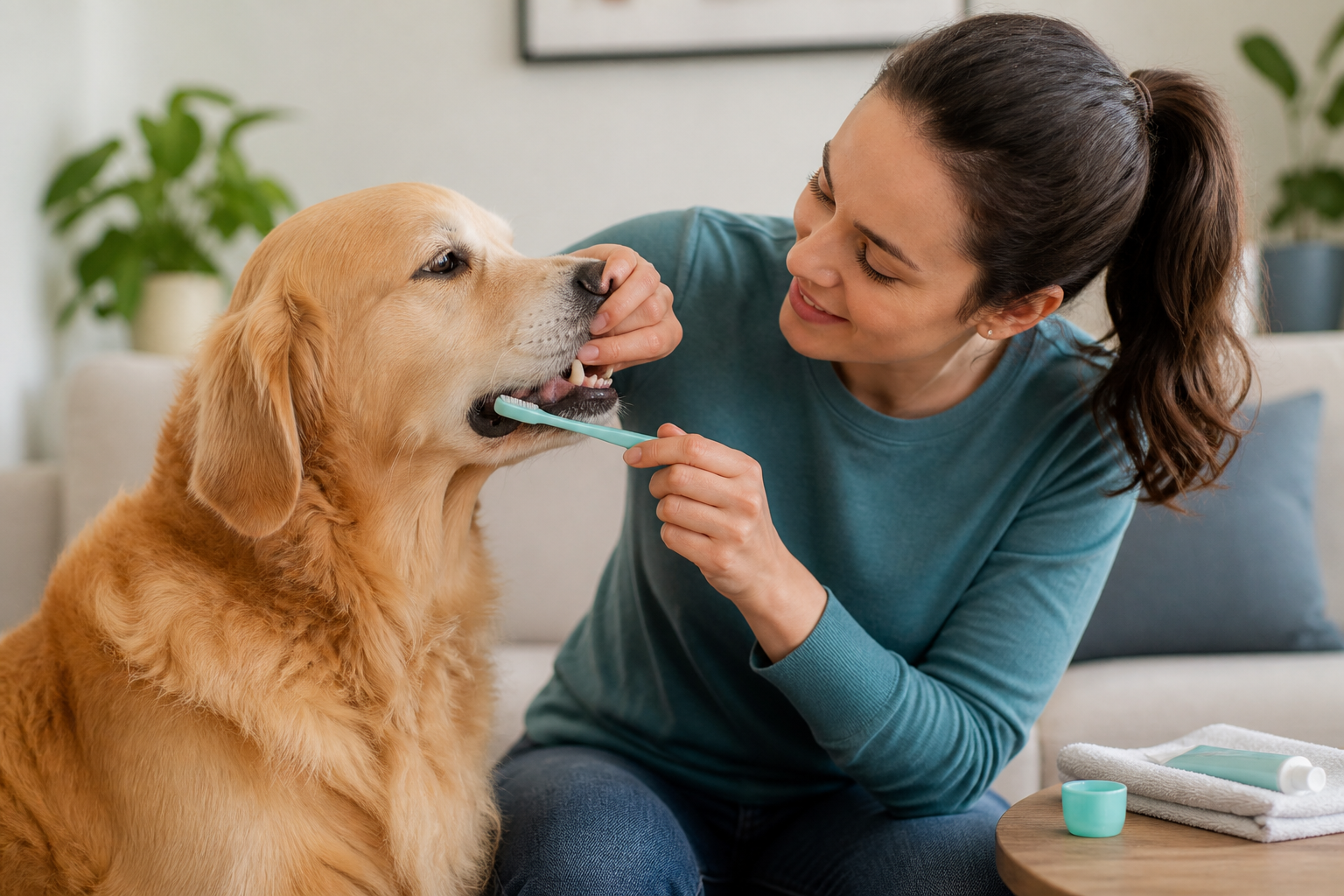
Step 1: Let them taste the paste. / Put a small amount of dog-safe toothpaste on your finger and let them lick it off. Most pet pastes come in flavors like poultry or beef to make this easier.
Step 2: Get them used to mouth handling. / Gently lift your dog's lip and rub your finger along their gums. This mimics the feeling of a brush without the hardware.
Step 3: Introduce the brush. / Apply toothpaste to a dog-specific toothbrush or finger brush. Hold the brush at a 45-degree angle to the gumline.
Step 4: Use circular motions. / Focus on the outside surfaces of the teeth. This is where most plaque accumulates. You do not usually need to worry about the inside surfaces because a dog's tongue does a decent job of cleaning those.
Step 5: Reward and praise. / Give your dog a small treat or lots of verbal praise immediately after you finish. This creates a positive association with the routine.
Key Takeaway: Consistency is more important than perfection when starting. Even brushing for thirty seconds a few times a week is better than one long session once a month.
Choosing the Right Supplies
The tools you choose make a massive difference in how successful you will be. Never use human toothpaste on a dog. Human pastes contain fluoride and foaming agents like sodium lauryl sulfate. These are meant to be spit out, not swallowed. Dogs will swallow the paste, and these ingredients can cause severe stomach upset.
Worse yet, some human toothpastes contain xylitol. This is an artificial sweetener that is highly toxic to dogs. Even a small amount can cause life-threatening drops in blood sugar or liver failure. Always stick to products formulated specifically for pets.
For brushes, you have options. A finger brush is a small rubber cap that fits over your index finger. It is great for small dogs or pets who are nervous about long objects in their mouths. Standard dog toothbrushes have longer handles and angled heads. These help you reach the back molars without putting your hand too deep into the mouth. You can find suitable options in our dog dental care collection.
- Dog-specific toothpaste: Flavored to be palatable and safe to swallow.
- Soft-bristled brush: Designed for sensitive canine gums.
- Finger brush: Offers more control and a gentler touch for beginners.
- Dental wipes: Good for dogs who absolutely refuse a brush.
Alternatives to Brushing
We know that not every dog will tolerate a toothbrush. Some dogs have mouth sensitivity or behavioral hurdles. If brushing is a battle, you can use other tools to support oral health. While these are not as effective as brushing, they are much better than doing nothing.
Dental chews are a popular choice. These treats are designed with a specific texture that scrapes the teeth as the dog chews. The chewing action also stimulates saliva production. Saliva contains natural enzymes that help kill bacteria. When choosing a chew, look for the VOHC seal. This means the Veterinary Oral Health Council has verified that the product actually does what it claims. Browse our dental treats and chews for alternatives to brushing.
Water additives are another "low effort" option. These are liquids you add to your dog's water bowl. They contain enzymes or ingredients that break down plaque and freshen breath. They are particularly useful for multi-dog households where individual brushing is difficult to manage.
Vet Tip: While chews and additives help, they cannot reach under the gumline where the most dangerous bacteria hide. If your dog has significant brown buildup or red gums, consult your vet for a professional assessment.
When Home Care Is Not Enough
Sometimes, despite your best efforts, your dog may develop dental disease. This is especially common in small breeds with crowded teeth or senior dogs. You need to know when the situation has moved beyond what a toothbrush can fix.
If you see bleeding gums, loose teeth, or heavy brown tartar, it is time for a professional cleaning. A veterinarian can perform a cleaning under anesthesia. This allows them to scale the teeth above and below the gumline safely. They can also take X-rays to see if there are abscesses or rot hidden beneath the surface.
Our pet pharmacy provides a wide range of support for these situations. Through our partnership with Pet's Choice, we offer FDA-approved medications for mouth infections and prescription dental diets. These specialized foods are often shaped like large kibbles that scrub the teeth as they are eaten. They can be a vital part of a long-term health plan for dogs prone to dental issues.
Signs of Dental Trouble
- Foul or "rotten" breath that persists after brushing.
- Red, swollen, or bleeding gums.
- Yellow or brown crust near the gumline.
- Drooling more than usual.
- Pawing at the mouth or face.
- Dropping food or refusing to eat hard kibble.
Key Takeaway: Professional cleanings are a medical necessity for many dogs. They are not a failure of your home care but a way to reset the mouth to a healthy state.
Advanced Dental Diets and Nutrition
The food your dog eats every day plays a role in their oral health. While wet food is often a favorite for its smell and taste, it does not provide any mechanical cleaning. It can actually stick to the teeth more easily than dry food.
Dry kibble is often touted as better for teeth. However, many dogs simply swallow their kibble whole. For a diet to help with teeth, it needs to be a specific dental formulation. These diets have a texture that does not crumble immediately. Instead, the tooth sinks into the kibble, which wipes away plaque on its way through.
You can also look for treats that include ingredients like parsley or cinnamon. These can help with breath in the short term. Just remember that a treat is not a substitute for mechanical cleaning. Treats should only make up about ten percent of your dog's daily calories to avoid weight gain. Explore our dental supplements for additional options.
Bottom line: Diet is a supporting player in dental health, but the physical removal of plaque remains the most important step.
Creating a Long-Term Dental Routine
The secret to success is making dental care a habit. It should feel as routine as filling the water bowl or going for the morning walk. If you only think about it when the breath gets bad, the damage might already be done.
Try to keep your supplies in a visible spot. If the toothbrush is tucked away in a drawer, you will likely forget to use it. Place it near the dog's food or leash. This reminds you to do a quick brush at the same time every day. This guide to warning signs of bad teeth can also help you recognize changes that need attention.
We recommend tracking your progress. You might notice that your dog gets easier to handle after the first week. Their gums might look less pink and more healthy. These small wins make the effort worth it. Many owners find that their dogs actually start to look forward to the "chicken-flavored" time of day.
- Set a daily reminder on your phone.
- Keep the toothpaste and brush in a convenient container.
- Check your dog's mouth once a week for any new changes.
- Schedule a yearly dental exam with your veterinarian.
The Role of Professional Support
Even with the best home routine, most dogs will eventually need a professional look. This is where our services can help bridge the gap. We carry over 500 brands, including many that specialize in senior care and dental wellness.
If your vet prescribes a specific rinse or a medicated diet, you can often find those through our pharmacy. Using our Autoship programme ensures you never run out of your dog's favorite dental chews or toothpaste. Plus, it saves you money and grants you a free MVP Gold membership for extra rewards.
We have been operating since 2006 because we understand that pet care is an ongoing journey. We want to be the neighbor you turn to for advice on which brush fits a Chihuahua or which chew lasts longest for a Labrador. Your dog's smile is a reflection of their overall health, and we are here to help you protect it.
Vet Tip: If your dog has a heart condition or kidney disease, dental health is even more critical. Infections in the mouth can put extra strain on these organs, so keep your vet informed of your home routine.
FAQ
How often should I brush my dog's teeth?
Ideally, you should brush your dog's teeth every single day. Plaque can start to harden into tartar in as little as 24 to 48 hours, so daily sessions are the most effective. If your schedule is busy, aim for at least three times a week to keep the bacterial load under control.
Can I use baking soda to clean my dog's teeth?
You should generally avoid using baking soda as a primary cleaner for your dog's teeth. It has a high alkaline content and a very salty taste that most dogs dislike. If swallowed in large amounts, it can upset the acid balance in their stomach and lead to digestive distress.
At what age should I start dental care for my dog?
You should start as soon as you bring your puppy home, usually around eight to twelve weeks of age. While they still have their baby teeth, starting early gets them used to the sensation of having their mouth handled. This makes it much easier to maintain a lifelong habit once their adult teeth come in.
Is bad breath always a sign of dental disease?
While bad breath is the most common sign of dental issues, it can occasionally signal other problems. Conditions like kidney disease, liver issues, or digestive problems can also cause changes in breath odor. If your dog's breath smells sweet, fruity, or like urine, you should contact your veterinarian immediately.
Bottom line: Home dental care is a simple way to extend your dog's life and save on expensive veterinary bills.






