
 Save 15% on your 1st Autoship learn more

 Email us
 Live Chat
 FAQs
FAQs





Introduction
You might be standing in the pet food aisle or looking at your pantry and wondering if your dog is getting bored with the same crunchy kibble every day. Perhaps your dog has started sniffing their bowl and walking away. Or maybe you just want to give them a little extra hydration during a hot Illinois summer. Many pet owners find themselves asking if they can mix different textures together for a better mealtime experience.
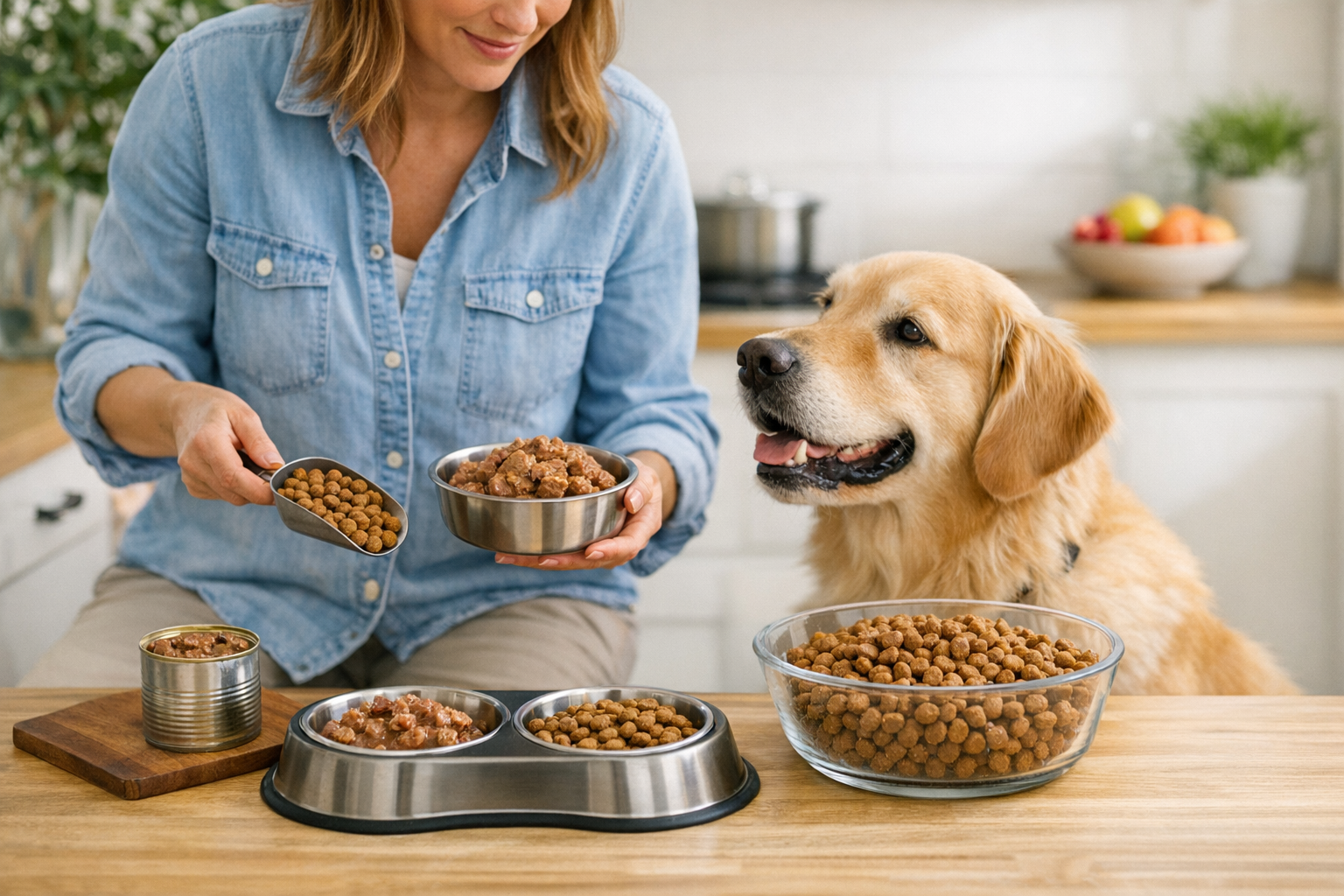
At BaxterBoo, we hear this question often from our neighbors and customers who want to provide the best nutrition without overcomplicating their routine. Mixing wet and dry food is not only safe, but it can also offer significant health and behavioral benefits. This guide will walk you through how to combine these foods safely, how to calculate the right portions, and why this variety might be exactly what your dog needs. You can create a meal plan that supports their health while keeping them excited for every bite.
The Basics of Wet and Dry Dog Food
Before you start mixing, it helps to understand what makes these two types of food different. The main distinction is not just the texture. It is the moisture content and the way the food is prepared. Most dry kibble contains about 10 percent moisture. Manufacturers create it by mixing ingredients into a dough and then cooking it at high temperatures through a process called extrusion. This creates the shelf stable, crunchy pieces we know as kibble.
Wet food is very different because it often contains 75 to 80 percent moisture. It starts with protein sources that are ground and mixed with a gravy or gel containing vitamins and minerals. The mixture is then sealed in a can or pouch and sterilized through heat. This process preserves the food without needing the same types of preservatives sometimes found in dry options. Because the ingredients are less processed and contain more water, wet food often smells much stronger to a dog.
Quick Answer: Yes, you can safely feed your dog a mix of wet and dry food. This method, often called mixed feeding, provides the dental benefits of kibble alongside the hydration and flavor of wet food.
Why Consider Mixed Feeding?
Many people choose mixed feeding because it offers a balance of convenience and quality. Dry food is easy to store and budget friendly. Wet food is often more expensive per serving but is packed with aroma and moisture. When you combine them, you get a middle ground that works for your wallet and your dog's preferences.
One major benefit is increased hydration. Many dogs do not drink enough standing water from a bowl. This can be a concern for dogs with a history of urinary tract issues or kidney stress. Adding wet food to their diet is an easy way to increase their daily fluid intake without any struggle. The high water content also helps dogs feel fuller. If you have a dog that always seems hungry, the extra volume from wet food can help them feel satisfied without adding excessive calories.
The Power of Palatability
Dogs rely heavily on their sense of smell to enjoy their food. Dry kibble loses some of its aroma once the bag is opened and exposed to air. Wet food has a much more intense scent because of the fats and juices sealed inside the can. For a picky eater or a dog recovering from an illness, that strong smell can be the difference between them eating a full meal or skipping it entirely.
Dental Health Benefits
While wet food is great for hydration, dry food serves a mechanical purpose. The crunchy texture of kibble can help scrape a small amount of plaque from the teeth as the dog chews. It is not a substitute for regular brushing or professional cleanings, but it provides more oral stimulation than soft food alone. By mixing the two, you ensure your dog still gets some of that abrasive action while enjoying a softer meal.
Key Takeaway: Mixed feeding combines the dental benefits and cost effectiveness of dry kibble with the hydration and high palatability of wet food.
How to Calculate the Right Portions
The biggest mistake owners make when mixing food is guessing the amounts. You cannot simply add a scoop of wet food on top of a full serving of dry food. This will quickly lead to weight gain and obesity. Every calorie counts, including the treats you give throughout the day.
To do this correctly, you need to look at the caloric density of both products. This information is usually found on the label as calories per cup or calories per can. If your dog needs 600 calories a day, you might choose to get 400 calories from kibble and 200 calories from wet food.
Step-by-Step Portion Planning
Step 1: Determine your dog's daily calorie needs. / Talk to your veterinarian to find the exact number based on your dog's weight, age, and activity level.
Step 2: Decide on the ratio. / A common choice is 75 percent dry and 25 percent wet, but some owners prefer a 50/50 split.
Step 3: Read the labels. / Find out how many calories are in one cup of your dry food and one full can of your wet food.
Step 4: Do the math. / If you want to feed 25 percent wet food, multiply the daily calorie total by 0.25 and then divide by the calories per can to see how much of the can to use.
Step 5: Adjust the kibble. / Subtract the wet food calories from the daily total and measure out the remaining amount in dry kibble.
Vet Tip: Always consult your veterinarian before making major changes to your dog's diet. They can calculate precise caloric needs and ensure the specific brands you choose are appropriate for your dog's health profile.
Choosing the Right Combination
It is generally best to stick within the same brand when mixing wet and dry food. Manufacturers often design their product lines to be nutritionally compatible. For example, if you feed a specific limited ingredient diet for allergies, using the matching wet food ensures you are not accidentally introducing a trigger ingredient.
We carry over 500 trusted brands like Farmina, Royal Canin, and NutriSource that offer both wet and dry options. If your dog is on a therapeutic diet for a health condition, consistency is even more important. Mixing a prescription dry food with a random grocery store wet food can dilute the effectiveness of the medical diet.
Checking for AAFCO Statements
Regardless of the brand, both the wet and the dry food should have an AAFCO (Association of American Feed Control Officials) statement on the label. This statement confirms that the food is complete and balanced. If a wet food is labeled as a topper or for supplemental feeding only, it does not contain all the necessary nutrients to be a primary meal source. You can still use these as flavor enhancers, but they should not make up a large portion of the diet.
Life Stage Considerations
A dog's nutritional needs change as they grow. What works for a puppy will not support a senior dog correctly. When mixing food, ensure both products are formulated for your dog's specific life stage.
Puppies
Puppies have small mouths and high energy needs. They need more protein and specific minerals like calcium and phosphorus for bone growth. Mixing wet food with dry kibble can make it easier for a weaning puppy to transition to solid food. The soft texture is gentle on their developing teeth.
Senior Dogs
Older dogs often experience a decline in their sense of smell and taste. They may also develop dental issues or missing teeth that make crunching hard kibble painful. Wet food is an excellent solution for seniors. The strong aroma encourages them to eat, and the soft texture is easy on their gums. If your senior dog has stiff joints, some wet foods are specifically formulated with added joint support.
Dogs with Health Conditions
For dogs managing chronic issues like kidney disease, diabetes, or severe allergies, diet is a form of medicine. Our pet pharmacy for dogs is a helpful place to start when your vet recommends a prescription diet or medication. If your vet prescribes a specific food, you can often find both wet and dry versions of that prescription. Keeping the diet consistent through our pharmacy services helps manage these conditions effectively.
Bottom line: Matching the life stage and health needs of your dog across both food types is essential for long term wellness.
Tips for a Successful Transition
Dogs have sensitive digestive systems. A sudden change in food can lead to an upset stomach, gas, or diarrhea. When you begin mixing wet food into a previously dry-only diet, do it slowly over the course of a week.
- Day 1-2: Mix 10 percent wet food with 90 percent of their usual dry food.
- Day 3-4: Increase to 20 percent wet food and reduce the dry food accordingly.
- Day 5-7: Reach your target ratio while monitoring your dog's stool consistency.
If you notice any loose stools or vomiting, slow down the transition. Some dogs may need two weeks to fully adjust to the higher moisture and fat content of wet food.
Storage and Hygiene
One of the challenges of wet food is that it spoils quickly. While dry kibble can stay in a bowl all day, wet food should not be left out for more than 30 to 60 minutes. If your dog is a grazer who likes to snack throughout the day, mixed feeding might require a change in your routine.
Once a can is opened, you must refrigerate the unused portion. Most wet food stays fresh in the fridge for two to three days. You can use a reusable silicone can cover to keep the food from drying out and to prevent the smell from spreading to your own food. When you are ready to feed the next meal, you can take the wet food out of the fridge a few minutes early to let it reach room temperature. Some dogs prefer it slightly warmed, which you can do by mixing in a tablespoon of warm water.
Key Takeaway: Proper storage and a gradual transition period are the best ways to prevent digestive upset and food waste.
Common Myths About Wet Food
There are several misconceptions about feeding wet food that often make pet owners hesitant. One common myth is that wet food causes weight gain. In reality, wet food is often less calorically dense than dry food because of the water content. A large volume of wet food may have fewer calories than a small handful of kibble. Weight gain only happens if the total daily calories exceed what the dog burns.
Another myth is that wet food causes diarrhea. While a sudden switch can cause loose stools, a high-quality wet food is actually very easy to digest. Many vets recommend bland wet diets for dogs recovering from stomach issues because the ingredients are often simple and the moisture helps with recovery.
Finally, some people believe that dogs "need" the crunch of kibble to keep their teeth clean. While it helps, kibble is not a magic toothbrush. Most dogs swallow kibble whole or break it into only a few pieces. The best way to manage dental health is through a combination of professional care, regular brushing, and appropriate dental chews, regardless of whether you feed wet or dry food.
Managing the Cost of Mixed Feeding
We know that providing high-quality food can be a significant expense. Mixed feeding can actually be a budget-friendly strategy. If you want the benefits of a premium wet food but cannot afford to feed it exclusively, using it as a 25 percent mix with a high-quality dry food makes it much more affordable.
To save more, consider using our Autoship programme. This allows you to set up recurring deliveries of your favorite wet and dry food so you never run out. You get savings on your first order and a free MVP Rewards programme membership, which helps you earn rewards on every purchase. We also offer a Frequent Buyer Program on many participating brands, allowing you to earn free bags or cases of food over time.
When to Talk to Your Vet
While mixed feeding is generally great, there are times when you should seek professional advice. If your dog has a sudden change in appetite, starts losing weight, or has chronic digestive issues, a vet visit is necessary. These could be signs of underlying health problems that a simple change in food won't fix.
If you are managing a specific condition like crystals in the urine or heart disease, your vet may recommend a very specific ratio of moisture to protein. Our pet pharmacy for dogs carries a variety of specialized diets for these needs. We make it easy to get the exact formula your vet requires, ensuring your dog gets the professional care they deserve.
Vet Tip: If your dog has a history of pancreatitis or sensitivity to dietary fats, check the fat content of wet foods carefully. Canned foods can sometimes be higher in fat than kibble, which may trigger a flare-up in sensitive dogs.
Summary of Mixed Feeding Best Practices
To make the most of mixing wet and dry food, keep these points in mind:
- Always match the life stage (puppy, adult, or senior).
- Use the same brand for both types whenever possible.
- Measure by calories, not just by volume.
- Refrigerate opened cans and use them within three days.
- Transition slowly over 7 days to avoid stomach upset.
- Keep fresh water available at all times, even with the added moisture of wet food.
By following these steps, you can provide a meal that is hydrating, delicious, and nutritionally complete. Your dog will appreciate the variety, and you will have peace of mind knowing you are supporting their health from the inside out.
Conclusion
Feeding your dog a combination of wet and dry food is an excellent way to improve their quality of life. It provides the essential hydration they need while maintaining the convenience and dental benefits of kibble. Whether you are trying to entice a picky eater or simply want to offer more variety, mixed feeding is a flexible and effective approach. Our team at BaxterBoo is here to help you find the perfect brands and formulas to make this transition easy.
- Boosts hydration for kidney and urinary health
- Increases mealtime excitement for picky eaters
- Provides a balance of textures for dental and digestive health
- Offers a cost-effective way to include premium wet food in the diet
Bottom line: Mixing wet and dry food is a safe, healthy, and practical way to enhance your dog's nutrition and enjoyment of their meals.
Ready to start your dog's new feeding routine? Browse our Dog Food collection to find the perfect wet and dry pairings for your pup.
FAQ
Is it okay to mix different brands of wet and dry dog food?
While it is generally safe to mix brands, staying within the same brand is often better. Manufacturers formulate their wet and dry lines to complement each other nutritionally. If your dog has a sensitive stomach or a specific health condition, mixing brands might make it harder to identify the cause of any digestive issues.
How do I store leftover wet dog food?
Once a can or pouch is opened, it must be refrigerated immediately. Use a tight-fitting lid or a silicone cover to keep the food fresh and prevent it from drying out. Most high-quality wet foods will stay fresh in the refrigerator for two to three days, after which any remaining food should be discarded.
Does mixing wet food with dry food cause weight gain?
Mixing food only causes weight gain if you do not adjust the total amount of calories. Since wet food is mostly water, it often has fewer calories by volume than dry kibble. However, if you simply add wet food on top of a full serving of dry food, your dog will be eating too many calories, which leads to obesity.
Can I mix wet food with dry food for every meal?
Yes, you can mix wet and dry food for every meal as long as the total daily portion is balanced. Some owners prefer to do this to keep their dog's digestion consistent. If you choose to do this, just ensure you are following a strict measurement routine to keep your dog at a healthy weight.






