
 Save 15% on your 1st Autoship learn more

 Email us
 Live Chat
 FAQs
FAQs





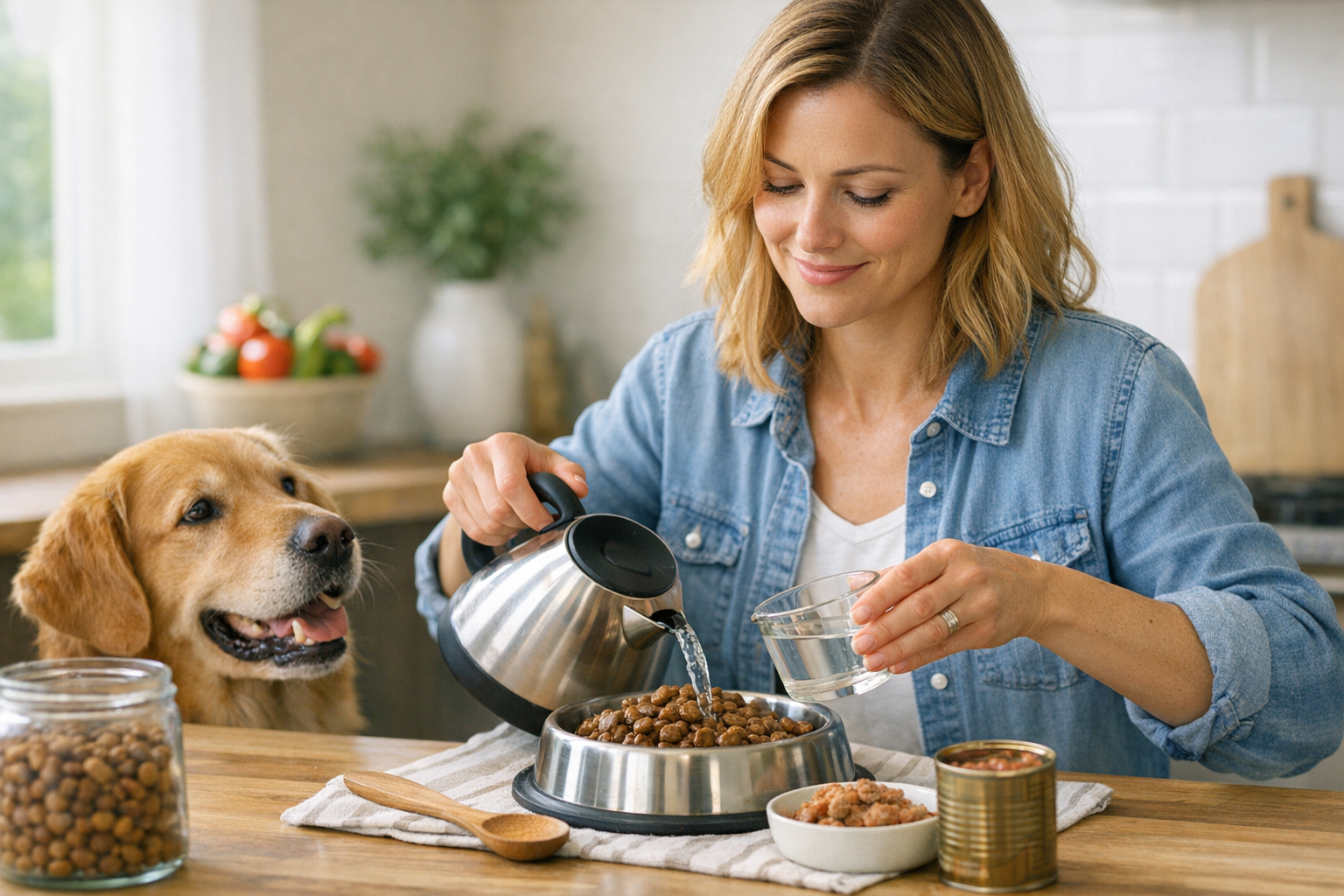
Quick Answer: Yes, you can absolutely add water to dry dog food. Doing so helps with hydration, improves the flavor of the meal, and makes the kibble easier for senior dogs or puppies to chew.
Introduction
You are standing in the kitchen with a scoop of kibble and a hungry dog at your feet. Perhaps your dog seems a little bored with their meal, or you are worried they are not drinking enough water from their bowl. You might wonder if splashing a little water into the bowl is a good idea. At BaxterBoo, we hear this question often from pet parents looking to spruce up mealtime. Adding moisture to dry food is a simple way to support your dog’s health and happiness, and our dog food category makes it easy to explore more meal options.
This practice can help picky eaters, support kidney health, and even help with weight management. In this post, we will explore the benefits and drawbacks of wetting dry dog food. We will also provide a step by step guide on how to do it safely to avoid spoilage. Our goal is to help you decide if this small change is right for your canine companion.
Why You Should Consider Adding Water to Kibble
Most dry dog foods only contain about 10 percent moisture. While kibble is nutrient dense and convenient, it does not provide much in the way of hydration. Many dogs do not drink enough water on their own, especially during the hot summer months. Adding water directly to their food ensures they get a significant boost of fluids twice a day.
Proper hydration is vital for every system in a dog’s body. It helps the kidneys flush out toxins and keeps the digestive tract moving smoothly. If your dog is prone to urinary tract issues or crystals, extra water is often a top recommendation from veterinarians.
Beyond health, there is the taste factor. Dry food often sits in a bag and loses some of its punchy aroma. Adding warm water releases the fats and scents within the kibble. This creates a savory gravy that most dogs find irresistible. If you have a picky eater who turns their nose up at plain dry food, a little moisture might be the secret to a clean bowl.
Key Takeaway: Adding water to kibble is an easy way to increase daily fluid intake and make meals more enticing for picky eaters.
Supporting Dental and Digestive Comfort
Wetting dry food is a great solution for dogs with physical limitations. Puppies with small baby teeth or senior dogs with dental disease often struggle with hard, crunchy pellets. Softening the food makes it much easier for them to consume their required calories without pain.
It also helps dogs that tend to eat too fast. Some dogs "bolt" their food, swallowing kibble whole in seconds. This can lead to choking or digestive upset. When you add water, the kibble expands before it hits the stomach. This pre-soaked food is often easier for the body to break down. It also forces the dog to lap up the moisture, which can naturally slow down their eating pace. If you need a better setup for moistened meals, our dog bowls and feeders collection is a helpful place to start.
Vet Tip: If your dog is refusing dry food due to dental pain, consult your veterinarian for an oral exam. Our pet pharmacy offers prescription diets and medications for dogs managing chronic dental or health conditions.
Potential Drawbacks of Wetting Dog Food
While the benefits are numerous, there are a few things to keep in mind. The biggest concern is spoilage. Dry kibble can sit in a bowl all day without much risk. However, once you add water, you have created a prime environment for bacteria to grow. This is especially true in warm weather. You must treat wet kibble like a fresh meal and pick it up if it is not eaten quickly.
Another consideration is dental health. Some experts believe the crunch of dry kibble helps scrape a small amount of plaque from the teeth. When you soak the food, you lose that abrasive texture. However, most veterinarians agree that kibble is not a substitute for regular teeth brushing or professional cleanings. The hydration benefits of wet food often outweigh the minimal dental benefits of dry kibble.
Finally, there is the mess. Wet kibble is stickier and can get trapped in the long facial hair of certain breeds. It can also be harder to clean out of plastic bowls if it is allowed to dry and harden. Switching to stainless steel or ceramic bowls can make cleanup much easier. If you want a simple, easy-to-clean option, our stainless steel dog bowl selection is a practical choice.
Bottom line: The main risk of wetting dry food is bacterial growth, so always discard uneaten portions after 30 to 60 minutes.
How to Properly Wet Dry Dog Food
You do not need to overthink the process, but consistency helps. Follow these steps to ensure a safe and tasty meal for your dog.
Step 1: Measure the kibble. / Start with your dog's standard portion of dry food in a clean bowl.
Step 2: Add warm water. / Use filtered, warm water rather than cold. Warm water is better at releasing aromas and softening the core of the kibble. Do not use boiling water, as it can destroy some vitamins and burn your dog’s mouth.
Step 3: Let it sit. / Allow the food to soak for about 10 to 15 minutes. This gives the kibble time to expand and soften.
Step 4: Stir and serve. / Give the bowl a quick stir to distribute the moisture and any "gravy" that has formed.
Step 5: Clean up. / If your dog does not finish the meal within an hour, throw the leftovers away and wash the bowl with soap.
Water to Kibble Ratios
| Dog Size | Amount of Kibble | Recommended Water | Result |
|---|---|---|---|
| Small | 1/2 Cup | 2 Tablespoons | Light coating/gravy |
| Medium | 1.5 Cups | 1/4 to 1/3 Cup | Softened texture |
| Large | 3 Cups | 1/2 to 3/4 Cup | Fully hydrated sponge |
Alternatives to Plain Water
If you want to provide even more nutrition, you can use liquids other than plain tap water. Bone broth is a popular choice among our customers. It is packed with collagen and amino acids that support joint health and digestion. However, you must ensure the broth is specifically made for pets. Human bone broths often contain onions, garlic, and high levels of salt, all of which are dangerous for dogs.
Another option is to mix in a small amount of canned wet food or a commercial food topper. We carry a wide variety of these at BaxterBoo to help customize your dog's diet. These mixers provide a variety of textures and extra protein. Goat milk is another fantastic hydrating topper that provides probiotics for gut health. You can browse our bone broth collection or our food topper selection for more ways to add moisture at mealtime.
- Bone Broth: High in protein and great for joints.
- Goat Milk: Packed with probiotics and easy to digest.
- Pet-Safe Canned Toppers: Adds variety and high moisture.
- Warm Water: The simplest and most cost-effective option.
Managing Special Health Needs
Sometimes, adding water is more than just a preference. It can be a medical necessity. Dogs with a history of bladder stones often need as much moisture as possible to keep their system flushed. In these cases, your vet might recommend a prescription diet.
Weight management is another area where soaking food helps. Dry food is very calorie dense. A small scoop can look like a tiny meal to a hungry dog. When you soak that same scoop in water, it can double in volume. This helps your dog feel physically full without adding any extra calories. This "satiety" can prevent your dog from begging for treats between meals.
If your dog is on a prescription diet for weight loss or kidney health, you can still use the soaking method. Our pet pharmacy carries many of these prescription diets. Transitioning to a new feeding style should always be done gradually to avoid stomach upset.
Key Takeaway: Hydrating kibble is a useful tool for weight management and supporting dogs with urinary or kidney issues.
Common Questions About Soaking Kibble
Many owners worry about the "bloat" risk. Bloat, or GDV, is a serious condition where the stomach twists. Some people believe that letting kibble expand in the bowl rather than the stomach can reduce the risk. While there is no definitive study proving this, many owners of large breed dogs prefer to soak food as a precaution.
Others ask if they can prep the food the night before. We do not recommend this unless you are keeping it in the refrigerator. Even then, the kibble can become very mushy and lose its appeal. Freshly soaked food usually has the best texture and the lowest risk of contamination.
If you are using a slow feeder or a puzzle toy, you can still wet the food. Just be prepared for a bit more cleanup. Silicon mats and stainless steel slow feeders work best for moistened meals. Avoid using porous materials like wood or cheap plastic that might harbor bacteria in the scratches. A product like our non-tip slow feed bowl can help keep mealtime a little tidier.
- Can I use cold water? Yes, but it takes longer to soften the food and does not release the aroma as well as warm water.
- Will it hurt their teeth? No, but you should continue a regular dental hygiene routine including brushing.
- Does it change the nutrition? No, the calories and nutrients remain the same, you are simply adding volume and hydration.
- Is it okay for puppies? Yes, it is actually recommended during the weaning process to help them transition to solids.
Conclusion
Wetting your dog's dry food is a simple, effective way to improve their daily life. It provides essential hydration, makes meals more flavorful, and helps those with dental issues eat comfortably. By following a few safety rules, like discarding uneaten food and using warm water, you can turn a boring meal into a hydrating feast.
At BaxterBoo, we want to help you provide the best possible care for your pets. Whether you are looking for a high quality bone broth topper or a new stainless steel bowl, we have the expert-picked supplies you need. If your dog has specific health requirements, remember to consult your veterinarian about the best diet plan, and explore our The Honest Kitchen selection or our Open Farm selection for meal options that pair well with added moisture.
To make your life easier, consider signing up for our Autoship programme. You can get your favorite kibble and hydrating toppers delivered right to your door on a schedule that works for you. This ensures you never run out of the supplies your dog loves while saving you money on every order.
Our MVP Rewards programme is another easy way to make everyday purchases more rewarding. It helps you earn back value while you shop for food, toppers, and mealtime essentials.
FAQ
Does adding water to dry dog food prevent bloat?
There is no scientific consensus that wetting kibble prevents bloat, but many owners of large breeds do it to prevent the food from expanding rapidly in the dog's stomach. Softening the food can also slow down dogs that eat too fast, which is a known risk factor for digestive issues. Always consult your vet if you are concerned about your dog's risk for bloat.
How long can I leave moistened dog food in the bowl?
You should remove any uneaten moistened kibble after 30 to 60 minutes. Once water is added to the dry pellets, it creates a moist environment where bacteria can grow quickly, especially in a warm house. To keep your dog safe, treat soaked kibble like you would a bowl of wet canned food or fresh meat.
Will wetting the food make my dog's teeth rot?
Adding water to food does not cause tooth decay, but it does remove the slight abrasive benefit of crunchy kibble. However, since most dogs swallow kibble whole or in large chunks, the dental benefits of dry food are often overstated. The best way to prevent dental issues is through regular brushing and professional veterinary cleanings, regardless of what texture of food you provide.
Can I add milk to my dog's dry food instead of water?
While some dogs can handle a small amount of milk, many adult dogs are lactose intolerant and may experience diarrhea or gas. A better alternative is pet-safe bone broth or goat milk, which is often easier on a dog's digestive system. If you want to use a liquid other than water, ensure it is free of added salts, onions, and garlic.






