
 Save 15% on your 1st Autoship learn more

 Email us
 Live Chat
 FAQs
FAQs





Introduction
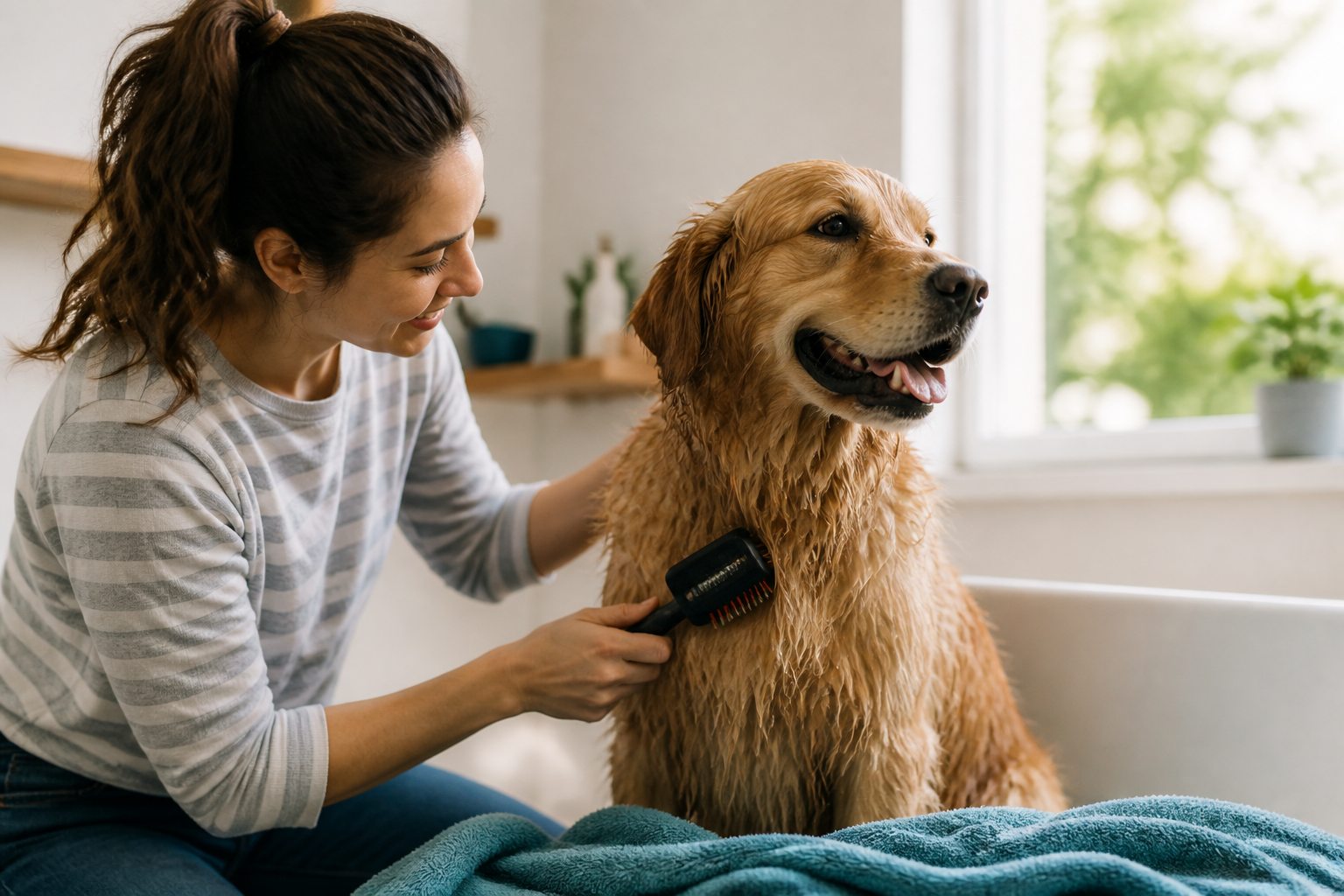
You just finished giving your dog a bath and they are finally standing still for a moment. They are dripping wet and their fur looks like a tangled mess. You reach for the brush to start smoothing things out. At this moment, many pet owners stop and wonder if they are about to make a mistake. Brushing a wet dog is a topic with plenty of conflicting advice. Some people say it is the only way to manage a long coat. Others warn that you will ruin the hair forever. At BaxterBoo, we see these grooming questions every day from owners who want to keep their pets looking great without causing pain. This post covers the science of wet hair, the right way to use a brush after a bath, and when you should put the tools down. You can maintain a beautiful coat safely if you follow a few professional rules.
Quick Answer: You can brush a wet dog, but only under specific conditions. Never brush a sopping wet coat or one that is heavily matted. The best approach is to brush a damp coat that has been treated with a high-quality conditioner or detangling spray.
The Science of Your Dog's Hair
To understand why wet brushing is controversial, you have to look at the structure of the hair. Each strand of your dog’s fur is held together by different types of bonds. These include hydrogen bonds, disulfide bonds, and salt bonds. These bonds determine the strength and elasticity of the coat.
Water specifically affects the hydrogen bonds. When hair gets wet, these bonds break temporarily. This makes the hair much more elastic than it is when dry. You might notice that wet hair stretches significantly before it snaps. While elasticity sounds like a good thing, it actually makes the hair weaker. The outer layer of the hair, called the cuticle, also swells when it absorbs water. This makes the hair strand more vulnerable to damage from the friction of a brush.
Dry hair is structurally stronger but less flexible. This is why brushing a bone-dry coat can also lead to problems. Without any moisture or lubrication, dry hair is prone to snapping and creating static. The goal of a good grooming routine is to find the middle ground where the hair is protected and manageable.
When Brushing a Wet Dog is a Bad Idea
There are two scenarios where you should absolutely avoid brushing a wet dog. The first is when the coat is dripping or sopping wet. At this stage, the hair is at its weakest point. The weight of the water combined with the pull of a brush is a recipe for breakage. You are likely to stretch the hair until it loses its natural shape or snaps off entirely.
The second and most important rule is to never brush out mats on a wet dog. If your dog has clumps of tangled fur, adding water often makes them worse. Water causes the hair fibers in a mat to swell and tighten. If you try to pull a brush through a wet mat, you will end up tugging on the dog's skin. This is incredibly painful for the pet. It can also cause "brush burn," which is a painful skin irritation from the pins of the brush hitting the same spot repeatedly.
Why Mats Tighten in Water
- Hair fibers expand and lock together like a puzzle.
- Wet hair creates more friction against other wet hairs.
- The weight of the water pulls the mat closer to the skin.
- Air cannot circulate through a wet mat, making it harder to dry later.
Key Takeaway: Always finish your heavy detangling work before the dog gets wet. If you find a mat during the bath, leave it alone until the coat is treated with conditioner and partially dried.
The Benefits of Proper Wet Brushing
If you follow the right steps, brushing a damp dog can actually be better for the coat than dry brushing. Professional groomers often use a technique called wet brushing to save time and protect the hair. When the coat is damp and treated with a lubricant, the brush can glide through much more easily.
Wet brushing is especially helpful for de-shedding. When the hair is damp, loose undercoat hair often releases more easily from the skin. This allows you to remove a large amount of dead fur during the bath or right after towel drying. This prevents that hair from ending up on your furniture later.
Another benefit is the distribution of natural oils. Brushing a damp coat helps move the skin's healthy oils and any added conditioners down the entire length of the hair shaft. This results in a much shinier and healthier appearance once the dog is fully dry.
The Mandatory Role of Conditioner
You should never brush a wet dog without using a product to provide "slip." This is the most important rule of the wet brushing method. A high-quality dog shampoo and conditioner or a leave-in detangling spray acts as a lubricant. It smooths down the hair cuticle that has been swollen by the water.
This lubrication allows the pins of your brush to slide past the hair instead of catching on it. It also reduces the amount of stretching that happens to the hair strand. If you are brushing during the bath, apply the conditioner and let it sit for a few minutes before you start. If you are brushing after the bath, use a spray-on product while the dog is still damp.
Vet Tip: If your dog has sensitive skin or allergies, choose a conditioner with soothing ingredients like oatmeal or aloe vera. For pets with chronic skin conditions, our pharmacy offers prescription-strength shampoos and topicals. Always consult your veterinarian before starting a new medicated grooming routine.
Choosing the Right Tools for Wet Fur
Not all brushes are created equal when it comes to wet hair. Using the wrong tool can lead to skin irritation or damaged fur. For wet or damp brushing, you want a tool that is gentle and has plenty of give.
The Pin Brush
A high-quality pin brush is usually the best choice for wet brushing. Look for one with rounded, polished tips. These pins are designed to penetrate the coat down to the skin without scratching. The pins should be set in a flexible rubber pad. This flexibility ensures that if the brush hits a snag, the pins will give way instead of forcing their way through and breaking the hair.
The Rubber Curry Brush
For short-haired breeds, a rubber curry brush like those made by Kong is excellent. These can be used while the dog is covered in shampoo. The rubber "teeth" massage the skin and help pull out loose fur without any risk of damaging the hair bonds. This is also a great way to stimulate blood flow to the skin.
Tools to Avoid on Wet Hair
Avoid using fine-toothed metal combs or stiff slicker brushes on a wet dog. These tools are often too aggressive for the weakened state of wet hair. A slicker brush has hundreds of tiny wire pins that can easily snag and tear wet fur. Save the slicker brush for when the coat is 80 to 90 percent dry.
Step-by-Step Guide to Brushing a Wet Dog
If you want to try wet brushing at home, follow this process to ensure your dog stays comfortable and their coat stays healthy.
Step 1: Prep before the bath. / Thoroughly brush your dog while they are bone dry. Remove every mat and tangle you can find. If you hit a mat that won't budge, do not think the bath will help it.
Step 2: Bathe and condition. / Use a high-quality shampoo and rinse thoroughly. Apply a generous amount of conditioner. This provides the necessary lubrication for the hair.
Step 3: Gentle towel dry. / Do not rub the dog vigorously with a towel. This creates tangles and friction. Instead, pat the coat and squeeze the hair to remove excess water. The goal is "damp," not "dripping."
Step 4: Apply a detangling spray. / Even if you used a rinse-out conditioner, a leave-in spray adds an extra layer of protection. It helps the brush glide through the most sensitive areas.
Step 5: Start at the ends. / Begin brushing at the very tips of the hair and work your way up toward the skin. This prevents you from pushing small tangles together into one large knot.
Step 6: Use a gentle touch. / Do not use heavy pressure. Let the tool do the work. If you feel resistance, stop and use your fingers to gently separate the hair before continuing with the brush.
Bottom line: Success in wet brushing depends on the transition from dripping wet to damp and the heavy use of conditioning products.
The Dangers of Brushing a Bone-Dry Coat
While we have focused on the risks of wet hair, it is also important to note that brushing a completely dry coat has its own set of problems. This is a common mistake made by pet owners between baths. When the hair is dry and lacks moisture, it creates static electricity.
Static causes individual hairs to stand up and wrap around each other. This actually leads to more mats and tangles. Dry brushing without any product also causes the hair to become brittle. Over time, this leads to a dull appearance and a coat that feels rough to the touch.
Whenever you brush your dog between baths, you should use a light "grooming spray." This adds just enough moisture to neutralize static and protect the hair from the friction of the brush. It makes the process much more comfortable for your dog.
Managing Different Coat Types
The "can you brush a wet dog" question depends heavily on what kind of fur your dog has. Different breeds require different approaches to moisture and grooming.
Double-Coated Breeds
Dogs like Huskies, Golden Retrievers, and Shepherds have a dense undercoat and a longer topcoat. For these breeds, wet brushing is a powerful tool for managing shedding. Using a high-velocity dryer in combination with a brush on a damp coat can help "blow out" the dead undercoat. This is much more efficient than trying to brush it all out while dry.
Curly and Corded Coats
Poodles and Doodles often have hair that tightens as it dries. If you let these dogs air dry without brushing, they will often develop tight curls that are hard to manage later. Brushing these breeds while they are damp (and treated with conditioner) helps straighten the hair as it dries. This results in a fluffy, "blown-out" look that is easier to maintain.
For more coat-care guidance, read our guide on how to groom a curly-haired dog.
Short-Haired Breeds
For Labradors or Boxers, wet brushing is less about tangles and more about skin health. Brushing during the bath helps remove dander and loose fur that is trapped deep near the skin. Since their hair is short, there is very little risk of breakage or stretching.
Skin Health and Moisture Risks
One major concern with wet dogs is the health of the skin underneath the fur. If you brush a wet dog but do not ensure they get completely dry afterward, you might be creating a health problem. Trapped moisture against the skin is a leading cause of hot spots and fungal infections.
This is especially true for dogs with thick or double coats. If the top layer feels dry but the layer near the skin is still damp, bacteria can thrive. When you brush a wet dog, you are often moving moisture around. Always follow up a wet brushing session with a thorough drying process.
If you notice your dog has red, itchy skin or a "yeasty" smell after being wet, they may have a skin irritation. We carry a wide range of skin and coat care products, including grooming products that can support your pet's regular care. However, persistent skin issues always require a trip to the vet.
Key Takeaway: Brushing is only half the job. Ensuring the skin is dry and healthy after the brush is just as important for your dog's well-being.
Grooming Gear and Value
At BaxterBoo, we believe in providing value without compromise. You do not need the most expensive professional setup to groom your dog at home. You just need the right knowledge and a few well-chosen tools. Investing in one good pin brush and a reliable detangling spray can save you money on professional grooming appointments in the long run.
Our team handpicks every grooming product we carry. We look for items that are durable and effective for real pet owners. Whether you are looking for a basic brush for a new puppy or a full grooming kit for a senior dog, our dog grooming supplies have options that work.
If you find yourself buying grooming supplies frequently, consider our Autoship programme. You can get your favorite shampoos, conditioners, and sprays delivered on a schedule that works for you. This ensures you never run out right when your dog decides to jump in a mud puddle. Plus, Autoship customers get a free MVP Gold membership for even more savings.
Summary of the Wet Brushing Rules
To keep your dog's coat in top shape, remember these essential points from our guide:
- Never brush a dog that is dripping wet.
- Always remove mats before the dog gets wet.
- Never brush wet hair without a conditioner or detangling spray.
- Use a gentle pin brush with rounded tips.
- Pat the dog dry with a towel instead of rubbing.
- Work in small sections starting from the ends of the hair.
- Ensure the coat and skin are completely dry after the session.
Brushing a wet dog does not have to be a disaster. When done correctly, it is a great way to keep the coat clean, shiny, and free of excess shed hair. It takes a little more patience and the right products, but the results are worth the effort.
If you ever feel overwhelmed by your dog's coat condition, do not hesitate to reach out to a professional groomer. They have the specialized dryers and tools to handle heavy matting safely. For everyday maintenance, our collection of grooming supplies and our dog shampoo and conditioner selection are here to support you in keeping your pet healthy and happy.
FAQ
Is it better to brush a dog wet or dry?
It depends on your goal and the dog's coat type. For general maintenance and removing mats, brushing dry (with a light grooming spray) is safer. For de-shedding or achieving a fluffy finish on curly coats, brushing a damp coat with plenty of conditioner is often more effective.
For additional bath-care advice, see our guide to the dos and don'ts of bathing your dog.
Can brushing a wet dog cause skin problems?
If the brush is used too aggressively on wet skin, it can cause "brush burn" or irritation. Additionally, if the dog is not dried thoroughly after brushing, trapped moisture can lead to fungal infections or hot spots. Always be gentle and ensure your dog is completely dry.
Why does my dog's hair feel rough after brushing it wet?
This usually happens if you brush the hair without enough lubrication or if you use a brush that is too stiff. The friction can damage the hair cuticle, leading to a rough or "fried" texture. Always use a conditioner or detangling spray to protect the hair shaft.
What should I do if I find a mat while my dog is wet?
Stop brushing that area immediately. Apply extra conditioner or a detangling spray directly to the mat and let it sit. Use your fingers to gently tease the hair apart as much as possible, then wait until the dog is mostly dry to finish removing the mat with a tool.






