
 Save 15% on your 1st Autoship learn more

 Email us
 Live Chat
 FAQs
FAQs





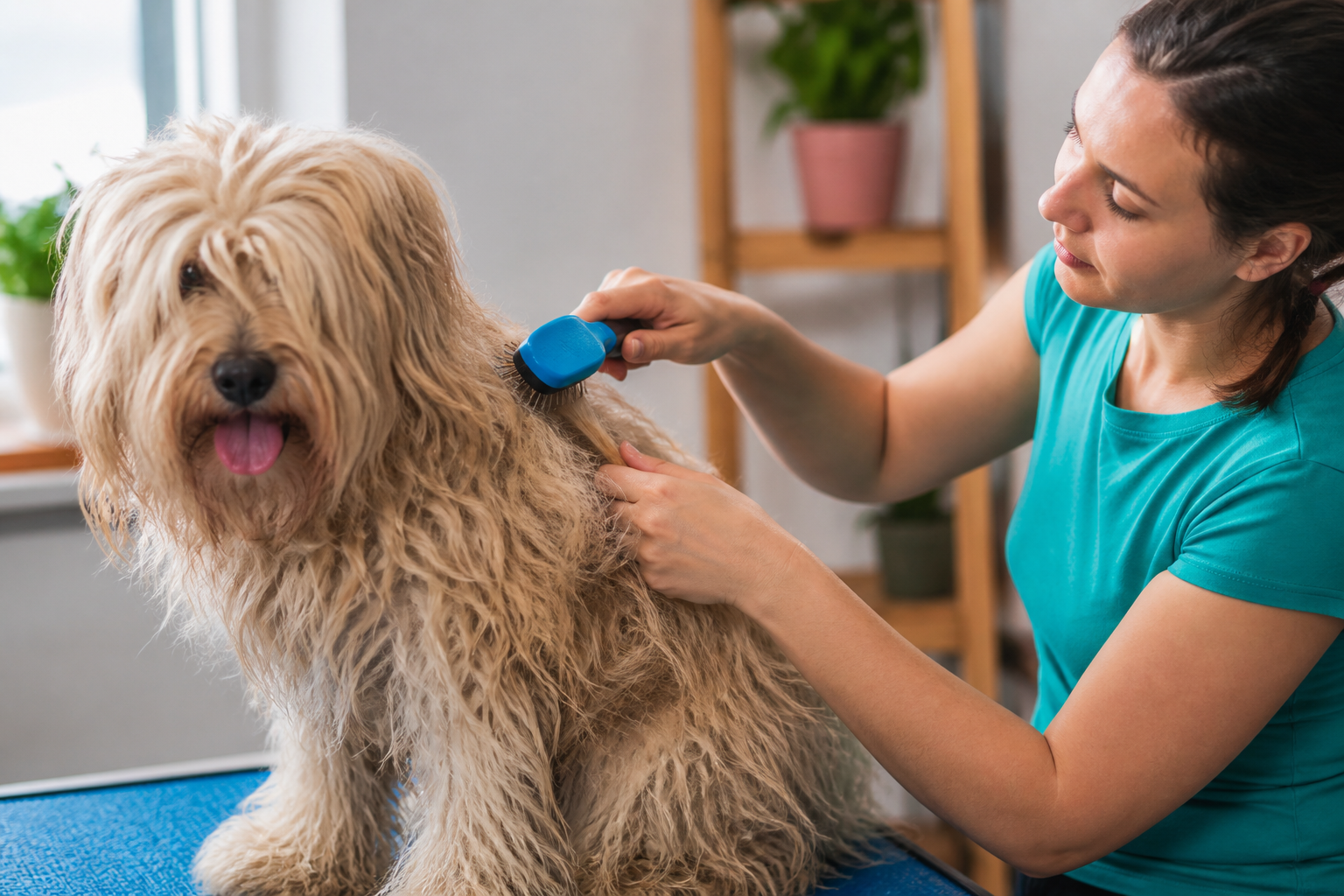
Introduction
You are relaxing on the couch with your dog when your fingers snag on a hard, tight clump of fur behind their ear. You try to pull it apart gently, but your dog flinches or pulls away. This is the moment every pet owner dreads. You want to know if you can simply brush it out or if you need to reach for the clippers. At BaxterBoo, we talk to owners every day who are dealing with this exact struggle. It is one of the most common grooming challenges for those with long-haired or curly-coated breeds. This guide will help you understand when a mat is manageable at home and when it requires professional intervention. We will cover the tools you need, the risks of improper dematting, and how to keep your dog’s skin healthy.
Quick Answer: You can brush out light, loose tangles using a slicker brush and detangling spray. However, if the mat is tight against the skin or "pelted," brushing is too painful and dangerous. In those cases, the mat must be safely shaved by a professional.
Understanding the Difference Between Tangles and Mats
Before you start brushing, you need to know exactly what you are dealing with. A tangle is a loose collection of hairs that have started to knot together. You can usually see through a tangle, and it moves freely away from the skin. A mat is much more serious. It is a dense, often hard clump of fur that has packed tightly.
Mats form when loose, shed hair becomes trapped in the coat instead of falling away. For dogs with undercoats, this trapped hair twists around the living guard hairs. Over time, moisture from rain, baths, or humidity causes these fibers to swell and then shrink as they dry. This creates a knot that tightens like a cinch.
If you cannot see the skin through the knot, or if the knot feels like a solid piece of felt, you are looking at a mat. If you try to brush this with a standard brush, you will only be pulling on the dog's skin. This causes significant pain and can lead to bruising.
Why Some Dogs Mat More Than Others
Not all coats are created equal. Some dogs can go a week without a brush and look fine, while others seem to develop knots overnight. Understanding your dog's specific coat type helps you set a realistic grooming schedule.
The Curly and Wavy Coat
Breeds like Poodles, Bichon Frises, and the many varieties of Doodles are the most prone to matting. Their hair does not fall out when it sheds. Instead, it stays caught in the curls. If you do not brush these dogs daily, the shed hair quickly creates a foundation for mats. For more guidance, read our tips on grooming a dog with curly hair.
The Double Coat
Golden Retrievers, Newfoundlands, and Huskies have a soft undercoat and a tougher outer coat. During "blow out" season, the undercoat comes loose in large amounts. If this hair is not removed with a de-shedding tool or slicker brush, it creates thick mats, especially around the haunches and under the front legs.
The Silky Drop Coat
Yorkshire Terriers and Maltese dogs have hair that is very similar to human hair. It is fine and thin. While they do not have a heavy undercoat, their hair is easily tangled by friction. Harnesses, collars, and even playing on the carpet can cause fine tangles that quickly turn into mats if they are ignored.
Puppy Coat Transitions
Puppies go through a specific phase where their soft puppy fur sheds to make way for their adult coat. This usually happens between six and twelve months of age. The soft puppy hair gets tangled in the new, coarser adult hair. This is a high-risk time for matting, and many owners are surprised by how quickly it happens.
The Physical Risks of Leaving Mats Untreated
Matted hair is not just a cosmetic issue. It is a health concern that can cause genuine suffering. When fur mats, it stops the flow of air to the skin. This creates a dark, moist environment that is perfect for bacteria and fungus to grow.
Key Takeaway: Mats act like a sponge for moisture and a trap for debris. This leads to hidden skin infections that you may not notice until the mat is removed.
If a mat is left long enough, it can cause the following issues:
- Hot spots and moist dermatitis.
- Parasite infestations like fleas or ticks that hide under the clumps.
- Skin irritation from the constant pulling of the hair.
- Reduced mobility if mats form tightly between the legs or around joints.
- Hematomas, which are pockets of blood that form in the ears when heavy mats are finally removed and blood rushes back to the delicate vessels.
Vet Tip: If you notice your dog's skin is red, oozing, or has a foul odor beneath a mat, do not try to brush it. The skin is likely infected and very sensitive. Consult your veterinarian for a professional assessment. Our pet pharmacy carries medicated shampoos and topical treatments through our pharmacy partner that may be necessary to heal the skin once the hair is removed.
Can You Brush It Out? The Pinch Test
Before you take a brush to a knot, perform the pinch test. Hold the base of the mat between your thumb and forefinger, right at the skin. If you can feel a clear space between the mat and the skin, you may be able to brush it out.
If the mat is flush against the skin and you cannot get your fingers behind it, do not attempt to brush it. Brushing a mat that is tight against the skin is like pulling someone’s hair with full force for twenty minutes. It is painful and will make your dog fear grooming for the rest of their life.
| Mat Type | Description | Recommended Action |
|---|---|---|
| Surface Tangle | Loose, see-through, moves freely. | Brush out with a slicker brush and detangler. |
| Moderate Mat | Dense clump, but has space beneath it. | Careful dematting with a comb and spray. |
| Severe Mat | Hard, felt-like, tight against the skin. | Shave with professional clippers. |
| Pelted Coat | Multiple mats joined into a solid layer. | Professional grooming or vet intervention. |
Essential Tools for Managing Tangles
Having the right tools makes a massive difference in your success and your dog's comfort. We recommend keeping a basic grooming kit ready so you can catch tangles before they turn into mats. At BaxterBoo, we handpick tools that are effective but gentle on your pet’s skin. You can find brushes, combs, and clippers in our dog grooming supplies.
The Slicker Brush
This is the most important tool for most coats. It has fine wire bristles that are slightly angled. It is designed to grab loose hair and break up small tangles. When using a slicker brush, always use short, gentle strokes. Do not press the wires into the skin. A suitable option is the Master Grooming Tools Ergonomic Slicker Dog and Cat Brush.
The Metal Greyhound Comb
A metal comb is your "check" tool. After you think you have brushed your dog completely, run the comb through the fur. If it snags, there is still a tangle that needs attention. The comb is also excellent for working through small knots near the ears or tail.
Detangling Spray and Conditioners
Never brush a dry coat. Dry hair is more likely to break, and broken hair mats faster than healthy hair. A good detangling spray provides "slip." This allows the hairs to slide past each other rather than catching and snapping.
Dematting Rakes
These tools have sharpened blades inside a curved tooth. They are designed to cut through a mat to break it into smaller pieces. These must be used with extreme caution. They are very sharp and can easily cut a dog's skin if they squirm.
How to Brush Out a Small Mat: A Step-by-Step Guide
If you have determined that the mat is loose enough to be worked on at home, follow these steps to keep the process as painless as possible.
Step 1: Isolate the knot.
Hold the mat at the base, near the skin, with your fingers. This ensures that when you brush, you are pulling against your own hand and not the dog’s sensitive skin.
Step 2: Apply a detangling agent.
Saturate the mat with a dog-specific detangling spray. Let it sit for a minute or two to penetrate the center of the knot. This softens the hair and makes it more pliable.
Step 3: Work from the outside in.
Do not start at the skin. Use your slicker brush to pick at the very ends of the hair at the edge of the mat. Slowly work your way toward the center of the clump.
Step 4: Switch to the comb.
Once the slicker brush moves through the area easily, use the wide-toothed end of a metal comb to ensure the center of the mat is gone. Finish with the fine-toothed end of the comb.
Step 5: Reward your dog.
Grooming can be stressful. Give your dog high-value treats throughout the process and a big reward at the end. You want them to associate the brush with good things.
Bottom line: Brushing from the ends of the hair toward the skin prevents the knot from tightening further while you work.
When Shaving Is the Only Humane Option
There is a common stigma around "shaving the dog." Many owners feel guilty if their dog has to be shaved down. However, shaving is often the most compassionate thing you can do for a heavily matted dog.
If a dog is pelted, meaning the mats have formed a solid layer over the body, brushing is impossible. Trying to "save the coat" would involve hours of painful pulling. Most professional groomers will refuse to brush out severe mats because it violates animal welfare standards.
Shaving a matted dog requires skill. The skin is often pulled up into the mats, making it very easy to cut the dog with clippers. This is why you should never try to shave a heavily matted dog at home with human hair clippers. Professional groomers use specific blades that can safely get under the matting to remove it in one piece.
The "No Scissors" Rule
One of the most dangerous things a pet owner can do is try to cut a mat out with scissors. It seems simple to just snip the clump off, but a dog's skin is incredibly thin and elastic.
When a mat is tight, it pulls the skin up into the base of the knot. When you pull the mat away from the body to get the scissors underneath, you are actually pulling a "tent" of skin up with it. It is very easy to accidentally cut a large gash in your dog's skin. These injuries often require stitches and can lead to serious infections.
Key Takeaway: Never use scissors to remove a mat. If the mat is too tight for a brush, it requires professional clippers used by someone trained to handle matted skin.
Dealing with Friction Zones
Mats do not usually appear in the middle of a dog’s back. They start in "friction zones" where hair rubs together or where equipment sits on the body.
- Behind the ears: This is the most common spot. Dogs scratch their ears, and the friction of the paw against the fine hair creates knots.
- The armpits: As the dog walks, the legs rub against the chest. This constant motion felts the hair quickly.
- The sanitary area: Hair around the tail and back legs can catch debris and moisture, leading to very tight, painful mats.
- Harness and collar lines: If your dog wears a harness all day, the straps rub against the coat. We recommend removing collars and harnesses when your dog is inside to give the hair a break.
If you focus your daily brushing on just these four areas, you can prevent 90 percent of all mats from forming. It only takes two minutes a day to check these zones.
The Role of Health and Nutrition in Coat Quality
A healthy coat is more resistant to matting. When a dog's skin is dry or they are lacking essential fatty acids, the hair becomes brittle. Brittle hair breaks easily, and those broken ends act like Velcro, catching other hairs and starting the matting process.
We carry a variety of supplements designed to support skin and coat health. Ingredients like Omega-3 fatty acids from fish oil can help keep the hair supple and strong. Explore our dog skin and coat care selection for related supplies. If your dog has chronic skin issues or allergies that lead to scratching and matting, consult your vet.
Our pharmacy through our pharmacy partner provides prescription-strength allergy medications and specialized diets that address the root cause of poor coat quality. When a dog stops scratching, the friction mats behind the ears often disappear on their own.
Establishing a Routine for Prevention
The best way to handle matted dog hair is to never let it form in the first place. This sounds simple, but it requires consistency.
- Daily "Feel Checks": Every evening while petting your dog, run your fingers down to the skin. Check the armpits and behind the ears. If you feel a tiny knot, brush it out immediately before it grows.
- The "Line Brushing" Technique: For long-haired dogs, do not just brush the surface. Part the hair with one hand so you can see the skin, then brush the hair down from the part. This ensures you are reaching the base where mats start.
- Dry After Every Outing: If your dog gets wet in the rain or goes for a swim, they must be brushed as they dry. Water is the catalyst that turns a small tangle into a hard mat.
- Professional Maintenance: Even if you brush at home, a professional groomer can reach areas you might miss. Scheduling a "bath and brush" every four to six weeks keeps the coat manageable.
For additional bathing guidance, see our article on the dos and don'ts of bathing your dog.
Using Autoship for Grooming Success
Consistency is easier when you have the right supplies on hand. Using our Autoship programme is a great way to ensure you never run out of detangling spray, high-quality shampoos, or the treats you use to reward your dog for sitting still. You save on every order and get the peace of mind that your grooming kit is always stocked.
When you have a fresh bottle of spray and a clean brush ready, you are much more likely to tackle that small tangle before it becomes a problem. Managing a coat is a marathon, not a sprint. Small, daily efforts are much easier on you and your dog than one massive, stressful grooming session every few months.
Summary of Safe Mat Removal
If you find a mat, do not panic. Assess it calmly using the pinch test. If it is loose, use the right tools and a gentle hand. If it is tight, call a professional. Protecting your dog’s trust is just as important as protecting their coat.
- Assess the tightness of the mat first.
- Always use a detangling spray to provide slip.
- Hold the base of the hair to prevent pulling on the skin.
- Work from the tips of the hair toward the root.
- Never, ever use scissors to cut a mat out.
- Seek professional help for pelted or very tight mats.
Bottom line: Your dog's comfort should always come before the appearance of their coat. If shaving is necessary for their health, it is the right choice.
FAQ
Does bathing my dog help get rid of mats?
No, bathing usually makes mats much worse. When the hair gets wet, the fibers swell and then tighten as they dry, causing the knot to become denser and harder to remove. You should always brush out every tangle and mat before you put your dog in the bathtub. If you must wash a matted dog, you need to use a high-quality conditioner and brush the coat while it is still wet and slippery.
My dog hates being brushed; how can I help them?
Most dogs hate brushing because it has been painful in the past. Start by letting them sniff the brush and giving them a treat. Brush one small, non-sensitive area for five seconds, then stop and reward them. Slowly increase the time as they become more comfortable. Using a high-value treat that they only get during grooming can help change their emotional response to the brush.
Can I use human detangling spray on my dog?
It is not recommended to use human products on pets. Dogs have a different skin pH than humans, and many human sprays contain ingredients or fragrances that can irritate a dog's skin. Additionally, dogs often lick their fur after being groomed, and human products may contain chemicals that are not safe for them to ingest. Stick to sprays specifically formulated for canine safety.
What is a "pelted" coat and why is it dangerous?
A pelted coat occurs when individual mats become so large that they join together, creating a solid layer of felted fur across the dog's body. This is dangerous because it traps heat and moisture against the skin, leading to severe infections. It also restricts the dog's movement and can be extremely painful. A pelted coat can only be safely removed by a professional using clippers to go underneath the entire layer of matted fur.






