
 Save 15% on your 1st Autoship learn more

 Email us
 Live Chat
 FAQs
FAQs





Introduction
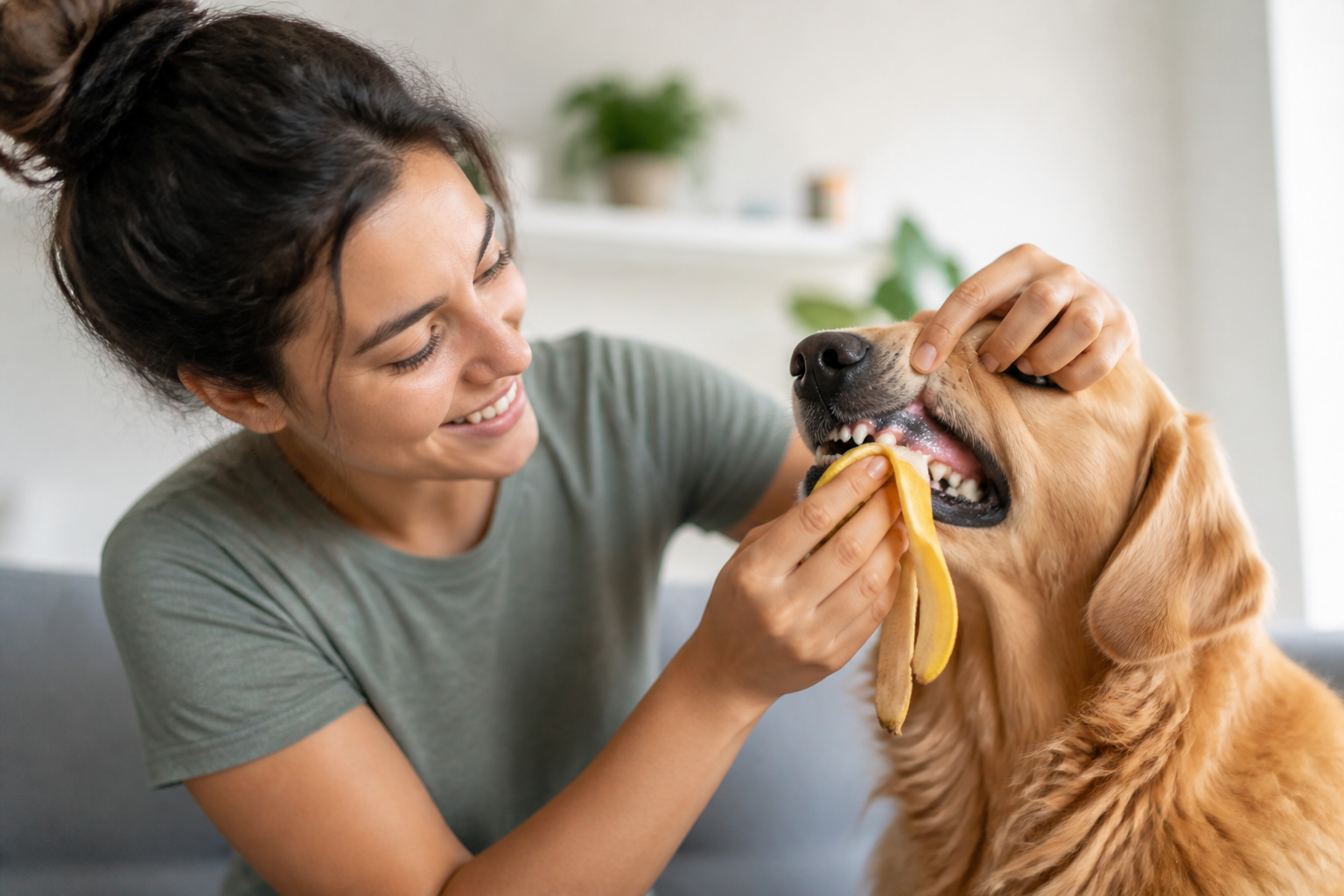
You are finishing your morning snack and see your dog staring at the leftover fruit on your plate. You might have seen a viral video or a social media post claiming that rubbing a banana peel on teeth can make them white and pearly. It sounds like a cheap and natural way to handle a task that most dogs hate. At BaxterBoo, we know that pet owners are always looking for practical ways to keep their companions healthy without unnecessary stress.
This post will look at the science behind banana peels and dog dental health. We will cover why this trend started and the potential risks it poses to your dog. You will also learn about the most effective ways to maintain your dog's oral hygiene. Our goal is to help you separate internet myths from expert-backed pet care.
The Origin of the Banana Peel Teeth Cleaning Myth
The idea that banana peels can clean teeth usually comes from the high mineral content found in the skin of the fruit. Banana peels contain potassium, magnesium, and manganese. On the surface, it seems logical that these minerals would strengthen the enamel or lift stains. Some people believe that rubbing the inside of a ripe peel against the teeth allows these minerals to absorb into the tooth structure.
However, the way minerals interact with teeth is more complex than a simple topical rub. For a mineral to strengthen a tooth, it generally needs to be part of a systemic diet or a specific clinical formulation. Simply rubbing a peel on the surface does not provide the mechanical action or the chemical concentration needed to change the color of the teeth.
Quick Answer: No, you cannot effectively clean a dog's teeth with a banana peel. They lack the abrasive texture required to remove plaque and the high sugar content can actually contribute to tooth decay over time.
Why Banana Peels Fail to Clean Teeth
Cleaning a dog's teeth requires two main things: abrasion and the breakdown of bacteria. When you use a toothbrush, the bristles physically scrub away the sticky film known as plaque. Banana peels are smooth and slippery. They do not have the rough texture necessary to lift plaque or tartar from the surface of the enamel.
In fact, some studies on the effect of banana peels on teeth have shown disappointing results. Instead of whitening the teeth, the residue from the peel can make the teeth look yellower or duller. This is because the pulp of the peel is dark and can leave behind a film. Furthermore, as a banana ripens, its starch converts into sugar. Rubbing sugar onto your dog's teeth is the opposite of what you want for good oral hygiene.
Potential Health Risks of Banana Peels
While the fruit itself is a healthy treat in moderation, the peel presents several problems for dogs. It is important to remember that just because something is not toxic does not mean it is safe for your dog to eat or use as a tool.
Digestive Upset
Banana peels are incredibly high in fiber. While a little fiber is good for digestion, the thick, leathery texture of a peel is very difficult for a dog’s stomach to break down. If a dog swallows pieces of the peel, it can lead to vomiting, gas, or diarrhea. The digestive tract has to work overtime to process the material.
Intestinal Blockages
The most significant risk is a physical blockage. This is especially true for smaller breeds. A large piece of banana peel can get stuck in the intestines. This is a serious medical emergency that often requires surgery. If your dog accidentally eats a banana peel, you should watch for signs of distress like straining to go to the bathroom or a loss of appetite.
Pesticide Exposure
Unless you are buying organic produce, the outside of a banana peel is often treated with pesticides to protect the fruit during growth and transport. Rubbing these chemicals directly onto your dog's gums is a bad idea. Dogs are sensitive to chemical residues, and their mucous membranes absorb substances quickly.
Key Takeaway: Stick to feeding the fruit as a treat and keep the peels in the compost bin where they belong.
The Biology of Your Dog's Teeth
To understand why a banana peel is not enough, you have to understand what is happening inside your dog's mouth. Adult dogs have 42 teeth. This is significantly more than the 32 teeth an average adult human has. These teeth are designed for grasping, shearing, and pulling. They have very long roots that sit deep in the jawbone.
In dogs, the visible part of the tooth is only about one-third of the total length. This means that a lot of dental disease happens below the gum line where you cannot see it. Plaque is a soft film of bacteria that forms on the teeth every day. If it is not removed through brushing or chewing, it reacts with the minerals in the dog's saliva. Within 48 to 72 hours, that soft plaque hardens into tartar, also known as calculus. Once tartar forms, it cannot be brushed away or rubbed off with a fruit peel. It requires professional tools to remove.
For additional guidance on recognizing oral health problems, read our guide to warning signs of bad teeth in dogs.
Better Ways to Support Dog Dental Health
Since banana peels are off the table, you need reliable alternatives. The goal of a dental routine is to stop plaque from turning into tartar. Consistency is more important than the specific tool you use.
Brushing the Teeth
Brushing is the gold standard of pet dental care. You should use a toothbrush specifically designed for dogs and enzymatic toothpaste. Never use human toothpaste. Human products contain xylitol and detergents that are toxic to dogs if swallowed. Enzymatic toothpaste works by breaking down the proteins that bacteria live on.
Step 1: Introduce the toothpaste. / Let your dog lick a small amount of flavored toothpaste off your finger.
Step 2: Get them used to mouth handling. / Gently lift the lips and rub the gums with your finger.
Step 3: Introduce the brush. / Use a finger brush or a long-handled pet brush at a 45-degree angle.
Step 4: Focus on the outside. / Most plaque builds up on the cheek side of the upper teeth.
For more brushing guidance, see these pet dental care tips.
Dental Chews and Toys
If your dog will not tolerate brushing, dental chews are a great second option. High-quality chews, like those from Greenies or Kong, are designed with textures that scrub the teeth as the dog bites down. Many of these products are approved by the Veterinary Oral Health Council (VOHC).
We carry a wide variety of these items in our dog dental care category. Look for toys that have nubs or ridges. As your dog plays, these textures help to mechanically scrape away the daily buildup of film. While toys do not replace brushing, they are a helpful supplement to a busy routine.
You can also explore our selection of Greenies products for dental treats and related pet care items.
Water Additives
Dental water additives are another easy way to manage bacteria. These are liquids you add to your dog's water bowl. They contain ingredients that help kill oral bacteria and freshen the breath. This is a "passive" way to improve hygiene for pets that are very sensitive about having their mouths touched.
Vet Tip: If you notice your dog has extremely foul breath, bleeding gums, or is dropping food, skip the home remedies. These are signs of periodontal disease that require a veterinary exam and possibly a professional cleaning under anesthesia.
Signs of Dental Disease in Dogs
It is easy to miss the early signs of dental problems because dogs are experts at hiding pain. They will often continue to eat even if their teeth or gums are hurting. You should perform a "flip the lip" check once a week to look for the following symptoms:
- Bad Breath: A healthy dog's breath shouldn't be odorless, but it shouldn't be repulsive either.
- Red or Swollen Gums: Gums should be a healthy pink color. Redness along the tooth line indicates inflammation.
- Yellow or Brown Buildup: This is a sign of tartar that has already hardened.
- Excessive Drooling: If your dog suddenly starts drooling more than usual, their mouth might be bothering them.
- Blood in the Water Bowl: This often indicates that the gums are sensitive and bleeding during drinking or eating.
For another overview of symptoms and next steps, read what to do when your dog may have bad teeth.
The Role of Diet in Oral Health
What your dog eats also impacts their teeth. Some kibble is specifically formulated to be "dental-friendly." These kibbles are usually larger and have a fibrous structure that does not shatter immediately when bitten. Instead, the tooth sinks into the kibble, providing a scrubbing action.
Brands like Royal Canin and Farmina Vet Life offer specialized diets for various health needs. Some of these are prescription-based and designed to manage plaque and tartar levels for dogs prone to dental issues. If your vet recommends a specific diet for your dog's dental health, our pet pharmacy can help.
We offer a pharmacy service through our partnership with Pet's Choice. This allows you to get FDA-approved medications and prescription diets delivered to your door. If your dog needs antibiotics for a mouth infection or a specialized dental food, you can manage those orders right alongside your regular supplies.
Managing Senior Dog Dental Needs
As dogs get older, their dental health becomes even more critical. Senior dogs are more likely to suffer from cracked teeth or advanced periodontal disease. This can lead to bacteria entering the bloodstream and affecting the heart, kidneys, and liver.
For older dogs, you might need to move away from very hard chews that could break a fragile tooth. Soft dental wipes or water additives are often better choices for seniors. Regular checkups become vital during the senior years to ensure that hidden infections are not causing chronic pain.
Key Takeaway: Dental health is a lifelong commitment that changes as your dog ages. What worked for a puppy might not be enough for a senior.
How to Give Bananas Safely
You can still use bananas in your dog's life without involving their teeth cleaning routine. Bananas are full of potassium, fiber, and vitamin C. They are a great low-sodium treat for most dogs.
- Mash them up: Use a fork to mash a small piece of banana and stir it into their regular food.
- Freeze them: Slice the banana into rounds and freeze them for a cold summer treat.
- Use them as a pill pocket: The soft texture of a banana is perfect for hiding a pill if your dog needs medication.
- Moderation is key: Bananas are high in sugar. For a small dog, two or three slices are enough. For a large dog, half a banana is a generous portion.
Why Quality Gear Matters
Beyond just food and treats, having the right gear can make the grooming process easier. If you are trying to start a brushing routine, having a comfortable place for your dog to sit and a good light source is helpful. Many owners find that using a grooming table or a specific mat helps the dog understand that it is time for a "procedure" rather than playtime.
At BaxterBoo, we pride ourselves on handpicking every product we stock. We have been operating since 2006, and we only carry brands that we would use for our own pets. Whether it is a specialized toothbrush or a durable chew toy, we focus on value and quality. We want to make sure you have the tools you need to keep your dog's smile healthy for years to come.
Bottom line: Skip the banana peel and invest in a real toothbrush and a VOHC-approved dental chew for the best results.
Summary of Dog Dental Care Steps
Maintaining your dog's mouth does not have to be a chore. If you break it down into small, manageable steps, it becomes part of your daily bond with your pet.
- Choose a dog-safe toothpaste with a flavor your dog enjoys, like poultry or beef.
- Establish a routine of brushing at least three times a week.
- Provide high-quality dental toys to help with mechanical cleaning during play.
- Watch for signs of pain or infection and consult your vet for annual cleanings.
- Use our MVP Rewards programme to save on recurring dental supplies and treats.
Professional care is the backbone of dental health. While home care is important, it cannot replace the deep cleaning a veterinarian provides. They can take X-rays to see if there is bone loss or infection deep in the jaw. This proactive approach saves your dog from pain and saves you from expensive emergency dental surgeries later.
Conclusion
The idea of cleaning a dog's teeth with a banana peel is a myth that can do more harm than good. Peels are a choking hazard and do not provide any real cleaning benefits. Instead, focus on proven methods like regular brushing, using dental chews, and scheduling professional veterinary checkups. At BaxterBoo, we are here to support you with everything from enzymatic toothpaste to prescription dental diets through our pharmacy. We want to help you provide the best care possible for your pet.
Key Takeaway: Real dental hygiene requires a consistent routine of brushing and vet-approved products rather than kitchen scraps.
Your next step should be checking your dog's mouth for any yellowing or redness. If you see significant buildup, it is time to talk to your vet about a professional cleaning. To stock up on the right tools for at-home care, browse our dog dental care collection for brushes, pastes, and toys that actually work.
FAQ
Is it safe if my dog ate a banana peel?
While banana peels are not toxic, they are very difficult to digest and can cause a blockage or stomach upset. If your dog ate a peel, monitor them for vomiting, lethargy, or a lack of bowel movements. It is always best to call your veterinarian for advice if they consumed a large piece.
How often should I brush my dog's teeth?
Ideally, you should brush your dog's teeth every day to remove plaque before it hardens into tartar. If daily brushing is not possible, aim for at least three times a week. Consistency is key to preventing long-term dental disease and expensive vet bills.
Can I use human whitening strips on my dog?
No, you should never use human dental products, including whitening strips or toothpaste, on your dog. These products often contain chemicals and sweeteners like xylitol that are highly toxic to pets. Always use products specifically formulated for canine oral health.
Do dental treats really work?
Yes, high-quality dental treats can help reduce plaque and tartar buildup through mechanical scrubbing. Look for products that have the Veterinary Oral Health Council (VOHC) seal of approval. These treats are tested to ensure they meet specific standards for improving a dog's dental health.






