
 Save 15% on your 1st Autoship learn more

 Email us
 Live Chat
 FAQs
FAQs





Introduction
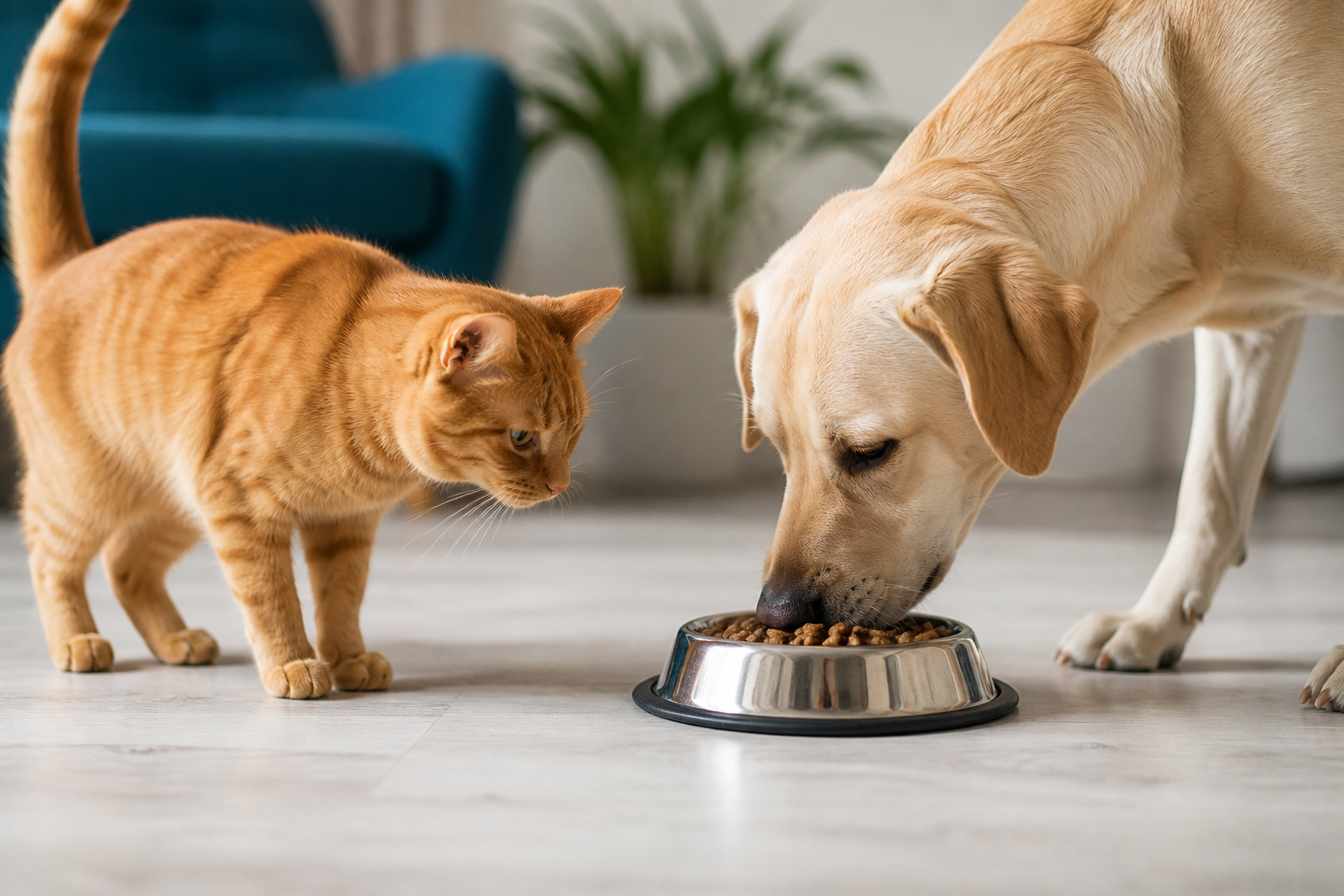
It is late at night and you realize the cat food bin is completely empty. You look at the large bag of dry dog food sitting in the pantry and wonder if a scoop of kibble will hurt your cat for just one night. Or perhaps you have a feline thief who constantly sneaks snacks from the dog's bowl during the day. At BaxterBoo, we hear these questions often from pet parents managing multi-pet households, and our cat food category is a good place to restock before an emergency hits. While a few stolen bites of dog food are generally not cause for a panicked trip to the emergency room, using dog kibble as a meal replacement is a different story. Cats and dogs have vastly different biological requirements that dictate what they must eat to stay healthy. This guide covers why dry dog food is not a suitable substitute for feline nutrition and how to handle emergency feeding situations.
The Biological Divide: Obligate Carnivores vs. Omnivores
To understand why cats cannot live on dog food, you have to look at their biology. Cats are obligate carnivores. This means their bodies are physically designed to process animal tissue as their primary source of energy and nutrients. They have a high demand for protein and specific amino acids that are only found in significant quantities in meat. Their digestive tracts are relatively short because meat is easy to break down compared to fibrous plant material.
Dogs are classified as omnivores. While they love meat, their bodies are capable of digesting and thriving on a mix of animal and plant based ingredients. Because of this, dog food often contains higher levels of grains, vegetables, and plant proteins. These ingredients are not toxic to cats, but they do not provide the concentrated nutrition a feline requires. A cat trying to live on an omnivore's diet will quickly run into health complications because their system is not built to extract everything they need from plant heavy formulas.
Quick Answer: Cats can safely eat a small amount of dog food in a one-time emergency, but it cannot be their primary diet. Dog food lacks essential nutrients like taurine and arachidonic acid that cats need for heart, eye, and skin health.
Key Nutritional Deficiencies in Dog Food
Pet food manufacturers follow guidelines set by the Association of American Feed Control Officials (AAFCO). These standards ensure that food labeled for a specific species contains everything that animal needs to thrive. The nutrient profile for dogs requires 36 essential nutrients, while the profile for cats requires 42. When a cat eats dry dog food, they miss out on several critical components.
Taurine
Taurine is an amino acid that is non-negotiable for cats. Dogs can actually synthesize their own taurine, so most dog foods do not include it as a separate supplement. Cats cannot make their own taurine. They must get it directly from their food. Without it, a cat can develop Dilated Cardiomyopathy (DCM), a serious condition where the heart walls thin and the heart weakens. Taurine deficiency also leads to irreversible retinal degeneration, eventually causing blindness.
Vitamin A
Dogs can convert beta-carotene (found in plants like carrots) into Vitamin A. Cats lack the enzyme necessary to make this conversion. They require preformed Vitamin A, which is typically found in animal livers or added as a specific supplement in cat food. Vitamin A is essential for a cat's immune system, skin health, and night vision.
Arachidonic Acid
This is an essential fatty acid that cats must ingest. Dogs can produce it within their own bodies, so dog food rarely contains supplemental amounts. For a cat, arachidonic acid is necessary for triggering inflammatory responses, regulating skin growth, and supporting the reproductive and gastrointestinal systems.
Protein Density
Cats require a much higher percentage of protein in their daily calories than dogs. Most adult maintenance dog foods aim for a minimum of 18 to 22 percent protein. In contrast, cat foods are usually formulated with 26 to 30 percent protein or higher. Feeding a cat a diet low in protein leads to muscle wasting and a weakened immune system over time.
The Impact of Dry Kibble Size and Calorie Count
Beyond the chemical makeup of the food, the physical properties of dry dog food can be an issue. Dog kibble is often much larger than cat kibble. While a large cat might be able to crunch through it, smaller cats or those with dental issues may struggle to chew dog food properly. This can lead to choking hazards or the cat swallowing large chunks that cause digestive upset.
Calorie density is another factor. Cat food is typically more calorie dense because cats have higher metabolic needs for their size. If a cat eats dog food, they have to consume a much larger volume to meet their caloric requirements. This can lead to stomach distension and discomfort. Conversely, if a cat eats too little of the dog food, they will experience rapid weight loss and lethargy. If you are comparing everyday meal options, our dog food category can help you see how canine formulas differ from feline ones.
Key Takeaway: Dog food is formulated for an omnivore's metabolism, while cats require a meat-dense, high-protein diet. Feeding dog food long-term leads to severe deficiencies in taurine, Vitamin A, and essential fatty acids.
Short-Term vs. Long-Term Effects
If your cat steals a few pieces of kibble from the dog's bowl today, you likely do not need to worry. Short-term consumption usually results in nothing more than a bit of curiosity. However, some cats have sensitive stomachs. If they ingest a significant amount of a foreign food, you might notice:
- Mild vomiting
- Diarrhea or loose stools
- Decreased appetite for their own food
- Occasional constipation
The real danger lies in long-term feeding. If a cat eats dog food for several weeks or months, the lack of specific nutrients begins to take a toll. You may notice their coat becoming dull and brittle. They may lose weight or seem less active. By the time clinical signs like vision loss or heart murmurs appear, the damage may be advanced.
Vet Tip: If you notice your cat is consistently preferring dog food over their own, schedule a veterinary checkup. Sudden changes in food preference or a drive to eat non-feline food can sometimes signal an underlying metabolic issue or nutritional deficiency that needs professional diagnosis.
Emergency Alternatives to Dog Food
If you find yourself without cat food and cannot get to a store, there are better options in your kitchen than reaching for the dog's dry food. Many "human foods" are safe for cats in small amounts and provide the protein they need to get through a day. When you are stocking up on feline-friendly options, our cat treats category can also help you keep approved snacks on hand.
- Cooked Chicken or Turkey: Plain, boiled meat with no skin, bones, or seasoning (no onions or garlic) is an excellent temporary meal.
- Canned Fish: Water-packed tuna or salmon is acceptable as a one-time substitute. Avoid fish packed in oil or flavored broth.
- Scrambled Eggs: Cooked eggs are highly digestible and packed with protein. Ensure they are plain and fully cooked.
- Plain Yogurt or Cheese: In very small amounts, these can provide some protein and calories, though many cats are lactose intolerant, so use caution.
Foods to Avoid
When looking for a temporary fix, never give your cat foods that contain onions, garlic, chives, grapes, raisins, or chocolate. These are toxic to cats and can cause serious illness even in small quantities. If you are unsure about an ingredient, it is better to stick to plain, cooked chicken or a very small portion of dog food if it is truly the only option.
Managing a Multi-Pet Household
Many owners struggle with "bowl jumping," where the cat finds the dog's food more enticing than their own. This is often due to the novelty of the smell or texture. To keep your cat out of the dog's bowl, consider these practical strategies:
- Scheduled Feedings: Stop free-feeding your pets. Put the food down for 15 to 20 minutes, then pick up whatever is left. This prevents the cat from grazing on the dog's leftovers.
- Separate Rooms: Feed your dog and cat in different rooms with the door closed. This ensures each pet can eat in peace without the temptation to swap bowls.
- Elevated Surfaces: Cats are natural climbers. Feed your cat on a counter, sturdy cat tree, or a high shelf where the dog cannot reach. This keeps the cat's food safe and allows you to watch the cat while they eat.
- Microchip Feeders: If you have a particularly persistent thief, microchip-activated feeders only open for a specific pet. These are highly effective for managing different diets.
Bottom line: Controlled mealtimes are the most effective way to ensure your cat receives feline-specific nutrition while keeping them away from the dog's kibble.
Transitioning and Health Management
If your cat has been sneaking dog food for a long period, they may need more than just a diet change. Chronic malnutrition can require medical intervention to correct. We recommend consulting your veterinarian if your cat has been eating a significant amount of dog food for more than a week.
Our pet pharmacy information explains how prescription pet foods and medications are handled through BaxterBoo. If your vet discovers a taurine deficiency or an underlying heart condition caused by poor diet, they may prescribe a therapeutic diet or specific supplements to help your cat recover. These specialized foods are designed to provide concentrated nutrients that standard over-the-counter kibble cannot match.
For cats that are simply picky eaters, you might need to try different textures or brands. We carry over 500 trusted brands, including high-protein options like our selection of Stella & Chewy's products, our selection of Open Farm products, and our selection of Ziwi Peak products. Often, transitioning to a more flavorful, meat-rich cat food will stop the cat from wandering over to the dog's bowl.
Signs Your Cat Needs a Diet Change
- Excessive shedding or a "dusty" looking coat
- Red, inflamed gums
- Difficulty seeing in low light
- Lethargy or sleeping more than usual
- Frequent digestive upset
Using Rewards and Programs
Managing pet health can be expensive, especially when you have both dogs and cats. We offer several programs to make keeping your pets healthy more affordable. Our MVP Rewards programme allows you to earn up to 5% back on every purchase, which can be used toward premium cat food or health supplies.
If you find yourself frequently running out of food, our Autoship programme is a great solution. You can set a recurring delivery schedule so that a new bag of cat food arrives before the old one is empty. This prevents those late-night "emergency" situations where you might be tempted to reach for the dog's food. Plus, Autoship customers receive a free MVP Gold membership for additional savings.
When to Call the Vet
If your cat accidentally consumes a large amount of dog food and begins to show signs of distress, it is time to call a professional. While dog food is not "toxic" in the way chocolate is, a sudden massive intake of high-fat dog kibble can trigger pancreatitis in some cats. This is an inflammation of the pancreas that causes severe pain, vomiting, and dehydration.
Watch for these red flags:
- Repeated vomiting that does not stop after an hour
- Extreme lethargy or inability to stand
- A painful or swollen abdomen
- Refusal to drink water
A veterinarian can provide fluids and supportive care to help the cat's system process the foreign food. If your cat has been eating dog food long-term, your vet may want to run blood work to check organ function and nutrient levels. This is the best way to ensure no lasting damage has been done to the heart or eyes.
Conclusion
While cats and dogs can be the best of friends, their dinner bowls should remain separate. Dry dog food lacks the essential amino acids, vitamins, and protein levels that a cat needs to maintain their heart, vision, and immune system. A single meal won't cause lasting harm, but long-term feeding can lead to serious health crises. By implementing scheduled feedings and choosing high-quality feline diets, you can keep your cat healthy and satisfied. If you find yourself in a pinch, reach for plain cooked chicken rather than the dog's kibble. For those managing ongoing health needs or looking for prescription diets, our cat food category is here to support your pet's wellness journey.
FAQ
Is dog food toxic to cats?
No, dog food is not toxic to cats in the way that foods like onions or chocolate are. If a cat eats a few bites of dog kibble, they will likely be fine. The danger is not in the ingredients themselves but in the lack of specific nutrients that cats need to survive, which can lead to serious illness over time.
What should I do if my cat eats dog food?
If it was just a small amount, simply monitor your cat for any signs of an upset stomach like mild vomiting or diarrhea. Make sure they have plenty of fresh water and return to feeding them their regular cat food at the next mealtime. If they ate a very large amount or seem to be in pain, consult your veterinarian.
Why does my cat prefer the dog's food over their own?
Cats are often attracted to the smell of dog food because it is different from what they eat every day. It is often the novelty rather than the nutritional content that draws them in. Additionally, some dog foods are coated in fats to make them more palatable, which can be very enticing to a curious cat.
Can cats eat dog treats instead of cat treats?
While a dog treat won't poison a cat, it is not ideal. Dog treats are often too large for a cat's mouth and can be a choking hazard. They also lack the taurine and protein density found in treats specifically formulated for felines. It is always better to provide treats made for cats to ensure they are getting appropriate nutrition.






