
 Save 15% on your 1st Autoship learn more

 Email us
 Live Chat
 FAQs
FAQs





Introduction
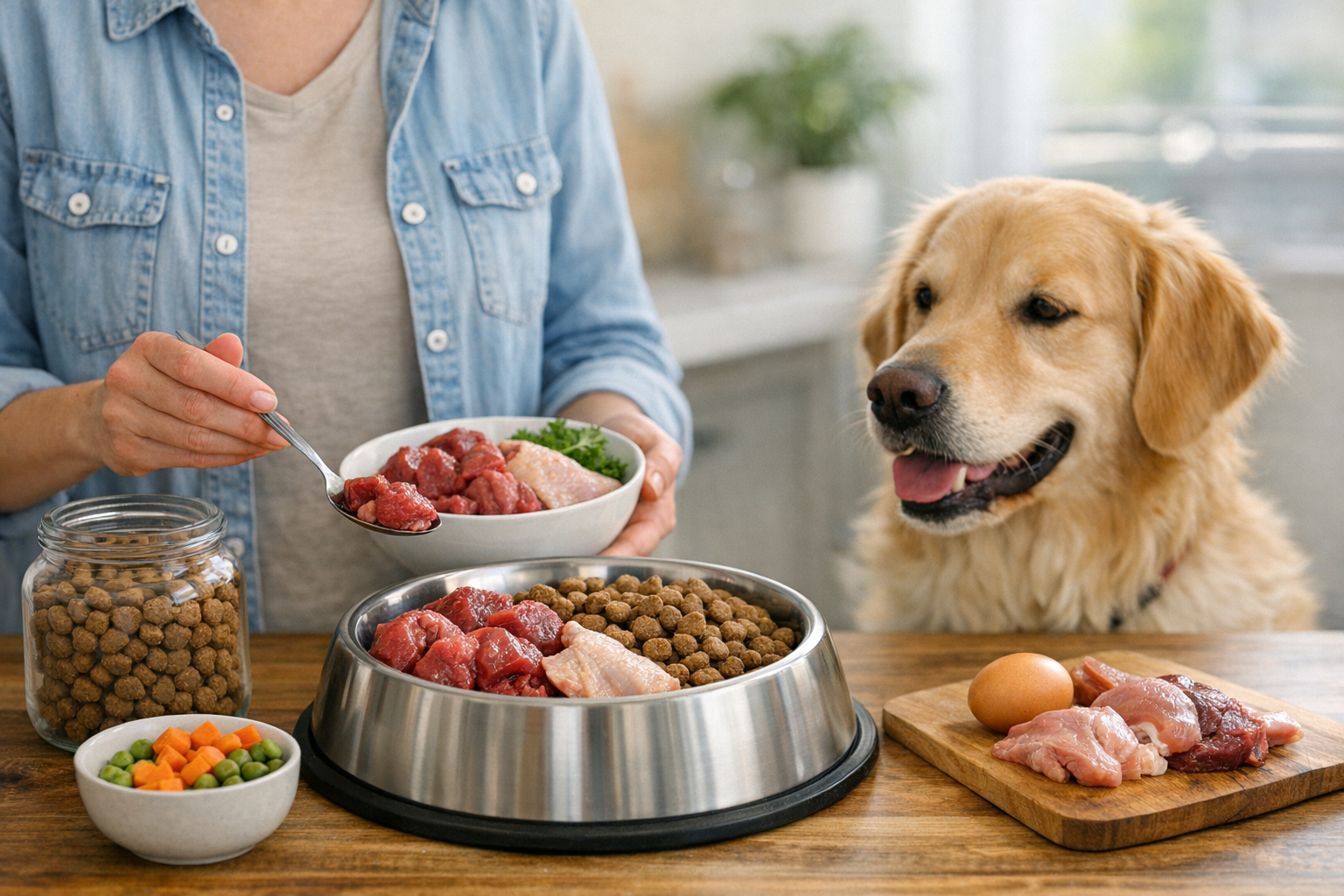
You are standing in the kitchen, holding a bag of premium kibble in one hand and a container of fresh raw beef in the other. You want to give your dog the nutritional boost of raw food, but a 100 percent raw diet might not fit your monthly budget or your busy morning schedule. You wonder if combining the two will cause a digestive disaster or if it is the perfect compromise for your pet. At BaxterBoo, we hear this question from concerned pet parents all the time. Many people want to improve their dog's bowl without making a total lifestyle change. This article covers the safety, benefits, and practical steps for mixing raw and dry dog food. We will explain how to balance ratios and keep your dog's gut healthy during the process. Mixing these two food types is a great way to offer high-quality nutrition while staying within your means.
Is It Safe to Mix Raw and Dry Dog Food?
The short answer is yes. Most healthy dogs can handle a combination of raw and dry food without any issues. Dogs have evolved as scavengers with highly resilient digestive systems. In the wild, a canine might eat a piece of fresh prey, some dried carrion, and even a few wild berries all in the same day. Their bodies are designed to process a variety of textures and nutrient profiles.
There is a common myth that you should never mix these foods because they digest at different rates. Some people worry that the kibble will slow down the raw food, causing it to sit in the gut and ferment. While it is true that carbohydrates and proteins move through the system differently, a healthy dog's body is more than capable of managing the load. The stomach produces different enzymes and acids based on what is eaten. Your dog's "metabolic machinery" is incredibly efficient.
Quick Answer: Yes, you can safely mix raw and dry dog food. Most dogs thrive on the variety, and it is an excellent way to introduce fresh nutrients without the high cost of a fully raw diet.
If your dog has a very sensitive stomach or a history of chronic digestive issues, you should proceed with more caution. Every dog is an individual. What works for a neighbor's Labrador might not work for your senior Chihuahua. If you notice persistent gas, loose stools, or lethargy, it is time to slow down or consult your veterinarian.
The Benefits of a Mixed Diet
Why even bother mixing the two? For most owners, it comes down to three main factors: nutrition, cost, and convenience.
Nutritional Boost
Even a small amount of raw food provides live enzymes, natural vitamins, and high-quality moisture that kibble lacks. Dry food is cooked at high temperatures, which can sometimes degrade certain nutrients. By adding a raw topper or a small portion of frozen raw food, you are introducing "living" nutrients back into the bowl. This can lead to a shinier coat, better skin health, and more energy.
Financial Flexibility
Raw food is significantly more expensive than even the highest-quality kibble. Feeding a large breed dog a 100 percent raw diet can cost hundreds of dollars a month. By mixing raw with dry, you can stretch your budget. You get the benefits of premium raw proteins like those from our selection of Stella & Chewy's products or our selection of Open Farm products without the staggering price tag of a full-diet replacement.
Practical Convenience
Kibble is easy to store and serve. It is great for when you are traveling, using a pet sitter, or rushing out the door in the morning. Raw food requires thawing, careful handling, and immediate cleanup. A mixed diet allows you to use kibble for convenience while saving the raw portions for when you have more time to prep.
Key Takeaway: Mixing raw and dry food offers a "best of both worlds" approach. It provides a nutrient boost and saves money while keeping mealtime manageable for the owner.
Understanding Digestion and Gut pH
One of the loudest arguments against mixing raw and dry food involves stomach acidity. Proponents of a raw-only diet often claim that the starch in kibble raises the pH of a dog's stomach. They argue that a less acidic environment makes it harder for dogs to digest raw meat and bone.
While starch can influence the environment of the gut, the canine body is not static. A dog's stomach pH fluctuates naturally based on what they just ate. When meat enters the stomach, the body signals for an increase in hydrochloric acid. This lowers the pH to a level that breaks down protein and kills potential bacteria.
If you are worried about your dog's gut health, we often suggest adding a high-quality probiotic. Brands like our selection of Zesty Paws products offer supplements that support a healthy microbiome. A strong gut makes the transition between food types much smoother.
Vet Tip: If your dog has a history of GI upset or chronic pancreatitis, talk to your vet before mixing food types. They may recommend a specific prescription diet available through our pharmacy.
How to Start Mixing Food
You should never switch your dog's diet overnight. A sudden change is the most common cause of diarrhea and vomiting. Follow a slow transition to let your dog's digestive enzymes adjust.
The Slow Introduction Method
Start by adding just a tiny amount of raw food as a "topper" to their regular kibble. This should be no more than 10 percent of the total meal. Do this for three or four days. Watch your dog's stool consistency and energy levels.
Step 1: Replace a tablespoon of kibble with a tablespoon of raw food. Do this for three days to monitor for any signs of gas or upset.
Step 2: Increase the raw portion to 25 percent. Reduce the kibble by an equal amount to keep the calorie count consistent.
Step 3: Move to a 50/50 split if that is your goal. Continue this for at least a week before deciding if you want to increase the raw portion further.
The Separate Meal Method
If your dog seems to have a sensitive stomach when the foods are touched together, try the "AM/PM" approach. Feed kibble in the morning and raw food in the evening. This gives the body several hours to process one type of food before dealing with the other. This method is often easier for owners who find raw prep too time-consuming during the morning rush.
Calculating Ratios and Calories
When you mix food, you must be careful not to overfeed. Raw food is often more calorie-dense than kibble. If you simply add raw food on top of a full portion of dry food, your dog will likely gain weight.
The 20 Percent Rule
For pet parents who do not want to worry about complex nutritional balancing, keep the raw portion to 20 percent or less of the total daily intake. Most high-quality kibbles are "complete and balanced." As long as 80 percent of the diet comes from that balanced source, adding up to 20 percent of "extras" like raw meat or eggs will not cause a nutritional deficiency.
Adjusting for Moisture
Dry food has very little water content. Raw food is mostly water. If you are replacing one cup of dry food, you will likely need to add about two cups of raw food to provide the same volume. However, always check the caloric density on the packaging.
- Measure by calories, not just by volume.
- Use a kitchen scale for the most accurate portions.
- Account for treats and dental chews in your daily total.
- Reduce kibble by 25 percent if you add a 25 percent raw portion.
Safe Handling of Raw Food
Safety is the biggest concern when dealing with raw meat. While dogs are well-equipped to handle the bacteria found in raw food, humans are not. You must treat your dog's raw food with the same care you use when preparing a chicken dinner for your family.
- Wash your hands. Always scrub with warm, soapy water after touching raw food or your dog's bowl.
- Sanitize surfaces. Use a pet-safe disinfectant on countertops and floors where food may have splashed.
- Clean the bowl. Do not let raw residue sit in the bowl all day. Wash it immediately after the dog finishes eating. Stainless steel or ceramic bowls are best because they do not have the microscopic pores found in plastic.
- Thaw properly. Never leave frozen raw food on the counter to thaw. Keep it in the refrigerator in a sealed container to prevent cross-contamination.
Key Takeaway: Proper hygiene is non-negotiable when mixing raw food. Protect your family by treating raw pet food like any other raw meat in your kitchen.
Choosing the Right Mix
Not all kibbles and raw foods are created equal. To get the best results, you want to pair high-quality ingredients together.
Selecting a Kibble
Look for a dry food that is low in fillers like corn, wheat, and soy. Brands like NutriSource or Farmina offer excellent nutrient profiles that complement a raw diet. A kibble with a high meat-to-protein ratio will be easier for a dog to digest alongside raw meat than a food filled with cheap starches.
Selecting a Raw Food
You can use frozen raw patties, raw nuggets, or even freeze-dried raw food. Freeze-dried options are incredibly popular at BaxterBoo because they offer the nutrition of raw food with the convenience of a shelf-stable product. You can crumble freeze-dried nuggets over kibble like a seasoning.
- Frozen Raw: Provides the most moisture and "living" nutrients.
- Freeze-Dried Raw: Easiest to store and great for travel.
- Fresh Additions: You can also add safe "human" foods like raw eggs, sardines canned in water, or plain blueberries.
Common Signs of Digestive Upset
Even with a slow transition, some dogs might experience minor changes. It is important to know the difference between a normal adjustment and a problem that requires a vet.
A small amount of gas or a slightly softer stool is common during the first week. This is often just the gut microbiome shifting. However, if you see the following signs, stop the new diet and call your veterinarian:
- Projectile vomiting or repeated retching.
- Liquid diarrhea that lasts more than 24 hours.
- Blood in the stool.
- Loss of appetite for more than one day.
- Signs of abdominal pain, such as the "prayer stretch" position.
If your dog needs support for chronic stomach issues, our pharmacy can help. We offer prescription medications for nausea, acid reflux, and inflammatory bowel conditions. Many of these require a prescription from your vet, which we can fill and ship right to your door.
Transitioning During Different Life Stages
Your dog's age plays a role in how they handle a mixed diet.
Puppies
Puppies have very specific needs for calcium and phosphorus to ensure their bones grow correctly. If you mix food for a puppy, it is best to use a "complete and balanced" raw food designed specifically for growth. Do not just add random pieces of raw meat to a puppy's bowl, as this can throw off their mineral balance.
Seniors
Senior dogs often have slower metabolisms and more sensitive digestive tracts. They can benefit greatly from the high-quality protein in raw food, which helps maintain muscle mass. However, you should move even slower with the transition. A senior dog's body takes longer to adapt to change.
Working Dogs
High-energy working dogs or athletes often thrive on a mixed diet. The raw fats and proteins provide excellent fuel for long days of hiking, hunting, or agility training. The kibble provides the necessary carbohydrates for quick energy.
Practical Tips for Multi-Dog Households
Feeding a mixed diet in a house with multiple dogs requires a plan. If one dog is a slow eater and the other is a "vacuum," you must supervise mealtime. Raw food should not sit out for more than 20 to 30 minutes.
If your dogs are on different diets, keep their bowls separated. One dog might handle a 50/50 mix perfectly, while another might need to stay on 100 percent kibble. Using different colored bowls can help you keep track of who gets what.
- Feed in separate rooms if there is food aggression.
- Set a timer and pick up any uneaten raw food after 20 minutes.
- Discard any raw food that has been left at room temperature for too long.
- Keep a log of how each dog reacts to the new mix.
The Role of Supplements in a Mixed Diet
When you mix raw and dry food, you might wonder if you still need supplements. Usually, the answer depends on the quality of the food and the specific needs of your dog.
Joint support is a common need for aging dogs. Adding a supplement like Cosequin can help. If you are adding a lot of raw meat, you might want to add a source of fiber or prebiotics to help with digestion. Pumpkin puree is a favorite at BaxterBoo for helping firm up stools during a food transition.
If your vet recommends a specific supplement for a medical condition, check our pharmacy section. We carry a wide range of medical and mobility aids that can be integrated into your dog's daily routine alongside their new diet.
Managing Weight on a Mixed Diet
One of the biggest risks of mixing food is accidental weight gain. Because you are often adding "the good stuff," it is easy to be too generous with portions.
Obesity in dogs can lead to joint pain, heart issues, and a shorter lifespan. Use a measuring cup every single time. If your dog starts looking a bit rounder, reduce the kibble portion first. Most dogs feel more satisfied by the protein in raw food than the starch in kibble.
Bottom line: A mixed diet is only healthy if your dog maintains a lean body condition. Monitor their weight every two weeks during the transition.
Why Quality Matters Most
The "mix" is only as good as its parts. If you are mixing a low-quality, high-filler kibble with raw meat, you may still see digestive issues. The goal is to create a synergy between the two foods.
We recommend looking for kibbles that use named meat meals and whole food ingredients. Avoid anything with "animal by-product" or "artificial colors." When choosing a raw food, look for brands that follow AAFCO standards for a complete and balanced diet. This ensures your dog is getting the right vitamins and minerals even if they are only eating a small amount of the raw product.
At BaxterBoo, we have been operating since 2006. We have seen many food trends come and go. The move toward "fresh" and "raw" is one of the most beneficial shifts we have seen in pet care. It represents a move back to real, recognizable ingredients.
Conclusion
Mixing raw and dry dog food is a practical, effective way to improve your pet's health without a total lifestyle overhaul. It allows you to provide high-quality fresh nutrients while keeping costs down and maintaining the convenience of kibble. Remember to transition slowly, keep the raw portion to about 20 percent for easy balancing, and maintain strict hygiene to keep your family safe. Every dog is different, so watch your pet's cues and adjust the ratio as needed. If your dog has specific health needs or requires a prescription diet, our pharmacy is here to help.
- Start with a 10 percent raw topper to test sensitivity.
- Always reduce kibble calories to account for the raw additions.
- Maintain a clean kitchen environment to prevent bacterial spread.
- Consult your vet for any persistent digestive changes.
Key Takeaway: You do not have to choose between convenience and nutrition. A mixed diet provides the benefits of raw food in a way that fits your budget and schedule.
If you are ready to start, browse our dog food collection and our freeze-dried food collection. You can save on every order by signing up for our Autoship programme, and you can earn rewards with the MVP Rewards programme.
FAQ
Can mixing raw and kibble cause my dog's stomach to flip?
No, mixing these foods does not cause Gastric Dilatation-Volvulus (GDV or bloat). Bloat is a complex condition often linked to eating too fast, exercise after meals, or genetics. While some claim the different digestion speeds cause issues, there is no scientific evidence that mixing raw and dry food increases the risk of bloat in healthy dogs.
Do I need to add water to the kibble when I add raw food?
Adding water or bone broth to kibble is a great idea when mixing with raw food. It helps the two textures blend more easily and provides much-needed hydration. Moisture also helps the digestive enzymes work more effectively. Our pharmacy carries specialized bone broths that are safe for dogs and free from toxic ingredients like onions or excessive salt.
What is the best ratio for mixing raw and dry food?
The best ratio depends on your budget and your dog's tolerance. Many pet parents find success with an 80/20 split, where 80 percent is kibble and 20 percent is raw. This provides a significant nutritional boost without requiring you to manually balance the vitamins and minerals in the raw portion. If your budget allows, a 50/50 split is also a popular and healthy option.
Can I mix raw food with grain-free kibble?
Yes, you can mix raw food with both grain-inclusive and grain-free kibbles. The most important factor is the quality of the ingredients rather than the presence of grains. However, if your dog is on a grain-free diet due to a specific allergy, ensure the raw food you choose also avoids those specific triggers. If you are managing severe allergies, our pharmacy carries several prescription-grade hypoallergenic diets.






