
 Save 15% on your 1st Autoship learn more

 Email us
 Live Chat
 FAQs
FAQs





Introduction
You stand in the kitchen with a bag of crunchy kibble in one hand and a savory can of pate in the other. Your dog is watching every move with an expectant wag. Maybe you want to make their dinner more exciting, or perhaps you are looking for a way to help them stay hydrated during a hot Illinois summer. At BaxterBoo, we hear this question from pet parents every day, and our dog food category makes it easy to compare wet and dry options. Mixing wet and dry dog food is a popular way to combine the convenience of kibble with the high moisture and intense aroma of canned food. This post covers the safety, nutritional balance, and practical steps for successful mixed feeding. You will learn how to calculate portions and choose the right combinations to keep your dog healthy and satisfied.
Quick Answer: Yes, you can safely mix wet and dry dog food as long as both products are labeled as complete and balanced. This feeding method provides a variety of textures and boosts hydration while remaining more cost-effective than an all-wet diet.
The Basics of Mixed Feeding
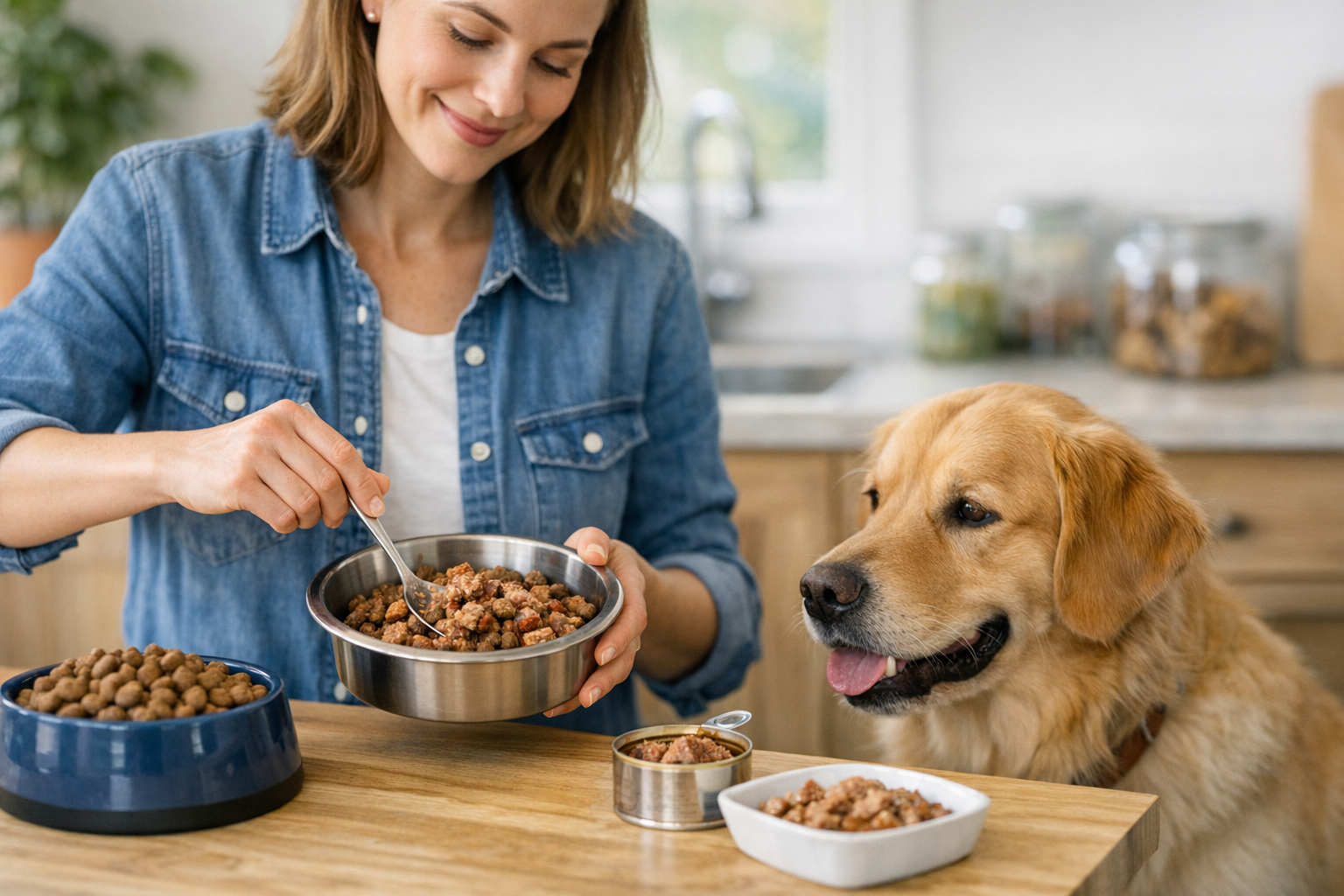
Mixed feeding is exactly what it sounds like. It is the practice of combining dry kibble with wet canned food in the same meal or at different times of the day. Many owners find this to be the perfect middle ground for their pets. It allows you to offer the dental benefits of crunchy food alongside the high protein and moisture levels found in wet options.
For most dogs, this variety makes mealtime the highlight of their day. The rich scent of wet food can encourage even the pickiest eaters to finish their bowl. It is also an excellent strategy for senior dogs who might have a harder time chewing hard kibble but still need the nutrition provided by high-quality dry food.
When you start this journey, the most important factor is consistency. You should not simply toss a random amount of wet food on top of a full serving of kibble. This can lead to overfeeding and weight gain. Instead, mixed feeding requires a little bit of planning to ensure your dog gets exactly what they need.
The Benefits of a Combined Diet
Combining these two types of food offers a range of advantages that a single-source diet might miss. Each format has strengths that complement the other.
Improved Hydration
Wet food typically contains between 70 and 80 percent water. Many dogs do not drink enough fresh water from their bowls to stay perfectly hydrated. This is especially true for dogs with certain health needs or those living in warmer climates. By adding wet food to the mix, you are naturally increasing their fluid intake. This supports kidney function and helps keep the urinary tract healthy.
Dental Health Support
Dry kibble is often praised for its mechanical scraping action. As a dog chews the hard pieces, the friction helps reduce the buildup of plaque and tartar. This is not a replacement for regular teeth brushing, but it is a helpful daily boost for oral hygiene. When you mix the two, your dog still gets that crunch while enjoying the softer textures they crave.
Better Palatability
As dogs age, their sense of smell can begin to fade. Since smell is a huge part of how dogs experience taste, they may lose interest in plain dry food. Wet food is much more aromatic. Heating it slightly before mixing it with kibble releases even more scent, which can jumpstart a lagging appetite.
| Feature | Dry Food | Wet Food | Mixed Feeding |
|---|---|---|---|
| Moisture Content | Low (approx. 10%) | High (approx. 75%+) | Moderate to High |
| Shelf Life | Long (once opened) | Short (24-48 hours) | Variable |
| Cost | Budget-friendly | Higher per serving | Mid-range |
| Palatability | Moderate | High | Very High |
| Dental Benefit | Mechanical scraping | Minimal | Some benefit |
Key Takeaway: Mixed feeding combines the hydration and aroma of wet food with the dental benefits and cost-savings of dry kibble.
How to Portion Mixed Meals Correctly
One of the biggest mistakes we see is the "topper trap." This happens when an owner adds wet food as a treat without reducing the amount of dry food. Over time, those extra calories add up to an overweight pet. To do this right, you need to look at the calorie count on both labels.
Most premium brands, like those we carry at BaxterBoo, list the calories per cup for dry food and per can for wet food. A common starting point is the 75/25 split. This means you feed 75 percent of the recommended daily amount of dry food and 25 percent of the wet food.
If your dog is currently eating two cups of kibble a day and you want to add wet food, you might drop to one and a half cups of kibble. Then, you would add the caloric equivalent of that half cup in wet food. This keeps the total energy intake the same while changing the experience of the meal.
Vet Tip: Always consult your veterinarian before making significant changes to your dog’s diet, especially if they have underlying health conditions like diabetes, kidney disease, or obesity. A vet can help you calculate the exact caloric needs for your dog's ideal weight.
Choosing the Right Foods to Mix
Not all pet foods are created equal. When selecting products to mix, you must ensure they are both high-quality and appropriate for your dog's specific needs.
Check for AAFCO Statements
Look for the Association of American Feed Control Officials (AAFCO) statement on every bag and can. It should say the food is "complete and balanced" for your dog's life stage. If a product is labeled as a "topper" or "supplemental," it does not have all the vitamins and minerals your dog needs. You can mix a topper with a complete dry food, but the topper should never make up the bulk of the diet. If you want to explore those add-ons, our food topper selection is a helpful place to start.
Match the Life Stage
Puppies have very different nutritional requirements than senior dogs. They need more protein and specific fats for brain development. If you are feeding a puppy, ensure both the wet and dry foods are formulated for growth. For seniors, look for combinations that include joint support ingredients like glucosamine or chondroitin. Brands like Stella & Chewy's or Open Farm offer excellent options for various life stages that work well together.
Consider Specialized Diets
If your dog has allergies or a sensitive stomach, mixing foods requires more care. You should stick to the same protein source for both. For example, if you feed a limited ingredient lamb kibble, pair it with a lamb-based wet food. This prevents a flare-up of digestive issues or skin irritations.
Our dog pharmacy offers prescription diets for dogs who need a more specialized feeding plan. If your vet has prescribed a specific diet for a condition like urinary stones or food sensitivities, we carry brands like Royal Canin and Farmina Vet Life. Many of these prescription lines offer both wet and dry versions that are designed to be used together for maximum therapeutic benefit.
Step-by-Step: How to Transition to Mixed Feeding
You should never switch your dog's diet overnight. Even if you are just adding a little wet food to their usual kibble, a sudden change can cause an upset stomach. Follow these steps for a smooth transition.
Step 1: Choose your combination. / Select a wet and dry food that share similar protein sources to keep digestion stable.
Step 2: Start small. / On the first day, add just a tablespoon of wet food to the bowl and reduce the kibble by a tiny amount.
Step 3: Monitor the reaction. / Watch for any signs of loose stools or gas over the next 24 hours.
Step 4: Increase the ratio. / Over the course of 7 to 10 days, slowly increase the amount of wet food while decreasing the kibble until you reach your desired balance.
Step 5: Maintain the routine. / Once you find a mix that works, try to keep the proportions consistent to prevent digestive upset.
Bottom line: A slow transition over 10 days helps your dog's digestive system adjust to the new moisture levels and ingredients.
Storage and Safety Considerations
Safety does not end once the food is in the bowl. Wet food is much more perishable than dry kibble. Once a can is opened, it must be handled correctly to prevent bacteria growth.
Handling Canned Food
If your dog does not finish their mixed meal within 30 to 60 minutes, you should pick up the bowl and discard the leftovers. Wet food left at room temperature can quickly become a breeding ground for bacteria. For the remaining food in the can, cover it with a tight-fitting silicone lid or plastic wrap and store it in the refrigerator. Most canned foods stay fresh for about two to three days after opening.
Dry Food Integrity
Keep your dry food in its original bag. These bags are designed to keep oxygen and light out, which prevents the fats in the food from going rancid. You can place the entire bag inside a plastic bin for extra protection against pests. When mixing, always use a clean scoop to avoid contaminating the bag with moisture from the wet food or your hands.
Managing the Cost of Mixed Feeding
While an all-wet diet can be expensive, mixed feeding is a great way to provide high-quality nutrition on a budget. You can get the benefits of premium wet food without the high daily cost of feeding only cans.
To save more, consider using our Autoship programme. This allows you to set up recurring deliveries of your favorite wet and dry food combinations so you never run out. You will save on your first order and receive a free MVP Gold membership. This membership helps you earn rewards faster on every purchase.
Another way to manage costs is through the MVP Rewards programme. Many of the brands we carry, such as NutriSource and Primal, participate in programs where you can earn free bags or cases after a certain number of purchases. This makes it easier to provide a diverse diet without overspending.
Special Considerations for Senior Dogs
Senior dogs often benefit the most from a mixed diet. As dogs age, they may develop dental issues or a decreased appetite. Soft wet food is easier for them to manage. It also provides the extra hydration that senior kidneys often require.
If your senior dog is on medication for heart health, joints, or cognitive function, mixing wet food can make pill time much easier. You can easily hide a tablet or capsule inside a spoonful of pate. If your senior dog needs specific medications, remember that we provide access to a full pet pharmacy. We carry everything from flea and tick preventives to chronic health medications through Pet's Choice. Having your food and medications delivered in one shipment saves time and ensures you always have what your senior pet needs.
Key Takeaway: Mixed feeding is an ideal solution for senior dogs who need extra hydration, softer textures, and a way to take medications more easily.
Common Myths About Mixing Food
There are several misconceptions about mixing wet and dry food that can confuse pet owners. Let's clear up some of the most common ones.
Myth 1: It causes bloat
There is no scientific evidence that simply mixing wet and dry food causes bloat. Bloat is a complex condition often related to how fast a dog eats, their physical activity after a meal, and their genetic predisposition. In fact, adding some wet food can sometimes slow down a dog who gulps dry kibble too quickly.
Myth 2: It ruins their teeth
While wet food does not provide the same scraping action as kibble, it does not "ruin" teeth on its own. Dental health is primarily driven by genetics, regular brushing, and professional cleanings. As long as you include some dry food or provide dental chews, your dog's teeth can remain healthy on a mixed diet.
Myth 3: You can't mix different brands
You absolutely can mix different brands, provided they are both high-quality and complete. Some owners prefer to use a base kibble from one brand and a high-protein topper or canned food from another. Just be mindful of the calorie counts and ingredient lists to ensure they complement each other.
Myth 4: It makes dogs "spoiled"
Adding wet food does make the meal more appealing, but it does not make a dog spoiled in a negative way. It simply provides better nutrition and enjoyment. If your dog starts refusing plain kibble later, it is usually because they have learned that something better is available. If you choose to mix, it is best to make it a consistent part of the routine.
Conclusion
Mixing wet and dry dog food is a practical and nutritious choice for most healthy dogs. It allows you to provide the hydration and flavor of wet food while maintaining the dental and cost benefits of dry kibble. By carefully calculating portions and transitioning slowly, you can improve your dog's mealtime experience without risking weight gain or digestive upset.
We are proud to be a hybrid retailer, serving pet parents from our warehouse superstore in Vernon Hills, Illinois, and through our extensive online shop. Since 2006, our team has been handpicking the best products for your pets. Whether you are looking for a new high-protein canned food or a specialized prescription diet from our pharmacy, we are here to help.
- Always use "Complete and Balanced" foods.
- Calculate calories to avoid overfeeding.
- Transition over 7 to 10 days.
- Store opened cans in the refrigerator for no more than three days.
Ready to start mixed feeding? Browse our premium wet and dry dog foods and sign up for Autoship today to save on every order.
FAQ
Does mixing wet and dry food cause diarrhea?
If you introduce the wet food too quickly, it can lead to loose stools because of the higher moisture and fat content. To prevent this, start with a very small amount and gradually increase it over a week. This gives your dog's digestive enzymes time to adjust to the new recipe.
Can I mix wet and dry food for a puppy?
Yes, you can mix both for a puppy as long as both the wet and dry foods are specifically formulated for growth or all life stages. Puppies have high energy needs, so ensure you are following the puppy-specific feeding guidelines on the packaging to support their developing bones and muscles.
How long can mixed food sit out in the bowl?
Once wet food is mixed with kibble, it should not sit out for more than an hour at room temperature. Bacteria can grow quickly in the moist environment, which can lead to foodborne illness. If your dog is a "grazer" who eats small amounts throughout the day, mixed feeding may not be the best option unless you offer smaller, more frequent meals.
Is it okay to mix different proteins like chicken and beef?
For most healthy dogs, mixing proteins is perfectly safe and can provide a broader range of amino acids. However, if your dog has a known food allergy or a very sensitive stomach, it is safer to stick to a single protein source. For example, pair a turkey kibble with a turkey canned food to minimize the risk of a reaction.






