
 Save 15% on your 1st Autoship learn more

 Email us
 Live Chat
 FAQs
FAQs





Introduction
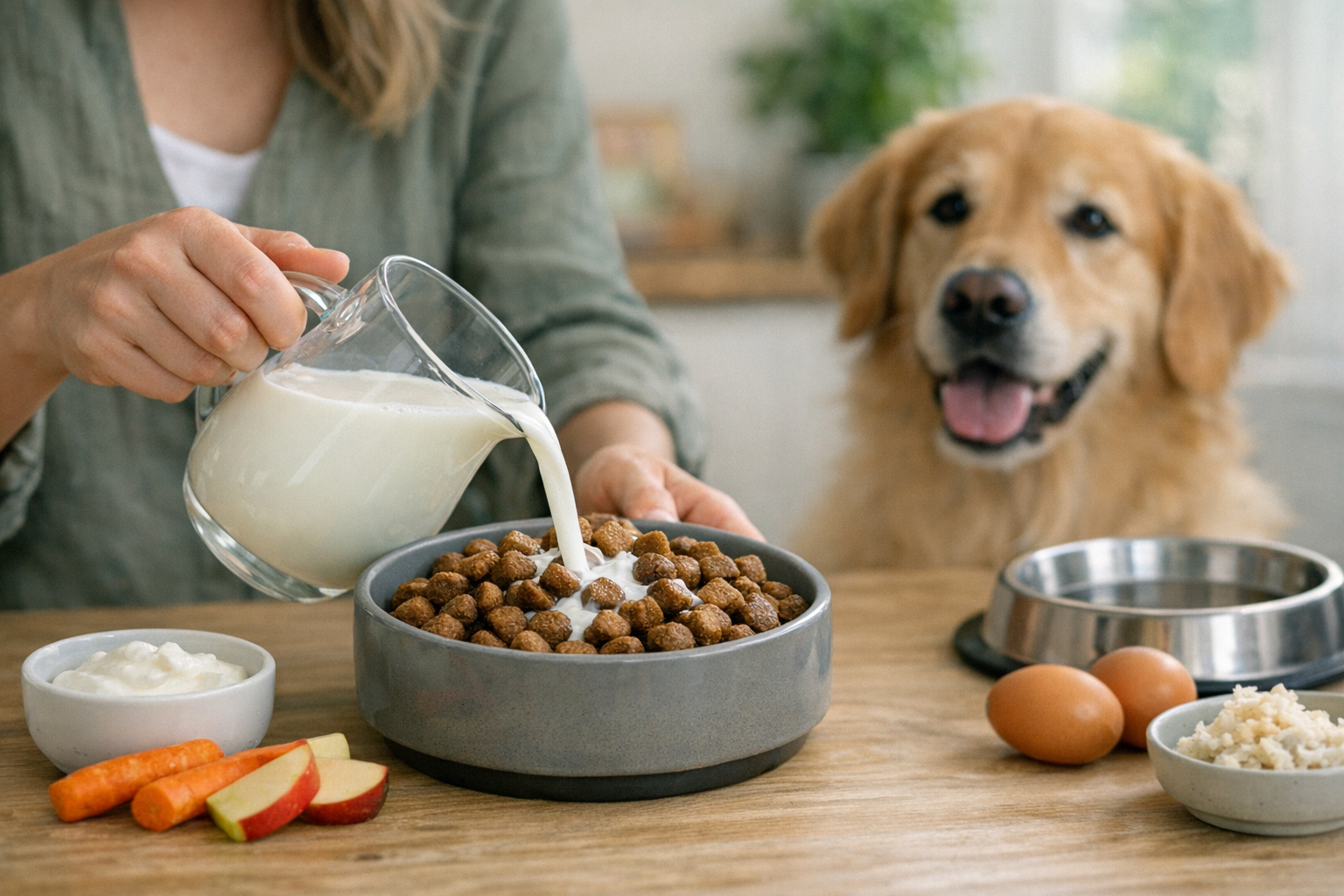
You are standing in the kitchen and your dog is staring at their bowl of dry kibble. You might think about splashing some milk over it to make it more appetizing or to add some extra nutrients. We get this question a lot at BaxterBoo, and while it seems like a simple way to add flavor, there are several things to consider before you pour. This article covers why dogs often struggle with dairy, the potential risks of regular cow's milk, and the best ways to hydrate dry food safely. Adding liquid to kibble can be a great health move, but only if you choose the right ingredients for your dog's unique digestive system.
Quick Answer: While milk is not toxic, it is generally not recommended to put it on dry dog food because most adult dogs are lactose intolerant. Small amounts may be fine for some, but many dogs will experience gas, bloating, or diarrhea after consuming dairy.
The Reality of Dogs and Dairy
Most people grew up seeing images of pets drinking milk from a saucer. While puppies rely on their mother's milk during their first few weeks of life, their bodies change as they grow. Puppies produce a high amount of an enzyme called lactase. This enzyme is specifically designed to break down lactose, which is the sugar found in milk.
As a dog matures and moves onto solid food, their body naturally produces less lactase. By the time they are adults, many dogs have very little of this enzyme left. This leads to lactose intolerance. When a dog drinks milk without enough lactase, the lactose stays in their digestive tract. Bacteria then ferment that sugar, which causes discomfort and digestive upset.
Symptoms of Lactose Intolerance
If you have already added milk to your dog's food, watch for these signs of an upset stomach:
- Loose stools or diarrhea.
- Excessive gas and flatulence.
- Abdominal bloating.
- Vomiting or nausea.
- Abdominal pain or whining after eating.
Vet Tip: If your dog experiences persistent diarrhea or vomiting after consuming dairy, contact your veterinarian. Some dogs have more severe sensitivities that can lead to dehydration or require professional medical care.
Nutritional Risks of Regular Milk
Even if your dog seems to tolerate small amounts of dairy, regular cow's milk is not always the best choice for a daily meal topper. There are three main reasons why we suggest caution.
High Fat Content
Whole milk is high in fat. While dogs need healthy fats in their diet, a sudden influx of dairy fat can be hard on the pancreas. In some cases, high-fat treats can trigger pancreatitis. This is a serious inflammatory condition that requires immediate veterinary attention. For dogs already prone to weight gain, the extra calories in milk can quickly lead to obesity.
Hidden Sugars
Milk contains natural sugars, but some processed dairy products contain added sweeteners. You must be extremely careful to avoid any product containing xylitol. This is a common sugar substitute in human foods that is highly toxic to dogs. Even a small amount of xylitol can cause life-threatening low blood sugar or liver failure.
Protein Allergies
Lactose intolerance is a digestive issue, but some dogs have a true allergy to milk proteins. This is an immune system response rather than a lack of enzymes. A dog with a dairy allergy might experience itchy skin, red ears, or chronic paw licking rather than just an upset stomach.
Key Takeaway: Milk is a source of calcium and protein, but the risk of digestive upset and weight gain usually outweighs the nutritional benefits for the average adult dog.
Why You Should Hydrate Dry Dog Food
Even though regular milk might not be the answer, you are on the right track by thinking about adding moisture to kibble. Dry dog food is designed to be convenient and shelf-stable. Most kibble only contains about 6% to 10% moisture. In the wild, a dog’s natural diet would contain much more water.
Improving Digestion
Water is a critical part of the digestive process. It helps break down food particles so the body can absorb nutrients. When a dog eats dry kibble without enough moisture, their body has to work harder to process it. Adding liquid helps the food move through the digestive tract more efficiently.
Kidney and Urinary Health
Dogs on a strictly dry diet are often in a state of mild, chronic dehydration. They have to drink a significant amount of water to make up for the lack of moisture in their food. By adding liquid directly to the bowl, you ensure they are getting extra hydration. This is especially helpful for preventing urinary tract issues or supporting kidney function in senior dogs.
Helping Senior Dogs
As dogs age, they may develop dental issues or lose some of their sense of smell. Dry kibble can be hard for them to chew, and it might not smell very interesting. Adding a warm liquid softens the pieces and releases the aroma of the food. This makes mealtime much more enjoyable for a senior pet with a fading appetite.
Better Alternatives to Cow's Milk
If you want to give your dog that creamy texture or boost their nutrition, there are safer options than standard milk. We carry a wide variety of meal toppers and supplements that provide the benefits you want without the digestive risks, including choices in our freeze-dried food topper collection.
Goat's Milk: The Liquid Gold
Goat's milk is often much easier for dogs to digest than cow's milk. The fat globules in goat's milk are smaller, which allows the body to process them more quickly. It also contains lower levels of lactose. Many brands, such as The Honest Kitchen, offer dehydrated goat's milk that you can easily mix with water and pour over kibble. It is packed with probiotics that support gut health.
Bone Broth
Bone broth is one of the best things you can add to a dog's diet. It is made by simmering bones and connective tissue for a long time. This process releases collagen, glucosamine, and glycine. These nutrients are fantastic for supporting joint health and a healthy gut lining.
When choosing a bone broth, make sure it is specifically formulated for pets. Many human-grade broths contain onions, garlic, or excessive sodium, all of which are harmful to dogs. We offer pet-safe bone broths from trusted brands like Open Farm and Stella & Chewy's.
Plain Yogurt or Kefir
If your dog really loves dairy, plain Greek yogurt or kefir can be a better choice than liquid milk. The fermentation process used to make these products breaks down much of the lactose. These also contain live active cultures. These probiotics can help balance the bacteria in your dog's digestive system. Just make sure the yogurt is completely plain and free of any sweeteners or fruit fillings.
Simple Warm Water
You do not always need a fancy supplement to improve your dog's meal. Simple warm water is often enough to make kibble more appealing. It creates a "gravy" with the natural coatings on the kibble and makes the food easier to eat.
| Liquid Type | Primary Benefit | Safety Level |
|---|---|---|
| Cow's Milk | Calcium/Protein | Low (High Lactose) |
| Goat's Milk | Probiotics/Easy Digestion | High |
| Bone Broth | Joint Support/Hydration | Very High |
| Plain Yogurt | Gut Health Probiotics | Medium |
| Warm Water | Hydration/Softens Food | Very High |
Bottom line: Goat's milk and bone broth offer the moisture and flavor of milk with significantly more nutritional value and fewer digestive risks.
Managing Picky Eaters and Transitions
If you are using milk because your dog refuses to eat their kibble, it might be time to look at their overall diet. Sometimes, a dog is picky because their current food does not provide enough variety or aroma.
Transitioning to New Liquids
When you decide to swap milk for a better option like bone broth, do it slowly. Even healthy changes can cause a temporary stomach upset if done too fast. Start by adding just a tablespoon of the new liquid to their meal. If their stools remain firm over the next 48 hours, you can gradually increase the amount.
Using Toppers
Many pet owners find success using freeze-dried raw toppers. Brands like Stella & Chewy's or Vital Essentials offer morsels that can be rehydrated with water. This gives the dog a boost of raw nutrition and a variety of textures that make dry food much more interesting.
Seeking Professional Guidance
If your dog is consistently refusing food or showing signs of chronic digestive issues, a veterinary visit is essential. Our dog healthcare category offers supportive options for dogs with sensitive stomachs and other wellness needs, and our pharmacy partnership with Pet's Choice is here to help. We provide a convenient way to get FDA-approved medications and prescription foods delivered right to your door.
Common Myths About Dry Food and Milk
There are several misconceptions that often lead owners to add milk to their dog's bowl. Let's clear up some of the most common ones.
Myth: Dry Kibble Cleans Teeth
Some owners worry that adding liquid will make the food soft and prevent it from cleaning the dog's teeth. The truth is that most standard kibble does little to nothing for dental health. It usually crumbles immediately upon contact with the tooth. Adding liquid does not make their dental health worse. For real dental care, you should rely on regular brushing and specific dental chews.
Myth: Milk is Necessary for Strong Bones
While calcium is vital for bone health, your dog should be getting all the calcium they need from a balanced, high-quality dog food. Adding extra calcium through milk can actually be harmful, especially for large breed puppies. Too much calcium can lead to orthopedic issues and abnormal bone growth.
Myth: Puppies Need Cow's Milk to Grow
Puppies only need their mother's milk or a specific canine milk replacer if the mother is not available. Cow's milk does not have the right balance of amino acids, fats, or minerals to support a growing puppy. In fact, cow's milk can cause severe diarrhea in puppies, which leads to dangerous dehydration.
Key Takeaway: Proper nutrition comes from a balanced diet, not from adding human dairy products to a dog's bowl.
Step-By-Step: How to Safely Hydrate Your Dog's Food
If you want to start adding healthy moisture to your dog's meal today, follow this simple routine.
Step 1: Choose your liquid. / Select a pet-safe option like warm water, goat's milk, or a low-sodium bone broth designed for dogs.
Step 2: Measure the amount. / Start with about 1/4 cup of liquid for every cup of dry kibble. You can adjust this based on your dog's preference.
Step 3: Let it soak. / Allow the food to sit for 5 to 10 minutes. This gives the kibble time to absorb the moisture and soften.
Step 4: Serve and monitor. / Offer the meal to your dog and watch for any signs of digestive change over the next day.
How BaxterBoo Can Help
At BaxterBoo, we have been helping pet owners find the best products for their furry friends since 2006. We carry over 500 trusted brands, including many that specialize in healthy meal toppers and supplements. Whether you want to try raw goat's milk or a nutrient-dense bone broth, we have handpicked options that meet our high standards for quality.
If you are looking for even more value, consider joining our MVP Rewards programme. You can earn up to 5% back on your purchases, which makes it easier to try new healthy toppers for your dog. For the items you use every day, like kibble and supplements, our Autoship programme offers savings on your first order and ensures you never run out.
We also understand that sometimes nutrition is part of a larger health plan. If your veterinarian has prescribed a specific diet or medication for your dog’s digestive health, our pet pharmacy information page is here to help. We provide a convenient way to get FDA-approved medications and prescription foods delivered right to your door.
Key Takeaway: Using pet-specific liquids like bone broth or goat's milk provides superior nutrition and hydration compared to standard cow's milk.
Conclusion
While it is physically possible to put milk on dry dog food, it is rarely the best choice for your pet. Most adult dogs cannot process lactose properly, leading to unnecessary stomach pain and digestive issues. By choosing safer alternatives like warm water, goat's milk, or bone broth, you can give your dog the hydration and flavor they crave without the risks.
Focusing on high-quality meal toppers and proper hydration will keep your dog's digestive system running smoothly and their coat looking great. If you ever have concerns about your dog's reaction to new foods, always consult your veterinarian for personalized advice.
- Avoid regular cow's milk due to lactose intolerance risks.
- Use warm water or bone broth to hydrate dry kibble safely.
- Goat's milk is a superior dairy alternative for most dogs.
- Slowly introduce any new liquid to prevent stomach upset.
Bottom line: For a healthier and happier dog, skip the cow's milk and reach for a pet-safe bone broth or goat's milk topper instead.
FAQ
Can I give my dog lactose-free milk on their food?
Lactose-free milk is safer than regular milk because the sugar that causes digestive upset has been removed. However, it still contains calories and fats that may not be necessary for your dog's diet. It is better than standard milk, but bone broth or water are still more nutritious choices for daily hydration.
Is goat's milk better than cow's milk for dogs?
Yes, goat's milk is generally much better for dogs because it has lower lactose and smaller fat molecules. It is also a natural source of probiotics, which can help support a healthy immune system and better digestion. Many dogs who cannot handle cow's milk do very well with small amounts of goat's milk.
Can puppies eat dry food soaked in milk?
You should not use cow's milk to soak a puppy's food as it often causes diarrhea. If you need to soften kibble for a weaning puppy, use warm water or a specific canine milk replacer. This ensures the puppy gets the correct nutrients without the risk of dehydration from an upset stomach.
How much liquid should I add to my dog's dry food?
A good starting point is about one part liquid to four parts kibble. For example, add a quarter cup of liquid to one cup of dry food. Some dogs prefer their food to be very soft, while others like a little bit of crunch, so you can adjust the amount and soaking time to fit your dog's preference.






