
 Save 15% on your 1st Autoship learn more

 Email us
 Live Chat
 FAQs
FAQs





Introduction
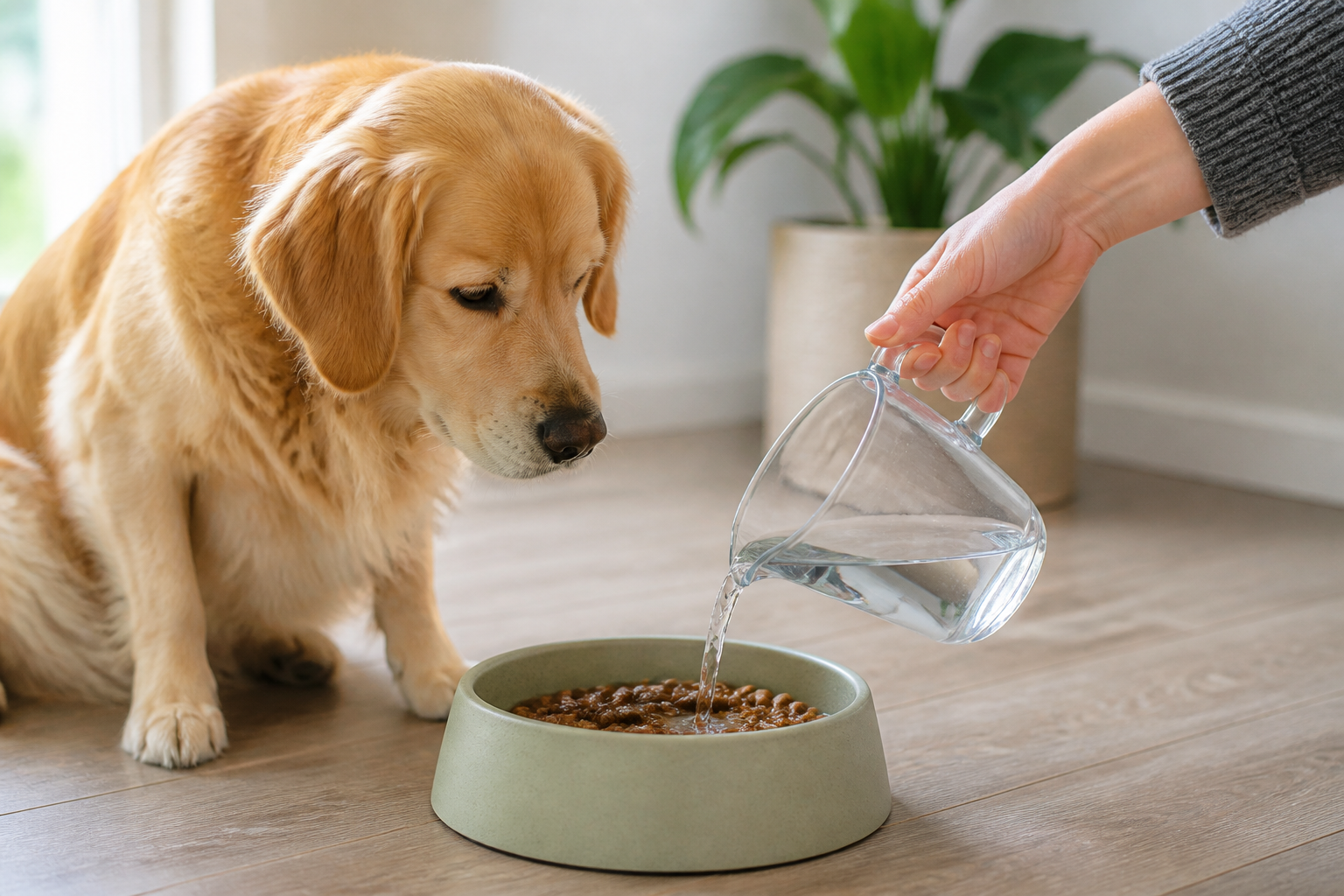
Many dog owners stand over a bowl of crunchy kibble and wonder if their pet would enjoy it more with a little splash of water. You might be looking at a senior dog who struggles to chew or a picky eater who turns their nose up at plain dry food. At BaxterBoo, we hear these questions often from customers who want to make mealtime both healthy and enjoyable. Adding water to dry dog food is a simple step that offers surprising benefits for hydration, digestion, and weight management. This post covers the safety rules, the proper ratios, and why moisture is a vital part of a canine diet. Adding a little liquid can transform a boring bowl of brown pellets into a savory, hydrating meal.
Quick Answer: Yes, you can absolutely put water in dry dog food. It helps with hydration, makes the food easier to digest, and can entice picky eaters by releasing the natural aromas of the kibble.
Why Moisture Matters in a Dry Diet
Dry dog food is convenient and shelf-stable, but it is very low in moisture. Most kibble contains only about 6 to 10 percent water. In contrast, a dog's natural diet in the wild would consist of prey that is roughly 70 percent water. When a dog eats purely dry food, their body must work harder to process the meal. They often need to pull moisture from their own tissues and blood supply to help the digestive tract move the food along.
This constant state of "eating dry" can lead to mild, chronic dehydration. While most dogs have a water bowl available, many do not drink enough to fully compensate for a dry diet. By adding water directly to the food, you ensure they take in fluids with every single bite. This is especially important during hot summer months or for dogs that are highly active. For more meal options, browse our dog food category.
The Physical Benefits of Hydrating Kibble
Adding water does more than just quench thirst. It changes the physical state of the food in a way that benefits the entire body. When kibble hits the stomach, it begins to expand as it absorbs gastric juices. If you pre-soak the food, this expansion happens in the bowl rather than in the dog's stomach.
Improved Digestive Health
Water acts as a lubricant for the digestive system. It helps the food move smoothly through the esophagus and into the stomach. Once there, moisture helps break down the dense, extruded pellets. Kibble is often made using high heat and pressure, which creates a very hard structure. Adding water starts the breakdown process before your dog even swallows.
This can be particularly helpful for dogs prone to "gulping" their food. When a dog eats too fast, they swallow air along with dry pellets. This can lead to gas or more serious stomach upset. Softening the food can slow them down and make the meal more manageable for their gut. For additional mealtime ideas, read our guide to mixing wet and dry dog food.
Kidney and Urinary Support
The kidneys are responsible for filtering waste from the blood and excreting it as urine. This process requires plenty of water. When a dog is even slightly dehydrated, the kidneys must work harder to concentrate the urine. This can increase the risk of crystals or stones forming in the bladder.
For certain breeds prone to urinary issues, moisture is not just a preference. It is a health requirement. Providing extra water in the food bowl helps flush the urinary system frequently. This dilutes the urine and keeps the kidneys functioning at their best.
Vet Tip: If your dog has a history of kidney stones or urinary tract infections, ask your veterinarian about prescription diets. Our pet pharmacy carries FDA-approved prescription foods and medications through our partnership with Pet's Choice to support these specific health needs.
The Myth of Kibble and Dental Health
One of the most common reasons owners avoid adding water is the fear that it will hurt their dog's teeth. There is a long-standing belief that crunchy kibble acts like a toothbrush to scrape away plaque. However, most experts now agree that this effect is minimal at best.
Kibble is starchy. When a dog crunches a dry pellet, it often shatters and turns into a paste that sticks to the teeth and gums. The carbohydrates in the food then break down into sugars, which feed the bacteria in the mouth. This can actually contribute to plaque and tartar buildup rather than preventing it.
Adding water softens the food so it does not shatter into tiny, sharp fragments. While it won't "clean" the teeth, it also won't make the dental situation significantly worse than dry kibble already does. The best way to manage dental health is through regular brushing and our dog dental care selection.
Key Takeaway: Dry kibble is not an effective substitute for dental care. Adding water to food does not significantly increase the risk of dental disease compared to feeding dry pellets alone.
Enhancing Palatability for Picky Eaters
If your dog seems bored with their dinner, the issue might be the lack of scent. Dogs experience the world primarily through their noses. Dry kibble that has been sitting in a bag for weeks loses its aroma quickly.
When you add warm water to dry food, it releases the fats and scents trapped inside the pellets. The steam carries these smells to your dog's nose, making the meal much more enticing. This is a great trick for:
- Dogs recovering from surgery or illness who have a low appetite.
- Senior dogs whose sense of smell is fading.
- Puppies who are transitioning from milk to solid food.
- Picky eaters who have grown tired of their current brand.
For another perspective on choosing between textures, read our guide to wet and dry dog food.
Weight Management and Satiety
Keeping a dog at a healthy weight is one of the best things you can do for their longevity. However, many weight-management diets involve feeding smaller portions. This can leave a dog feeling hungry and constantly begging for treats.
Water adds volume without adding calories. When you soak a cup of kibble in a half-cup of water, the meal looks and feels much larger. The added volume helps stretch the stomach wall, which sends signals to the brain that the body is full. This feeling of satiety can help your dog feel more satisfied on a calorie-restricted diet.
If you are managing a dog's weight, we carry specialized formulas like Farmina Vet Life for weight management. Combining these targeted diets with the "hydration trick" can make the weight-loss journey much easier for your pet.
How to Properly Add Water to Dry Dog Food
You should not just dump a gallon of water into the bowl. There is a right way to do it to ensure the food remains safe and appetizing.
Step 1: Measure the food. / Always start with the correct portion of dry kibble for your dog's weight.
Step 2: Choose the right liquid. / Use filtered water or a pet-safe broth. Avoid human broths that contain onions, garlic, or high salt levels.
Step 3: Use warm water. / Warm water (not boiling) is best for releasing aromas. It also softens the pellets faster than cold water.
Step 4: Use the 1-to-2 ratio. / A good starting point is one part water to two parts kibble. For example, use a half-cup of water for every one cup of food.
Step 5: Let it soak. / Wait about 5 to 10 minutes. This allows the water to penetrate the center of the kibble so it isn't just floating in a puddle.
Bottom line: Using warm water and a consistent ratio will create a consistent texture that most dogs find highly appealing.
Safety and Spoilage Concerns
While adding water is beneficial, it does introduce a new safety factor. Dry kibble is stable because it lacks moisture. Once you add water, you are essentially creating a "fresh" meal that can grow bacteria quickly.
You should never leave moistened kibble out for more than 30 to 60 minutes. If your dog is a "grazer" who likes to snack throughout the day, adding water might not be the best choice unless you can pick up the bowl after they finish their initial meal. Bacteria love the combination of moisture, protein, and room temperature.
Always wash the food bowl thoroughly after every meal. Moistened food leaves behind a sticky residue that can mold if left in the cracks and crevices of a bowl. Stainless steel or ceramic bowls are usually the best choice for wet meals because they are easier to sanitize than plastic.
Using Toppers and Mix-ins
If your dog isn't a fan of plain water in their food, you can level up the experience with other liquids. These add extra nutrients and even more flavor. Browse our dog food topper collection for broths and meal mixers.
Bone Broth
Bone broth is a powerhouse of nutrition. It contains collagen and amino acids that support joint health and gut integrity. We carry several bone broth options designed specifically for dogs. These are formulated without the high sodium levels found in grocery store brands.
Goat Milk
Raw goat milk is often called "universal milk" because it is so easy for dogs to digest. It is packed with probiotics and enzymes. Adding a splash of goat milk to dry kibble is an excellent way to support a dog with a sensitive stomach or chronic digestive issues.
Canned Food Mix-ins
Mixing a spoonful of canned food with water creates a thick gravy that coats every piece of kibble. This is often the most successful method for the pickiest dogs. Brands like Stella and Chewy's or The Honest Kitchen offer high-quality wet options that pair perfectly with dry food.
- Checklist for adding toppers:
- Ensure the topper is free of xylitol, onions, and garlic.
- Reduce the amount of dry kibble slightly to account for the extra calories in the topper.
- Store open broth or milk in the refrigerator and discard according to the package directions.
- Start with small amounts to avoid upsetting your dog's stomach.
Special Considerations for Life Stages
The age of your dog determines how much they might benefit from hydrated food.
Puppies
Puppies have small, sensitive teeth. When they transition from mother's milk to solid food, dry kibble can be intimidating and even painful to crunch. Softening the food into a "mash" makes this transition much smoother. It also ensures they stay hydrated during a period of rapid growth. Our puppy supplies section can help you find age-appropriate essentials.
Senior Dogs
Older dogs frequently deal with dental decay, missing teeth, or gum sensitivity. For these dogs, dry kibble can be a chore to eat. They may begin to lose weight simply because eating has become uncomfortable. Softening the food allows them to continue eating the kibble they enjoy without the pain.
Seniors also face a higher risk of kidney issues. Increasing their fluid intake through their food is one of the easiest ways to support their aging organs. If your senior dog is on medication for chronic conditions, our pharmacy can help manage those prescriptions alongside their nutritional needs.
When Not to Add Water
There are very few times when adding water is a bad idea. However, if your veterinarian has put your dog on a very specific dental-health prescription diet, the kibble might be designed with a special fiber matrix meant to stay together. In these rare cases, follow your vet's advice.
Also, if your dog is currently experiencing severe diarrhea, you should consult a professional before making changes. While hydration is good, a sudden change in food texture or temperature can sometimes aggravate an already upset stomach.
Prescription Diets and the BaxterBoo Pharmacy
Sometimes, a dog needs more than just a splash of water to stay healthy. For pets with chronic conditions like heart disease, advanced kidney failure, or severe allergies, a specific prescription diet is often necessary. These diets are carefully balanced to limit certain minerals or proteins.
We are proud to offer a full-service pharmacy through our partnership with Pet's Choice. This allows you to order your dog's prescription food and medications in the same place you buy their favorite toys and treats. If your vet recommends a moisture-rich prescription diet, we can help you get exactly what your pet needs delivered to your door.
Key Takeaway: Proper nutrition and hydration are the foundations of health. For pets with medical needs, combining a vet-approved diet with extra moisture can significantly improve their quality of life.
Conclusion
Adding water to dry dog food is a simple, cost-effective way to improve your pet's health. It supports the kidneys, aids in digestion, and makes every meal more exciting for your dog. Whether you are helping a senior dog chew more easily or trying to keep an active puppy hydrated, a little warm water goes a long way. Remember to keep things clean by washing bowls daily and avoiding leaving wet food out to spoil.
For the best results, consider rotating in some high-quality toppers like bone broth or goat milk. If you find your dog needs a more specialized nutritional approach, browse our selection of premium dog food or visit our pet pharmacy for prescription options. You can also save time and money by setting up our Autoship programme, ensuring your dog never runs out of their favorite hydrating meals.
FAQ
How long should I let the water soak in the kibble?
Most kibble only needs about 5 to 10 minutes to soften. If you use warm water, the process will be faster. You can leave it longer if your dog prefers a "mushy" texture, but try to serve it within 20 minutes for the best aroma.
Can I use boiling water to soften dog food?
It is best to avoid boiling water. Extremely high temperatures can destroy some of the heat-sensitive vitamins and probiotics added to the kibble. Use warm water that is comfortable to the touch to ensure you protect the nutritional value and avoid burning your dog's mouth.
Does adding water to kibble cause bloat?
There is no definitive evidence that adding water causes bloat. In fact, many experts believe it may help prevent bloat by slowing down dogs that eat too fast and by "pre-expanding" the food before it enters the stomach. If your dog is a high-risk breed for bloat, always consult your veterinarian about the best feeding practices.
Can I add cold water instead of warm water?
Yes, cold water is perfectly safe. However, cold water does not release the aromas of the food as well as warm water does. It also takes much longer for the pellets to absorb cold liquid, so you may need to wait longer before serving the meal.






