
 Save 15% on your 1st Autoship learn more

 Email us
 Live Chat
 FAQs
FAQs





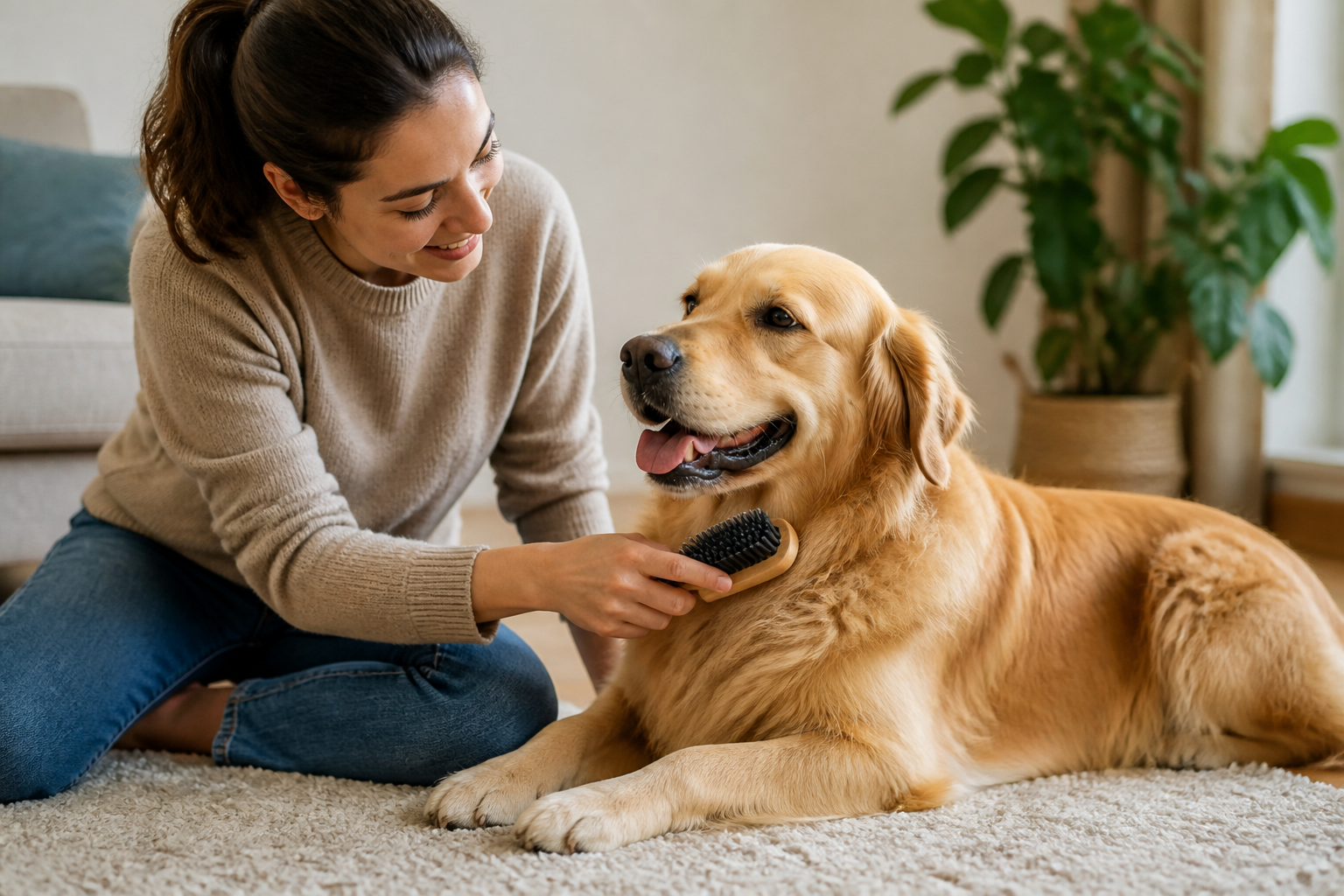
Introduction
You are relaxing on the couch when you notice a clump of tangled fur behind your dog's ear. Your own hairbrush is sitting right there on the end table. It seems like a quick and easy solution to reach over and give that knot a few strokes. Many of us have been in this exact moment. At BaxterBoo, we talk to pet owners every day who wonder if specialized grooming tools are truly necessary or just an extra expense.
While the brushes we use on our own heads look remarkably similar to the ones in the pet aisle, they are not interchangeable. Using the wrong tool can lead to skin irritation, missed tangles, and a dog that runs away the moment they see a brush. This article covers why human brushes fall short, the risks they pose to your dog's skin, and how to choose the right tool for every coat type. Understanding these differences ensures your grooming routine stays comfortable and effective.
The Short Answer for Busy Pet Owners
If you are looking for a quick answer, you should generally avoid using a human brush on your dog. It might work for a very quick surface fluff on a short-haired breed, but it will not provide a deep or safe clean for most dogs.
Quick Answer: Most human brushes are designed for the thin, single-layered hair of a human. Dogs have much thicker coats and more sensitive skin, meaning human bristles often fail to reach the undercoat and can cause painful scratches.
Most people assume that if a brush feels soft to them, it will feel soft to their dog. This is a common misconception. Human skin is actually much thicker than dog skin. A brush that feels gentle on your scalp could feel like sandpaper to your pup. Beyond comfort, a human brush is simply not built to handle the structural depth of a canine coat.
Why Human Brushes Fail the Dog Test
The biggest difference between us and our dogs is how our hair is anchored. Humans typically have one hair per follicle. Dogs have compound follicles where multiple hairs grow out of a single spot. This creates a much denser environment that a standard plastic human bristle cannot penetrate.
Bristle Density and Flexibility
Human hairbrushes usually have flexible plastic or nylon bristles. These are designed to glide through thin strands of hair. When these bristles hit a dog's thick undercoat, they tend to bend or skip over the top. This means you are only grooming the very top layer of fur. Below that surface, mats and tangles continue to tighten against the skin.
Pin Length and Tip Design
If you look closely at a human brush, the pins are often short and topped with large plastic balls. These balls are great for massaging a human scalp. On a dog, these balls can catch on tangles and pull the hair painfully. Dog brushes, such as slicker brushes, have thin, angled pins designed to hook into the undercoat and lift out dead hair without the snagging caused by rounded tips.
Pressure Distribution
Human brushes have rigid heads that concentrate all the pressure onto the tips of the bristles. Because our skin is tough, we do not mind this. Dogs have very thin skin that is easily bruised or scraped. Professional dog brushes often have a slight "give" or a flexible base that absorbs the force of your stroke. This protects the dog from "brush burn," which is a painful red rash caused by repetitive scraping.
The Risks of Using the Wrong Tools
Using a human brush is not just inefficient. It can actually lead to health issues that might require a trip to the vet. When a brush does not reach the skin, it allows the undercoat to become "impacted." This is when dead hair gets trapped against the skin and begins to felt together.
The Hidden Danger of Mats
Mats are not just a cosmetic problem. They trap moisture and heat against the dog's body. This creates a perfect breeding ground for bacteria and fungi. Because a human brush only skims the surface, you might think your dog is tangle-free while a massive mat is actually forming underneath. These mats can pull the skin so tight that it cuts off circulation or causes open sores.
Skin Irritations and Infections
If you use a human brush and press hard to reach the skin, you risk causing micro-tears. These tiny scratches are invisible to the eye but can lead to staph infections or "hot spots." If you notice your dog’s skin looks red or they are licking a specific spot after grooming, they may have an irritation.
Vet Tip: If your dog develops redness, bumps, or an odor after grooming, consult your veterinarian to rule out a skin infection. Our dog grooming supplies include tools and coat-care products to support your routine.
Identifying Your Dog’s Coat Type
To choose the right brush, you must first understand what you are working with. Every breed has different requirements. Using a brush meant for a Labrador on a Poodle will not yield good results.
Short and Smooth Coats
Breeds like Boxers, Pugs, and Greyhounds have hair that lies flat against the body. They do not get mats, but they shed constantly. A human brush is useless here because it cannot grab the tiny, stiff hairs that these dogs drop. Instead, these dogs need a rubber curry brush. The rubber material uses static electricity and friction to pull out dead hair that a plastic bristle would miss.
Double Coats
German Shepherds, Huskies, and Golden Retrievers have a soft, insulating undercoat and a tougher topcoat. This is where human brushes are most dangerous. They completely ignore the undercoat, which is where 90 percent of the shedding happens. For these dogs, an undercoat rake is the only tool that can reach deep enough to remove the "blown" coat during seasonal changes.
Long and Silky Coats
Yorkshire Terriers and Maltese dogs have hair that is most similar to humans, but it is much finer. While a human brush might seem okay here, it will still likely cause static and breakage. A professional metal pin brush with polished tips is a better choice. These pins are designed to slide through silky hair without snapping the strands.
Curly and Wire Coats
Poodles and Doodles have coats that trap dead hair instead of letting it fall to the floor. If this hair is not brushed out daily, it turns into a solid brick of felt. A human brush is far too weak to penetrate these curls. You need a high-quality slicker brush with firm, thin wires to separate the curls and pull out the trapped fur.
Key Takeaway: Matching the tool to the coat type is the only way to ensure you are actually removing dead hair and preventing painful mats.
Essential Tools Every Dog Owner Needs
You do not need a professional grooming salon in your closet, but you should have a few core items. Quality matters more than quantity. We carry over 500 trusted brands at BaxterBoo, and we have found that having two specific tools can handle almost any dog.
The Slicker Brush
This is the workhorse of the grooming world. It has a flat or curved head with hundreds of tiny wire pins. It is excellent for removing loose hair and breaking up small tangles. It works for medium to long hair and is a must-have for any curly-coated dog. Browse our dog brushes and combs to compare grooming tools for different coat types.
The Metal Finishing Comb
This is the most important tool you probably do not own yet. After you brush your dog with a slicker or pin brush, you must run a metal comb through the fur. If the comb catches, there is still a knot. The comb reaches all the way to the skin to ensure no mats are hiding in the "hotspot zones" like the armpits or behind the ears.
The Rubber Curry Brush
As mentioned before, this is for the short-haired pups. It is also a fantastic tool to use during bath time. It helps work the shampoo down to the skin and massages the dog, which can make the bath a more positive experience. The BASS Bathing Dog Brush - Black is designed for wet or dry hair use.
How to Properly Groom Your Dog at Home
Once you have the right tools, technique is everything. Brushing too fast or in the wrong direction can make your dog hate the process. Follow these steps to keep the experience calm and productive.
Step 1: Create a Calm Environment
Choose a time when your dog is relaxed, perhaps after a long walk. Avoid grooming during high-energy times or right before dinner when they are distracted.
Step 2: Perform a Visual and Manual Check
Before picking up a brush, run your hands over your dog's entire body. Feel for new lumps, bumps, or mats. Check the "hotspot zones" like the collar line, ears, and tail.
Step 3: Start from the Bottom Up
Many people start at the head, but this can be intimidating for dogs. Start at the rear legs and work your way forward. This allows the dog to get used to the sensation before you move toward their face.
Step 4: Use the Line Brushing Technique
For dogs with long or thick hair, pull the hair up with one hand and brush the hair underneath it. This ensures you are reaching the skin and not just the surface. Work in small sections rather than long, sweeping strokes.
Step 5: The Comb Test
Once you think you are finished, take your metal finishing comb and run it through the coat. If it glides through from skin to tip, you are done. If it stops, go back to that area with your brush.
Bottom line: A brush fluffs the hair, but a comb confirms the job is actually done.
For additional bath and brushing guidance, read Dos and Don’ts for Bathing Your Dog.
Grooming as a Health Check
One of the greatest benefits of regular brushing is that it turns you into an expert on your dog's body. When you brush your dog every few days, you will notice changes immediately. This is often how pet owners find ticks, fleas, or new skin growths that need veterinary attention.
If you find evidence of fleas or ticks during your grooming session, do not panic. Our flea and tick collection includes products for regular parasite-care routines. You can also explore flea and tick combs and brushes for coat checks.
When to See a Professional
Sometimes, a coat gets beyond the point of home care. If you find a mat that is as large as your hand or if the mat is tight against the skin, do not try to cut it out with scissors. It is very easy to accidentally cut a dog's thin skin. In these cases, a professional groomer or a vet is needed to safely shave the area.
If your dog becomes aggressive or extremely fearful during brushing, this is another sign you might need professional help. A groomer has specialized tables and restraints that can keep a wiggly or nervous dog safe during the process.
Frequently Asked Questions
Can I use a human brush on a short-haired dog?
While a human brush will not necessarily hurt a short-haired dog, it will not do much to help with shedding. Human bristles are not designed to grip the stiff, short hairs of a breed like a Beagle or a Labrador. You are much better off using a rubber grooming tool that can actually lift the dead fur away from the skin.
Is it okay to use a human comb on my dog?
Standard human combs are usually made of plastic, which creates static electricity in a dog's coat. This static can cause the hair to frizz and tangle more easily. Furthermore, plastic teeth are prone to snapping if they hit a tough knot. A stainless steel pet comb is much more durable and will glide through the fur without the static pull.
Why does my dog run away when I bring out the brush?
If your dog dislikes grooming, it is often because they have experienced pulling or skin scraping in the past. This is common when using human brushes that snag on tangles. To fix this, switch to a proper dog brush, keep sessions very short, and provide high-value treats to create a positive association with the tool.
What should I do if I find a mat I cannot brush out?
Never pull or yank on a mat, as this can bruise the skin underneath. Try applying a pet-safe detangling spray and gently picking at the mat with the end of a metal comb. If the mat is hard and tight against the skin, it is safest to have a professional groomer remove it with electric clippers rather than risking a cut with scissors.
Conclusion
While it is tempting to reach for your own hairbrush in a pinch, your dog's coat requires specialized care. Human brushes lack the pin depth, flexibility, and bristle design needed to safely navigate a canine's thick, multi-layered fur. Investing in a proper slicker brush and a metal comb will save you time, prevent painful mats, and keep your dog's skin healthy.
Regular grooming is more than just a way to keep your house clean; it is a vital part of your dog's overall wellness. By using the right tools, you can turn a potential chore into a bonding experience that keeps your pet comfortable. For all your grooming needs, from brushes and shampoos to prescription skin care, explore our full dog grooming collection.
Key Takeaway: Using dog-specific tools protects your pet's sensitive skin and ensures you are actually removing the dead undercoat that causes mats and shedding.
If you want to ensure you never run out of your favorite grooming sprays or supplements, consider signing up for our Autoship programme. You will save on your first order and earn MVP Rewards points on every purchase to use toward future grooming gear.
FAQ
Can I use a human brush on a short-haired dog?
While a human brush is unlikely to cause serious injury to a short-haired dog, it is generally ineffective. The bristles on a human brush are meant to move through long strands of hair rather than gripping the short, coarse fur of breeds like Boxers or Dalmatians. A rubber curry brush is a much better choice because it uses friction to pull out dead hair and massages the skin at the same time.
Is it okay to use a human comb on a dog?
Human combs are typically made of plastic, which creates significant static electricity when used on animal fur. This static can make the hair more prone to tangling and can be uncomfortable for the dog. Professional metal combs are made of stainless steel to eliminate static and are strong enough to work through knots without bending or breaking.
Why does my dog hate being brushed?
Most dogs develop a dislike for brushing because of "brush burn" or painful hair pulling. This often happens when owners use human brushes that are too stiff or have snagging tips. Switching to a high-quality slicker brush with polished pins and using a detangling spray can make the process much more comfortable and help your dog learn to enjoy grooming.
What should I do if I find a mat I cannot brush out?
If you encounter a stubborn mat, do not try to force a brush through it, as this can tear the skin. You can try to gently tease the knot apart with your fingers or a metal comb after applying a detangling solution. If the mat is tight against the skin, it is best to visit a groomer or veterinarian, as trying to cut it out with scissors often results in accidental skin cuts.






