
 Save 15% on your 1st Autoship learn more

 Email us
 Live Chat
 FAQs





Introduction
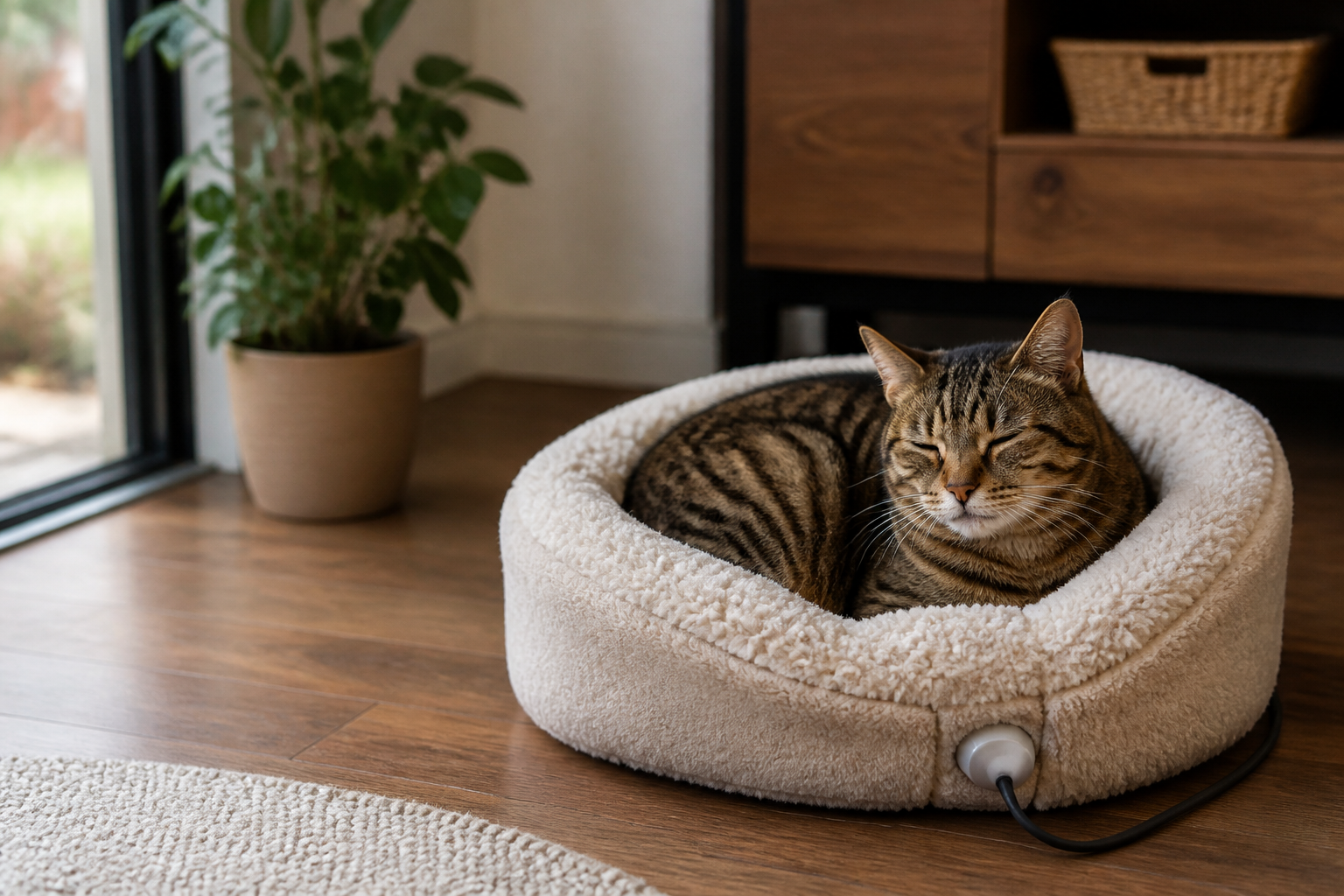
Your cat has claimed the sunny windowsill, but that spot gets chilly once the sun moves. A cat bed heater can offer another warm place to rest, especially in a drafty room. The choices include plug-in beds, separate warming mats, self-warming beds and covered cat caves.
At BaxterBoo, we know the right choice depends on more than how cozy a bed looks. Your cat needs room to get comfortable, easy access to an unheated spot and a bed that suits your home. We’ll help you compare the options, check the features that matter and set up a warm resting place. Choose a product made for pets, follow its instructions and let your cat decide when to use it.
Choose the Right Kind of Warm Cat Bed
A heated cat bed and a self-warming bed can look similar, but they work differently. Start by deciding whether you want an electrical heat source or a bed that helps retain your cat’s own warmth.
| Bed type | How it provides warmth | Best fit to consider |
|---|---|---|
| Electric heated bed | Uses a built-in or included heating element | A resting spot near a suitable outlet |
| Heated mat or pad | Uses an electrical heating element in a flatter shape | A cat who likes an open surface, or a compatible bed |
| Self-warming bed or mat | Uses insulating or reflective materials to help retain body heat | A cord-free resting spot |
| Heated cat cave | Combines a covered bed with a heating element or warming materials | A cat who prefers a more enclosed place to rest |
| Unheated padded bed | Offers cushioning and some insulation without an active heater | A simple option for a comfortable, draft-free room |
A plug-in model provides an active source of heat. Its controls and operation vary, so check the product instructions rather than assuming every bed has the same temperature settings or automatic shutoff.
A self-warming bed does not produce electrical heat. It may be a good first choice if you want to avoid a cord, though it won’t work like a plug-in heater in a cold room.
Cat Heated Beds

Heated Bed, Separate Pad or Cat Cave?
An all-in-one heated bed
An all-in-one bed is a straightforward choice if you want a dedicated sleeping spot. The heater and bed are designed to be used together, so you can check one set of instructions for placement, cleaning and operation.
Look at the inside dimensions, not just the outside measurements. Thick sides can take up space that your cat might otherwise need for stretching or turning around.
A heated mat or separate bed heater
A flat mat can suit a cat who likes to sprawl or dislikes high bed walls. If you plan to add a heater to a bed you already own, check that the manufacturer specifically permits that combination.
Do not assume any heating pad can go under any cushion. The wrong cover or extra layers can affect how the heater works. Use only the placement and covering described in the instructions.
A heated cat cave
A heated cat cave has a covered or hooded shape that gives a cat a more sheltered place to rest. Some are electric, while others rely on insulating materials. Check the description to see which kind you’re buying.
A cave may appeal to a cat who already naps in covered beds or boxes. Choose an opening your cat can enter and leave without squeezing, and make sure the bed doesn’t collapse across the entrance.
Keep an open, unheated resting spot nearby. If your cat prefers to watch the room while resting, an open bed or mat may be a better match than a cave.
Key Takeaway: Match the bed to how your cat already sleeps. A heater can add warmth, but it won’t make an awkward entrance or cramped sleeping area more appealing.
What to Check Before You Buy
A little measuring and label reading can help you avoid a bed that doesn’t fit your cat or your space.
- Sleeping area: Measure your cat’s usual resting spot and compare it with the bed’s interior dimensions. Consider whether your cat curls up or stretches out.
- Entry height: Low sides or a flat mat may be easier to reach than a tall bolster, particularly for a cat who has trouble stepping over things.
- Heating method: Confirm whether the bed plugs in, holds body warmth or uses another manufacturer-approved warming method.
- Controls and instructions: Check how the heater operates, whether it has a shutoff feature and what the maker says about leaving it on.
- Cleaning: Look for a removable cover and read the washing instructions. The heating element may need different care from the fabric.
- Electrical safety: Look for a product tested by a recognized safety testing organization, and inspect the cord and plug before use.
- Intended location: Check whether the product is designed for indoor or outdoor use. An indoor bed should stay indoors.
Also consider where the cord will run. A bed that fits the room but leaves a cord across a walkway may not be the best choice. If your cat chews cords, a non-electric bed may be a better option.
Set Up a Cat Bed Heater Safely
Step 1: Pick a suitable resting place
Choose a stable, dry spot where your cat can enter and leave easily. A quiet corner can work well, but don’t put the bed somewhere your cat must squeeze behind furniture to reach it.
Keep a separate unheated bed or resting area available. Your cat should be able to move away from the heat at any time.
Step 2: Inspect and assemble the bed
Check the heater, cord and cover for damage before plugging anything in. Follow the manufacturer’s directions for positioning the heating element and using its supplied cover.
Don’t fold a heating mat unless its instructions specifically allow it. Don’t add blankets over or under an electric heater unless the manufacturer says they’re suitable.
Step 3: Arrange the cord and plug
Use the power connection specified by the manufacturer. Keep the cord where it won’t be pinched by furniture, walked on or within easy reach of a cat who may chew it.
If the cord, plug or bed becomes damaged, stop using it. Unplug the product when it is safe to do so and follow the manufacturer’s guidance.
Step 4: Introduce the bed
Let your cat approach the bed without being placed inside it. You can set it near a favorite resting spot and give your cat time to investigate.
Watch how your cat gets in, settles down and leaves. If the bed slides, the opening is awkward or your cat avoids it, try a more stable location or a different style.
Step 5: Check it regularly
Follow the instructions for checking the heater and cleaning the cover. A bed that feels only mildly warm to your hand is not necessarily faulty; products operate differently. Use the manufacturer’s recommended check rather than trying to make the bed hotter.
Before your cat settles in, check that:
- The bed and cord are intact and dry.
- The heater and cover are assembled as directed.
- The entrance and exit are clear.
- Your cat can reach an unheated place.
- You know the product’s instructions for cleaning and unattended use.
Can a Heated Bed Stay On Overnight?
Some pet beds are designed for longer use, but that does not make every model suitable to leave on overnight or while you’re away. Read the instructions for the exact product, including any limits on unattended use.
Even when the instructions permit longer use, check the bed and cord regularly. Stop using it if you notice damage, unusual heat, an odor or another sign that something is wrong. If you’re uncomfortable leaving an electric bed on, a self-warming bed is a cord-free alternative.
Don’t use a human heating pad as a substitute. Choose a warming product intended for pets and use it only as directed.
Warmth for Kittens and Senior Cats
A soft, accessible bed can give a senior cat a comfortable place to rest. A flat mat or a bed with a low entrance may be easier to use than a high-sided cave. Place it on the floor if your cat has difficulty reaching a favorite raised spot.
A heated bed is not a treatment for stiffness or a substitute for a veterinary exam. If your cat seems reluctant to move, has trouble getting into the litter box or shows a new change in behavior, contact your veterinarian.
Young kittens need special care, and their warming needs differ from those of an adult cat. Ask your veterinarian for guidance before using a warming product for a very young, sick or orphaned kitten.
Vet Tip: Ask your veterinarian which warming setup is appropriate if your cat has limited mobility, is recovering from illness or cannot easily move away from a heat source.
If you notice a possible burn or your cat appears distressed, remove access to the heat source and contact your veterinarian. Panting or open-mouth breathing warrants immediate veterinary attention.
Indoor and Outdoor Use Are Different
A bed made for the living room is not automatically suitable for a porch, garage or outdoor shelter. Moisture, exposure and electrical connections all matter. Use a product outdoors only if its instructions specifically allow that use, and follow its placement and power requirements.
A heated bed alone does not make an exposed outdoor space safe in cold weather. Give your cat access to a warm indoor area whenever possible, and check outdoor resting places for dampness and damage.
Help Your Cat Accept a New Bed
Cats can be particular about where they sleep. If your cat ignores the new bed, start by looking at the location and shape rather than assuming the heater is the problem.
Move the bed near a place your cat already chooses, provided the new location meets the product instructions. If the bed is a cave, your cat may prefer a quieter position where the entrance is easy to see and reach. If it is an open mat, check that it stays flat and doesn’t slide.
Give your cat another resting option and avoid forcing them into the bed. Some cats may prefer an unheated cushion or use a heated bed only occasionally.
For cleaning, unplug the bed and follow the care instructions. Wash removable covers only as directed, let them dry fully, and reassemble the bed before reconnecting it.
Choosing a Cozy Resting Spot
The best warm bed is one your cat can use comfortably and leave whenever they choose. Start with your cat’s sleeping habits, then compare the heating method, fit and care instructions.
- Choose an open mat, padded bed or cave based on your cat’s preferred sleeping position.
- Use a pet-specific heater only with its approved cover and setup.
- Keep an unheated resting place available nearby.
Key Takeaway: A warm bed is a comfort option, not a replacement for a suitable room or veterinary care.
Explore the cat beds and resting options at BaxterBoo to find a style that fits your cat’s favorite way to nap.
FAQ
Is a self-warming cat bed the same as a heated bed?
No. A self-warming bed uses materials that help retain body heat, while an electric heated bed uses a heating element. A self-warming bed is cord-free, but it does not provide the same active heat as a plug-in model.
Can I put a heating pad inside my cat’s existing bed?
Only use a pet heating product in that bed if the manufacturer’s instructions permit the combination. Don’t improvise with a human heating pad or add layers that the heater’s instructions don’t allow.
How do I know if my cat is too warm in a heated bed?
Make sure your cat can leave the bed and reach an unheated resting place. If your cat appears distressed, pants or breathes with an open mouth, remove access to the heat and seek immediate veterinary care.
Why won’t my cat use a heated cat cave?
Your cat may prefer an open bed, a different location or an entrance that is easier to use. Try positioning the cave near a familiar resting place, and let your cat investigate without being forced inside.



- Site & Contents BaxterBoo.com. BaxterBoo is located in the United States.
- Privacy & Security
- Terms of Use
- Accessibility Statement
