
 Save 15% on your 1st Autoship learn more

 Email us
 Live Chat
 FAQs





Introduction
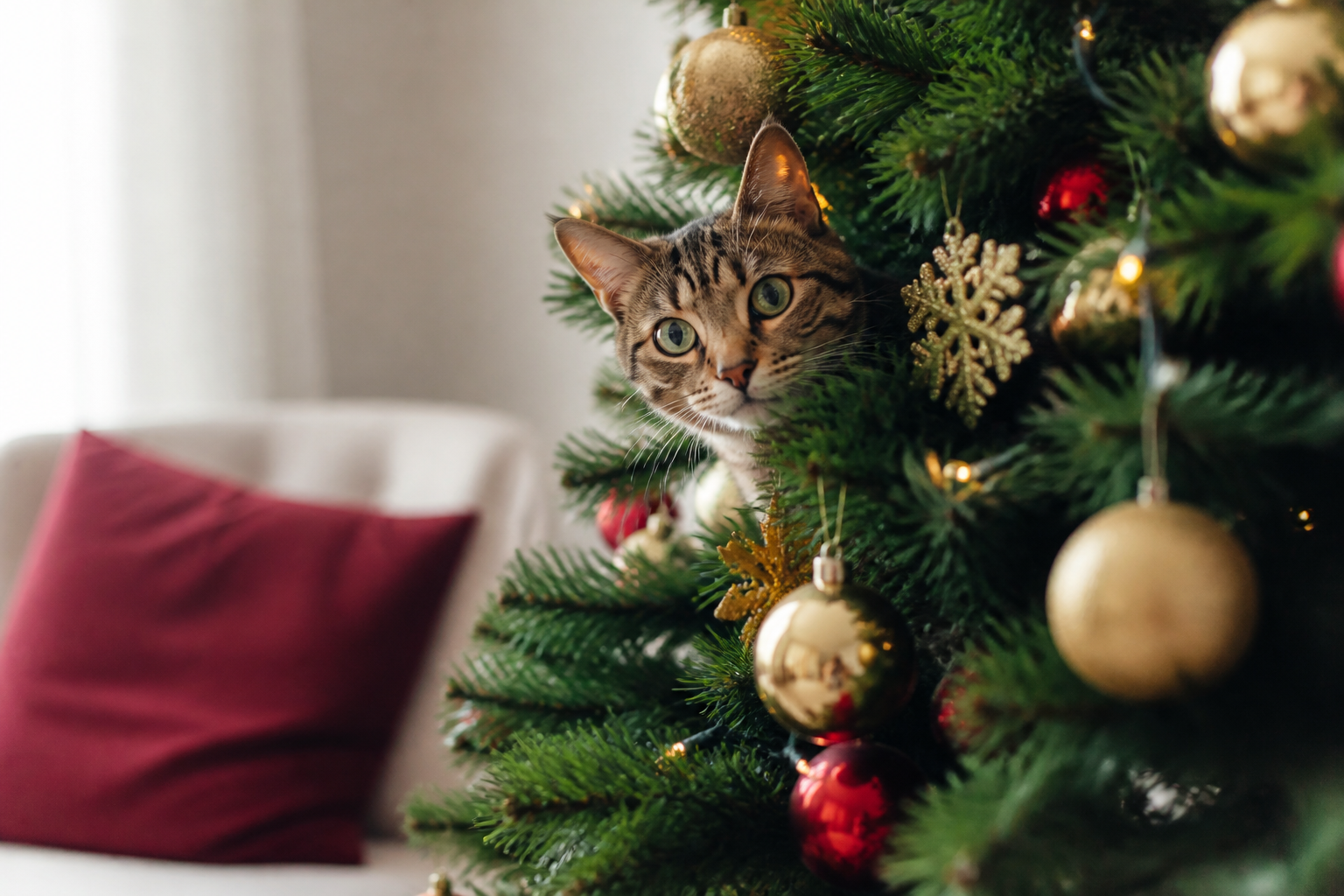
You turn around for a moment, and your cat is peeking out from the middle of your Christmas tree. It’s a funny sight, but an unsteady tree, dangling decorations and electrical cords can make climbing risky. If your cat is inside the tree, stay calm, steady the tree if you can do so safely, and encourage your cat to come down rather than pulling them out.
At BaxterBoo, we know that keeping a curious cat away from a new attraction can take more than moving a few ornaments. We’ll help you make the tree safer, give your cat another place to climb and recognize when a vet should be involved. The best plan combines a secure setup with a rewarding alternative for your cat.
Why Cats Climb Christmas Trees
A Christmas tree offers several things cats may find appealing: height, branches to hide among and a new object to investigate. Add swinging ornaments, and the tree can look like a play area.
Best Friends Animal Society notes that cats may also be drawn to the attention people give the tree and the social room where it stands. Your cat isn’t necessarily trying to cause trouble. The tree may simply be the most interesting thing in the room.
Some cats investigate for a day and move on. Others keep climbing, chewing or batting at decorations. Watch what your cat actually does around the tree, then adjust your setup around that behavior.
Cat Accessories










What to Do When Your Cat Is Inside the Tree
A cat in the branches can startle easily, and a sudden movement may make the tree wobble. Give your cat a clear way down and avoid turning the situation into a chase.
Step 1: Assess the surroundings. Check whether the tree is leaning and whether your cat is tangled in decorations or near a damaged cord. Keep other pets and excited family members away while you decide what to do.
Step 2: Encourage your cat to come down. Place a favorite treat or toy on the floor a short distance from the tree. Give your cat time to climb out on their own.
Step 3: Help gently if needed. If your cat is within easy reach and comfortable being handled, support their body as you lift them clear of the branches. Don’t pull on a leg, tail, collar or tangled decoration.
Step 4: Check the tree before letting your cat return. Look for loose ornaments, exposed wires and a shifted stand. If your cat keeps climbing, close the room off until you can make changes.
If your cat appears stuck high in the tree, don’t shake the branches or climb an unstable ladder to reach them. Keep the area quiet and contact your veterinarian or local animal services for advice on getting help safely.
Vet Tip: If your cat may have bitten a plugged-in cord or is in contact with damaged electrical equipment, turn off the power before touching them. Contact an emergency veterinarian immediately.
Set Up a More Secure Christmas Tree
Start with the stand. Choose one suited to the size of your tree and make sure the trunk is firmly secured according to the stand’s instructions. A wide, sturdy base can reduce wobbling, though it won’t guarantee that a determined climber can’t tip the tree.
You can also secure the tree to a wall using appropriate anchors. Keep any securing line out of your cat’s reach, and check it regularly for looseness. Best Friends Animal Society’s tree safety advice also recommends moving nearby furniture that gives cats an easy route into the branches.
Before decorating, take a look at the room from your cat’s perspective:
- Move chairs, shelves or other launch points away from the tree when practical.
- Place the tree where a fall would be less likely to strike your cat or knock over other objects.
- Check that the stand sits level and doesn’t shift when the tree is gently nudged.
- Keep the room closed when you can’t supervise if your cat continues to climb.
A gate or pen around the tree may help some households, but many cats can jump or squeeze around barriers. If a barrier doesn’t keep your cat out, a closed door is a more dependable way to separate them from the tree.
Choose Decorations With Your Cat in Mind
Skip Tinsel and Fragile Ornaments
Tinsel, ribbon and string garlands can attract cats who like to chase or chew. If swallowed, these long materials can cause a dangerous intestinal blockage. PetMD’s Christmas tree safety guide recommends leaving string-like decorations off the tree.
Glass ornaments can break and leave sharp pieces on the floor or in the branches. Consider non-breakable ornaments instead, and avoid small pieces your cat could chew off or swallow. No ornament is completely safe for a cat to play with, so check decorations regularly for damage.
Secure decorations firmly and leave the lowest branches bare if your cat likes to bat at them. Remember that placing an item higher doesn’t make it inaccessible to a cat who climbs.
Manage Lights and Cords
Chewing an electrical cord can cause serious injury. Run cords where your cat can’t reach them when possible, and use a protective cord cover. Cats Protection also recommends covering wires and switching lights off at the outlet when you’re away.
Unplug the lights when you leave the room or can’t supervise your cat. Unplugging reduces electrical risk, but the cord itself can still attract a chewer. If your cat keeps biting it, remove their access rather than relying on the cover alone.
Before you finish decorating, check for:
- Tinsel, ribbon or loose string that should be removed.
- Breakable ornaments and small detachable pieces.
- Loose hooks, ties or ornaments within reach.
- Exposed cords or lights your cat can chew.
- Decorations that have fallen beneath or behind the tree.
Real or Artificial: Which Tree Is Safer?
Both types need supervision and a secure setup. A real tree brings needles and tree water into the room. An artificial tree avoids those particular hazards, but a cat can still chew its branches or knock it over.
| Tree type | What to watch for | Practical precautions |
|---|---|---|
| Real | Fallen needles, chewing and access to tree water | Clean up needles, cover or block access to the water, and avoid additives |
| Artificial | Chewed plastic or other branch material, loose pieces and artificial snow | Check for damage, avoid flocking and keep a chewing cat away |
PetMD notes that swallowed needles can irritate a cat’s mouth or digestive tract, while pieces chewed from an artificial tree can also cause problems if swallowed. Contact your veterinarian if your cat eats needles or parts of either kind of tree.
For a real tree, use plain water without fertilizers or preservatives, and prevent your cat from drinking it. A decorative tree skirt alone may not keep a curious cat out of the stand. Use a secure cover or block access, and check that your cat can’t move it aside.
For an artificial tree, avoid flocking, the material used to imitate snow. Inspect the branches as you set them up and throughout the season, especially if your cat likes to chew.
Give Your Cat a Better Place to Climb
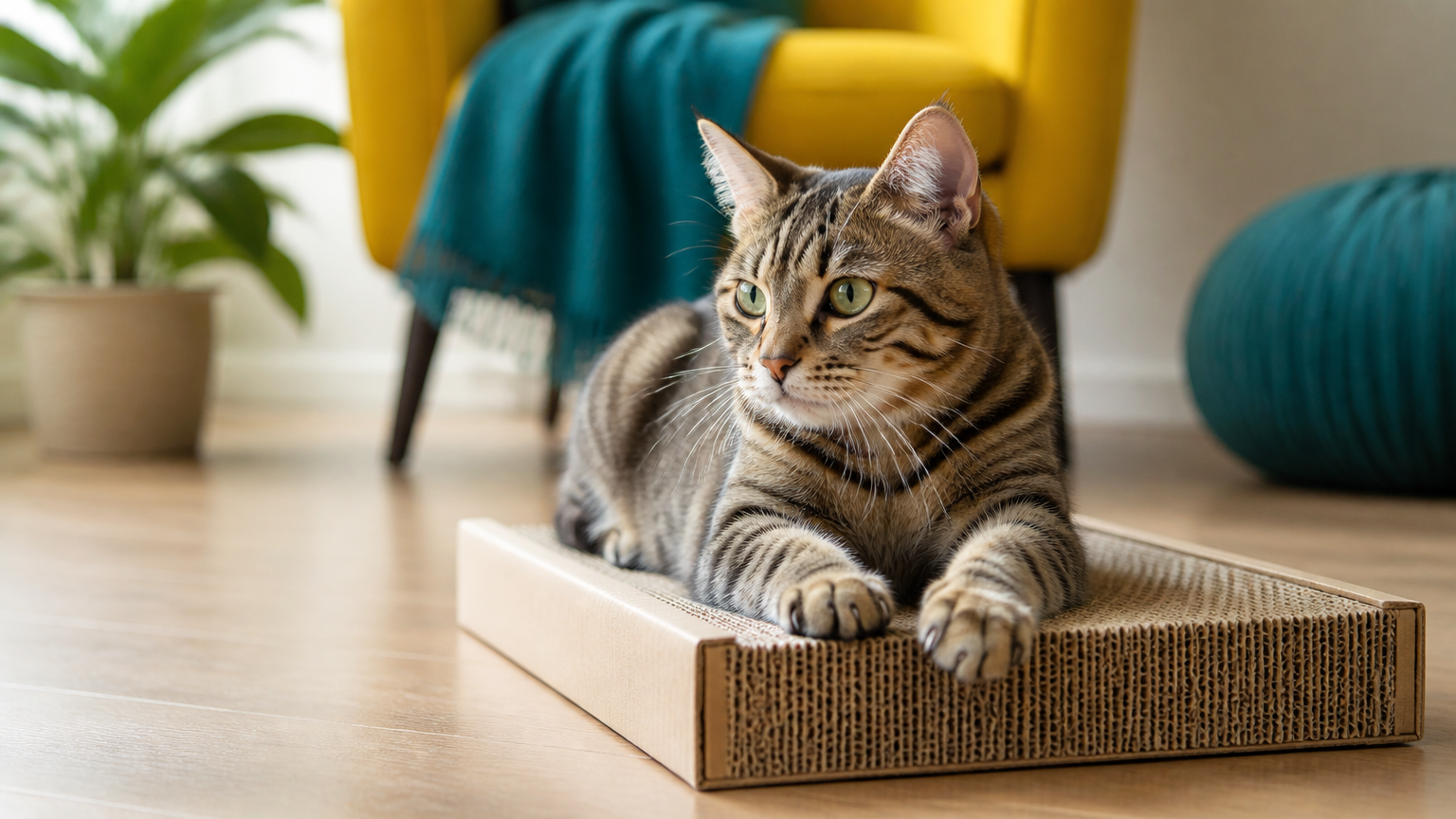
A separate climbing spot gives your cat somewhere appropriate to perch while the Christmas tree is up. A sturdy cat tree, perch or cleared space on stable furniture can work. Place it in a social area your cat enjoys, but far enough from the Christmas tree that it doesn’t become a launching platform.
Make the alternative interesting before your cat starts climbing the holiday tree. Offer a favorite cat toy or a small treat at the approved spot, and praise your cat when they use it. Best Friends Animal Society recommends rewarding cats for choosing another activity rather than punishing them for approaching the tree.
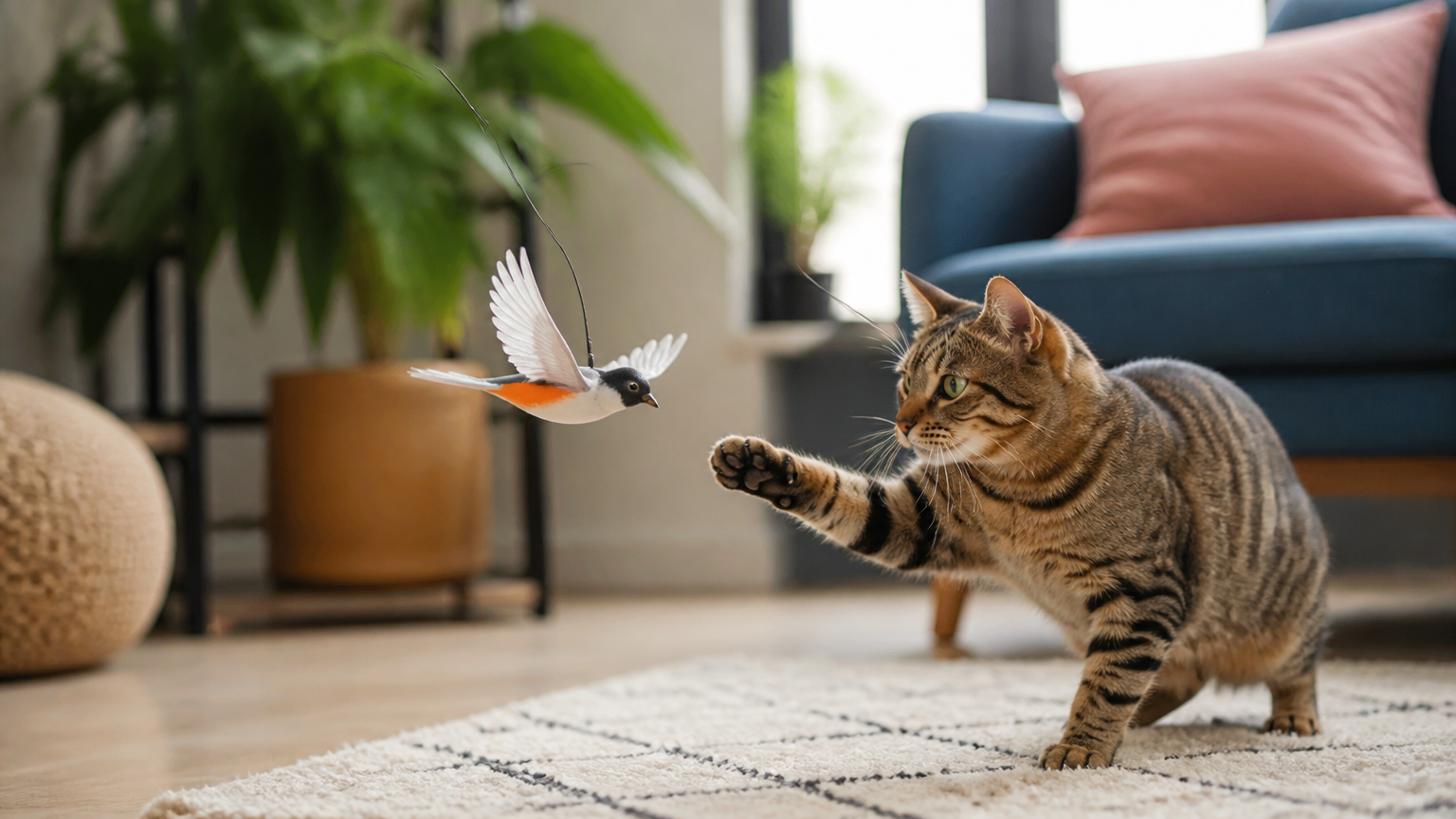
A few short play sessions can also give your cat an outlet for chasing and batting. Put wand toys and other toys with strings away after supervised play so they aren’t left available to chew.
If your cat returns to the Christmas tree, calmly redirect them to the perch or play area. Consistency helps, but it’s still sensible to restrict access when you can’t watch. The goal is a safer room, not a promise that your cat will lose all interest in the tree.
When to Call Your Veterinarian
Call your veterinarian promptly if your cat swallows, or you suspect they swallowed, tinsel, ribbon, ornament pieces, needles or artificial tree material. Don’t wait for symptoms before asking for advice. Tell the veterinary team what your cat may have eaten and keep any relevant packaging or matching material to show them.
If string or ribbon is visible in your cat’s mouth or coming from their rear, don’t pull it. Contact a veterinarian immediately. Swallowed string can become caught inside the digestive tract, and pulling it could cause further injury.
Seek urgent veterinary help if your cat has been shocked, is having trouble breathing, collapses or appears seriously injured after a tree falls. For vomiting, mouth irritation or other concerning changes after your cat has been around the tree, contact your vet for guidance.
Don’t give medication or try to make your cat vomit unless a veterinarian specifically instructs you to do so. While you arrange care, keep your cat away from the tree and any remaining hazards.
Conclusion
A cat in a Christmas tree needs a calm exit and a safer setup, not a scolding. Start with the hazards you can remove, then give your cat another place to climb and play.
- Secure the tree and limit access when you can’t supervise.
- Skip tinsel, ribbon and breakable ornaments.
- Keep cords, needles and tree water out of reach.
- Call your veterinarian if your cat swallows tree material or is injured.
Next Step: Explore the cat furniture category at BaxterBoo for a climbing spot your cat can enjoy beyond the holiday season.
FAQ
Why does my cat hide inside the Christmas tree?
The branches offer a new hiding place as well as an opportunity to climb. Your cat may also be interested in the ornaments or the attention the tree receives.
Can I let my cat sit in the Christmas tree?
It’s safer to encourage your cat to use a sturdy cat tree or perch instead. A Christmas tree can tip, and its decorations, lights and branches can create hazards.
Is an artificial Christmas tree safe for cats?
An artificial tree avoids real needles and tree water, but it isn’t risk-free. Cats can chew branch material or knock the tree over, so secure it and prevent access if your cat keeps climbing or chewing.
What should I do if my cat eats part of the Christmas tree?
Contact your veterinarian and explain what your cat may have swallowed. If you see string coming from your cat’s mouth or rear, don’t pull it.




- Site & Contents BaxterBoo.com. BaxterBoo is located in the United States.
- Privacy & Security
- Terms of Use
- Accessibility Statement
