Save 15% on your 1st Autoship learn more

 Email us
 Live Chat
 FAQs
FAQs





Introduction
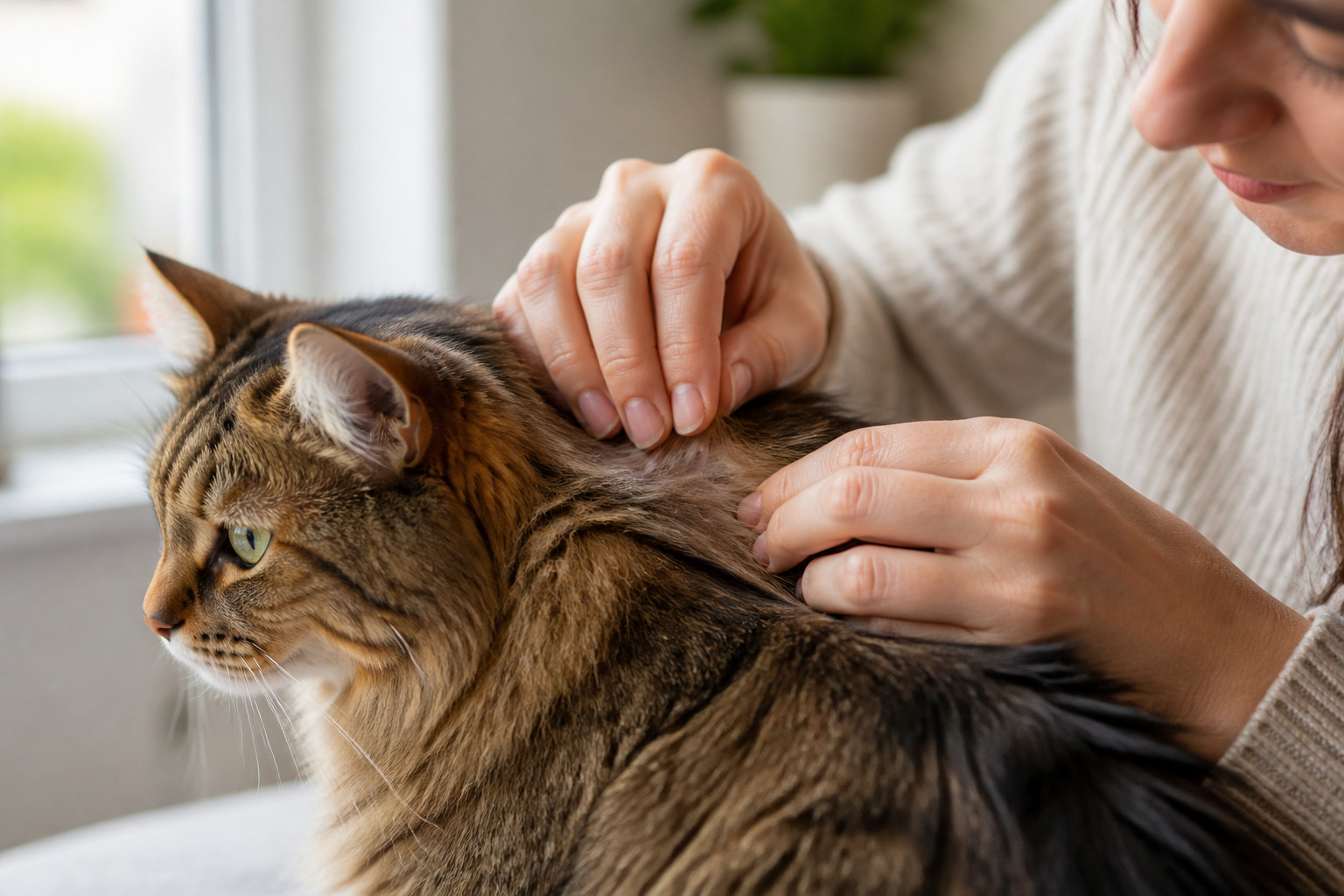
Petting your cat is usually a relaxing way to bond at the end of the day. You might be sliding your hand down their spine when you suddenly feel a hard, thick clump of fur near the base of their tail. When you separate the hair to look closer, a flurry of white flakes spills out. Seeing cat matted fur on back dandruff is a common experience for many owners. It often serves as a visual signal that your cat is struggling to keep up with their daily grooming routine. At BaxterBoo, we know how frustrating it is to see your feline friend looking a bit unkempt. This guide will help you understand why these mats and flakes appear together. We will also provide practical steps to restore your cat's coat to its natural shine.
Quick Answer: Mats and dandruff often occur together because the tangled fur traps dead skin cells that would normally be groomed away. This is usually caused by mobility issues, obesity, or dental pain that prevents the cat from reaching their back and tail area.
The Connection Between Mats and Dandruff
Dandruff and mats are not separate problems. They are often two sides of the same coin. Cats are meticulous groomers that spend hours every day licking their fur. This process does more than just keep them clean. It removes loose hair and distributes natural skin oils across the body. It also lifts away dead skin cells.
When a cat stops grooming a specific area, loose hair begins to tangle. These tangles eventually turn into tight mats. Because the hair is so densely packed, dead skin cells cannot fall away naturally. They get trapped against the skin and within the mat. When you finally break the mat apart, you see a concentrated amount of white flakes. This creates the classic look of cat matted fur on back dandruff.
The skin under a mat can also become dry and irritated. Mats prevent air from reaching the skin surface. This lack of airflow can lead to a buildup of moisture and heat. Over time, the skin becomes flaky and even more prone to shedding dead cells. It is a cycle that continues until the mat is removed and the skin can breathe again.
Why the Back and Tail Base are Problem Areas
The lower back and the base of the tail are the most common spots for these issues. This is because these areas require the most flexibility to reach. A cat has to twist their body into a "C" shape to groom their lower spine. If a cat feels any discomfort, this is the first area they stop cleaning.
Gravity also plays a role. Loose hair from the upper back often migrates down toward the tail. If the cat is not actively removing this shed hair, it settles and starts the matting process. This is especially true for long-haired breeds or cats with very dense undercoats.
Key Takeaway: Mats on the lower back are a primary indicator of "grooming reach" issues. If your cat cannot twist comfortably, the back and tail area will be the first to show signs of neglect.
Health Factors That Stop Grooming
If you notice your cat is failing to groom their back, it is rarely due to laziness. Most cats have a strong instinct to stay clean. A sudden or gradual stop in grooming usually points to a physical barrier.
Osteoarthritis and Joint Pain
This is the leading cause for senior cats. Arthritis makes twisting and bending painful. If it hurts to reach the lower back, the cat will simply skip that area. You might notice your cat looks clean on their chest and front legs but messy everywhere else. For more information about mobility-related grooming changes, read about arthritis care for cats.
Obesity and Weight Issues
An overweight cat may physically be unable to reach their back. Their own body mass acts as a barrier. If they cannot reach the area with their tongue, mats and dandruff will inevitably form. Weight management is often the most effective long-term cure for grooming issues in heavy cats.
Dental Problems
Grooming requires a healthy mouth. If a cat has a painful tooth, a gum infection, or oral inflammation, licking their fur becomes a chore. They may stop grooming entirely to avoid the pain of their tongue rubbing against their fur. You can also review these pet dental care tips when building a regular oral-care routine.
Vet Tip: If you notice a sudden change in your cat's grooming habits, schedule a check-up with your veterinarian. They can check for hidden sources of pain like dental disease or early-stage arthritis that may be causing the lack of self-care.
The Role of the BaxterBoo Pharmacy
Sometimes grooming issues are a symptom of a metabolic condition. Hyperthyroidism or diabetes can change the texture of a cat's skin and coat. These conditions often make the skin oilier or much drier than normal. Both extremes lead to more dandruff and easier matting.
Our pharmacy provides a direct way to manage these underlying health concerns. We work through a partnership with Pet's Choice to offer FDA-approved medications and prescription diets. If your vet determines that a medical condition is causing the skin issues, you can find the necessary treatments through our cat pharmacy. This includes prescription foods designed for weight management or skin support.
Accessing these items requires a valid prescription from your vet. Having a reliable source for these medications ensures your cat gets the support they need to feel better. When a cat feels healthy, they are much more likely to return to their normal grooming habits.
Safe Methods for Removing Mats
Removing a mat near the skin requires patience and the right tools. Never use sharp craft scissors or kitchen shears. A cat's skin is incredibly thin and can easily be pulled into the blades. You can find additional coat-care supplies in our cat grooming collection.
The Cornstarch Trick
Cornstarch is a great tool for loosening mats. Sprinkle a small amount directly onto the mat and work it in with your fingers. The starch helps the hair fibers slide past each other. This makes it easier to gently pull the mat apart without tugging on the skin.
Using the Right Brushes
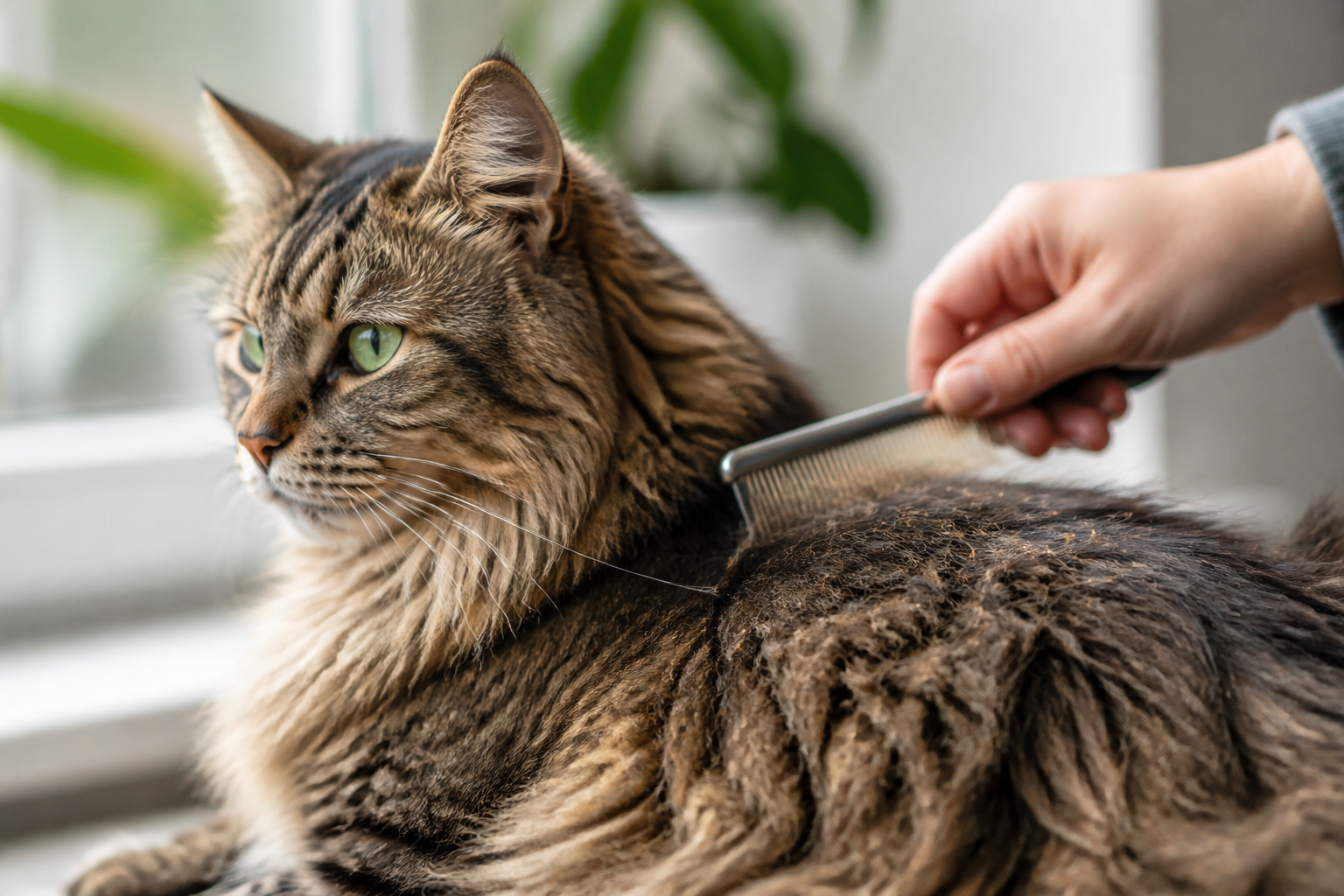
For the back and tail area, a stainless steel greyhound comb is your best friend. Start at the very edge of the mat and work your way inward. Do not try to pull the whole clump out at once. Hold the base of the hair near the skin so you are not pulling on the cat's body. A flexible slicker brush can also help reach difficult areas during routine grooming.
Step-by-Step Mat Removal
Step 1: Calm your cat. / Use treats or a calming spray to ensure your cat is relaxed before you begin.
Step 2: Apply a lubricant or starch. / Use a cat-safe detangling spray or cornstarch to reduce friction.
Step 3: Separate the mat. / Use your fingers to pull the mat into smaller sections before using a comb.
Step 4: Gently comb out. / Work from the tips of the hair down toward the skin until the hair is smooth.
Key Takeaway: Slow and steady is the rule for mat removal. If a mat is too tight or sits flush against the skin, seek professional help from a groomer to avoid injury.
Managing Dandruff Through Nutrition
Healthy skin starts from the inside. If your cat has chronic dandruff, their diet might be missing essential fatty acids. Omega-3 and Omega-6 fatty acids are vital for maintaining the skin's moisture barrier.
We carry several high-quality supplements that focus on skin and coat health. Brands like Zesty Paws and Stella and Chewy's offer options that are easy to add to your cat's meal. Look for supplements that contain fish oil or flaxseed oil. These ingredients help reduce inflammation in the skin and stop the excessive shedding of skin cells. Explore skin and coat support for cats to compare available options.
High-protein diets with real meat as the first ingredient also support hair growth. Cats need a significant amount of protein to maintain their fur. If their diet is too high in fillers, the quality of their coat will suffer. This makes the hair more brittle and prone to tangling.
Environmental Factors and Dry Air
The air inside your home can contribute to the "cat matted fur on back dandruff" problem. This is especially common during the winter months. When the heater runs constantly, it strips the humidity from the air. This dries out your cat's skin just as it does your own.
A dry coat creates more static electricity. Static causes individual hairs to cling together. This creates the "seeds" of mats. When the skin is dry, it also produces more flakes.
Solutions for Dry Air
- Use a humidifier in the rooms where your cat spends the most time.
- Offer more wet food to increase your cat's overall hydration.
- Avoid over-bathing, which can strip away natural oils.
- Use a damp cloth to wipe down your cat's back to reduce static.
When to Call the Veterinarian
While most cases of dandruff and mats are about grooming and environment, some situations require professional help. If the skin under the mat is red, oozing, or smells bad, it may be infected. This is a common issue when mats are left for too long.
You should also look for signs of parasites. Fleas can cause a cat to over-groom some areas while neglecting others due to irritation. A specific mite called Cheyletiella is often nicknamed "walking dandruff." It looks like large flakes of skin but is actually a parasite. This requires specific medication from a vet.
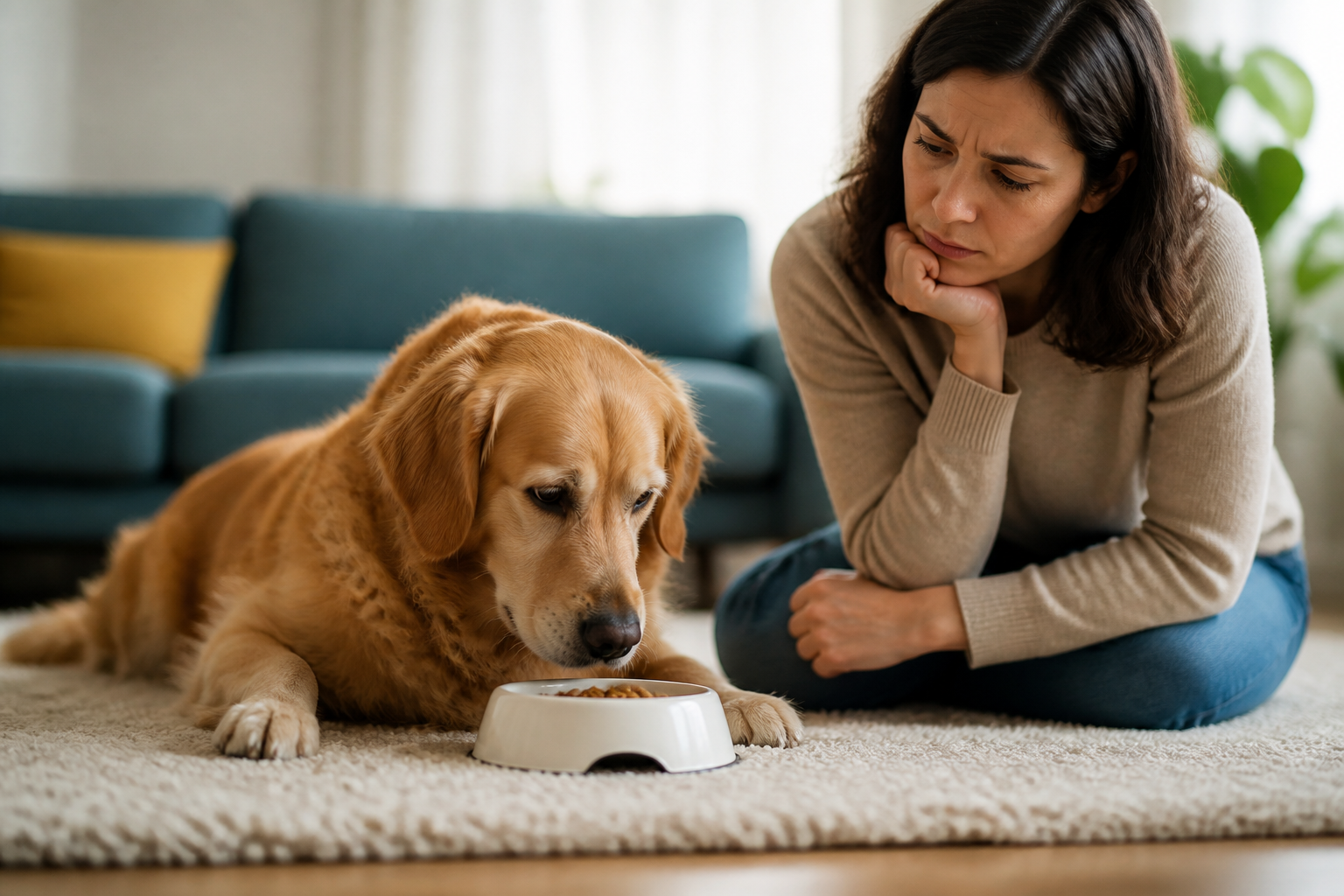
If your cat seems lethargic or has a change in appetite along with their messy coat, it is time for a visit. A dull, matted coat is often one of the first outward signs of internal illness. Catching these problems early makes them much easier to manage.
Choosing the Right Grooming Gear
At BaxterBoo, we believe that having the right tools makes grooming a bonding experience rather than a chore. Every cat owner should have a basic kit for coat maintenance.
- Slicker Brushes: These are great for removing loose undercoat hair before it can mat. The Master Grooming Tools Flexible Slicker Dog and Cat Brush is designed to provide flexibility around hard-to-reach areas.
- Metal Combs: These are essential for checking for mats that a brush might miss.
- Waterless Shampoos: These help clean the fur and reduce dandruff without the stress of a full bath. Browse waterless grooming options for cats.
- Deshedding Tools: These are helpful for cats with very thick coats to reduce the amount of shed hair.
Regularly using these tools for five minutes a day can prevent most mats from ever forming. It also allows you to keep an eye on your cat's skin health. You will notice small flakes before they become a major dandruff issue.
Bottom line: Consistent, gentle grooming is the most effective way to prevent the buildup of mats and dandruff on your cat's back.
Conclusion
Managing cat matted fur on back dandruff is about more than just appearance. It is about your cat's comfort and overall health. By understanding that mats trap skin flakes, you can see why the two issues appear together. Whether the cause is aging joints, weight issues, or dry winter air, there are many ways you can help. Start by improving their nutrition with Omega-3 supplements and using the right grooming tools. If the problem persists, our cat pharmacy is here to help with any prescription needs your vet recommends. Keeping your cat's coat clean and flake-free helps them feel their best every day.
- Brush your cat daily to prevent loose hair from tangling.
- Add fish oil supplements to support the skin's moisture barrier.
- Monitor your cat's weight to ensure they can reach their back.
- Use a humidifier to combat dry indoor air.
Key Takeaway: A matted coat with dandruff is a message from your cat that they need help with their grooming. Addressing it early prevents skin infections and improves their quality of life.
FAQ
Why does my cat only have mats and dandruff on their lower back?
The lower back and tail base are the most physically demanding areas for a cat to reach. If a cat has arthritis, obesity, or dental pain, they will stop grooming these areas first. This leads to a buildup of loose hair and trapped skin cells.
Should I give my cat a bath to get rid of dandruff?
Bathing is usually not recommended for cat dandruff unless specifically ordered by a vet. Water can actually make mats tighter and harder to remove. Most cats find baths stressful, which can worsen skin conditions. Instead, use a waterless foam shampoo or a damp cloth to clean the area.
Can a change in diet really help with matted fur?
Yes, a diet rich in high-quality proteins and healthy fats provides the building blocks for a strong coat. Omega fatty acids specifically help the skin stay hydrated, which reduces dandruff. A healthy coat is more flexible and less likely to snag and form mats.
Is it safe to cut mats out with scissors?
Using standard scissors is very risky because cat skin is extremely stretchy and thin. It is very easy to accidentally cut the skin while trying to remove a mat. It is much safer to use a specialized mat-splitting tool or to gently work the mat out with cornstarch and a metal comb.