Save 15% on your 1st Autoship learn more

 Email us
 Live Chat
 FAQs
FAQs





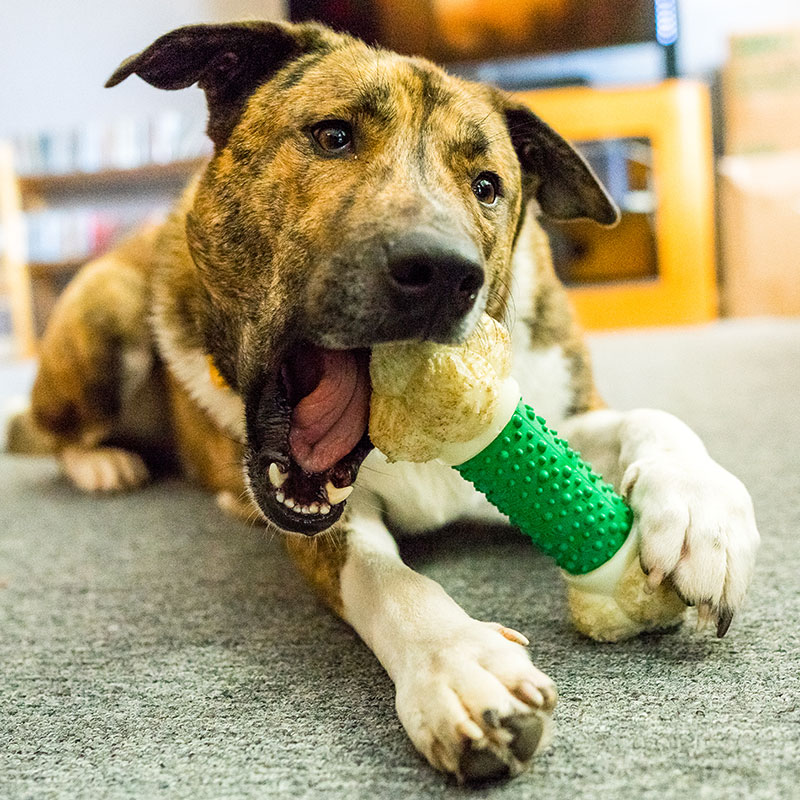
As a new pet owner, you may become frustrated by your dog's indiscriminate chewing habits that can destroy your possessions. You may wonder how you can stop your dog from chewing, but this really isn't the right question to ask. Chewing is a normal, instinctual, and beneficial behavior for dogs, so you don't really want to stop your dog from chewing altogether. Rather, you want to redirect the behavior in a way that satisfies your dog's instinct while preserving your home.
Why Do Dogs Chew?
The first step to modifying your dog's chewing behavior is to understand why he is chewing. Dogs chew for many different reasons, so this may require some detective work. The reason that your dog is chewing may depend on his age. If your dog is still a puppy, then his adult teeth won't come in fully until he is at least six months old. Prior to that time, he may experience gum irritation and pain from teething, just as human babies do. Chewing helps to relieve the pain. If your puppy is chewing inappropriately, it can help to give him a cooling chew toy to help numb his gums.
It is also a good idea to consult a vet about your dog's chewing behavior. Chewing can be a coping mechanism in dogs that experience symptoms of gastrointestinal conditions. Treating the underlying condition may help to decrease the destructive chewing behavior.
Once you have ruled out a medical condition, the most likely cause of destructive chewing behavior in a grown dog is probably emotional. Dogs that are left alone for extended periods can become anxious or bored. Chewing is a way for them to occupy their minds and relieve their tension.
Why Is Chewing Good for Dogs?
When dogs' wild ancestors had to hunt for their food, their survival depended on keeping the muscles of their jaws strong and supple so they could apply the necessary force to take down their prey. Chewing and gnawing on the carcasses of their prey helped to strengthen these muscles. Domestic dogs no longer need to hunt to survive, but they still benefit from keeping their jaw muscles strong by chewing.
Chewing and gnawing on the bones of their prey also helped dogs' wild ancestors to keep their teeth clean and free from tartar or plaque. As a dog owner, you should brush your dog's teeth as part of her care routine, but chewing still has a supplemental role to play in your dog's oral hygiene. Some toys are made of hard materials with raised bristles specifically to help keep a dog's teeth clean. Other toys are made of soft, organic materials that are naturally abrasive , such as loofah, which works on your dog's teeth in the same way as dental floss.
How Can You Prevent Destructive Chewing Behaviors?
One of the best ways to stop your dog from chewing your stuff is to give him his own toys that he is allowed to chew. Chew toys are already designed to be appealing to dogs by making noises when squeezed or being scented or flavored like food. When your dog chooses a chew toy over an inappropriate item, you should provide positive reinforcement by praising him. While you should make one or two toys available at all times, you should also create interest by rotating the toys available rather than giving them to your dog all at once. Dogs like novelty and appreciate a challenge. They get bored with toys that are always within easy reach.
You should supervise your dog as much as possible, and if your catch your dog chewing something that she should not, you should scold her immediately. However, do not scold your dog for something that she chewed hours ago. She will not remember chewing the item and will not understand why you are upset. Therefore, she will not learn not to chew, but she may learn to be afraid of your capricious moods. You can be proactive in preventing your dog from chewing by teaching the "leave it" command as soon as possible. Once your dog has learned it, you can give the command when your dog gets ahold of something she should not have, and she will know to let go of it.
When it is not possible to supervise your dog, you should confine him to a crate or an area of the home that has been "puppy-proofed," i.e., cleared of all objects that you do not want him to chew on. However, be careful not to confine your dog for too long. You may want to hire a dog walker to let him out during the day or install a pet door so he can go in and out as he pleases.
If your dog is chewing because she is bored, you may want to try giving her a toy that provides mental stimulation. Some toys can be stuffed with food or treats , which presents both an engaging challenge for your dog and a reward when she finally figures it out.
Finally, one of the best ways to stop your dog from chewing is to make sure he gets plenty of exercise. A nice, long walk or jog before you leave for work will tire him out so that he'll likely spend most of his time sleeping while you are gone and be ready for more play and cuddles by the time you get home.
Remember that you cannot stop your dog from chewing, nor do you want to because chewing is good for him. Instead, you need to provide him with items that he can chew on and teach him which objects are appropriate for chewing and which are not.