Save 15% on your 1st Autoship learn more

 Email us
 Live Chat
 FAQs
FAQs





Introduction
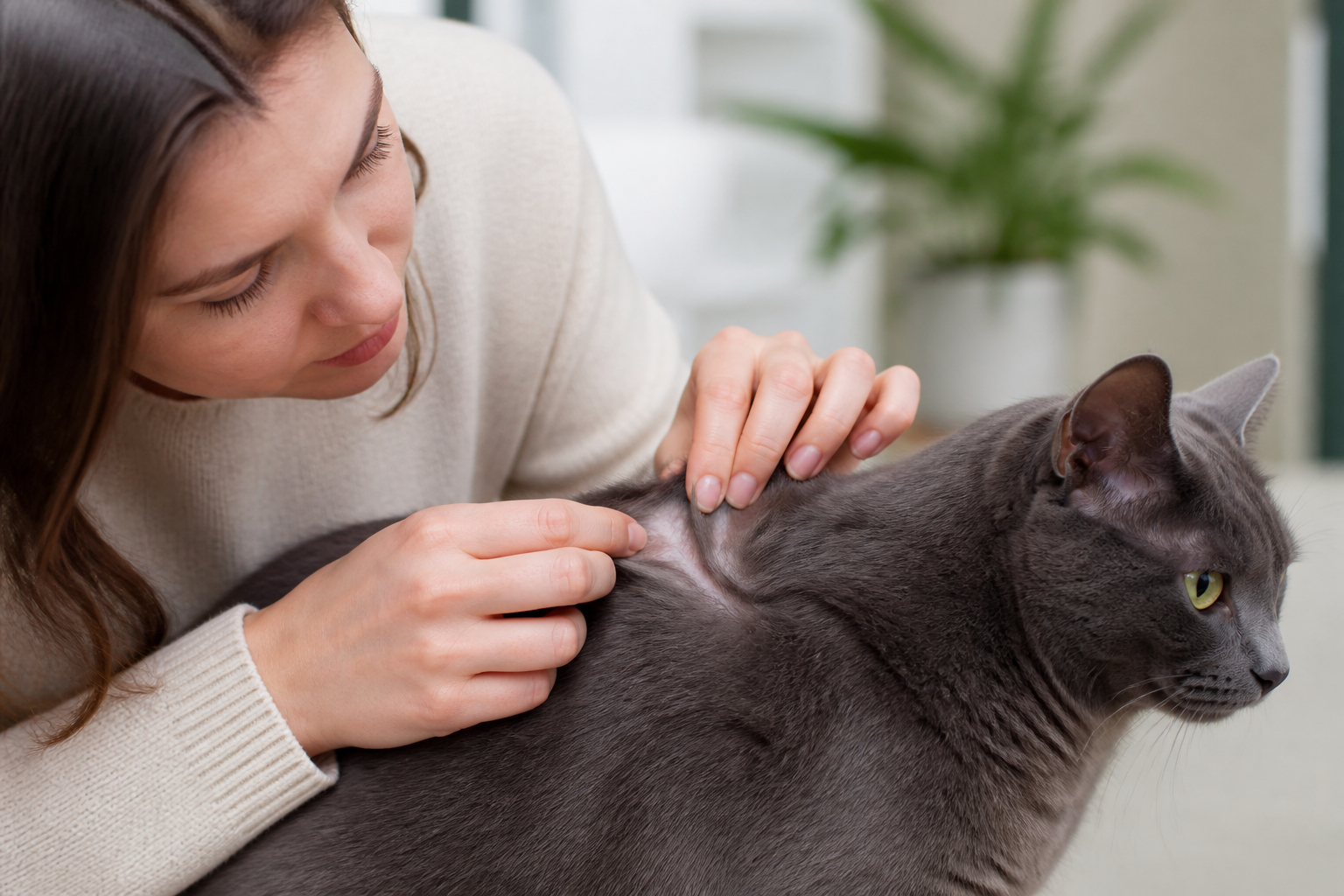
You are enjoying a quiet moment petting your cat when you notice tiny white specks scattered across their fur. At first, you might think it is just a bit of dust or salt. However, these small particles often tell a more complex story about your pet's health. Distinguishing between harmless dry skin and a developing parasite problem is a common challenge for many owners. We see this often at BaxterBoo, where pet parents come to us looking for clarity on skin issues. This post covers the physical traits, behavioral signs, and simple tests to help you identify what is hiding in your cat's coat. Understanding these differences is the first step toward restoring your cat's comfort and maintaining a clean home.
Quick Answer: Dandruff consists of irregular, flat, and flaky skin cells that often stick to the fur. Flea eggs are uniform, oval-shaped, and smooth specks that do not stick to hair and fall easily into the environment.
Physical Characteristics of Cat Dandruff
Dandruff is technically called "scale" by many veterinarians. It is a collection of dead skin cells that have clumped together and shed from the surface of the skin. Every cat sheds skin naturally as part of the renewal process. However, when the skin is irritated or overly dry, this process accelerates and becomes visible to the naked eye.
Dandruff flakes are almost always irregular in shape. If you look closely, you will see some are tiny specks while others are larger, jagged pieces. They are usually flat and have a dull, white or grayish appearance. Because skin cells are somewhat porous, they tend to get snagged on the hair shafts. This means dandruff often stays on the cat rather than falling off immediately.
You will most likely find dandruff along the lower back and near the base of the tail. These are areas where oils can accumulate or where a cat might have trouble reaching during their daily grooming routine. If you run your hand against the grain of the fur, the flakes will likely stay trapped in the coat.
Key Takeaway: Dandruff is irregular, flat, and often stays trapped in the fur due to its jagged edges and the natural oils on the hair.
Identifying Flea Eggs on Your Cat
Flea eggs are entirely different in structure and behavior. A female flea can lay up to 50 eggs per day. These eggs are about 0.5 millimeters long. This makes them roughly the size of a grain of salt or a small grain of sand. Unlike dandruff, every flea egg is the same shape. They are perfectly oval with rounded ends.
Flea eggs have a pearlescent, off-white, or translucent appearance. They look almost like tiny, shiny beads under a magnifying glass. The most significant difference is their texture. Flea eggs are smooth and lack any sticky coating. This is an evolutionary trait that allows the eggs to fall off the host and into the carpet or bedding.
If you see white specks on your cat that seem to vanish as soon as the cat moves, you are likely looking at flea eggs. They do not cling to the hair. Instead, they slide right off and settle into the places where your cat sleeps. This is why you often find more "white dust" in a cat's bed than on the cat itself.
The Role of Flea Dirt
If you suspect flea eggs, you should also look for flea dirt. Flea dirt consists of digested blood excreted by adult fleas. It looks like small specks of black pepper or dark dirt.
You can perform a simple test to confirm this. Place the dark specks on a wet white paper towel. If the specks dissolve and create a reddish-brown stain, it is flea dirt. Since flea eggs and flea dirt usually appear together, finding these dark specks is a strong indicator that the white particles are eggs.
Common Causes of Feline Dandruff
Dandruff is rarely a condition on its own. It is usually a symptom of an underlying issue. Identifying the cause is the only way to make the flakes disappear for good.
Environmental Factors
Low humidity is a major cause of dry skin in cats. This is especially common during the winter months when indoor heating systems strip moisture from the air. This dry air pulls moisture from your cat's skin, leading to flaking. Using a humidifier in the rooms where your cat spends the most time can make a significant difference.
Nutritional Deficiencies
The skin is the largest organ of the body. It requires specific nutrients to stay healthy and supple. A diet low in omega-3 and omega-6 fatty acids often results in a dull coat and flaky skin. We carry brands like Zesty Paws and Stella and Chewy's that focus on high-quality ingredients to support skin health.
Grooming Issues
Cats are famous for their cleanliness. However, some cats lose the ability or the desire to groom themselves effectively. Obesity is a common reason for this. A cat that is overweight cannot reach its lower back, leading to a buildup of dead skin.
Senior cats also struggle with grooming. Arthritis or general stiffness can make it painful for them to twist and reach certain areas. When grooming stops, dandruff starts to accumulate.
Vet Tip: If your cat has suddenly stopped grooming or has developed severe dandruff, consult your veterinarian. Flaky skin can sometimes be a sign of systemic issues like diabetes or hyperthyroidism that require medical management.
Medical Conditions That Mimic Dandruff
There are certain parasites and infections that can look like standard dandruff but require specific medical treatment.
One example is Cheyletiellosis, which is often called "walking dandruff." This is caused by a specific type of mite that lives on the skin surface. These mites are large enough to be seen with the naked eye. As they move under the scales of the skin, the dandruff appears to be moving.
Fungal infections like ringworm can also cause localized crusting and flaking. These conditions are contagious to other pets and humans. They cannot be treated with standard grooming or moisturizers.
Our pharmacy at BaxterBoo offers a variety of FDA-approved medications for skin conditions and parasite control. Through our partnership with Pet's Choice, we provide access to prescription treatments that your vet may recommend for these specific medical issues. You can explore our pet pharmacy for available options.
Testing to Tell the Difference
If you are still unsure whether you are seeing dandruff or eggs, you can perform two quick tests at home. These tests require no special equipment other than a fine-tooth comb and some dark paper.
The Comb Test
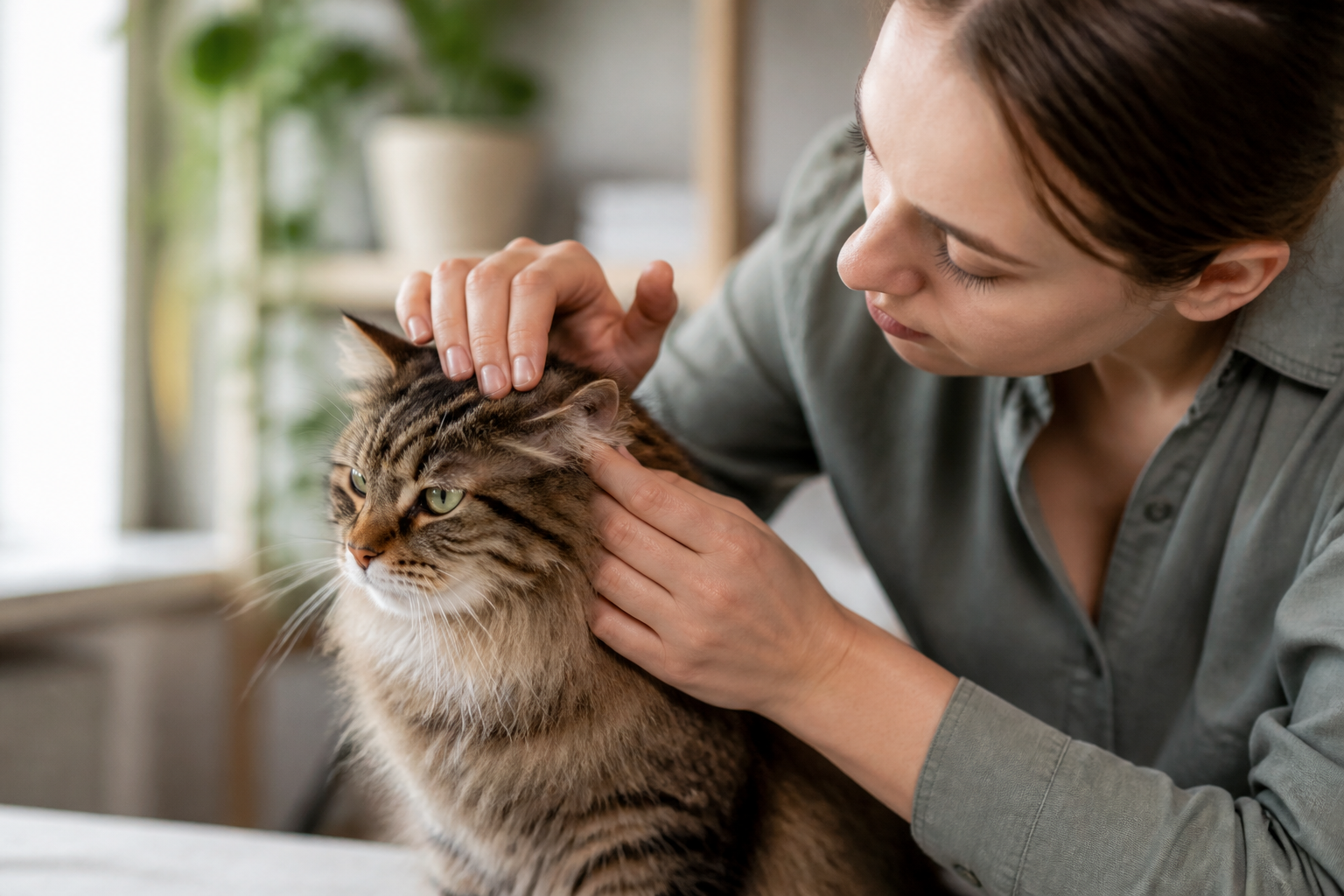
Use a fine-tooth flea comb to brush through your cat's fur. Focus on the base of the tail and the neck area.
- Brush the cat over a dark piece of construction paper or a dark towel.
- Observe the particles that fall onto the surface.
- Use a magnifying glass if possible.
- If the particles are flat, jagged, and vary in size, it is dandruff.
- If the particles are uniform, oval, and roll around easily, they are flea eggs.
The Stickiness Test
Gently touch a white speck while it is still on your cat's fur.
- Try to move it with your fingertip.
- If it feels stuck to the hair or skin, it is likely dandruff or a skin scab.
- If it slides down the hair shaft with almost no resistance, it is a flea egg.
- Try to crush the speck between your fingernails.
- Dandruff will crumble easily. Flea eggs are surprisingly resilient and may pop rather than crumble.
Bottom line: Physical behavior is the best indicator. Dandruff clings and crumbles, while flea eggs roll and resist crushing.
Managing Fleas and Their Eggs
Finding flea eggs means you have an active infestation in your home. The eggs you see are only a small percentage of the total flea population. For every flea you see on your cat, there are likely hundreds of eggs, larvae, and pupae in your carpets and furniture.
To eliminate flea eggs, you must break the life cycle. This involves a multi-step approach:
- Treat the cat: Use a vet-recommended flea preventive. This kills adult fleas before they can lay more eggs.
- Vacuum daily: Vacuuming picks up eggs and larvae. It also creates heat and vibration that encourage pupae to hatch, making them easier to kill.
- Wash bedding: Use hot water and high heat in the dryer for all pet bedding. This kills eggs and larvae instantly.
- Environmental treatment: In severe cases, you may need to treat your home with an insect growth regulator (IGR).
Our pharmacy carries a wide selection of flea and tick preventives. This includes topical treatments, oral medications, and collars from trusted brands like Frontline and NexGard. Since some of the most effective treatments require a prescription, we work closely with your vet through Pet's Choice to get your cat the protection they need. Browse our cat flea and tick collection for prevention options.
For more information about choosing a prevention method, read our guide to flea and tick prevention products.
Treating and Preventing Cat Dandruff
If you have confirmed that the white specks are dandruff, the goal shifts to skin hydration and health. Most cases of mild dandruff can be managed with changes to your home routine.
Improve the Diet
Switching to a premium food can improve skin quality from the inside out. Look for recipes that include real animal proteins and added fish oils. Brands like Farmina Vet Life offer specialized diets for pets with sensitivities. You might also consider adding a dedicated skin and coat supplement to their current meals.
Targeted Grooming
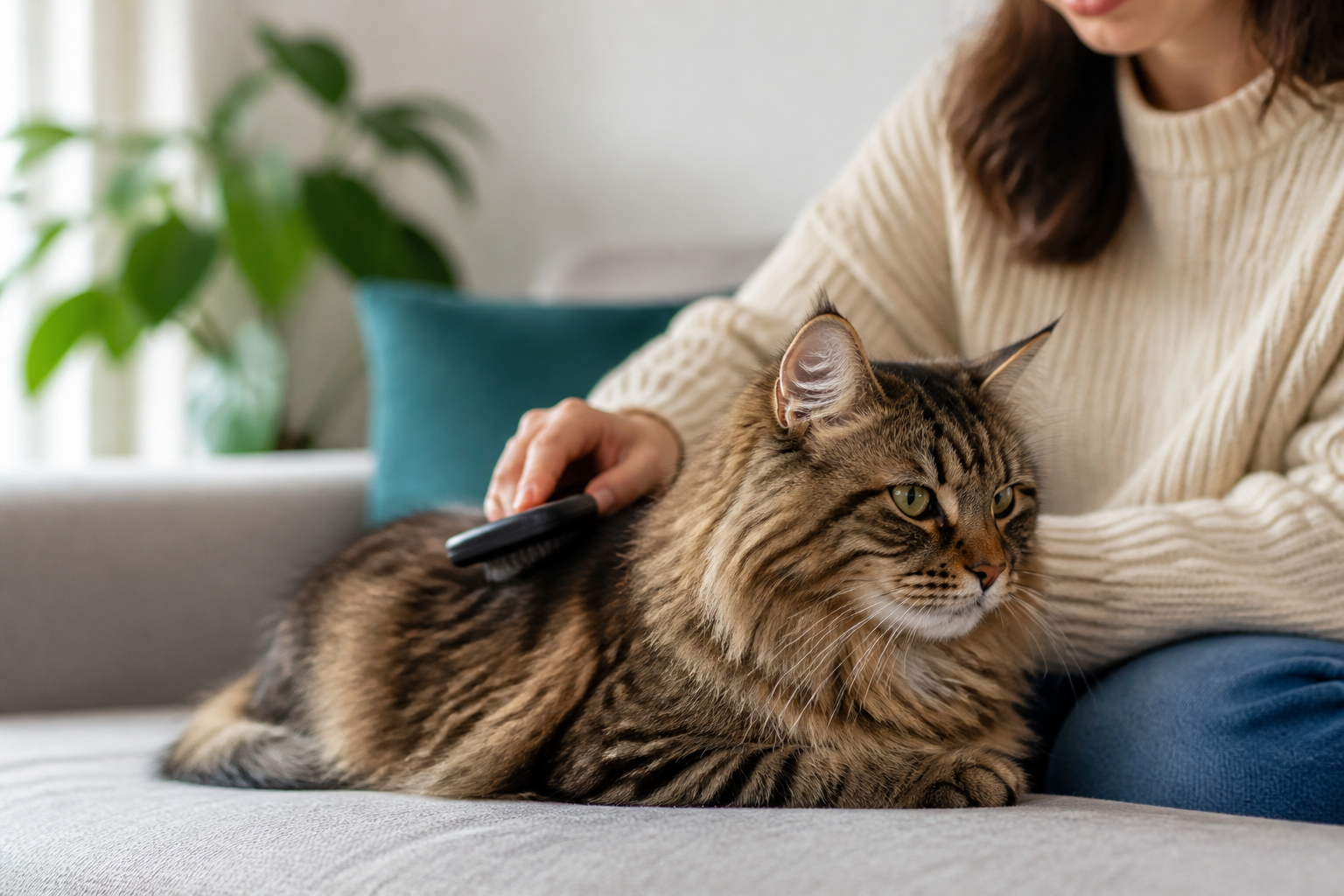
Regular brushing is essential for cats with dandruff. It helps distribute natural skin oils across the coat and removes the buildup of dead cells. For long-haired cats, a daily session is best. Short-haired cats can be brushed once or twice a week.
Avoid over-bathing your cat. While a bath might seem like a good way to wash away dandruff, too much water and soap can strip the skin of its natural protective barrier. This often makes the dandruff worse. If you must bathe your cat, use a moisturizing shampoo specifically formulated for felines.
You can also browse our cat skin and coat care collection for grooming and skin-care supplies.
Hydration Habits
Dehydration leads to dry skin. Ensure your cat has multiple sources of fresh water throughout the house. Many cats prefer running water, so a pet fountain can encourage them to drink more. Switching some of their dry kibble to wet canned food is another easy way to increase their daily moisture intake.
Key Takeaway: Treating dandruff requires a holistic approach that includes better nutrition, environmental humidity, and consistent grooming.
When to Seek Veterinary Care
While dandruff and flea eggs are often manageable at home, some situations require professional intervention. You should schedule a visit with your veterinarian if you notice any of the following:
- Red, inflamed, or bleeding skin under the white specks.
- Loss of fur or the presence of bald patches.
- Intense itching that leads to self-trauma or scabbing.
- A foul odor coming from the skin or ears.
- A sudden change in appetite or lethargy accompanying the skin issues.
A veterinarian can perform a skin scraping or a fungal culture to rule out more serious infections. They can also provide prescription-strength shampoos or medications if the dandruff is caused by a medical condition like seborrhea.
At BaxterBoo, we aim to be your partner in your cat's long-term wellness. Whether you are managing a temporary flea problem or a lifelong skin sensitivity, we provide the tools and resources you need. Our Autoship program is a great way to ensure you never run out of skin supplements or flea preventives, and it includes a free MVP Gold membership for extra savings.
Summary of Differences
| Feature | Cat Dandruff | Flea Eggs |
|---|---|---|
| Shape | Irregular, flat flakes | Uniform, oval |
| Texture | Rough, jagged, crumbles | Smooth, hard, pops |
| Stickiness | Often clings to hair | Falls off easily |
| Location | Mostly on the body | Mostly in bedding/carpet |
| Associated Signs | Dry skin, poor grooming | Flea dirt, intense itching |
Conclusion
Seeing white specks on your cat can be worrying, but identifying them correctly makes the solution clear. Dandruff usually calls for better nutrition and grooming, while flea eggs require a comprehensive approach to pest control. By observing the shape and behavior of these particles, you can take quick action to keep your cat comfortable. Our pharmacy and wide selection of grooming supplies are here to support you every step of the way. If your cat's skin issues persist or seem painful, always consult your veterinarian for a professional diagnosis and treatment plan.
Bottom line: Check the shape and stickiness of the white specks to distinguish between dry skin and a flea infestation.
FAQ
Can I use human dandruff shampoo on my cat?
No, you should never use human dandruff shampoos on cats. Human skin has a different pH level than feline skin, and many human products contain ingredients like zinc pyrithione or salicylic acid that can be toxic if your cat licks their fur. Always use a shampoo specifically formulated for cats to avoid irritation or poisoning.
Why do flea eggs fall off the cat so easily?
Flea eggs are designed by nature to fall off the host. This allows the fleas to spread throughout the animal's environment, such as in carpets and bedding, where the larvae can hatch and hide in dark places. This survival strategy makes it harder to eliminate fleas because the majority of the population lives in your home rather than on your pet.
Can a cat have both dandruff and fleas at the same time?
Yes, it is very common for a cat to have both. Flea bites can cause an allergic reaction known as flea allergy dermatitis, which leads to inflamed, itchy, and flaky skin. If your cat has fleas, the resulting skin irritation often causes a significant increase in dandruff.
Does my indoor cat still need flea prevention?
Yes, indoor cats are still at risk for fleas. Fleas can enter your home on your clothing, through window screens, or on other pets that go outside. Because flea eggs can remain dormant in the environment for a long time, consistent prevention is the best way to keep your indoor cat safe from infestations.