
 Save 15% on your 1st Autoship learn more

 Email us
 Live Chat
 FAQs
FAQs





Introduction
You lean in for a happy morning nuzzle only to be met with a puff of unmistakable dog breath. It is a common moment for many of us. We start searching for ways to freshen that breath and keep those pearly whites healthy. At BaxterBoo, we hear from many pet owners who want to know if natural chews like bully sticks can actually replace a toothbrush. Most people know dogs love the taste of these high protein treats. However, their role in oral hygiene is often debated. This article will look at the science behind how these chews work and how they impact plaque and tartar. We will also cover safety tips and how to choose the right size for your pet. Bully sticks are a highly effective tool for mechanical cleaning, but they work best as part of a broader dental care routine.
The Science of Chewing and Oral Bacteria
Many owners assume that only special dental biscuits or veterinary treatments can clean a dog's mouth. Science suggests otherwise. A study conducted at Rutgers University looked at how various chews affected the bacterial load on a dog's teeth. The researchers compared brushing with enzymatic toothpaste, specific dental chews, raw bones, and bully sticks.
The results were quite surprising for many pet parents. Raw bones showed the highest reduction in oral bacteria at 79 percent. Brushing came in second at around 70 percent. Bully sticks were not far behind, reducing bacteria by over 60 percent. This was actually more effective in the study than some treats specifically designed and marketed for dental health.
The reduction in bacteria happens because of two main factors. First, the physical act of gnawing scrapes the surface of the tooth. Second, the prolonged chewing session changes the environment inside the mouth. While brushing is still the gold standard for reaching the gum line, these natural chews provide a significant boost to a dog's daily oral hygiene.
Quick Answer: Yes, bully sticks help clean a dog's teeth by physically scraping away plaque and stimulating saliva production. Research shows they can reduce oral bacteria by up to 60 percent, making them a powerful supplement to regular brushing.
Mechanical Scraping: Nature's Toothbrush
To understand how bully sticks clean teeth, we have to look at the difference between plaque and tartar. Plaque is a soft, sticky film of bacteria that forms on the teeth within hours of eating. If it is not removed, it mixes with minerals in the saliva and hardens into tartar, also known as calculus. Once tartar forms, it is very difficult to remove without professional veterinary tools.
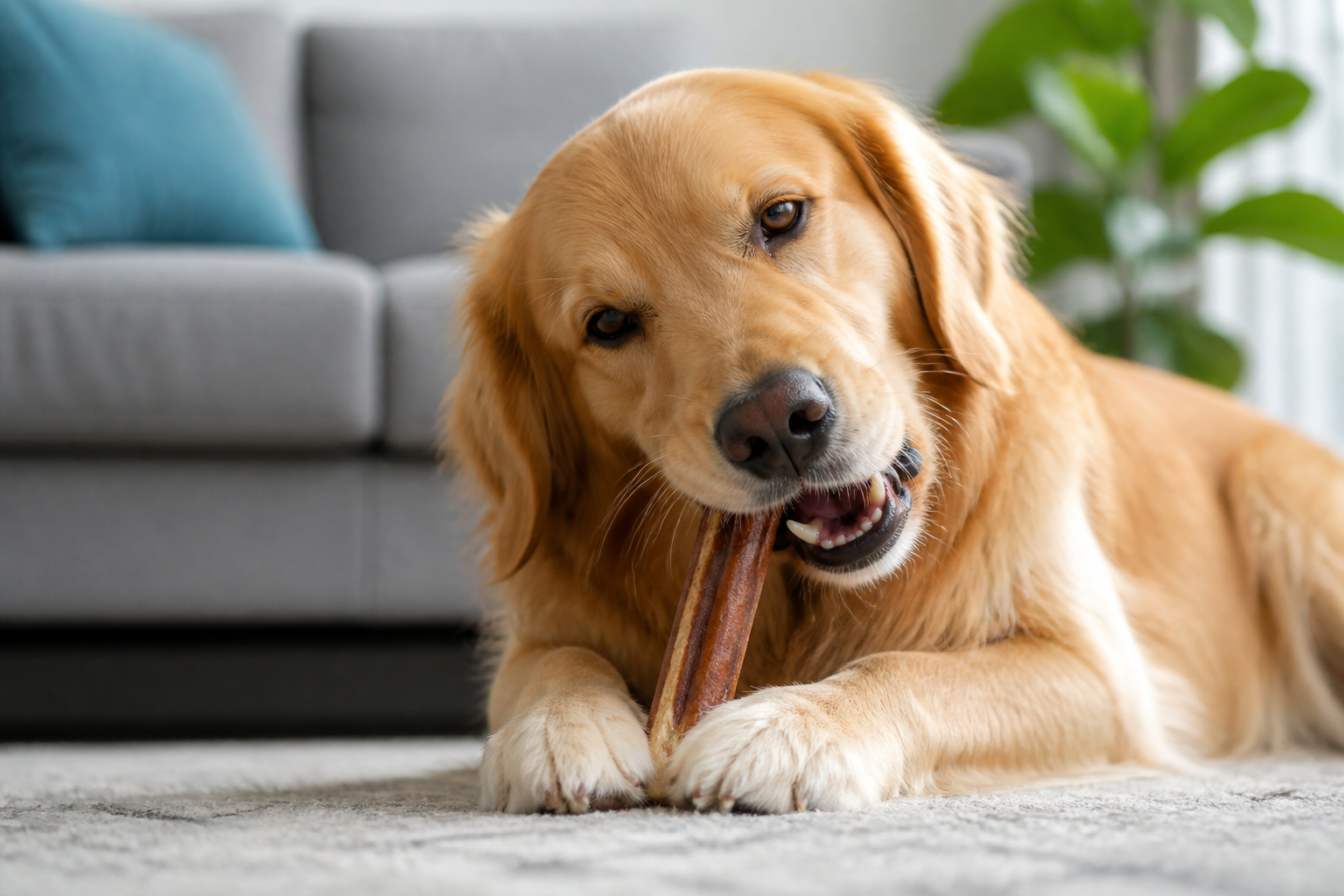
Bully sticks are made from 100 percent beef muscle. Specifically, they are dried bull pizzle. This material is very fibrous and tough. As a dog chews, the stick does not just crumble like a biscuit. It stays firm but becomes slightly fibrous as it moistens. This texture allows the chew to act like a very large, edible toothbrush.
As the dog gnaws on the stick, the fibers rub against the surface of the teeth. This friction helps "scrub" away the soft plaque before it has a chance to harden into tartar. Because dogs tend to use their back molars to work on a bully stick, these chews are particularly good at cleaning the teeth that are hardest for owners to reach with a brush. You can compare options in our bones, bully sticks, and natural chews collection.
The Saliva Factor: A Natural Mouthwash
The physical scraping is only half the story. The act of chewing itself is a biological trigger for a dog's body. When a dog settles in for a 20 or 30 minute chewing session, their mouth produces a significant amount of extra saliva.
Saliva is one of the best natural defenses against dental disease. It contains enzymes and antibacterial properties that help break down food particles. It also helps neutralize the acids produced by oral bacteria. These acids are what lead to tooth enamel erosion and gum disease.
The increased flow of saliva helps rinse the mouth and wash away loose debris. When combined with the mechanical action of the bully stick, this creates a two pronged attack on oral bacteria. This is why a long lasting chew is often more effective than a quick dental treat that a dog swallows in three bites.
Key Takeaway: The best dental benefits come from "prolonged" chewing. A treat that takes 15 to 30 minutes to finish provides much more mechanical cleaning and saliva stimulation than a treat eaten in seconds.
For more ideas about combining chews with brushing and other at-home habits, read our guide to the top pet dental care tips.
Digestibility and Ingredient Quality
One reason we recommend bully sticks over options like rawhide is digestibility. Rawhide is a byproduct of the leather industry and is often treated with chemicals. It can also be very difficult for a dog to break down in the stomach. This leads to potential blockages or digestive upset.
Bully sticks are a single ingredient protein source. They are highly digestible, which means they break down completely in the digestive tract. This makes them a safer choice for most dogs. Because they are 100 percent beef, they also provide essential amino acids. These acids support muscle health, brain function, and skin and coat condition.
We carry brands like Redbarn that focus on high quality sourcing and natural processing. High quality sticks are usually cleaned and slow roasted to preserve their natural flavor without the need for artificial preservatives. This makes them an excellent choice for dogs with food sensitivities or those on a limited ingredient diet.
Comparing Dental Care Options
Not all chews are created equal. Some are better at cleaning, while others are safer for certain types of chewers. It helps to see how bully sticks stack up against other common items found in a pet owner's pantry.
| Chew Type | Dental Benefit | Digestibility | Hardness Level |
|---|---|---|---|
| Bully Sticks | High (Mechanical scraping) | High | Medium/Firm |
| Rawhide | Moderate | Low | Firm |
| Antlers | High (Tartar removal) | N/A | Very High (Risk of fractures) |
| Dental Biscuits | Low (Often swallowed too fast) | High | Low |
| Braided Bully Sticks | Very High (Extra friction) | High | Firm |
While antlers and bones are very hard, they carry a higher risk of breaking a dog's teeth. Bully sticks provide a middle ground. They are firm enough to clean but have enough "give" when moistened to prevent most dental fractures.
For alternatives designed specifically for oral care, browse our dental and breath care selection.
Choosing the Right Size and Style
Proper sizing is the most important factor for both safety and dental effectiveness. If a stick is too small, a dog might try to swallow it whole. If it is too big, they might get frustrated and give up. We offer several variations at BaxterBoo to meet the needs of different breeds.
Standard 6 inch sticks are usually best for small to medium dogs. For larger breeds, a 12 inch stick is the standard choice. However, you should also consider the thickness. "Thin" or "Standard" sticks are good for light chewers or senior dogs. "Jumbo" or "Monster" sticks are designed for powerful chewers like Labradors or Pit Bulls.
Braided bully sticks are another great option for dental health. These are made by braiding three individual sticks together. The braided shape creates more nooks and crannies, which provides even more friction against the teeth and gums. This extra texture is excellent for removing stubborn plaque.
Sizing Checklist:
- Measure the length: 6 inches for small dogs, 12 inches for large dogs.
- Check the thickness: Match the width of the stick to your dog's jaw strength.
- Consider the shape: Use braided or curly sticks for dogs that need extra dental stimulation.
- Watch the calories: Bully sticks are high in protein and have calories, so adjust your dog's meal size accordingly.
If your dog is still teething, you may also find our puppy teething toy guide helpful when choosing appropriate chew options.
Safety and Supervision
While bully sticks are generally safe, you should never leave your dog unattended with any chew. The biggest risk occurs when the stick gets chewed down to a small "nub." At this point, some dogs will try to swallow the remaining piece. This can lead to choking or a digestive blockage.
A simple solution is to use a bully stick holder. These devices clamp onto the end of the stick, making it impossible for the dog to swallow the last inch or two. Once they get down to the end, you can take the small piece away.
Vet Tip: If your dog has existing dental issues like loose teeth, inflamed gums, or heavy tartar buildup, consult your veterinarian before introducing hard chews. A professional cleaning might be necessary before a maintenance routine with bully sticks can be effective.
For more guidance on selecting and supervising these treats, see our article about bully stick safety for dogs.
Integrating Bully Sticks into a Routine
Bully sticks should be one part of a larger plan for your dog's health. We suggest giving a bully stick two or three times a week rather than every single day. This keeps the calorie intake in check while still providing consistent dental benefits.
On the days your dog does not have a bully stick, you should still aim to brush their teeth. Even a quick 30 second brush with dog safe toothpaste can help reach the gum line where bacteria like to hide. You can also use dental wipes or water additives as supplemental tools.
If you find a brand your dog loves, look into our Autoship programme. This allows you to have your favorite chews delivered on a schedule. You save money on your orders and ensure you never run out of the tools you need to keep your dog's breath fresh.
When to See a Professional
Sometimes, no amount of chewing can fix a dental problem. If you notice your dog has extremely foul breath, bleeding gums, or is dropping food while eating, these are signs of serious dental disease. Periodontal disease is the most common health issue in adult dogs. It can lead to heart, liver, and kidney problems if the bacteria enters the bloodstream.
In these cases, your veterinarian may prescribe a specific dental diet. Brands like Royal Canin and Farmina Vet Life offer prescription foods designed to break down tartar and support gum health. Our pharmacy works through a partnership with Pet's Choice to provide these FDA-approved prescription diets and medications. If your vet determines your dog needs a medicated approach to oral health, we can help fulfill those orders through our pharmacy section.
Key Takeaway: Bully sticks are a preventative tool. They are not a "cure" for existing periodontal disease. Use them to keep healthy teeth clean, but see a vet for any signs of pain or infection.
When you notice warning signs, learn more about hidden dental problems in dogs.
Value and Rewards
Keeping up with a dog's dental health can become expensive. Professional cleanings often require anesthesia and can cost hundreds of dollars. By investing in high quality chews and regular home care, you can often extend the time between professional cleanings.
We want to make it easier for our customers to afford the best care. Our MVP Rewards programme allows you to earn up to 5 percent back on your purchases. When you stock up on bully sticks, treats, and supplements, those points add up quickly. This is a great way to maintain a high quality dental routine without overspending.
Managing the Smell
One common complaint about bully sticks is the odor. Because they are a natural animal product, they can have a strong scent. This is usually what makes them so appealing to dogs. However, it can be less than pleasant for humans.
If the smell bothers you, look for "odor-free" bully sticks. These are processed using a longer drying time to remove the moisture that causes the smell. They still provide all the same dental benefits and high protein content but are much easier on the human nose. Options such as the Redbarn Odor Free Bully Stick Dog Treat may be worth considering.
Bottom line: Bully sticks are a safe, digestible, and effective way to reduce plaque and oral bacteria through mechanical scraping and increased saliva.
Summary of Best Practices
To get the most out of bully sticks for your dog's teeth, follow these simple steps. This ensures your dog stays safe while their smile stays bright.
Step 1: Select the right size / Choose a stick that is large enough that your dog cannot put the whole thing in their mouth.
Step 2: Supervise the session / Watch your dog to ensure they are gnawing and not trying to break off large chunks.
Step 3: Take away the nub / Remove the small end piece before your dog can swallow it to prevent choking.
Step 4: Maintain consistency / Offer a chew a few times a week as part of a regular routine that includes brushing.
Step 5: Monitor oral health / Regularly lift your dog's lips to check for redness, tartar, or broken teeth.
Finding the Best Choice at BaxterBoo
Since 2006, we have been helping pet owners find the right products for their furry family members. Every item we carry in our warehouse is handpicked by people who genuinely care about pets. We do not just stock what is popular; we stock what works.
Whether you have a tiny puppy just learning to chew or a senior dog needing gentle oral support, we have the selection to help. From standard bully sticks to specialized dental treats like Greenies or Cosequin for joint and overall wellness, we aim to be your neighborhood partner in pet care.
Our combination of a physical warehouse in Vernon Hills and an easy to use online store means you get the expertise of a local shop with the convenience of home delivery. If you are a new customer, you can even earn a 10 dollar reward on your first order of 39 dollars or more when you sign in at checkout.
FAQ
How often should I give my dog a bully stick for dental health?
For most dogs, giving a bully stick two to three times per week provides a good balance of dental cleaning and calorie management. Giving them every day can lead to weight gain because they are high in protein and calories. Always monitor your dog's overall diet and adjust their meals if you are giving long lasting chews frequently.
Can bully sticks break a dog's teeth?
Bully sticks are much softer than bones or antlers, so the risk of a tooth fracture is very low. They are designed to soften as the dog chews and mixes the fibers with saliva. However, if your dog is an extremely aggressive "power chewer" or has weakened enamel, you should still watch them closely or consult a vet.
At what age can a puppy start having bully sticks for their teeth?
Puppies can usually enjoy bully sticks once they are able to chew hard kibble and treats comfortably, typically around nine to twelve weeks old. They are actually very helpful during the teething stage because they provide a safe outlet for the urge to chew. Just make sure to choose a "thin" or "puppy" sized stick to match their smaller jaw.
Do odor-free bully sticks work as well as regular ones for cleaning?
Yes, odor-free bully sticks provide the exact same dental benefits as regular ones. The "odor-free" label simply means they have been dried for a longer period or at a specific temperature to remove the moisture that carries the scent. The texture and mechanical scraping action remain the same, making them just as effective for cleaning teeth.






