
 Save 15% on your 1st Autoship learn more

 Email us
 Live Chat
 FAQs
FAQs





Introduction
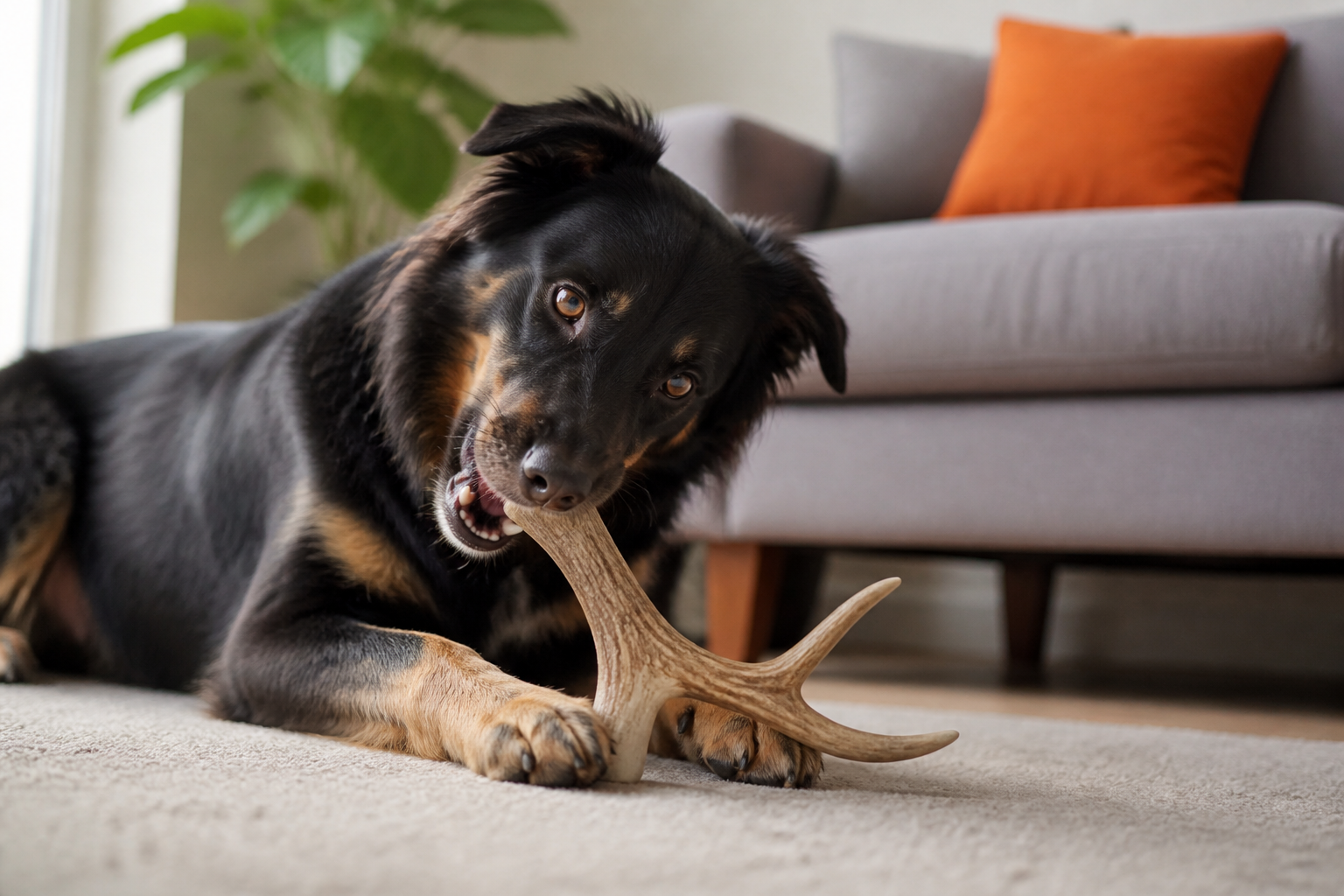
You are sitting on the couch when you hear a rhythmic, loud scraping sound coming from the rug. You look down to see your dog gnawing with total focus on a hard deer antler. Their tail thumps once, and they go right back to work. As a pet owner, you might feel a sense of relief that they are occupied. You might also wonder if that intense chewing is actually doing any good for their oral hygiene.
At BaxterBoo, we get questions every day about which natural chews are best for maintaining a bright smile. While antlers are often marketed as nature's toothbrush, the reality is a bit more complex. This post covers how these chews work, the very real risks they pose to tooth enamel, and safer ways to keep your dog's mouth healthy. We want to help you balance the urge to provide a natural treat with the need to protect your pet from expensive dental repairs.
Quick Answer: Deer antlers can physically scrape away soft plaque through mechanical abrasion, but they do not remove hard tartar. Most veterinarians advise against them because their extreme hardness frequently causes painful slab fractures on a dog's premolars.
The Science of How Antlers Clean Teeth
To understand if antlers work, we have to look at the difference between plaque and tartar. Plaque is a soft, sticky film of bacteria and food particles. It starts forming on your dog's teeth just hours after they eat. If you catch it early, you can rub it off with a finger or a brush.
When a dog chews on an antler, the hard surface creates friction against the tooth. This is called mechanical abrasion. It works like a scouring pad on a dirty pot. As the dog gnaws, the antler surface rubs against the side of the tooth and physically pushes the plaque away.
The Saliva Factor
Chewing also does something else important. It triggers the production of saliva. Saliva is a natural defense mechanism for your dog. It contains enzymes that help break down food debris and slightly antibacterial properties that keep the mouth's pH levels in check.
The longer a dog chews, the more saliva they produce. This helps rinse away the loosened plaque before it can settle. For many dogs, a twenty minute chewing session provides a significant amount of oral "rinsing" that they would not get from eating kibble alone.
The Mineral Connection
Antlers are primarily made of bone-like material. They contain high levels of calcium and phosphorus. Some proponents suggest that as a dog chews, these minerals are released. In theory, this could support the structural integrity of the teeth.
However, the primary benefit remains the physical scraping. While the minerals are healthy, they do not replace the need for a balanced diet. If you are looking for specific nutritional support, we carry many high quality foods like Farmina or Royal Canin that are formulated for dental health.
The Plaque vs. Tartar Timeline
The biggest mistake pet owners make is thinking a chew can fix "yellow" teeth. That yellow or brown buildup is usually tartar, also known as calculus. Tartar is plaque that has mineralized and hardened. This transition happens quickly, often within 48 to 72 hours.
Once plaque becomes tartar, it bonds to the tooth enamel like cement. No amount of chewing on an antler, bone, or rubber toy will remove it. At that stage, only a professional dental cleaning with a veterinary scaler can get the teeth clean again.
Key Takeaway: Antlers are a preventative tool for plaque management, not a cure for existing tartar buildup. They work best as part of a daily routine before dental disease sets in.
Why Many Vets Say No to Antlers
If antlers are so good at scraping plaque, why do so many veterinarians warn against them? The answer lies in the Mohs scale of mineral hardness. Tooth enamel is the hardest substance in the mammalian body, but it is also brittle. Deer antlers are exceptionally dense and do not have any "give" when a dog bites down.
The Risk of Slab Fractures
The most common injury from antler chewing is a slab fracture. This usually happens to the fourth upper premolar. This is the large, flat tooth toward the back of the mouth that dogs use for heavy crushing.
When a dog bites down on an antler with full force, the tooth can give way before the antler does. A "slab" of the tooth enamel breaks off, often exposing the sensitive pulp and nerve underneath. This is incredibly painful for the dog and usually requires an extraction or a root canal.
The Knee Cap Test
Vets often suggest the "knee cap test" for any dog chew. If you would not want to be hit in the knee with the object, it is likely too hard for your dog's teeth. Deer antlers fail this test every time. Unlike rubber toys or even some dental treats, antlers do not compress at all under pressure.
Vet Tip: If your dog is an aggressive "power chewer" who tries to crack things rather than gnaw them, avoid antlers entirely. The risk of a thousand dollar dental bill for a fractured tooth outweighs the cleaning benefits.
Understanding Different Types of Antlers
Not all antlers are created equal. If you decide to provide them, you should know the differences in density and safety.
Deer Antlers
Deer antlers are generally the hardest and densest variety. They are popular because they last for months, even for the toughest chewers. However, their density makes them the highest risk for tooth fractures. They are best suited for "nibblers" who use their front teeth to scrape rather than their back teeth to crunch.
Elk Antlers
Elk antlers are usually larger and slightly less dense than deer antlers. They have a thicker inner core of marrow. Because they are a bit more porous, they offer a slightly safer profile for some dogs. Many pet owners find that elk antlers provide a good balance between durability and dental safety.
Split Antlers
Split antlers are whole antlers that have been cut down the middle. This exposes the soft, tasty marrow inside. These are often the best choice for dogs new to antlers or those who are not aggressive chewers.
- They are softer on the teeth because the dog can reach the marrow easily.
- They provide immediate reinforcement for chewing.
- They reduce the urge for a dog to "crack" the outer shell.
Signs Your Dog Has a Dental Injury
Because dogs are experts at hiding pain, you might not know they have a fractured tooth from a chew. You should regularly check your dog's mouth if they are frequent chewers. For additional guidance, read our article on warning signs of dental problems in dogs.
- Picky eating: They may suddenly drop hard kibble or only eat on one side of their mouth.
- Drooling: Excessive drooling can be a sign of oral pain or an exposed nerve.
- Face shying: Your dog might pull away when you try to pet their muzzle.
- Discolored teeth: A tooth that looks grey, purple, or has a visible pink spot usually indicates internal trauma.
If you notice these signs, a visit to the veterinarian is necessary. For those managing chronic oral health issues, our dog pharmacy provides access to prescription medications and specialized dental diets.
Safer Alternatives for Clean Teeth
You do not have to risk a broken tooth to keep your dog's breath fresh. There are many alternatives that provide the same mechanical cleaning with much lower risk. Explore our dog dental care category for options designed for daily oral-care routines.
Dental Treats and Chews
Products like Greenies dental dog chews are specifically designed to be "flexible" chew toys. They have a texture that allows the tooth to sink into the treat. This cleans the entire surface of the tooth, including the gum line, without the risk of fracturing the enamel. These treats often carry the VOHC (Veterinary Oral Health Council) seal of approval.
Rubber Enrichment Toys
A classic Kong toy or similar rubber chew can be very effective. While rubber is softer than an antler, the constant gnawing action still stimulates saliva and provides mild abrasion. You can stuff these toys with healthy treats or even a bit of wet food to keep your dog engaged for long periods.
Active Brushing
Nothing beats a toothbrush. Even if you only brush your dog's teeth three times a week, you are doing more for their long term health than any antler could. Use a pet-safe toothpaste and a soft brush to reach the back molars. For more routine-building ideas, see our pet dental care tips.
Bottom line: While antlers are natural and long lasting, safer alternatives like dental treats or rubber toys provide similar cleaning benefits without the high risk of tooth breakage.
How to Introduce Chews Safely
If you do choose to give your dog a hard chew, you must follow safety protocols to minimize risk. Never leave a dog alone with a new chew.
Step 1: Choose the right size. / The chew should be large enough that your dog cannot fit the entire thing in their mouth. This prevents accidental swallowing and choking.
Step 2: Monitor the chewing style. / Watch how your dog interacts with the antler. If they are trying to break it in half with their back molars, take it away immediately. You want to see them scraping the surface with their front teeth or gently gnawing.
Step 3: Limit the time. / Do not let your dog chew for hours on end. Constant pressure on the teeth can cause micro-fractures. Limit sessions to 15 or 20 minutes.
Step 4: Check the condition. / Inspect the antler for splinters or sharp edges. If the chew gets small enough to be a choking hazard, throw it away.
The BaxterBoo Approach to Dental Wellness
We believe in a holistic approach to pet care. At BaxterBoo, we curate our selection to include everything from basic rubber toys to high end supplements. Keeping your dog's teeth clean is about more than just a single chew. It is a combination of diet, regular vet checkups, and safe activity.
Our MVP Rewards program makes it easy to stay consistent with your dog's oral care. You can earn points on every bag of dental treats or new toothbrush you buy. If you find a product your dog loves, like a specific dental chew, our Autoship program ensures you never run out and saves you money on every order.
We also know that sometimes, home care is not enough. If your vet recommends a specific prescription diet for dental health, we can help fulfill that through our pharmacy. We are here to be your partner in pet health, whether you are shopping in our Illinois warehouse or ordering from the comfort of your home.
Summary Checklist for Dental Chews
When deciding if an antler is right for your dog, keep these points in mind:
- Assess the chewer: Is your dog a gentle gnawer or a "destroyer"?
- Check the tooth age: Puppies and seniors have more fragile teeth and should avoid hard antlers.
- Look for the seal: Whenever possible, choose products with VOHC approval.
- Size it up: Always buy a size larger than you think your dog needs.
- Verify the source: Ensure any natural chew is cleaned without harsh chemicals or bleaches.
Key Takeaway: Proper dental care is a lifelong commitment that requires a mix of mechanical cleaning, vet visits, and safe chew choices tailored to your dog's specific habits.
Conclusion
Deer antlers can technically help clean a dog's teeth by scraping away plaque, but they come with a high price in terms of safety risks. The danger of painful slab fractures is a major concern for many veterinarians and pet owners. While the long lasting nature of antlers is appealing, protecting your dog's enamel is the priority. We recommend looking into safer, flexible dental treats or engaging rubber toys that provide the same enrichment without the dental drama. If you are ready to upgrade your dog's oral health routine, browse our dental treats and chews to find veterinarian-approved options for every breed.
FAQ
Can antlers remove tartar that is already on my dog's teeth?
No, antlers cannot remove hardened tartar. Tartar is mineralized plaque that bonds strongly to the enamel. Once it has formed, it requires a professional cleaning with specialized tools at a veterinary clinic. Antlers and other chews are only effective at removing soft plaque before it hardens.
Are elk antlers safer than deer antlers for a dog's teeth?
Elk antlers are generally considered slightly safer than deer antlers because they are less dense. They have a larger, more porous marrow center which provides a bit more "give" when a dog chews. However, they are still very hard objects and still carry a risk of causing tooth fractures in aggressive chewers.
What should I do if my dog breaks a tooth on an antler?
If you notice a cracked or broken tooth, you should contact your veterinarian immediately. An exposed nerve is extremely painful and can lead to a serious infection or abscess. Your vet will likely recommend a dental X-ray to see the extent of the damage and may suggest an extraction or a referral to a veterinary dentist.
Are split antlers better for cleaning teeth than whole ones?
Split antlers are often better for the average dog because they provide easier access to the marrow. This encourages a scraping or licking motion rather than a hard crushing motion. While both types provide mechanical abrasion, split antlers are often more engaging and slightly less stressful on the jaw and teeth.






