
 Save 15% on your 1st Autoship learn more

 Email us
 Live Chat
 FAQs
FAQs





Introduction
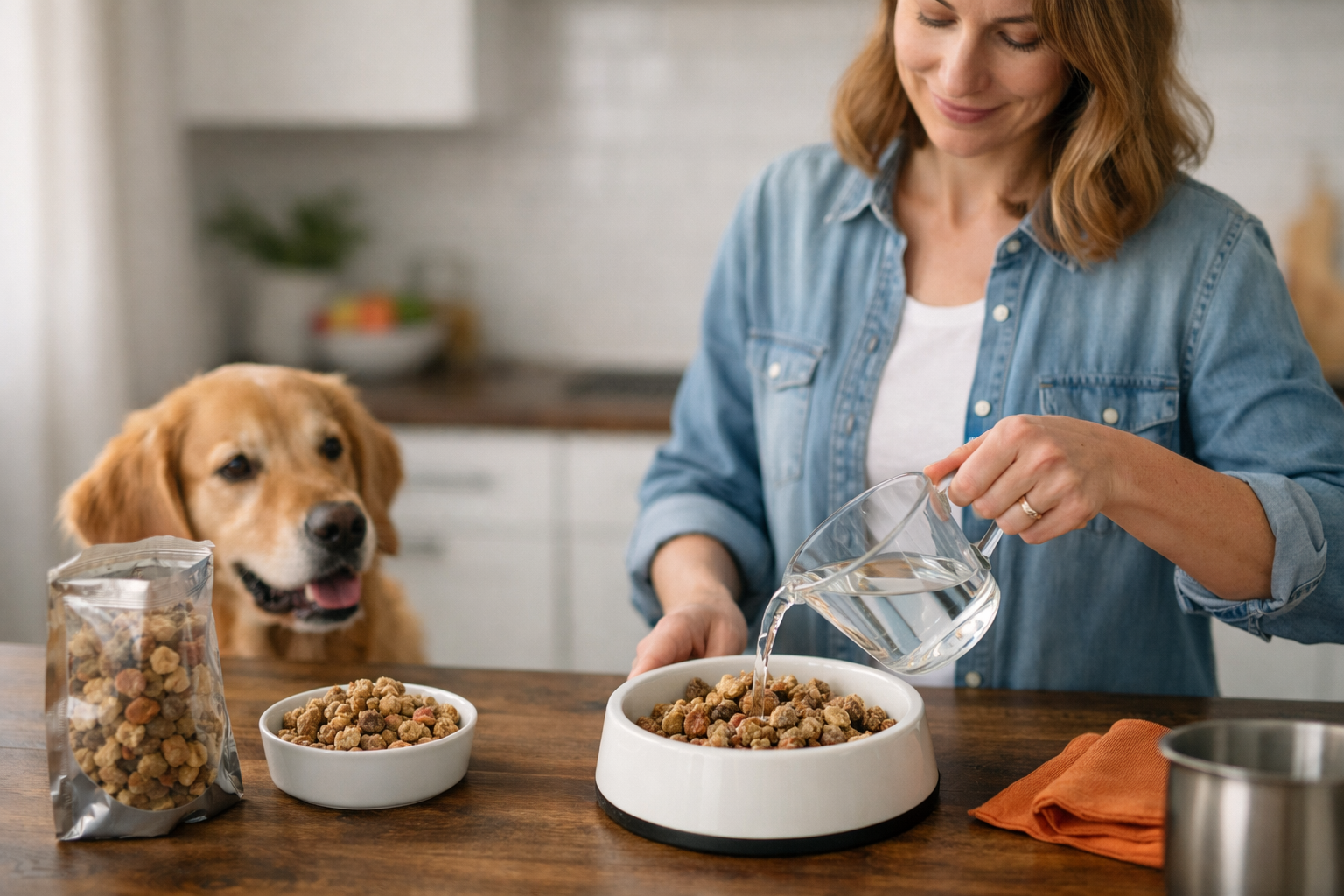
You just opened a new bag of freeze-dried dog food and the nuggets feel light and airy. They look a bit like croutons or small crackers. As you stand in your kitchen, you might wonder if you should pour them straight into the bowl or head to the sink first. It is a common question for many pet parents who are switching from traditional kibble to a more nutrient-dense option.
At BaxterBoo, we see many owners making this transition to provide a diet that is closer to raw nutrition. In this article, we will explain whether you need to rehydrate these meals and how the process affects your dog's health. We will cover the benefits of adding moisture, the rare times when feeding dry is okay, and the best ways to prepare a meal. Adding water is usually the right choice for a full meal, but there are specific details you should know to get the most out of your dog's food.
Understanding the Freeze Drying Process
To understand why water matters, you first need to know how the food is made. Freeze-drying is a unique preservation method that is quite different from making kibble. During the process, raw ingredients are frozen solid. They are then placed in a vacuum chamber where the moisture is removed through a process called sublimation. This turns ice directly into vapor without it ever becoming a liquid.
This method is very gentle compared to high-heat processing. It preserves roughly 97 percent of the original nutrients found in the raw meat and vegetables. Most brands we carry, such as our selection of Open Farm products or our selection of Stella & Chewy's products, use this method because it keeps vitamins and enzymes intact. Because the heat is so low, the proteins do not become denatured.
The result is a product that is extremely shelf-stable but very dry. Most freeze-dried dog foods have a moisture content of only 2 to 5 percent. For comparison, our freeze-dried dog food collection is much drier than standard kibble, which usually has about 10 percent moisture. Fresh or raw food contains about 70 percent moisture. When you feed your dog a meal with only 2 percent moisture, their body has to work harder to digest it.
The Short Answer: Do You Need Water?
Quick Answer: While you can technically feed freeze-dried dog food dry, we strongly recommend adding water for full meals. Rehydrating the food helps with digestion, prevents dehydration, and makes the meal more satisfying for your dog. For treats or small toppers, feeding it dry is generally acceptable.
If you are using the food as a complete meal every day, hydration is a necessity. If you are just using a single nugget as a training reward, you can skip the water. The context of how much you are feeding makes the difference.
Why Rehydration is Better for Your Dog
Adding moisture back into the food does more than just change the texture. It serves several biological purposes that help your dog thrive.
Improved Digestion and Nutrient Absorption
A dog's digestive system is designed to process food that contains moisture. When food enters the stomach, the body uses gastric juices to break it down. If the food is incredibly dry, it absorbs the moisture already present in your dog's stomach. This can lead to a slower digestive process and might even cause mild bloating or discomfort.
When you rehydrate the food first, it enters the stomach ready to be broken down. This allows the body to focus on absorbing the amino acids and vitamins immediately. It is much easier on the gastrointestinal tract, especially for dogs with sensitive stomachs.
Better Hydration for Kidney Health
Many dogs do not drink enough water on their own. This is particularly true if they have been raised on a diet of wet food or fresh food. By adding water directly to their freeze-dried nuggets, you are tricking them into staying hydrated.
Proper hydration is vital for flushing toxins through the kidneys and maintaining a healthy urinary tract. Over time, a chronic lack of moisture in the diet can put a strain on the renal system. This is a common concern for senior dogs.
Enhanced Aroma and Palatability
Dogs experience the world through their noses. Freeze-dried food is already very flavorful, but adding warm water releases those aromas. The scent of real beef, chicken, or lamb becomes much stronger once the food is wet. If you have a picky eater, a rehydrated meal is often much more enticing than a dry one.
Key Takeaway: Rehydrating freeze-dried food mimics a natural, raw diet. This supports better digestion and ensures your dog gets enough water to protect their long-term kidney health.
When It Is Safe to Feed Dry
There are a few situations where skipping the water is perfectly fine. You do not need to worry about rehydrating every single bite if the food is not the main source of nutrition for that moment.
Using Food as Training Treats
Freeze-dried nuggets make excellent high-value treats. They are lightweight and usually easy to break into small pieces. If you are out on a walk or in a training class, you can give these to your dog dry. Since the amount is small, it will not significantly impact their overall hydration levels or digestion.
Adding a Topper to Kibble
If you are just crumbling a small amount of freeze-dried food over a bowl of standard kibble, you can leave it dry. Some dogs enjoy the extra crunch it adds to their meal. However, if you are adding more than a tablespoon or two, you should still consider adding a splash of water or dog-safe bone broth. You can also browse our food topper collection for more mealtime mix-ins.
Travel and Convenience
If you are hiking or traveling, feeding a dry meal once in a while is not a disaster. Just make sure your dog has access to a large bowl of fresh water immediately after they eat. They will likely be very thirsty as the food begins to expand and absorb moisture in their belly.
How to Properly Rehydrate Freeze-Dried Dog Food
Rehydrating food is not complicated, but doing it correctly ensures the best texture and safety. Most manufacturers provide specific instructions on the bag, but the general rules are consistent across brands.
Step 1: Measure the portion. / Use a standard measuring cup to get the right amount of dry nuggets or medallions for your dog's weight.
Step 2: Crumble the food. / Breaking the nuggets into smaller pieces increases the surface area. This allows the water to soak in much faster.
Step 3: Add warm water. / Use a 1:1 ratio of water to food as a starting point. Warm water works better than cold water because it helps release fats and aromas more effectively.
Step 4: Wait and stir. / Let the mixture sit for 3 to 5 minutes. Stir it occasionally to make sure there are no hard, dry pockets in the middle.
Liquid Alternatives for a Boost
You do not have to use plain tap water. If you want to give your dog extra nutrients, you can use other liquids.
- Bone Broth: Ensure it is specifically made for dogs. Human versions often contain onions and garlic, which are toxic to pets.
- Goat Milk: This is a great source of probiotics and is very easy for most dogs to digest.
- Warm Water: The simplest and most cost-effective option.
Vet Tip: If your dog has a history of urinary crystals or kidney issues, always rehydrate their food. The extra moisture is a critical part of managing these conditions. If you notice your dog is suddenly drinking much more or less than usual, consult your veterinarian to rule out underlying health issues.
Rehydration Checklist
Before you serve the meal, run through this quick list to ensure everything is perfect:
- Is the water warm but not boiling? (Boiling water can damage delicate vitamins).
- Have you waited at least three minutes?
- Are the nuggets soft all the way through?
- Is the bowl clean?
- Is there a separate bowl of fresh water nearby?
Special Considerations for Different Life Stages
The decision to add water can be even more important depending on how old your dog is.
Senior Dogs
Older dogs often have dental issues or missing teeth. Dry freeze-dried nuggets can be quite hard and may even have sharp edges. Rehydrating the food into a soft, mushy consistency makes it much easier for them to chew and swallow. Additionally, senior dogs often experience a decline in kidney function. Every extra ounce of water you can get into their diet is a win for their health.
Puppies
Puppies are still developing their adult teeth and may go through periods where their gums are sore from teething. Softened food is much more comfortable for them. Because puppies have high energy needs and smaller stomachs, rehydrated food is easier for their bodies to process quickly so they can get back to growing and playing. For more age-specific nutrition guidance, see why your puppy is begging for holistic ingredients.
Dogs with Health Conditions
If your dog is managing a chronic condition like diabetes or heart disease, consistency in their diet is key. We carry several specialized options through our pet pharmacy. If your vet has prescribed a specific diet for weight management or organ support, ask them how rehydration fits into the plan. Many prescription diets come in freeze-dried formats that specifically require water to work as intended.
Safety and Storage After Rehydrating
Once you add water to freeze-dried food, the shelf-stable nature of the product changes. It effectively becomes a fresh meal.
The Two-Hour Rule
You should never leave rehydrated freeze-dried food out in the bowl for more than two hours. Once moisture is added, the risk of bacterial growth increases. If your dog does not finish their meal within twenty minutes, it is best to pick it up.
Refrigeration
If you have a very small dog and you accidentally prepare too much food, you can store the leftovers in the refrigerator. Use an airtight container and keep it for no more than 24 hours. After that, the risk of spoilage is too high.
Handling Raw Ingredients
Most freeze-dried foods are raw. While the freeze-drying process and steps like High-Pressure Processing (HPP) make the food safe, you should still practice good hygiene. Wash your hands after handling the dry nuggets. Always wash your dog's bowl with hot, soapy water after every rehydrated meal to prevent old food from lingering.
Bottom line: Treat rehydrated freeze-dried food the same way you would treat fresh meat or canned food by following strict storage and cleaning habits.
Comparing Freeze-Dried to Other Formats
It helps to see how freeze-dried food stacks up against other types when it comes to moisture and preparation.
| Food Type | Moisture Content | Rehydration Required? | Preparation Level |
|---|---|---|---|
| Kibble | ~10% | No | Very Low |
| Freeze-Dried | ~2-5% | Recommended | Medium |
| Air-Dried | ~14% | Optional | Low |
| Canned/Wet | ~75-80% | No | Low |
| Frozen Raw | ~70% | No (needs thawing) | High |
As you can see, freeze-dried food is the driest option available. This is why adding water is so much more important for this specific format than it is for kibble or air-dried jerky.
Common Mistakes to Avoid
Even though the process is simple, there are a few common errors that pet owners make when starting with freeze-dried food.
Using Too Much Water
While hydration is good, you do not want to turn the meal into a thin soup unless your dog specifically prefers that. If there is too much water, the flavor might be diluted, and some picky dogs might lose interest. Start with a 1:1 ratio and adjust based on how your dog reacts.
Using Boiling Water
It can be tempting to use boiling water to speed up the soaking process. However, very high temperatures can destroy the live enzymes and delicate vitamins that make freeze-dried food so nutritious. Warm water from the tap or a kettle that has cooled for a few minutes is much safer.
Forgetting to Wash the Bowl
Because the food is so concentrated, bits of it can stick to the corners of the bowl. If you just keep adding new food on top of old residue, it can lead to bacterial issues. A clean bowl for every meal is a must when feeding rehydrated raw food.
Not Transitioning Slowly
If your dog is used to dry kibble, switching to a full bowl of rehydrated freeze-dried food overnight can cause an upset stomach. Start by using the freeze-dried food as a topper. Slowly increase the amount over 7 to 10 days until your dog is fully transitioned.
Enhancing the Mealtime Experience
If you want to make mealtime more engaging, you can use the rehydrated food in different ways.
Enrichment Toys
Instead of serving the food in a standard bowl, you can stuff the rehydrated mixture into a rubber toy or spread it on a lick mat. This provides mental stimulation and slows down fast eaters. You can even freeze the stuffed toy for a few hours to create a long-lasting, cooling treat for a hot day.
Mixing Textures
Some dogs love a bit of variety. You can mix rehydrated freeze-dried nuggets with a little bit of their favorite kibble or some fresh vegetables like steamed green beans. This creates different textures and flavors that keep your dog excited about their bowl.
Finding the Right Balance for Your Lifestyle
We understand that every pet owner has a different routine. One of the reasons we love freeze-dried food at BaxterBoo is its versatility. If you are in a rush on a Monday morning, you might add just a quick splash of water and serve. On a slow Sunday, you might mix in some warm goat milk and let it soak while you make your own breakfast.
The goal is to find a method that works for your schedule while still prioritizing your dog's health. You do not have to be perfect every single time, but making rehydration the standard for most meals will pay off in your dog's energy levels and coat health.
Why Quality Matters
Not all freeze-dried foods are created equal. When shopping, look for brands that list a high-quality protein as the first ingredient and avoid those with excessive fillers. Brands like our selection of NutriSource products, our selection of Open Farm products, and our selection of Stella & Chewy's products are excellent choices that respond well to rehydration. These brands use quality cuts of meat that retain their structure even after water is added.
If you are looking for specific health support, our dog supplement category offers options that can be easily mixed into rehydrated food. Whether you are looking for joint support like Cosequin or skin and coat oils, a wet meal is the perfect vehicle for adding supplements without your dog noticing.
Summary of Feeding Methods
To wrap things up, remember that the "right" way to feed depends on the goal of the meal.
- As a Full Meal: Always rehydrate with warm water, broth, or goat milk.
- As a Topper: Use dry for a small crunch or wet for extra flavor.
- As a Treat: Use dry for convenience and portability.
- For Seniors: Use plenty of water to create a soft texture.
Rehydrating freeze-dried dog food is one of the easiest things you can do to improve your dog's daily nutrition. It takes less than five minutes and provides benefits that can last a lifetime.
Wrapping up, your dog's health depends on more than just the ingredients in their bag. It also depends on how that food is prepared and served. By adding water to freeze-dried meals, you are supporting their digestion and hydration in a way that dry food alone cannot.
Key Takeaway: While freeze-dried food is convenient and shelf-stable, its low moisture content means it should be rehydrated for most meals. This simple step ensures your dog gets the full nutritional benefit of their raw diet without the risk of dehydration.
If you need to stock up on your dog's favorite freeze-dried brands, our freeze-dried dog food collection is a great place to start. You can also use our Autoship programme for recurring orders or our MVP Rewards programme to get more value from regular purchases. Our warehouse is always stocked with the 500+ brands you trust to keep your pets happy and healthy.
FAQ
Can I rehydrate freeze-dried food with cold water?
Yes, you can use cold water, but it will take longer for the food to absorb the moisture. Warm water is generally preferred because it helps soften the fats in the meat and releases a stronger aroma that appeals to picky eaters.
How long can rehydrated freeze-dried food sit out?
You should treat rehydrated freeze-dried food like fresh or canned food. Do not leave it at room temperature for more than two hours. If your dog does not eat it within that window, the food should be discarded to prevent bacterial growth.
Do I have to add water if my dog drinks a lot from their bowl?
Even if your dog is a big drinker, we still recommend adding water to the food. Freeze-dried food is so dry that it absorbs moisture from the digestive tract as soon as it is swallowed. Adding water beforehand ensures the digestion process starts smoothly and reduces the risk of bloating.
Can I use store-bought chicken broth to rehydrate the food?
You should only use broth that is specifically labeled for dogs. Most store-bought broths for humans contain high levels of sodium, onions, and garlic, all of which can be harmful or toxic to dogs. Look for dog-safe bone broths or simply use warm water.






