
 Save 15% on your 1st Autoship learn more

 Email us
 Live Chat
 FAQs
FAQs





Introduction
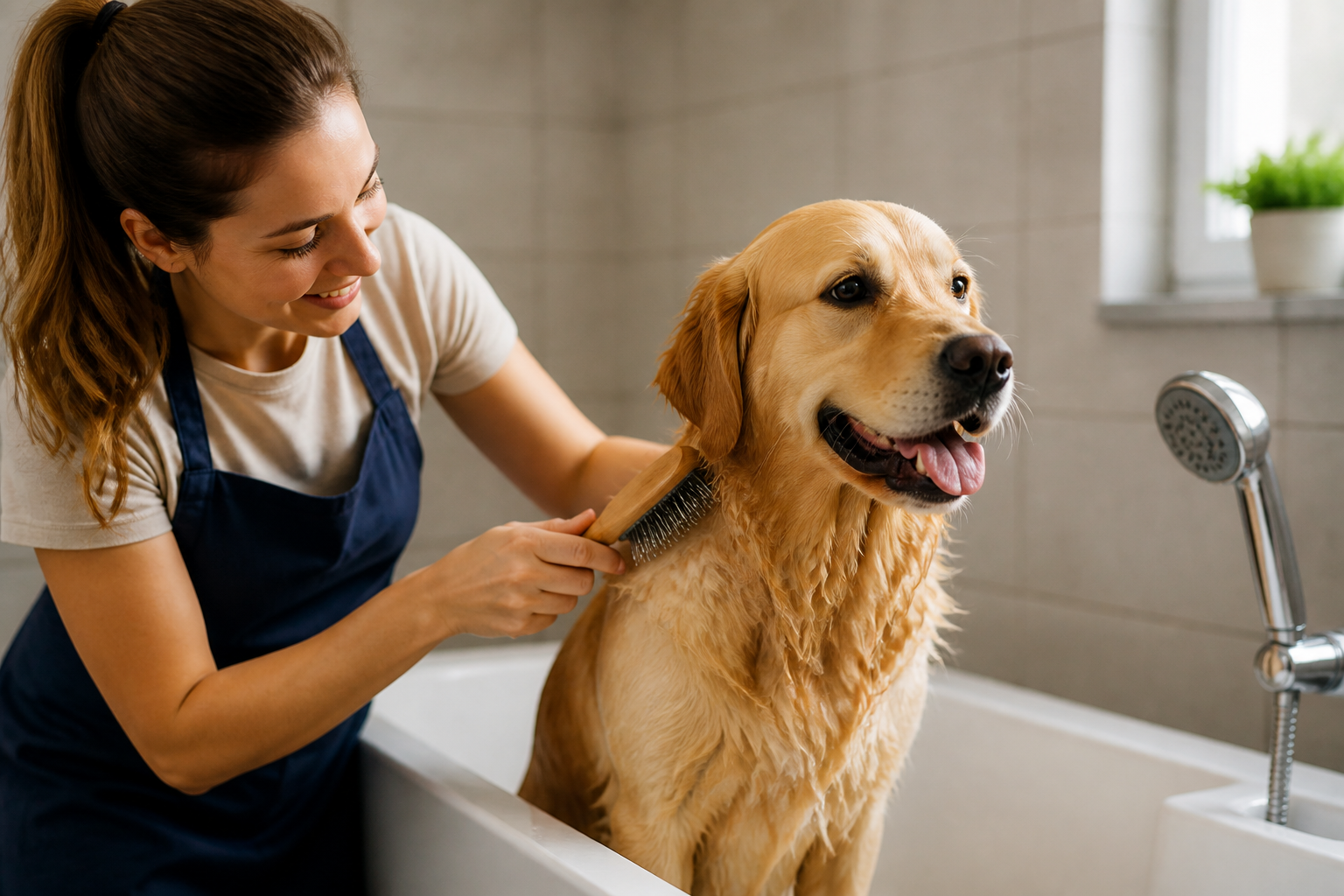
You are standing in the bathroom with a muddy dog and a handful of grooming tools. Your pup might have spent the afternoon digging in the garden or rolling in the grass. Now you face the classic dilemma: do you reach for the brush or turn on the faucet first? It seems like a simple choice, but the order you pick can change the health of your dog's coat and skin. At BaxterBoo, we have helped thousands of pet parents navigate home grooming since 2006. Our warehouse in Vernon Hills is packed with the same high quality tools and shampoos that professional groomers use every day. This article explains the pros and cons of brushing before or after a bath. You will learn how to handle different coat types and how to avoid common mistakes that cause painful mats. The right sequence makes grooming easier for you and more comfortable for your dog.
Quick Answer: For most dogs, you should brush thoroughly before washing. Water can cause existing tangles and mats to tighten like cement, making them nearly impossible to remove once the dog is dry. However, professional groomers sometimes wash first if they have high velocity dryers and heavy duty conditioners to "slip" the mats out.
The Case for Brushing Before the Bath
The traditional rule in pet grooming is to brush your dog before they ever touch the water. This is especially true for dogs with long hair or thick undercoats. When hair gets wet, the shafts expand and then contract as they dry. If there is a knot in the hair, this process acts like a tightening knot on a rope. By the time the dog is dry, that small tangle has become a hard mat against the skin.
Brushing first also helps you remove a significant amount of loose fur and debris. You do not want to wash away dirt that you could have simply brushed out. Removing the "dead" coat before the bath allows the shampoo to reach the skin more effectively. If you try to wash a dog with a thick, unbrushed undercoat, the water and soap might never actually reach the skin. You end up with a dog that smells like wet fur but still has dirty skin underneath. Explore our dog grooming supplies for brushes, shampoos, conditioners, and other bath-time essentials.
Key Takeaway: Brushing before the bath prevents mats from tightening and ensures the shampoo can actually reach the skin to clean it properly.
Managing the Undercoat
Dogs with double coats like Golden Retrievers, Huskies, or Shelties have a soft undercoat that sheds constantly. If you do not brush this out first, the water will weigh down the loose fur. It creates a thick, soggy mess that is difficult to rinse. You might find yourself rinsing for twenty minutes and still seeing soap bubbles trapped in the fur. A thorough pre-bath brush saves you time in the tub and reduces the amount of shampoo you need to use.
Spotting Skin Issues
Brushing is not just about aesthetics. It is your best chance to inspect your dog's body. As you move the brush through the fur, you can see the skin clearly. This is when you might notice a new lump, a tick, or a patch of red, irritated skin. If you find a hot spot or an open sore, you may need to delay the bath or use a specific medicated shampoo.
Vet Tip: If you notice your dog has extremely red skin, a foul odor, or is constantly licking one spot, consult your veterinarian before bathing. These can be signs of a skin infection or allergies that require prescription treatment. Our BaxterBoo pharmacy offers FDA approved medicated shampoos and allergy medications through our partnership with Pet's Choice if your vet provides a prescription.
When Washing First Makes Sense
While brushing first is the standard advice for home groomers, some professionals prefer to wash first. This method relies on high quality conditioners and specialized equipment. When a dog is very dirty, the grit and grime in the fur act like sandpaper on your grooming tools. Brushing a very dirty coat can actually damage the hair cuticles and make your brushes dull.
Professional groomers often use a "bath first" approach for dogs with manageable coats or those that are extremely dirty. They use the power of the water and heavy conditioner to help the hair "slide" apart. This is often combined with a high velocity dryer. These dryers are much more powerful than a human hair dryer. They literally blow the water and loose undercoat right off the dog's body.
The Role of Conditioner
If you choose to wash first, the conditioner is the most important step. A good conditioner coats the hair shaft and provides "slip." This makes it easier for a comb to glide through the fur later. Some people even brush the dog while the conditioner is still on the fur in the tub. This can be effective for certain coat types, but you must be very gentle. Wet skin is more elastic and can be easily irritated by the sharp teeth of a metal rake or slicker brush.
Equipment Requirements
To successfully wash before brushing, you generally need a high velocity dryer. If you use a standard towel and a human hair dryer, you will likely end up with more tangles than you started with. The high velocity air separates the hair and pushes the knots away from the skin. Without this tool, you are better off sticking to the "brush first" method at home. You can find dog brushes and combs for different coat types when assembling your grooming kit.
Bottom line: Washing first is a professional technique that requires specific tools and heavy conditioning to prevent the coat from matting further.
How Coat Type Changes the Rules
The "brush or wash" debate depends heavily on the type of fur your dog has. A Beagle has very different needs than a Poodle or a Newfoundlander. Understanding your dog's specific coat category will help you choose the right order.
Short and Smooth Coats
For breeds like Boxers, Labradors, or Dobermans, the order matters less. These dogs do not get mats in the traditional sense. However, they do shed. For these dogs, using a rubber grooming mitt like a Kong ZoomGroom during the bath is highly effective. You can "brush" them while they are covered in bubbles. This helps loosen dead hair and massages the skin.
Long and Silky Coats
Breeds like Yorkies or Maltese have hair that is very similar to human hair. It tangles easily. For these dogs, you should always do a light brush first to find any big knots. If you find a mat, try to work it apart with your fingers before getting it wet. Once they are clean and conditioned, you can do a final, detailed brushing while the hair is damp or dry.
Curly and Wire Coats
Poodles and Bichons have hair that traps shed fur instead of letting it fall to the ground. This leads to quick matting. These dogs almost always require a thorough brush and comb-through before the bath. If you wash a "compacted" Poodle coat, the water will turn that coat into a felt-like material that usually has to be shaved off by a professional. For more guidance, read how to groom a dog with curly hair.
Double Coated Breeds
Huskies and Shepherds should be "blown out" or brushed heavily before the bath. If you don't remove the dead undercoat, the bath will be a struggle. You will use too much shampoo, and the dog will take hours to dry. Damp undercoat trapped against the skin is a leading cause of "hot spots" and fungal skin infections.
| Coat Type | Primary Recommendation | Key Tool |
|---|---|---|
| Short/Smooth | Wash and brush together | Rubber curry brush |
| Long/Silky | Brush first, then wash | Steel comb |
| Curly/Crisp | Brush first (Essential) | Slicker brush |
| Double Coat | Heavy brush first | Undercoat rake |
Step-by-Step Guide for a Successful Grooming Session
If you want to achieve professional results at home, follow this sequence. This process minimizes stress for the dog and ensures a deep clean. We carry over 500 brands at BaxterBoo to help you find the exact tools for these steps.
Step 1: The Pre-Bath Inspection
Run your hands over your dog's entire body. Look for sticks, burrs, or mats. Use a wide tooth comb to check for tangles in high friction areas like the armpits, behind the ears, and where the collar sits.
Step 2: The Initial Brush Out
Use an appropriate brush for your dog's coat type. Work in sections. If you find a mat, hold the fur at the base near the skin so you don't pull on the dog's sensitive skin. Use short, gentle strokes rather than long, pulling ones. Our grooming tools collection includes brushes, combs, grooming mitts, and other helpful supplies.
Step 3: The Bath
Use lukewarm water. Avoid the eyes and ears. If your dog has a history of ear infections, you can place a large cotton ball gently in the opening of the ear to keep water out. Use a shampoo formulated for dogs. Human shampoo has a different pH level and can strip the natural oils from a dog's coat.
Step 4: Conditioning
Apply conditioner and let it sit for a few minutes. This is the time to use a rubber brush on short-haired dogs. For long-haired dogs, just let the product work. Rinse until the water runs completely clear. Any leftover soap will cause itching and flakiness.
Step 5: Drying
Towel dry by blotting, not rubbing. Vigorous rubbing with a towel creates tangles. If you use a hair dryer, keep it on a cool or low heat setting. Move the dryer constantly to avoid burning the skin.
Step 6: The Final Polish
Once the dog is mostly dry, do one last pass with a soft brush or comb. This removes any tiny tangles that formed during the drying process and leaves the coat looking shiny and finished.
Key Takeaway: A systematic approach of inspecting, brushing, washing, and drying creates a professional finish and keeps your dog's skin healthy.
The Dangers of Brushing a Soaking Wet Dog
Many people make the mistake of brushing their dog as soon as they step out of the tub. While the hair is soaking wet, it is at its weakest point. The hair shafts are stretched and prone to snapping. Furthermore, wet skin is very soft. A metal slicker brush that feels fine on dry skin can easily "brush burn" or scratch wet skin.
If you must brush while the dog is damp, use a leave-in detangling spray. This provides extra lubrication. Only use brushes with rounded tips or wide tooth combs. Never use an undercoat rake or a de-shedding tool on a wet dog. These tools are designed to pull through the coat, and on wet hair, they will pull too hard and cause significant pain.
Vet Tip: If your dog has a very thick coat, ensure they are 100 percent dry all the way to the skin. Moisture trapped in the deep layers of the coat can lead to bacterial overgrowth. If your dog smells "musty" a day after a bath, they likely did not dry completely.
Essential Tools for Your Home Grooming Kit
To do the job right, you need more than just a bottle of soap. Having the right tools makes the difference between a dog that hides when they see the brush and one that enjoys the attention. We curate our selection at BaxterBoo to include only the brands we trust for our own pets.
- Slicker Brushes: These have fine wire bristles and are great for removing loose hair and breaking up small tangles in curly or medium coats.
- Undercoat Rakes: These have long, T-shaped pins. They reach through the topcoat to pull out the fuzzy undercoat that causes the most shedding.
- Rubber Curry Brushes: These are best for short-haired dogs. They massage the skin and pull away loose hair without any risk of scratching.
- Steel Combs: Often called "Greyhound combs," these are essential for checking your work. If the comb can't pass through the fur, there is still a tangle there.
- High Quality Shampoo: Look for ingredients like oatmeal, aloe, or honey. Avoid heavy perfumes if your dog has sensitive skin.
If your dog requires a specific medicated wash for a condition like seborrhea or fungal infections, our pharmacy partnership with Pet's Choice can help. You can get your vet-prescribed treatments delivered right to your door alongside your regular toy and treat orders.
Common Mistakes to Avoid
Even experienced pet owners can fall into bad habits. Avoiding these simple mistakes will make bath time much more pleasant for everyone involved. For additional bath-time guidance, see our tips on the dos and don'ts of bathing your dog.
Using the Wrong Water Temperature
Many people use water that is too hot. A dog's skin is thinner than ours. If the water feels "nice and hot" to you, it is likely too hot for your dog. Use lukewarm water. If your dog is shivering, you can go slightly warmer, but always test it on the inside of your wrist first.
Skipping the Rinse
Soap residue is a leading cause of "grooming dandruff." If you don't rinse thoroughly, the dried soap will irritate the skin. This leads to scratching, which can then lead to broken skin and infections. When you think you are done rinsing, rinse for two more minutes.
Forgetting the Ears and Nails
Grooming is the perfect time to check the ears and trim the nails. Long nails can cause your dog's toes to splay and lead to arthritis over time. If you can hear your dog's nails clicking on the floor, they are too long. Check the ears for a dark discharge or a yeasty smell. These are signs of an infection that needs a vet's attention.
Neglecting the "Sanitary" Areas
Don't forget to check the fur around the tail and the belly. These areas are prone to "matting" from urine or feces. Keeping these areas trimmed and clean is vital for your dog's hygiene. If these areas are already matted, do not use scissors. It is very easy to nick the thin skin in these areas. Use clippers or ask a professional for help.
When to Call a Professional
Sometimes a dog's coat is beyond the help of a home grooming session. If your dog is "pelted"—where the mats have joined together into a solid layer against the skin—trying to brush them out is cruel. It causes extreme pain and can tear the skin. In these cases, the only humane option is for a professional to shave the coat off and start fresh.
If your dog is extremely aggressive or fearful during grooming, a professional has the equipment and experience to keep the dog safe. Do not risk a bite or an injury to your dog if they are panicking. You can work on "cooperative care" training at home with high-value treats to make future sessions easier.
Bottom line: Know your limits. If a coat is severely matted or your dog is highly stressed, a professional groomer is the safest and most humane choice.
Conclusion
Deciding whether to brush or wash your dog first is a foundational part of pet care. For most home groomers, brushing first is the safest way to prevent painful mats and ensure a deep clean. Remember to choose the right tools for your dog's specific coat type and always prioritize skin health. Regular grooming is a great way to bond with your pet and catch health issues before they become serious. We invite you to explore our wide selection of grooming supplies, where we have been serving pet parents since 2006. Whether you need a new slicker brush or a prescription shampoo from our pharmacy, we are here to help you keep your dog looking and feeling their best. To save on your regular grooming essentials, consider signing up for our Autoship programme, which includes a free MVP Gold membership.
FAQ
Should I brush my dog while they are in the bathtub?
You can use a rubber curry brush on short-haired dogs while they are covered in shampoo to help loosen dead fur. For long-haired or double-coated dogs, you should generally avoid brushing in the tub unless you have applied a heavy conditioner and are using a wide-tooth comb. Wet hair is fragile and more likely to snap or stretch uncomfortably.
What happens if I wash my matted dog without brushing first?
The water will cause the hair fibers in the mats to swell and then tighten as they dry. This often turns a manageable tangle into a "pelted" mat that sits tight against the skin. These tight mats trap moisture and bacteria against the skin, which can lead to painful sores, hot spots, or fungal infections.
Can I use a human hair dryer on my dog after a bath?
You can use a human hair dryer, but you must be extremely careful. Human dryers get much hotter than pet-specific dryers and can easily burn a dog's sensitive skin. Always use the "cool" or "low" setting and keep the dryer at least six inches away from the fur. Never leave the dryer pointed at one spot for more than a few seconds.
How often should I bathe and brush my dog?
Most dogs benefit from a bath every four to six weeks, though dogs with skin conditions may need more frequent medicated baths. Brushing should happen much more often. Long-haired and double-coated breeds should be brushed at least three times a week to prevent tangles and manage shedding. Short-haired breeds can be brushed once a week to keep the coat shiny.






