
 Save 15% on your 1st Autoship learn more

 Email us
 Live Chat
 FAQs
FAQs





Introduction
You reach into the pantry to grab a scoop of kibble and realize the bag has been sitting there longer than you thought. Maybe your dog is sniffing the bowl and walking away. Perhaps you found a great deal on a bulk bag but are not sure if your single small dog can finish it in time. It is a common situation for many pet owners. At BaxterBoo, we understand that you want to provide the best nutrition for your furry family members. Freshness is not just about a crunchier texture or a better smell. It is a fundamental part of your dog's daily health and safety. This guide will explain how long dry dog food really lasts and how to identify when it is time to toss a bag. If you want to compare options, start with our dry dog food category. We will cover storage secrets that preserve nutrients and help you avoid the risks of spoiled food.
Quick Answer: Dry dog food does expire. Most unopened bags last 12 to 18 months from the manufacture date. However, once you open the bag, you should ideally use the kibble within 4 to 6 weeks for maximum freshness and safety.
Understanding "Best By" Dates and Expiration
Most pet food manufacturers print a "best by" or "use by" date on their packaging. This date is not a legal requirement from the FDA. However, most reputable brands include it to help owners manage their supply. This date represents the manufacturer's estimate of how long the food will stay fresh and keep its full nutritional value. It assumes the bag remains sealed and is stored in a cool, dry place.
An unopened bag of kibble is usually stable for a year or more. The packaging is designed to keep out oxygen and moisture. These are the two biggest enemies of food stability. Vitamins and minerals are carefully balanced when the food is made. Over time, these nutrients begin to break down. This is especially true for fragile vitamins like Vitamin A and Vitamin E. Even if the food is technically safe to eat after the "best by" date, it might not provide the complete nutrition your dog needs.
Key Takeaway: "Best by" dates refer to the nutritional peak and flavor of the food. While the food may not be dangerous the day after the date passes, its quality begins to drop immediately.
How Long Does Dry Dog Food Last Once Opened?
The clock starts ticking the moment you break the seal on a new bag. Opening the bag exposes the kibble to oxygen, light, and humidity. These elements trigger a process called oxidation. This is particularly problematic for the fats and oils in the food. Most experts recommend finishing an opened bag of dry food within 6 weeks. Some brands may stay fresh for up to 8 weeks if stored perfectly.
If you have a small dog, buying a 40-pound bag might seem like a way to save money. However, if that bag takes three months to finish, the food will likely be stale and less nutritious by the end. You might even notice your dog becoming a "picky eater" as the food loses its aroma. In reality, they are often just reacting to food that has started to turn.
Factors That Speed Up Spoilage
- High Humidity: Moisture in the air can lead to mold growth inside the bag.
- Heat: Storing food in a warm garage or near a heater causes fats to turn rancid faster.
- Light Exposure: UV rays can degrade certain vitamins and weaken the packaging.
- Oxygen: Air makes fats oxidize and can make the food lose its crunch.
Five Signs Your Dog Food Has Gone Bad
You cannot always rely on your eyes to tell if kibble is spoiled. Bacteria and rancid fats are often invisible. You should use all your senses to check your dog's food regularly.
1. The Smell Test
Fresh kibble has a distinct, often meaty or grainy scent. If you notice a sour, metallic, or "old paint" smell, the fats have likely gone rancid. Rancid fats are not just unappealing. They can cause internal inflammation and digestive upset.
2. Changes in Texture
Kibble should be dry and crunchy. If the food feels oily to the touch or seems unusually soft, moisture may have gotten into the bag. If the pieces are sticking together or crumbling into dust, it is a sign of degradation.
3. Visible Mold or Pests
This is a clear sign to discard the entire bag. Never try to "scoop out" the moldy part. Mold produces microscopic spores and toxins that spread throughout the container. Similarly, if you see small moths, weevils, or mites, the food is contaminated.
4. Your Dog Refuses to Eat
Dogs have a sense of smell that is thousands of times more sensitive than ours. They can often detect rancidity or bacterial growth long before we can. If a normally enthusiastic eater suddenly turns their nose up at a fresh bowl, inspect the food immediately.
5. Physical Illness
If your dog experiences vomiting or diarrhea after eating from a specific bag, the food could be the culprit. Check for any recalls or signs of spoilage. If your dog seems sick, contact your veterinarian right away. For broader support, our dog healthcare category is a helpful place to browse.
Vet Tip: If your dog experiences persistent digestive issues, it may not just be the food's age. They could have a food sensitivity or an underlying health condition. Always consult your vet to rule out serious issues before simply switching brands.
Why Proper Storage Is Non-Negotiable
The way you store your dog's food at home is just as important as the quality of the food itself. Many owners make the mistake of pouring the kibble directly into a plastic bin. While this looks neat, it can actually cause the food to spoil faster.
Keep the Original Bag
Pet food bags are highly engineered. They are often lined with specific materials designed to prevent fat from seeping through and to block out oxygen. When you pour food into a plastic container, the oils from the kibble can soak into the plastic walls. Over time, these oils turn rancid. Even if you wash the bin, the smell and the residue can contaminate the next batch of fresh food.
The Double-Barrier Method
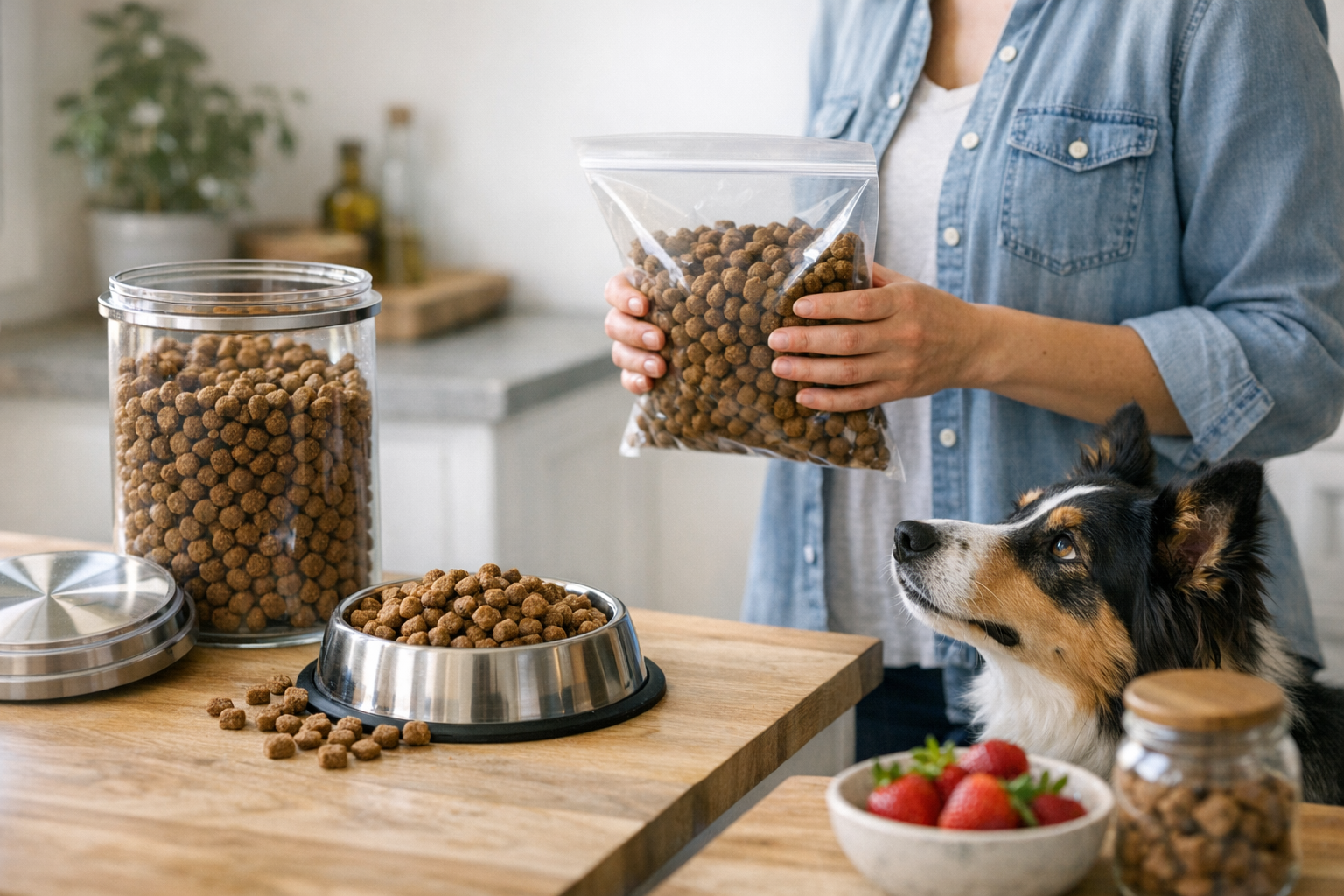
The best way to store food is to keep it in the original bag, fold the top down tightly, and secure it with a heavy-duty clip. Then, place that entire bag inside an airtight plastic or metal container. This provides two layers of protection against oxygen, moisture, and pests. It also keeps your storage bin clean. For a practical setup, browse our dog food storage collection.
Temperature Matters
Store the food in a temperature-controlled environment. Avoid the garage, the laundry room, or the area under the kitchen sink where pipes might leak. A cool, dark pantry is the ideal spot. Try to keep the temperature below 80 degrees Fahrenheit.
Key Takeaway: Keeping kibble in its original bag inside an airtight bin is the gold standard for food safety. It preserves the fats and makes it easy to reference the "best by" date.
Health Risks of Feeding Expired Kibble
Feeding your dog spoiled or expired food is more than just a minor mistake. It can lead to several health complications that vary in severity.
Nutrient Deficiency
As vitamins degrade, your dog stops getting the tools they need for a healthy immune system and coat. A dog eating expired food for a long time might develop dull fur, dry skin, or low energy. This happens because the food no longer meets the "complete and balanced" standards promised on the label.
Bacterial Contamination
Expired or poorly stored food is a breeding ground for bacteria like Salmonella and E. coli. These can cause severe gastrointestinal distress. In some cases, these bacteria can even be passed from the dog to the human family members during handling or through kisses. If your vet recommends prescription support, our pet pharmacy can be a useful next step.
Mycotoxins
Mold in dog food can produce mycotoxins, such as aflatoxin. These are extremely dangerous and can lead to liver failure or even death. Aflatoxins are heat-stable, meaning they are not destroyed by cooking or processing. If you see mold, the food is a biohazard for your pet.
Digestive Upset
Rancid fats are very hard on a dog's stomach. They can cause vomiting, diarrhea, and a painful condition called pancreatitis. If your dog has a sensitive stomach, our pharmacy at BaxterBoo carries specific prescription diets through our partnership with Pet's Choice. These diets are often used to manage long-term digestive health under a vet's guidance.
Practical Tips to Keep Kibble Fresh
Managing your dog's food supply does not have to be a chore. A few simple habits can ensure your pup always has a fresh, nutritious meal.
Step 1: Buy the right size. Calculate how much your dog eats per day. Choose a bag size that will be finished in about 4 to 6 weeks. For a single small dog, a 5-pound or 10-pound bag is usually better than a 25-pound bag.
Step 2: Check the bag before buying. Always look for the "best by" date in the store. Avoid buying bags that expire in the next month or two. Also, check for small tears or grease stains on the packaging, as these indicate the seal has been compromised.
Step 3: Use a clean scoop. Do not use your dog's bowl to scoop food directly from the bag. The bowl carries saliva and bacteria that can contaminate the rest of the food. Use a dedicated, clean measuring cup or scoop.
Step 4: Practice "First In, First Out." If you buy a new bag before the old one is finished, do not mix them. Finish the old bag completely, wash your storage bin if needed, and then start the new bag. Mixing old and new food can cause the fresh kibble to spoil faster.
Consider Autoship for Freshness
One of the easiest ways to ensure your food is always fresh is to use a recurring delivery service. At BaxterBoo, our Autoship programme allows you to time your deliveries based on your dog's actual eating habits. This prevents you from needing to stock up on massive quantities that might go stale. Plus, you get savings on your orders and a free MVP Gold membership.
How Different Brands Handle Preservation
The ingredients in the food also play a role in how fast it expires. Orijen and Acana often use natural preservatives like mixed tocopherols (a form of Vitamin E) and rosemary extract. These are safer for your dog than synthetic chemicals, but they do not last as long. This makes proper storage even more important for premium, natural brands.
Other brands may use synthetic preservatives like BHA or BHT. These provide a longer shelf life, but many owners prefer to avoid them due to health concerns. Regardless of the preservative type, the 6-week rule for an opened bag still applies to ensure the best flavor and safety.
Managing Recalls and Lot Numbers
Keeping the original bag is vital for another reason: the lot number and UPC code. In the rare event of a product recall, you will need this information to see if your bag is affected. Without the bag, you have no way of knowing if your food is part of a safety alert. We stay closely informed about any recalls for the 500+ brands we carry. If you ever have a concern about a brand like Royal Canin or NutriSource, having that bag handy allows you to get clear answers quickly.
Conclusion
Dry dog food is a convenient and nutritious option for most pets, but it does not last forever. An unopened bag is a long-term staple, but once opened, it is a fresh product that needs care. By keeping the food in its original bag, sealing it tightly, and storing it in a cool place, you protect your dog from rancid fats and harmful bacteria. At BaxterBoo, we want to help you make every mealtime safe and enjoyable. Whether you are shopping for premium kibble or managing a health condition with our pharmacy services, quality and freshness are our top priorities. If you are looking for more value on repeat purchases, the MVP Rewards programme is another smart way to save.
Bottom line: Treat your dog's dry food like a fresh grocery item by using it within 6 weeks and storing it in a cool, dark place.
FAQ
Can I feed my dog food that expired last month?
It is not recommended to feed your dog expired food even if it is only a month past the date. The nutritional value has likely decreased, and the fats may have started to turn rancid. While it might not cause immediate illness, it poses an unnecessary risk to your dog's health.
Is it safe to store dog food in the garage?
Storing dog food in a garage is usually a bad idea because of temperature fluctuations. Heat and humidity in the summer will cause the food to spoil and grow mold very quickly. Additionally, garages are more prone to pests like mice or insects that can chew through bags and contaminate the food.
Does freezing dry dog food keep it fresh longer?
Freezing can technically prevent fats from going rancid, but it is generally not advised for kibble. The freezing and thawing process creates condensation inside the bag, which introduces moisture. This moisture can lead to mold growth once the bag is back at room temperature, making the food unsafe.
What should I do if I find bugs in my dog's food?
If you find insects in the food, you must throw the entire bag away immediately. Bugs can introduce bacteria and waste products that make the food unpalatable and unsafe. After discarding the food, thoroughly clean your storage area and any containers to ensure no eggs or larvae are left behind to infest the next bag.






