
 Save 15% on your 1st Autoship learn more

 Email us
 Live Chat
 FAQs
FAQs





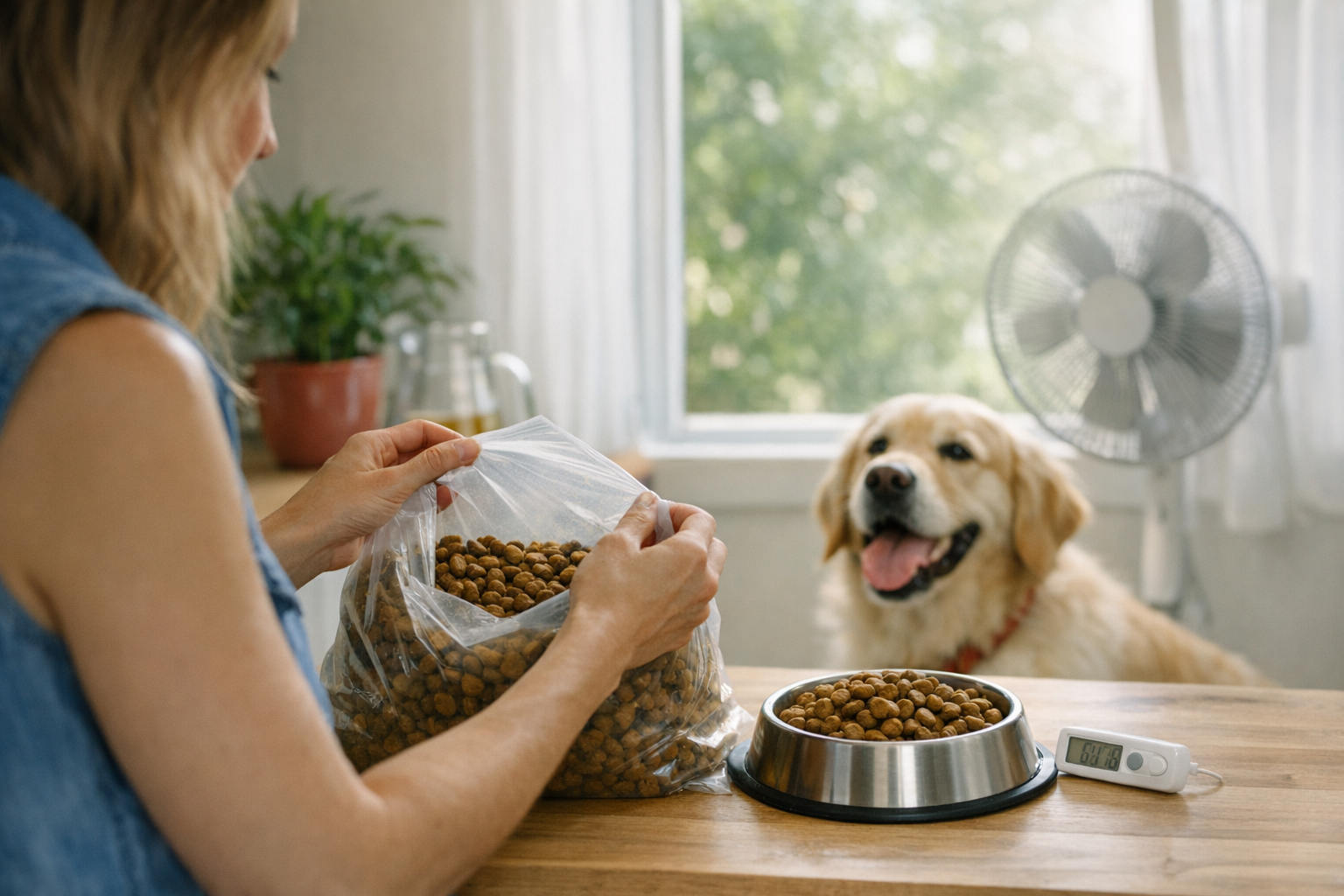
Introduction
You are running errands on a Saturday morning. The pet store is your first stop. You pick up a large bag of premium kibble and toss it in the trunk. Then you stop for groceries. You meet a friend for a quick coffee. By the time you get home, the interior of your car feels like a sauna. You grab the bag and wonder if that heat did any real damage.
It is a moment of uncertainty every dog owner faces. We often view dry food as a shelf-stable product that can handle anything. The reality is much more delicate. At BaxterBoo, we know that high-quality nutrition is an investment in your dog's long-term health. Heat is one of the fastest ways to compromise that investment, so it helps to start with our dry dog food category.
This post explains how high temperatures affect kibble. We will look at the science of food decay and how to spot spoilage. You will also learn the best ways to store and transport food to keep it fresh. Understanding these risks helps you ensure every meal is safe and nutritious.
Quick Answer: Yes, dry dog food can go bad in heat. High temperatures cause the fats in the food to go rancid and destroy essential vitamins. If the food is exposed to heat and humidity, it can also grow dangerous mold and bacteria.
The Science of Food Decay
Dry dog food may look like hard, indestructible biscuits. In reality, it is a complex blend of proteins, carbohydrates, and fats. Most high-quality brands coat their kibble with fats and oils after the baking process. This coating makes the food taste better. It also provides the essential fatty acids your dog needs for a healthy coat and skin.
These fats are highly sensitive to temperature. When kibble sits in a hot environment, a chemical process called lipid oxidation begins. This is the scientific term for fat going rancid. Oxidation happens when oxygen reacts with the fats. Heat acts as a catalyst for this reaction. It speeds up a process that normally takes months and forces it to happen in hours.
Vitamins are also at risk. Many essential nutrients are heat-labile. This means they break down and lose their potency when temperatures rise. Vitamin A and Vitamin E are particularly vulnerable. Even if the food does not smell bad, it may no longer provide the nutrition listed on the bag. This can lead to nutritional gaps if a dog eats heat-damaged food over a long period.
Natural vs Synthetic Preservatives
The type of preservative in your dog's food matters during a heat wave. Many premium brands use natural preservatives like tocopherols. These are forms of Vitamin E. They are excellent for your dog's health but they are not as stable as synthetic chemicals.
Natural preservatives break down much faster when exposed to heat. If you buy high-end brands like Farmina or Stella & Chewy's, you must be even more careful about storage. These foods are designed for freshness rather than a decade-long shelf life. Heat will bypass these natural protections quickly.
Key Takeaway: Heat causes a rapid chemical breakdown of fats and vitamins. This turns healthy kibble into a meal that is either nutritionally empty or potentially toxic due to rancid fats.
The Greenhouse Effect in Your Car
The temperature inside a parked car rises much faster than most people realize. On a mild day with an outside temperature of 70 degrees, the interior can hit 100 degrees in 20 minutes. On a 90-degree summer day, your car can reach 130 degrees in less than an hour.
This happens because of the greenhouse effect. Glass windows allow solar radiation to enter the car. This radiation heats the seats and dashboard. The heat cannot escape through the closed windows. Your dog's food bag absorbs this heat directly.
Most manufacturers recommend storing kibble in a cool place below 80 degrees. Once you hit 100 degrees, the structural integrity of the food starts to fail. The oils may begin to seep out of the kibble. This creates a greasy film on the inside of the bag. This film is a magnet for bacteria.
Why the Trunk Is Dangerous
The trunk is often the hottest part of the car. It lacks the insulation of the main cabin. It also does not benefit from the residual cool air from your air conditioning. Placing a bag of food in a trunk during July is like putting it in a slow cooker. If you must run errands, keep the food in the back seat where the air is slightly cooler.
Biological Risks: Mold and Bacteria
Heat is not just a chemical problem. It is a biological one. While dry kibble is low in moisture, it is not moisture-free. When a bag of food heats up and then cools down, condensation forms inside the bag. This creates tiny pockets of moisture.
These pockets are the perfect breeding grounds for mold. Some molds produce mycotoxins. These are toxic substances that can cause long-term health issues. Mycotoxins are often invisible to the eye. You might not see green fuzz, but the toxins could still be present.
Bacteria also thrive in warm environments. Salmonella and Listeria are the two biggest concerns. Modern manufacturing aims to eliminate these. However, if a bag has a tiny puncture or was previously opened, any trace amounts of bacteria will multiply rapidly in the heat.
Vet Tip: If your dog experiences sudden vomiting or diarrhea after starting a new bag of food, stop feeding it immediately. Consult your veterinarian to rule out food poisoning or bacterial infection. They may suggest a prescription diet from our pet pharmacy to help settle your dog's digestive system.
How to Tell if Dog Food Is Spoiled
You should always inspect your dog's food before every meal. Your senses are your best tools for detection. Do not rely solely on the expiration date. A bag can go bad long before that date if it was stored in a hot garage or left in a car.
The Smell Test
Fresh kibble should have a mild, nutty, or meaty aroma. Rancid fat has a very distinct odor. People often describe it as smelling like wet paint or old cardboard. Sometimes it smells sour or like fermented fruit. If the smell is sharp or makes you wrinkle your nose, the fats have likely oxidized.
The Texture Test
Check the feel of the kibble. If the fats have started to melt, the bits may feel excessively greasy. They might also feel tacky or sticky. In extreme cases of heat exposure, the kibble might clump together. This is a major red flag. Fresh food should be dry and crunchy.
Visual Cues
Look for changes in color. Spoiled food may look darker or more dull than usual. Check the bottom of the bag for "dust" or crumbly bits. While some settled bits are normal, a sudden increase in crumbs can mean the food is drying out and breaking down due to heat damage. Also, look for any signs of insects. Pests are attracted to the smell of decaying food.
The Dog's Reaction
Your dog has a sense of smell that is much stronger than yours. They can often detect rancidity long before you can. If your dog is usually excited for dinner but suddenly turns their nose up at the bowl, listen to them. Do not try to mask the scent with toppers to force them to eat. They are likely sensing that the food is no longer safe.
Bottom line: If the food smells like paint, feels sticky, or your dog refuses to eat it, throw the bag away.
Proper Storage for Maximum Freshness
How you store the food once you get it home is just as important as how you transport it. Many owners make the mistake of keeping food in a garage or a laundry room. These areas often lack climate control and can get very hot.
Keep the Original Bag
One of the best things you can do is keep the food in its original packaging. These bags are engineered with specialized liners. They are designed to keep moisture out and fats in. If you use a plastic storage bin, do not pour the kibble directly into it.
Plastic containers can actually speed up spoilage. Over time, the fats from the food leach into the plastic. These fats go rancid and contaminate every new bag of food you pour in. Instead, place the entire bag inside the plastic bin. This gives you the benefit of an airtight seal while keeping the food in its protective liner.
Choose a Cool Location
The best place for dog food is a pantry or a kitchen cabinet. It should be away from the oven, the dishwasher, and direct sunlight. The temperature should ideally stay between 50 and 75 degrees. If you live in a humid climate, consider using a dehumidifier in your pantry. Humidity is the partner of heat when it comes to mold growth.
Avoid Bulk Buying for Small Dogs
It is tempting to buy the 40-pound bag to save money. However, if you have a small dog, that bag might sit open for months. Every time you open the bag, you expose the food to oxygen and heat. If you cannot finish a bag within six weeks, buy a smaller size. This ensures the food stays fresh until the last bite.
Health Consequences of Heat-Damaged Food
Feeding spoiled food is more than just a bad experience for your dog's taste buds. It can lead to real health problems. The immediate concern is gastrointestinal upset. This includes vomiting, diarrhea, and abdominal pain.
Long-term exposure to rancid fats is more subtle. It can cause chronic inflammation in the body. It may also lead to a dull coat and itchy skin. Since the vitamins have degraded, your dog might develop nutritional deficiencies. They might lose weight or have less energy for their daily walks.
Managing a Sensitive Stomach
If your dog has a sensitive stomach, heat-damaged food can be particularly dangerous. Dogs with conditions like Pancreatitis or Inflammatory Bowel Disease need stable, high-quality nutrition. If your dog is struggling with ongoing digestive issues, we recommend talking to your vet.
For a broader look at supportive nutrition options, browse our dog healthcare category. Our pharmacy partnership with Pet's Choice provides access to prescription diets like Royal Canin Veterinary Diet or Farmina Vet Life. These foods are formulated for specific health needs. Keeping these specialized foods cool and fresh is vital for your dog's recovery and comfort.
Shopping and Transport Tips
You can prevent most heat-related food issues by changing your shopping routine. A little planning goes a long way in protecting your pet's health.
- Make the pet store your last stop. Never leave food in the car while you run other errands.
- Use the back seat instead of the trunk. The cabin air stays cooler.
- Check the "Best By" date before you buy. Choose the bag with the furthest date out.
- Inspect the bag for tears. A hole in the bag allows heat and oxygen to enter even before you get it home.
- Use an insulated blanket. If you have a long drive home, wrap the bag in an insulated moving blanket.
Step 1: Plan your errands. / Schedule your pet food purchase as the very last task of the day. Step 2: Check the bag integrity. / Ensure there are no punctures or weakened seals at the store. Step 3: Transport in the cabin. / Place the bag on the floor of the back seat where it is shaded. Step 4: Store immediately. / Move the food into a climate-controlled pantry as soon as you arrive home.
The Role of Preservatives and Packaging
Modern packaging has come a long way. Many bags now feature "stay-fresh" zippers and multi-layered foil liners. These are great, but they are not heat-proof. They are designed to block light and air. They do very little to stop the transfer of heat.
Think of a dog food bag like a winter coat. It can keep the internal temperature stable for a short time. However, if it sits in the sun, the heat eventually penetrates the layers. Once the internal temperature of the kibble reaches the ambient temperature of a hot car, the damage begins.
Why Batch Numbers Matter
If you suspect a bag of food has gone bad, do not just toss it. Take a photo of the batch number and the expiration date. If your dog gets sick, this information is vital for the manufacturer and your vet. It helps track if there was a problem with that specific production run. At us, we take product safety seriously and can help you navigate concerns about the brands we carry.
Key Takeaway: Proper storage starts at the store. Transporting food in a cool cabin and keeping it in the original bag are the two most effective ways to prevent spoilage.
Signs Your Dog Needs a Change
Sometimes, even with perfect storage, a specific food might not agree with your dog during the hot months. Some dogs become less active in the summer and need fewer calories. Others might need a food with more moisture.
If your dog seems less interested in dry kibble during a heatwave, you might consider mixing in a high-quality wet food. For another angle on that choice, read our wet versus dry food guide. Brands like Tiki Cat or Caru offer moisture-rich options that can be more appealing when it is hot outside. Just remember that wet food spoils much faster than dry food once it is opened. Always refrigerate leftovers and discard them after two days.
Summary of Best Practices
Keeping your dog's food safe requires a mix of common sense and scientific understanding. Heat is a quiet destroyer of nutrition. By the time you see physical evidence of spoilage, the food has likely been degraded for a while.
- Avoid temperatures above 80 degrees for storage.
- Never leave food in a hot car for more than 15 minutes.
- Keep the kibble in its original bag to protect the fats.
- Clean your storage containers between every bag.
- Trust your dog's nose if they refuse a meal.
We offer a wide variety of storage solutions and premium foods to help you maintain a healthy feeding routine. Our MVP Rewards programme lets you earn points on every bag of food you buy. This makes it easier to buy smaller, fresher bags more often.
Conclusion
Dry dog food is more vulnerable to the environment than it seems. Heat triggers chemical reactions that strip away nutrition and create toxic byproducts. By storing food in a cool, dry place and being mindful of transport, you can protect your dog from digestive upset and long-term health issues.
A healthy dog starts with a fresh bowl of food. If you ever have doubts about a bag's safety, err on the side of caution. Your dog's health is worth far more than a bag of kibble. For those who want to ensure they never run out of fresh food, our Autoship programme is a great way to have smaller bags delivered right to your door on a regular schedule.
Key Takeaway: Heat-damaged food can lead to serious illness. Protect your dog by keeping food cool, using original packaging, and consulting a vet if you notice signs of illness.
FAQ
Can I still feed dog food that was left in a hot car for a few hours?
It depends on the temperature and the duration. If the car was over 100 degrees for more than an hour, the fats have likely started to oxidize. Check for a sour or paint-like smell and a greasy texture before deciding. When in doubt, it is safer to discard the food to avoid making your dog sick.
Is it okay to store dog food in the garage?
Storing dog food in a garage is generally not recommended unless the space is climate-controlled. Garages often reach extreme temperatures in the summer and experience high humidity. This environment creates the perfect conditions for rancidity and mold growth. A kitchen pantry or a closet inside the home is a much safer choice.
What are the symptoms of a dog eating spoiled food?
The most common symptoms are gastrointestinal distress, including vomiting, diarrhea, and a loss of appetite. Some dogs may also show signs of lethargy or abdominal pain. If the food contained mycotoxins from mold, the symptoms could be more severe and require immediate veterinary attention. Our pharmacy carries prescription diets that can help dogs recover from these issues once they have been seen by a vet.
Does heat affect unopened bags of dog food?
Yes, heat can affect unopened bags because the packaging is not an insulator. While the seal prevents oxygen from entering, the heat still transfers through the bag and triggers the breakdown of fats and vitamins inside. The "greenhouse effect" inside a car or a hot shed will damage the food regardless of whether the seal is broken.






