
 Save 15% on your 1st Autoship learn more

 Email us
 Live Chat
 FAQs
FAQs





Introduction
You might be sitting on the floor with your dog and notice their breath smells a bit like old socks. When you lift their lip, you see red gums or a bit of yellow buildup. This is a common moment for many pet owners. You want a natural way to help your dog without jumping straight to expensive procedures. Many people wonder if the golden spice in their kitchen cabinet can help. We often get questions at BaxterBoo about natural supplements and how they fit into a dental routine. Turmeric is famous for its health benefits in humans, and it is becoming a popular choice for pets too. This post covers how turmeric works for dental health, the proper way to use it, and when you need to see a professional.
Quick Answer: Turmeric contains curcumin, which has anti-inflammatory and antibacterial properties that can reduce gum redness and slow plaque growth. While it helps maintain a healthier mouth, it cannot physically scrub away hard tartar or replace regular tooth brushing.
Understanding Turmeric and Canine Dental Health
Turmeric is a root that belongs to the ginger family. It has been used for thousands of years in traditional medicine. The most important part of turmeric is a compound called curcumin. This is what gives the spice its bright yellow color. It is also the source of almost all its health benefits. When we talk about cleaning teeth, we are usually talking about two things. The first is removing physical buildup like plaque and tartar. The second is managing the health of the gums. Turmeric excels at the second part.
Curcumin is a powerful anti-inflammatory agent. Most dental problems in dogs start with inflammation. When plaque sits on the teeth, it irritates the gums. This leads to gingivitis, which makes the gums look red and swollen. If left alone, this can turn into periodontal disease. Turmeric helps by calming that inflammation. It makes the environment in the mouth less hospitable for bad bacteria.
The Role of Bacteria
The mouth is home to billions of bacteria. Some are good, but some cause decay and bad breath. Turmeric has natural antibacterial properties. It helps limit the growth of the bacteria that form plaque. Plaque is the sticky film that coats teeth after eating. If plaque stays on the tooth for more than a few days, it hardens into tartar. Turmeric can slow down this process. It does not act like a scraper, but it helps keep the "slime" from getting out of hand.
Why Turmeric Isn't a Magic Wand
It is important to be realistic about what a spice can do. If your dog already has thick, brown tartar, turmeric will not make it disappear. Tartar is like concrete. Once it forms, it usually requires a professional cleaning by a veterinarian. However, for a dog with mild redness or as a preventive measure, turmeric is a great addition to their care. We see many owners use it to keep the mouth fresh between professional cleanings.
For more options that support an at-home routine, browse our dog dental care products.
The Specific Benefits of Turmeric for Gums
Gingivitis is the first stage of dental disease. It is very common in dogs by the time they reach age three. You might notice your dog's gums bleed slightly when they chew a hard toy. This is a sign of infection and inflammation. Because turmeric is so good at reducing swelling, it can make a big difference here.
When a dog has healthy gums, the tissue is pink and fits tightly against the tooth. In a mouth with dental disease, the gums pull away. This creates pockets where more food and bacteria get trapped. By reducing the swelling, turmeric helps the gums stay tighter against the teeth. This limits the space where bacteria can hide and grow.
For additional guidance on warning signs, read how to recognize signs of bad teeth in dogs.
Key Takeaway: Turmeric is best used as a preventative tool and an anti-inflammatory aid for the gums rather than a physical tooth cleaner. It works best when combined with mechanical cleaning like brushing or chewing.
How to Give Your Dog Turmeric Safely
You cannot simply toss a pile of dry turmeric powder onto your dog's food and expect results. Turmeric is not easily absorbed by a dog's digestive system on its own. It is "fat-soluble," meaning it needs to be eaten with a healthy fat to work. It also leaves the body very quickly. To get the most dental benefit, you need to prepare it correctly.
The Golden Paste Method
Most experts recommend making what is known as "golden paste." This mixture combines turmeric with a healthy fat and a tiny bit of black pepper. The black pepper contains piperine. Piperine can significantly increase the absorption of curcumin in the body.
To make a basic golden paste, you will need:
- 1/2 cup organic turmeric powder
- 1 cup water
- 1/3 cup organic cold-pressed coconut oil or olive oil
- 1/2 to 1 teaspoon freshly ground black pepper
You simmer the turmeric and water until it forms a thick paste. Then you stir in the oil and pepper once it is off the heat. You can store this in a glass jar in the fridge for about two weeks.
Dosage Guidelines
A little goes a long way with this spice. Starting with too much can cause a messy stomach. Always start small and work your way up over a week or two.
| Dog Size | Daily Dosage Recommendation |
|---|---|
| Small Dogs (under 20 lbs) | 1/8 to 1/4 teaspoon per day |
| Medium Dogs (20-50 lbs) | 1/4 to 1/2 teaspoon per day |
| Large Dogs (50-100 lbs) | 1/2 to 3/4 teaspoon per day |
| Giant Dogs (over 100 lbs) | 1 teaspoon per day |
Vet Tip: Before starting any new supplement, check with your veterinarian. This is especially important if your dog is on medication for blood thinning, diabetes, or has gallbladder issues. Turmeric can interact with certain prescriptions.
Using Turmeric as a Natural Toothpaste
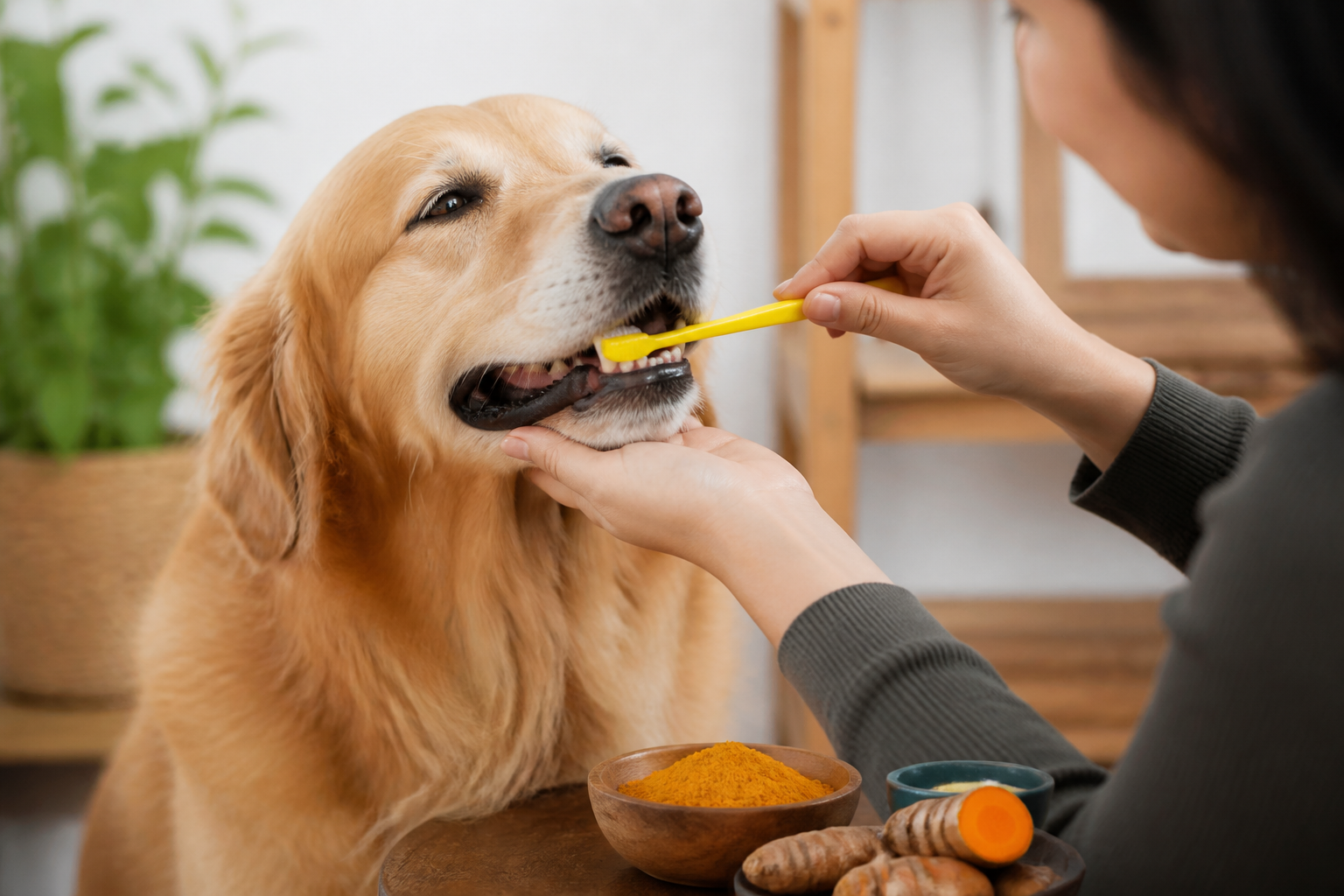
If you want to use turmeric specifically for cleaning the teeth, you can apply it directly. Some owners make a natural toothpaste using coconut oil and turmeric. Coconut oil also has antibacterial properties, making it a perfect partner.
Step 1: Mix one tablespoon of softened coconut oil with 1/4 teaspoon of turmeric.
Step 2: Use a soft-bristled dog toothbrush or a finger brush to apply the mixture to the teeth.
Step 3: Focus on the gum line where the teeth meet the soft tissue.
Step 4: Gently massage the gums in a circular motion.
Step 5: Let your dog lick some of the mixture, as the internal benefits are also helpful.
Be warned that turmeric stains everything it touches. It will turn your dog's beard yellow for a while. It will also stain your carpet, your white towels, and your clothes. If you have a white dog, be prepared for a yellow-tinted snout. This is purely cosmetic and will eventually fade or wash away.
For other brushing supplies, explore our dog dental food and treat selection.
Potential Side Effects and Precautions
While turmeric is generally safe, it is a powerful herb. Some dogs may experience a "warming" effect because turmeric is considered a heating spice in traditional medicine. If your dog is always seeking out cold floors or panting heavily, they might be too "hot" for daily turmeric.
The most common side effect is loose stools or an upset stomach. If this happens, stop the supplement for a few days. When you restart, use a much smaller amount. Turmeric also has a very distinct smell. Some people say it makes their dog smell slightly like cat urine or strong spice. Adding a little cinnamon to the golden paste can help mask this scent.
Another concern is blood thinning. Turmeric can slow down blood clotting. This is why you should always stop giving your dog turmeric at least two weeks before any scheduled surgery, including a professional dental cleaning.
A Holistic Approach to Dental Care
Turmeric is just one piece of the puzzle. To keep your dog's mouth truly clean, you need a multi-pronged approach. We carry many products at BaxterBoo that can work alongside natural remedies to keep your pet healthy.
Mechanical Cleaning
The "gold standard" for dental care is still daily brushing. The physical action of the bristles removes plaque before it can harden. If your dog hates the toothbrush, try dental toys. Look for toys with ridges or nubs that massage the gums as the dog chews. These nubs help scrape away debris while the dog plays.
For more ideas, read our pet dental care tips.
Diet and Nutrition
What your dog eats matters. High-carbohydrate diets can sometimes lead to more plaque because sugars feed the bacteria in the mouth. Some owners find that a raw diet or high-protein kibble helps keep teeth cleaner. There are also specific dental diets designed to be extra crunchy. These kibbles are made to not crumble immediately. Instead, they scrub the tooth as the dog bites down.
If your veterinarian recommends a prescription food, you can browse our selection of Royal Canin products or Farmina products.
Supplements and Additives
Besides turmeric, other natural ingredients can help. Seaweed and kelp are popular additives. They contain enzymes that help break down the "biofilm" of bacteria on the teeth. You can also find water additives that you simply pour into your dog's bowl. These are great for dogs that do not allow you to touch their mouths.
Dental chews can also complement brushing. See how dental chews can fit into a dog's oral care routine.
When to Use the BaxterBoo Pharmacy
Sometimes natural remedies are not enough. If your dog has advanced dental disease, they may need more help. This could include prescription dental diets or medications to treat an active gum infection. Our pet pharmacy offers FDA-approved medications and prescription pet foods through our partnership with Pet's Choice.
If your vet prescribes a specific dental diet like Royal Canin Dental or Farmina Vet Life, you can often find these options available for home delivery. Managing chronic health issues often requires a mix of veterinary guidance and high-quality products. We want to make sure you have easy access to the tools your vet recommends for your dog's long-term wellness.
Key Takeaway: Always pair natural supplements like turmeric with regular veterinary check-ups to ensure your dog's dental health is on the right track.
Common Signs of Dental Trouble
It helps to know what you are looking for when you check your dog's mouth. Healthy teeth are white and the gums are pale pink. If you see any of the following, it might be time to skip the turmeric and head to the vet:
- Extremely bad breath that doesn't go away
- Yellow or brown crust near the gum line
- Gums that are bright red or bleeding
- Loose or missing teeth
- Difficulty eating or dropping food
- Swelling on the face under the eye
Bottom line: Turmeric is a fantastic anti-inflammatory aid for gum health, but it works best as part of a larger routine that includes brushing and professional care.
Professional Cleaning and Safety
Even with the best at-home care, most dogs will eventually need a professional cleaning. This is done under anesthesia so the vet can clean under the gum line. This is the most important part of the cleaning. You cannot reach under the gums at home with a toothbrush or turmeric paste.
During these visits, the vet might find a tooth that is rotting from the inside. Removing these "problem" teeth can save your dog from significant pain. After a professional cleaning is the perfect time to start a turmeric routine. It will help keep the freshly cleaned gums healthy and may extend the time until the next professional visit is needed.
Creating a Daily Dental Routine
Consistency is the most important factor in pet health. A little bit of care every day is better than a lot of care once a month. You might decide to give a golden paste treat every morning and do a quick brush with coconut oil and turmeric every Sunday.
Step 1: Check the mouth once a week for any new redness or lumps.
Step 2: Add a small amount of golden paste to the evening meal.
Step 3: Provide a safe dental chew toy for daily play.
Step 4: Schedule a yearly dental exam with your vet.
We have seen thousands of owners successfully manage their pets' health by staying consistent. Whether you are using MVP Rewards to save on dental treats or using our Autoship program for your dog's favorite food, we are here to support that routine.
Conclusion
Turmeric is a wonderful, natural tool for supporting your dog's oral health. Its ability to fight inflammation and bacteria makes it a great partner for healthy gums. While it won't replace the need for physical cleaning, it can help keep your dog's mouth feeling and smelling better. Remember to start with small doses and watch for any digestive changes. Use a golden paste to ensure your dog actually absorbs the curcumin. Most importantly, keep your veterinarian involved in your dog's dental journey.
Key Takeaway: Use turmeric to support gum health and reduce inflammation, but continue to rely on brushing and vet visits for complete dental care.
To keep your dog's smile bright, explore our full collection of dental care products. From toothbrushes to dental treats, we have everything you need to build a solid routine. You can also talk to your vet about prescription options available through our pharmacy partnership with Pet's Choice.
FAQ
Does turmeric whiten a dog's teeth?
Turmeric is not a bleaching agent and will not whiten teeth in the traditional sense. In fact, it is a very strong yellow dye that can temporarily stain a dog's fur or the surfaces it touches. Its primary benefit is improving gum health and reducing the bacteria that cause yellow plaque, which may help the teeth look cleaner over time.
Can I just sprinkle dry turmeric on my dog's food?
While you can sprinkle it, your dog likely won't get much benefit from dry powder. Curcumin is difficult for a dog's body to absorb on its own. It needs to be mixed with a healthy fat, like coconut oil, and a pinch of black pepper to be effective. Without these additions, the turmeric will likely pass through your dog's system without being absorbed.
Will turmeric help with my dog's bad breath?
Yes, turmeric can help reduce bad breath if the smell is caused by gum inflammation or bacteria in the mouth. Since turmeric is antibacterial and anti-inflammatory, it targets the root causes of many mouth odors. However, if the bad breath is coming from a more serious issue like a rotting tooth or a stomach problem, turmeric may only provide a temporary mask.
Is turmeric safe for all dogs?
Most dogs handle turmeric well, but there are exceptions. It should be avoided in dogs with gallbladder disease or those prone to kidney stones. Because it can thin the blood, it should not be given to dogs with bleeding disorders or those about to have surgery. Always talk to your vet before starting turmeric if your dog is on any long-term medications.






