
 Save 15% on your 1st Autoship learn more

 Email us
 Live Chat
 FAQs





Introduction
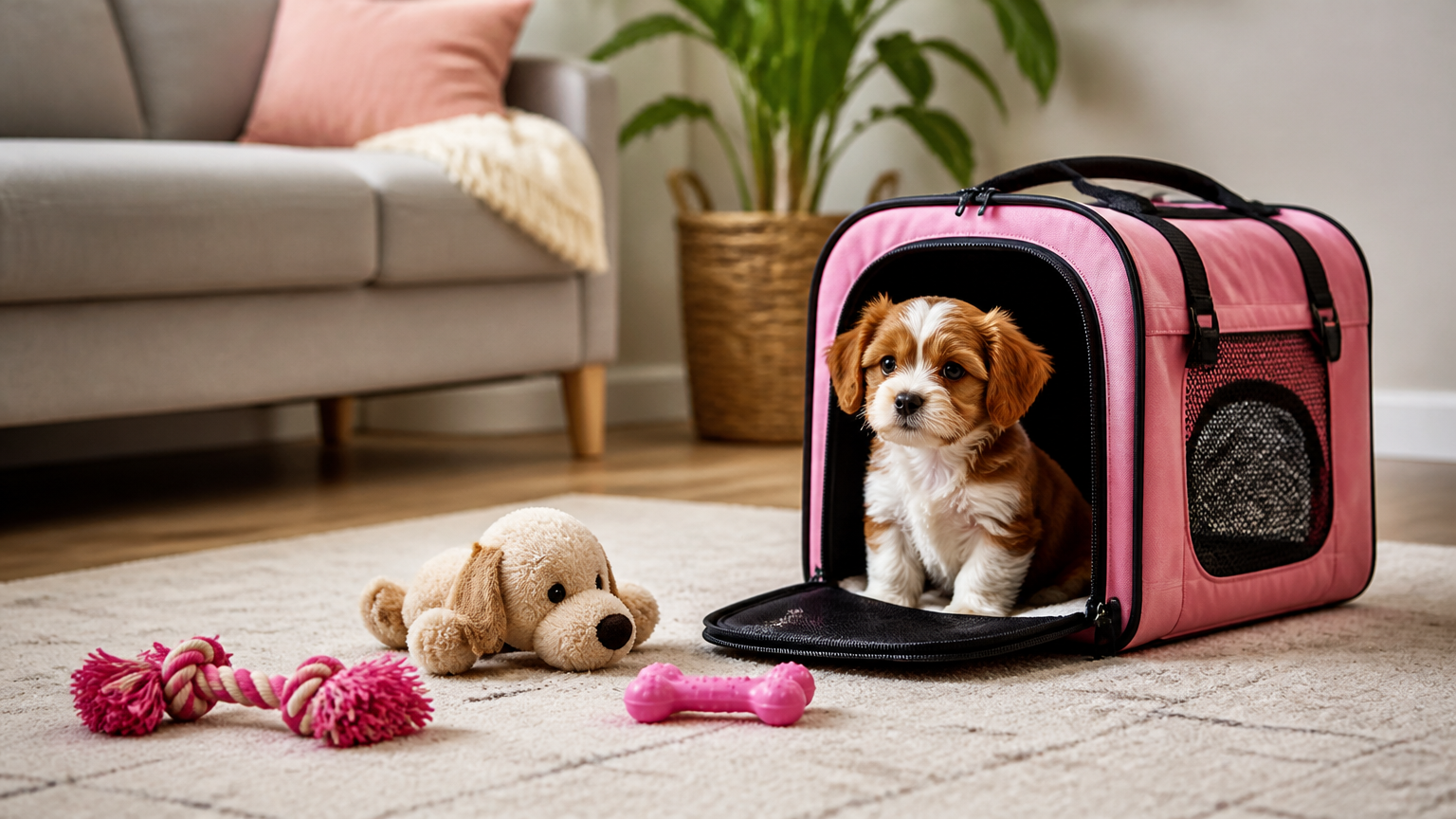
A search for a dog carrier toy can bring up two very different products: a pretend-play set with a stuffed puppy, or a carrier made for a real toy-breed dog. They may look alike in photos, but they are not interchangeable. A child’s toy carrier is not designed to hold a living animal, even a very small puppy.
At BaxterBoo, we help pet owners think through the practical details of traveling with a small dog. We’ll also cover what to check if you meant a play set for a child. Start by deciding who will use the carrier, then compare its size, construction and intended purpose before you buy.
Which Kind of Dog Carrier Do You Need?
The product description should tell you if a carrier is a toy or pet gear. Look beyond a photo of a puppy peeking out of a bag, since it could show a stuffed animal or a real dog.
| Product | Intended use | What to check |
|---|---|---|
| Pretend-play carrier | Carrying a plush dog or other toy | Age guidance, included pieces and toy size |
| Toy-breed dog carrier | Carrying a living small dog | Interior dimensions, weight limit and ventilation |
A pretend-play carrier might be sold with a plush puppy, or it might be a case for a toy you already own. A carrier for a real dog should identify itself as pet equipment and provide sizing information for the animal.
Dog Carriers


Choosing a Pretend-Play Dog Carrier Toy
For a child’s play set, first check what comes in the package. Some sets include a stuffed dog, while others contain a carrier and accessories but no plush animal. If your child has a favorite toy already, compare its size with the carrier opening and interior.
Look for the manufacturer’s age recommendation and any warnings about small pieces. A set with pretend food, brushes or other accessories offers more ways to play, but those pieces also need to be kept together and stored appropriately.
Consider how your child will use the carrier. A simple soft bag may be easy to carry around the house, while a structured case may be easier to open and pack. Check the cleaning instructions, especially if the plush dog will go along on outings.
Before choosing a play set, check:
- Whether the stuffed dog is included.
- The recommended age and any warnings.
- The number and size of loose accessories.
- How the carrier opens and closes.
- The cleaning instructions for both the toy and the carrier.
Keep a child’s play set separate from your dog’s own toys. If your dog grabs a plush puppy or loose accessory, take it away rather than assuming it is suitable for chewing.
Choosing a Carrier for a Toy-Breed Dog
A real dog carrier needs to fit your dog and suit the way you plan to travel. A carrier that works for a short walk to a nearby appointment may not be the right choice for a flight or a car trip.
Measure Your Dog First
Breed names and size labels are starting points, not measurements. Two dogs of the same breed can differ in length, height and weight.
Measure your dog’s length and height, then compare those measurements with the carrier’s interior dimensions. Check the manufacturer’s weight limit too. A dog who is under the limit can still be too tall or long for the space.
Your dog should have room to turn around and lie down comfortably without having to bow their head. The pet-carrier sizing guide from TeaCups, Puppies & Boutique also recommends checking height, length and the carrier’s weight limit.
If you are shopping for a growing puppy, consider how quickly the fit may change. Check the carrier again as your puppy grows rather than relying on their first measurements.
Compare Carrier Styles
Different styles make different tradeoffs. Think about how you will carry your dog, how easily you can get them in and out, and how well the carrier supports them.
| Style | Potential fit | Detail to check |
|---|---|---|
| Soft-sided carrier | Everyday trips when you want a lightweight bag | That the base stays supportive and the sides allow enough room |
| Structured carrier | Owners who want a more rigid shape | That the opening and interior work for the dog |
| Backpack carrier | Walking when the owner wants hands free | That the dog is supported and can be checked easily |
| Sling-style carrier | Short outings with a dog who fits comfortably | That the dog’s body is supported and they cannot easily slip out |
A style is only a starting point. Check each product’s dimensions, construction and instructions before deciding it works for your dog.
Look at the Details
Ventilation matters in any enclosed carrier. Look for openings that allow airflow, and make sure they will not be blocked by the way you carry or place the bag.
A stable base gives your dog a surface to stand and rest on. Check the handles, straps, seams and closures as well. You should be able to lift the carrier comfortably and close it securely without catching fur or paws.
Some carriers have removable pads or washable liners. Those can make cleanup easier after a muddy walk or an accident, but check the care instructions before washing.
Use this checklist when comparing options:
- Does your dog fit within both the interior dimensions and weight limit?
- Can your dog turn around and lie down comfortably?
- Are the ventilation openings clear?
- Does the base support your dog without sagging?
- Can you manage the opening and carry the bag comfortably?
Plan for the Trip
Car Rides
A carrier that is easy to carry into a store is not automatically designed to protect a dog in a collision. Check the manufacturer’s vehicle-use instructions and any specific claims about how the carrier should be secured.
Place and secure the carrier according to those instructions. Do not hold it on your lap while driving, and never leave your dog unattended in a parked vehicle.
Air Travel
Before buying a carrier for a flight, check the airline’s current pet policy for your specific trip. Ask about the carrier dimensions, required features and any rules for your dog’s travel.
A bag described as suitable for air travel is not a substitute for checking with the airline. The carrier also still needs to fit your dog comfortably, even if its outside dimensions meet the airline’s limits.
Everyday Outings
For a walk or appointment, think about the entire trip. A shoulder bag may be convenient for a short distance, while a backpack may leave your hands free. The best choice is one you can carry comfortably and monitor while your dog rests inside.
Pack only what you need, and keep personal items from pressing into your dog’s space or blocking ventilation. Check on your dog during the outing and give them a break when appropriate.
Help Your Dog Get Used to the Carrier
A new carrier can feel unfamiliar. Give your dog time to investigate it at home before relying on it for an important trip.
Step 1: Set the carrier down. Leave it open on a stable surface where your dog can approach and move away freely.
Step 2: Reward interest. Place a suitable treat near the opening, then inside if your dog is comfortable approaching. Avoid pushing or forcing your dog into the carrier.
Step 3: Practice short stays. Once your dog enters willingly, let them spend a little time inside while you stay nearby. Build up gradually, watching for signs that they want to come out.
Step 4: Practice carrying. Close the carrier as directed and lift it briefly. Set it down and let your dog out before trying a short walk around the room.
Step 5: Try a short outing. Choose a manageable trip before using the carrier for a longer journey. If your dog struggles, return to an easier step.
A familiar, appropriately sized blanket may make the carrier more inviting if it does not crowd your dog or block airflow. Check the fit again with any bedding in place.
Vet Tip: If your dog seems persistently distressed in a carrier or has trouble getting comfortable, ask your veterinarian for advice before traveling.
Keep the Carrier Clean and in Good Condition
Check the carrier after outings for dirt, moisture and damage. Follow the manufacturer’s cleaning directions for the bag and any removable pad, and let cleaned pieces dry before putting them back together.
Look closely at zippers, fasteners, straps, seams and ventilation panels. A damaged closure or torn panel can change how securely the carrier holds your dog. Stop using a carrier if you cannot close it properly or if its structure no longer supports your dog.
Conclusion
A dog carrier toy and a carrier for a toy-breed dog have different jobs. Choose a play set for a stuffed animal, and choose properly sized pet equipment for a living dog.
- For a play set, check the age guidance and what is included.
- For a real dog, measure first and check the interior dimensions and weight limit.
- Match the carrier to your trip, then give your dog time to get comfortable with it.
A carrier made for pretend play should never be used to carry a real dog.
When you’re ready to compare options for your dog, explore the carrier and travel gear selection at BaxterBoo.
FAQ
Does a dog carrier toy come with a stuffed dog?
Some play sets include a plush dog, while others include only a carrier or accessories. Check the package contents before buying, especially if the child expects a puppy inside.
Can a toy dog carrier hold a real puppy?
No. A carrier sold for pretend play is not a substitute for equipment designed for a living dog. Choose a pet carrier that fits your puppy’s measurements and weight.
Is a carrier labeled “extra small” right for every toy breed?
Not necessarily. Check your dog’s length, height and weight against the carrier’s interior dimensions and weight limit. Your dog also needs enough room to turn around and lie down comfortably.
Can I use my dog’s everyday carrier on a plane?
Possibly, but check the airline’s current requirements for your trip before you travel. The carrier must meet those requirements and still provide a comfortable fit for your dog.




- Site & Contents BaxterBoo.com. BaxterBoo is located in the United States.
- Privacy & Security
- Terms of Use
- Accessibility Statement
