Save 15% on your 1st Autoship learn more

 Email us
 Live Chat
 FAQs
FAQs





Introduction
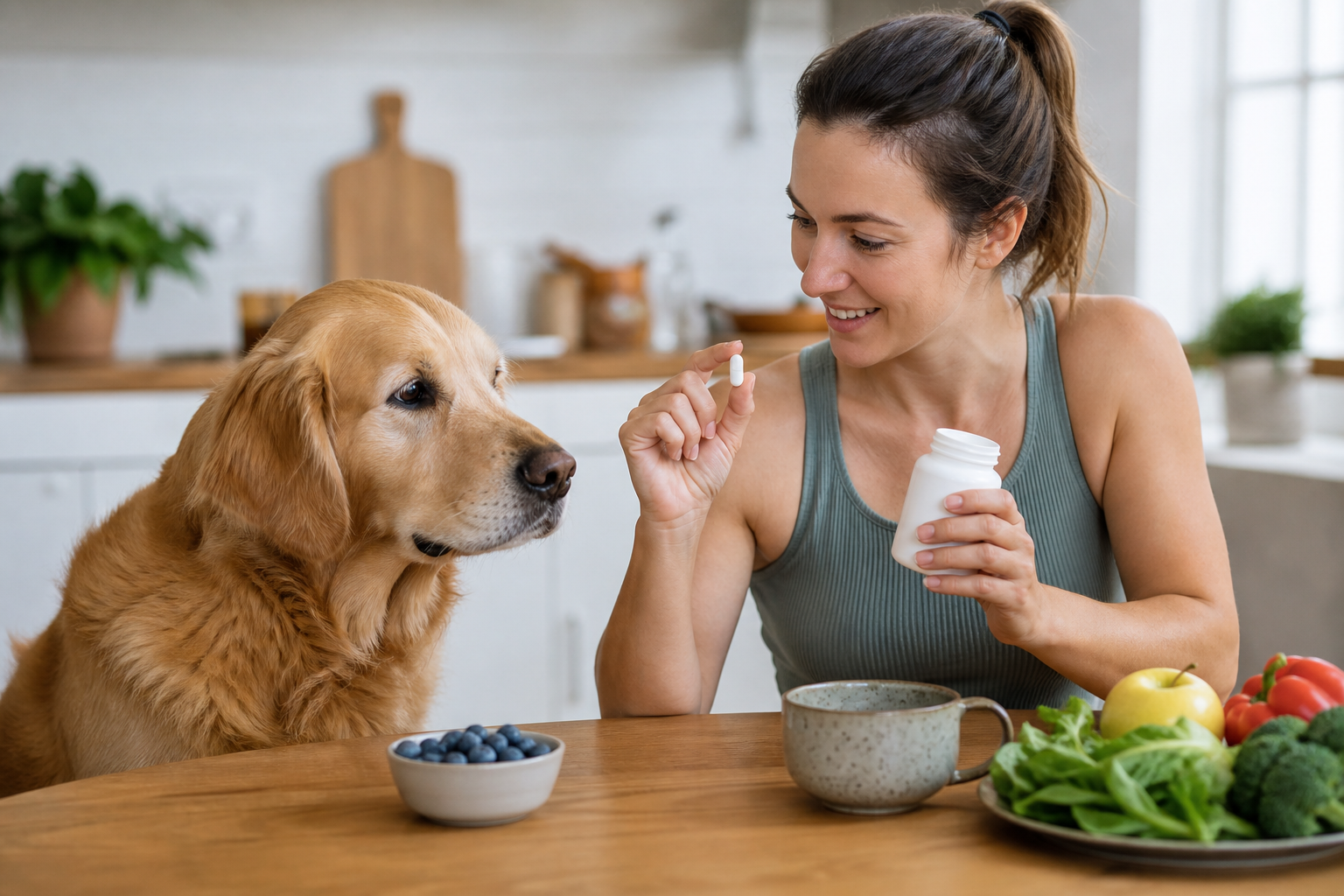
You might be standing in your kitchen, looking at your own bottle of digestive supplements while your dog sits nearby with a rumbly stomach or a bout of gas. It is natural to wonder if you can simply share a capsule of your probiotics to help them feel better. At BaxterBoo, we hear this question often from pet parents who want to support their dog's gut health without overcomplicating things. While both humans and dogs rely on beneficial bacteria for digestion, their internal environments are distinct. This post explores the biological differences between canine and human digestive tracts, the safety risks of sharing supplements, and how to choose the right support for your pet. Understanding these nuances ensures you provide the most effective care for your dog's unique microbiome.
Quick Answer: While dogs can technically take some human probiotics, they are often less effective because a dog's gut has a different pH and bacterial makeup. Some human supplements also contain ingredients like xylitol that are toxic to dogs.
The Biological Gap Between Dogs and Humans
The primary reason to choose a species-specific supplement is the environment of the gastrointestinal tract. A dog's stomach is significantly more acidic than a human's stomach. This high acidity is a natural defense mechanism. It helps dogs break down raw proteins and protects them from bacteria they might encounter while sniffing the ground or licking their paws.
Because the canine stomach is so harsh, many probiotic strains formulated for humans cannot survive the journey to the intestines. If the bacteria die in the stomach acid, they cannot colonize the gut or provide any health benefits. Our dog digestive health category includes supplements designed to support canine digestion.
The microbiome itself is also different. Humans and dogs host different populations of "good" bacteria. While we share a few common strains, the ratios and dominant species vary. A supplement designed for a human focuses on the needs of a human microbiome, which may not align with what a dog needs to achieve a healthy internal balance.
Key Takeaway: Dogs have much more acidic stomachs than humans. This means human-grade probiotics often break down before they can reach the dog's intestinal tract to do any good.
Why Bacterial Strains Matter
When you look at a supplement label, you will see names like Lactobacillus or Bifidobacterium. These are different strains of bacteria that perform specific jobs in the body. While some strains are found in both species, dogs benefit most from strains that are naturally prevalent in their own digestive systems.
Common canine-specific strains include:
- Enterococcus faecium: This strain is particularly hardy and helps manage stress-related diarrhea.
- Bifidobacterium animalis: This is often used to support healthy digestion and improve stool quality.
- Lactobacillus acidophilus: This strain is found in both humans and dogs and helps with nutrient absorption.
- Bacillus coagulans: This strain is known for supporting the immune system and gut lining.
Human supplements might contain high concentrations of strains that are useful for us but less relevant for a dog. If you give a dog a human probiotic, you are essentially introducing a workforce that does not know how to do the job in that specific environment.
Potential Risks of Using Human Probiotics
The biggest risk of giving your dog a human supplement is not the bacteria itself, but the "other" ingredients. Manufacturers often add flavors or sweeteners to make human supplements more palatable.
One of the most dangerous additives is xylitol. This artificial sweetener is perfectly safe for humans but is highly toxic to dogs. Even a small amount can cause a life-threatening drop in blood sugar or liver failure. Human supplements may also contain chocolate, raisins, or certain types of fiber that cause significant bloating and gas in pets.
Even if the supplement is free of toxins, the concentration of bacteria is a factor. Human probiotics often have a much higher Colony Forming Unit (CFU) count than what a dog requires. Introducing a massive amount of foreign bacteria to a dog's gut can actually cause a "die-off" reaction or an overgrowth. This often leads to:
- Increased gas and bloating
- Vomiting
- Loose stools or worsening diarrhea
- Abdominal discomfort
Vet Tip: Always read the full ingredient list on any human supplement before considering it for your pet. If you see xylitol (sometimes listed as birch sugar) or unknown herbal blends, keep it away from your dog.
When Your Dog Might Need Probiotic Support
Most healthy dogs maintain a balanced gut naturally through a high-quality diet. However, certain life events can throw that balance out of alignment. This is known as dysbiosis. When the "bad" bacteria outnumber the "good," you might notice your dog is more flatulent than usual or has inconsistent stools.
Common scenarios where we recommend probiotic support include:
- Antibiotic use: Antibiotics are great at killing infections, but they also kill off beneficial gut bacteria.
- Transitioning foods: Moving to a new protein or brand can be hard on the stomach.
- High-stress events: Boarding, moving houses, or holiday travel can cause "stress colitis" or nervous diarrhea.
- Senior health: Older dogs often have less efficient digestive systems and may need help absorbing nutrients.
- Chronic skin issues: There is a strong link between gut health and skin allergies in dogs.
For dogs with chronic conditions like Inflammatory Bowel Disease (IBD) or severe food sensitivities, a standard over-the-counter supplement might not be enough. Our pharmacy offers prescription-strength probiotics and specialized veterinary diets through our partnership with Pet's Choice. These products are formulated for clinical needs and should be used under the guidance of your veterinarian.
Prebiotics: The Support System
You cannot talk about probiotics without mentioning prebiotics. Think of probiotics as the "seeds" and prebiotics as the "fertilizer." Prebiotics are types of fiber that the dog's body cannot digest, but they serve as the primary food source for the beneficial bacteria in the colon.
Many high-quality dog foods, like those from NutriSource or Farmina, already include prebiotics like chicory root or beet pulp. When choosing a supplement, look for one that includes both. This combination is often called a "synbiotic." It ensures that the good bacteria you are introducing have the energy they need to grow and thrive once they reach the intestines.
Checklist for Choosing a Dog Probiotic
- Look for a "Guaranteed Analysis" of live cultures at the time of expiration.
- Ensure it contains at least one canine-specific strain like Enterococcus faecium.
- Check for added prebiotics like inulin or fructooligosaccharides (FOS).
- Choose a delivery method your dog likes, such as a flavored chew or a tasteless powder.
- Avoid products with heavy fillers, artificial colors, or chemical preservatives.
How to Introduce Probiotics Safely
If you decide to start your dog on a supplement, do not rush the process. Even the best bacteria can cause a little bit of gas if introduced too quickly. Start with a half dose for the first few days to let your dog's system adjust.
Step 1: Consult your veterinarian. / They can help you determine if the symptoms you see are a simple gut imbalance or something requiring medical intervention.
Step 2: Select a canine-specific product. / Choose a reputable brand carried by a trusted retailer like BaxterBoo to ensure quality control and safety.
Step 3: Monitor the results. / Keep an eye on your dog's stool consistency and energy levels over the next two to four weeks.
Step 4: Maintain consistency. / Probiotics work best when given daily at the same time to keep the population of beneficial bacteria stable.
Bottom line: While the occasional bite of plain, xylitol-free yogurt is usually fine, dedicated canine probiotics are safer and more effective than human capsules.
The Connection Between Gut Health and Behavior
Modern veterinary science is exploring the "gut-brain axis." This is the communication line between the digestive system and the central nervous system. In dogs, an unhealthy gut can lead to more than just physical symptoms. It can actually influence their mood and anxiety levels.
Certain strains, such as Bifidobacterium longum, have shown promise in helping dogs remain calmer during stressful situations. When the gut is balanced, the body can produce neurotransmitters like serotonin more effectively. If your dog suffers from separation anxiety or noise phobias, a probiotic might be a helpful part of a broader training and wellness plan.
Natural Food Sources vs. Supplements
Some pet owners prefer to give natural foods instead of powders or chews. While this can be a great addition to their diet, it is harder to control the "dose" of bacteria.
- Plain Greek Yogurt: This is a common choice, but many dogs are lactose intolerant. The high lactose content can cause more diarrhea than the probiotics help to fix.
- Kefir: This is often easier for dogs to digest than yogurt and contains a wider variety of bacterial strains.
- Fermented Vegetables: Small amounts of plain sauerkraut (no onions or garlic) can provide natural probiotics, but the salt content is often too high for daily use.
For most dogs, a concentrated supplement is more effective because it provides billions of CFUs in a small, controlled serving. It also removes the risk of adding extra calories or triggering a dairy sensitivity.
Managing Ongoing Health Needs
If your dog's digestive issues do not clear up within a week of starting a probiotic, it is time for a vet visit. Chronic diarrhea or vomiting can lead to dehydration and may be a sign of parasites, infections, or underlying organ issues. For additional guidance, read what to know about dry food and diarrhea in dogs.
For dogs that require long-term management for allergies or GI disorders, your vet may recommend a prescription path. Our pharmacy carries FDA-approved medications and prescription diets designed to manage these chronic conditions. Through our partnership with Pet's Choice, we make it easy to get the specific formulas your vet prescribes delivered right to your door.
Vet Tip: If your dog has a suppressed immune system or is undergoing chemotherapy, do not give any probiotics without direct veterinary approval. In rare cases, introducing live bacteria can be risky for immunocompromised pets.
Conclusion
Choosing between dog probiotics and human probiotics comes down to biology and safety. While we share the need for a healthy gut, the way we get there is different. Using a species-specific supplement ensures the bacteria survive the acidic canine stomach and provides the right strains for a dog's unique microbiome. At BaxterBoo, we curate a wide selection of gut health supplements and premium foods to help your dog feel their best. By focusing on quality ingredients and canine-specific formulas, you can support your dog's digestion, immunity, and even their mood.
- Dogs need specific bacterial strains like E. faecium that human supplements often lack.
- The high acidity of a dog's stomach can kill off human-grade probiotics.
- Human supplements may contain dangerous toxins like xylitol.
- Probiotics are most effective when paired with prebiotics.
If you are ready to start your dog on a gut health routine, explore our collection of canine probiotics. For those looking for long-term savings, our Autoship programme offers a convenient way to keep your dog's supplements in stock while earning MVP Rewards.
FAQ
Can I give my dog human probiotics in an emergency?
While a single dose of a plain, human-grade probiotic is unlikely to be toxic, it is rarely an effective emergency treatment. If your dog is having a digestive crisis, it is better to use a bland diet of boiled chicken and rice and consult your vet. Always ensure the human supplement does not contain xylitol or other harmful additives before use.
How long does it take for dog probiotics to work?
You might see an improvement in stool quality within 24 to 48 hours for acute issues like stress-related diarrhea. However, for chronic issues like skin allergies or immune support, it typically takes three to four weeks of consistent daily use to see a significant change. Behavioral benefits related to the gut-brain axis can take up to six weeks to manifest.
Do puppies need probiotics?
Puppies can benefit greatly from probiotics, especially as they transition from their mother's milk to solid food. Their immune systems are still developing, and a large portion of that immunity lives in the gut. Using a puppy-specific probiotic can help reduce the frequency of "puppy diarrhea" and support their overall growth. For related puppy nutrition guidance, see why puppies benefit from holistic ingredients.
Can probiotics cause my dog to have more gas?
It is common for dogs to experience a temporary increase in gas or bloating when they first start a probiotic. This usually happens as the microbiome shifts and the "bad" bacteria are crowded out. If the gas is severe or accompanied by vomiting, reduce the dose or stop the supplement and talk to your veterinarian.