
 Save 15% on your 1st Autoship learn more

 Email us
 Live Chat
 FAQs





Introduction
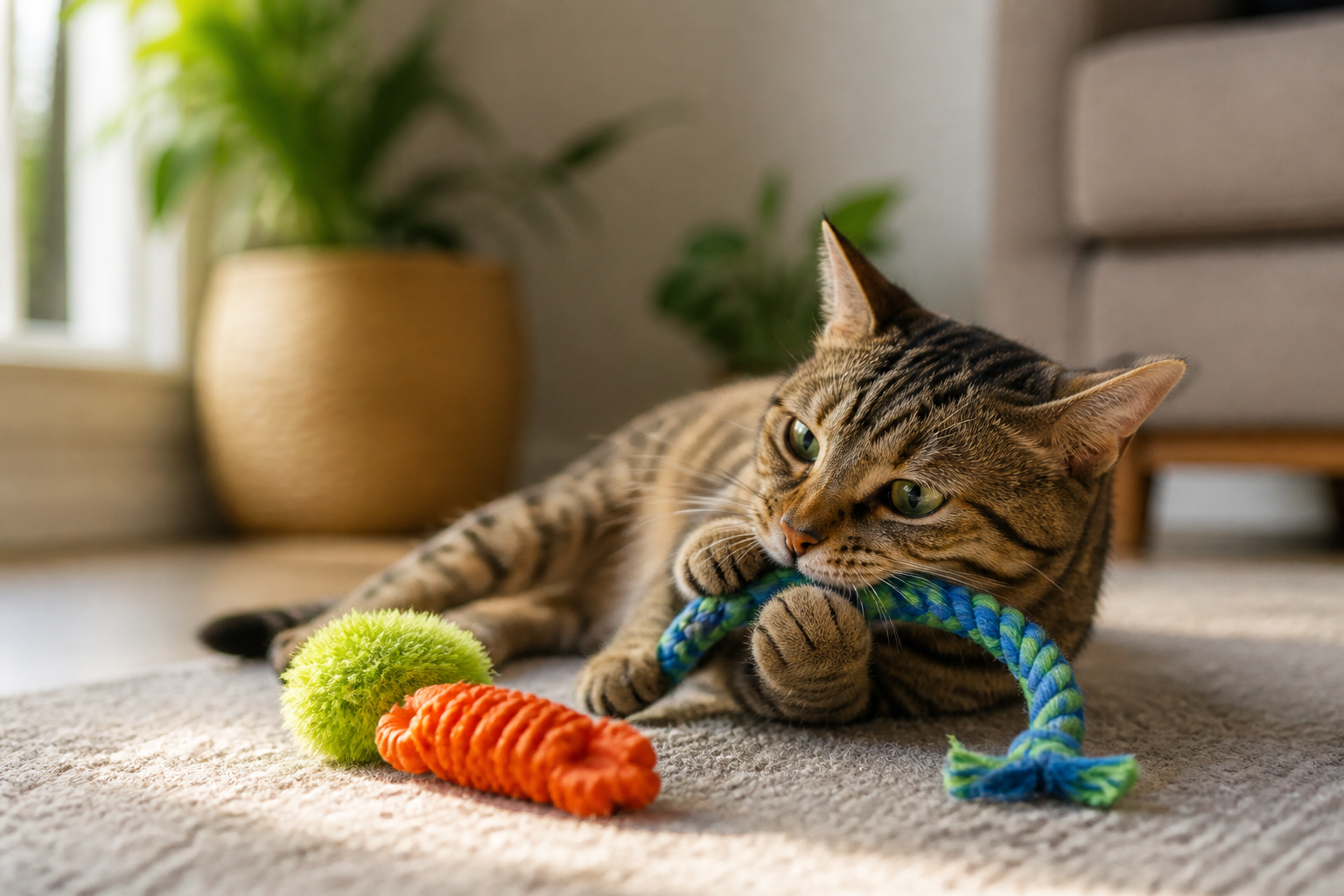
You reach for your phone charger only to find the plastic casing riddled with tiny puncture marks. Perhaps you have noticed your favorite pair of sneakers now has frayed shoelaces or the corners of your cardboard boxes are mysteriously shredded. While we often associate heavy chewing with dogs, many cats have a strong urge to gnaw on objects around the home. This behavior can be frustrating and even dangerous if they swallow non food items. At BaxterBoo, we know that redirected chewing is a sign of a healthy predatory instinct or a need for dental relief. This post covers the best types of toys for cats that chew and how to choose safe materials for your feline friend. Understanding why your cat bites is the first step toward finding the perfect durable solution.
Why Some Cats Are Heavy Chewers
Chewing is a natural behavior for felines, but it often surprises new owners. In the wild, cats use their teeth to tear through prey and crunch on small bones. This action keeps their jaw muscles strong and their teeth clean. In a home environment, that same drive still exists. If they do not have a dedicated toy, they might turn to your furniture or electrical cords.
Boredom is a common trigger for indoor cats. When a cat lacks mental stimulation, they look for ways to entertain themselves. Chewing provides sensory feedback that passes the time. It also releases endorphins which can help a stressed cat feel more relaxed. If you notice your cat chewing during loud events or after a move, they might be using it as a coping mechanism.
Teething is another major factor for younger animals. Kittens lose their baby teeth between three and six months of age. During this window, their gums are often sore and inflamed. Gnawing on soft rubber or cool surfaces provides much needed relief. Providing specific teething toys can save your curtains and clothes from tiny, sharp teeth.
Key Takeaway: Chewing is an instinctual behavior used for dental health, stress relief, and boredom. Providing an appropriate outlet prevents damage to your home and keeps your cat safe.
Cat Toys


Identifying Your Cat's Chewing Style
Not every cat chews the same way. Some are gentle nibblers while others are aggressive gnawers. Before you buy a new toy, spend time watching how your cat interacts with objects. Do they prefer to lick and lightly bite soft fabrics? Or do they try to tear pieces off of everything they touch?
Aggressive chewers need dense materials that can withstand high pressure. Harder rubber and solid plastic toys are usually best for these cats. If your cat prefers a "crunchy" feel, they might enjoy dried silvervine sticks. For gentle chewers, mesh or soft plush toys with reinforced seams are often enough to satisfy the urge without causing injury.
Size is also a factor in safety. A toy that is too small can be a choking hazard. A toy that is too large might be ignored because the cat cannot get a good grip. Look for items that are easy for them to carry in their mouth but large enough that they cannot be swallowed accidentally.
- Observe if they chew with their front or back teeth.
- Check if they try to swallow pieces of what they bite.
- Note if they prefer smooth, rough, or fuzzy textures.
- See if sound, like crinkling, increases their interest.
Rubber Toys for Persistent Gnawers
Rubber is one of the most durable materials available for pet toys. Many companies that make famous dog chews, such as KONG, also offer feline versions. These are often made from a slightly softer rubber compound that is gentle on feline teeth but tough enough to resist punctures.
Textured rubber toys are particularly useful for dental hygiene. Look for designs with ridges, nubs, or "wiggle" shapes. As the cat bites down, these textures rub against the teeth and gums. This action helps to scrape away plaque and food debris. Some rubber toys are hollow, allowing you to hide small treats or catnip inside. This adds a layer of mental stimulation to the chewing session.
If you have a teething kitten, try putting a rubber chew toy in the refrigerator for an hour. The cold temperature helps to numb the gums and reduce swelling. Ensure the rubber is non toxic and free from small parts that could be bitten off. High quality rubber should bounce back into shape immediately after a bite.
Quick Answer: The best toys for cats that chew are made from durable rubber, non splintering silvervine sticks, or reinforced mesh. These materials satisfy the urge to gnaw while helping to clean teeth and reduce boredom.
The Benefits of Silvervine and Matatabi
Silvervine is a natural climbing plant found in the mountains of Japan and China. It is often called Matatabi by enthusiasts. While many people know about catnip, silvervine is actually more potent for many felines. Studies suggest that about eighty percent of cats respond to silvervine, compared to about sixty percent for catnip.
Silvervine is usually sold as small sticks which are the actual dried vines of the plant. These sticks are excellent for chewing. They have a bark like exterior that cats love to gnaw on. Unlike regular wood, silvervine is fibrous and does not splinter into sharp shards. This makes it a much safer alternative to sticks found in the yard.
As your cat chews the stick, the fibers act like natural dental floss. This helps to clean between the teeth and right at the gum line. Most cats will chew the stick for a few minutes and then bat it around like a toy. Once the ends become dry and lose their scent, you can simply shave off the outer layer to reveal fresh wood underneath.
- Natural and eco friendly material.
- More potent than traditional catnip.
- Helps mechanically remove tartar.
- Does not contain artificial dyes or chemicals.
Dental Mesh Toys for Oral Health
Dental mesh is a unique material designed specifically for cats that like to bite. It is usually a thin, woven nylon or polyester mesh that wraps around a soft toy. The holes in the mesh are sized so that a cat's tooth can pass through them easily. When the cat bites down, the mesh slides against the surface of the tooth.
This sliding action is perfect for removing soft plaque before it hardens into tartar. Many of these toys are filled with catnip or dried mint to encourage the cat to keep biting. The Petstages Mint Stick is a popular example of this design. It provides a fresh scent while the cat works on their dental hygiene. You can browse our selection of Petstages products for available toys from the brand.
Mesh toys are generally better for light to moderate chewers. Because the mesh is thin, an extremely aggressive cat might eventually tear it. Always inspect these toys for loose threads. If the mesh begins to unravel, it is time to replace the toy to avoid your cat ingesting the fibers.
Vet Tip: While dental toys help reduce plaque, they do not replace professional veterinary cleanings. Schedule regular dental exams to check for broken teeth or gum disease, especially if your cat suddenly starts chewing more than usual.
Plush Toys with Reinforced Seams
Not every chew toy needs to be hard. Many cats prefer the feel of fabric. However, standard plush toys often have weak seams and poly fill that can be messy if the toy breaks. For a cat that chews, you need reinforced plush. This usually involves multiple layers of fabric and double stitched edges.
Look for toys made from heavy duty canvas, denim, or ballistic nylon. These materials are much harder to puncture than soft fleece. Some plush toys are designed as "kickers." These are long, tube shaped toys that a cat can grab with their front paws and bite while "bunny kicking" with their back legs. This provides a full body workout and satisfies the predatory drive to grab and hold prey.
Avoid plush toys with glued on eyes, sequins, or small plastic parts. These are the first things an active chewer will remove and swallow. Embroidered features are much safer. If your cat likes to shred fabric, you may need to move away from plush entirely and stick to rubber or wood based options.
Interactive and Fillable Chews
Sometimes a cat needs a reason to chew. Fillable toys turn a chewing session into a puzzle. These are often made of rubber or hard plastic with an opening for food. You can fill them with wet food, squeeze treats, or even pieces of kibble.
This approach is excellent for cats with high energy. It forces them to work for their food. As they lick and nibble at the toy to get the treat, they are using their brain and their jaw muscles. Licking is also a naturally calming behavior for cats. A fillable toy can keep a cat occupied for twenty minutes or more, which is great for times when you are busy. For more enrichment ideas, see our interactive cat toys.
Cleaning these toys is important. Since they hold food, bacteria can grow if they are not washed regularly. Look for options that are dishwasher safe or have wide openings that are easy to scrub with a bottle brush.
Bottom line: Interactive toys combine the physical act of chewing with the mental challenge of a puzzle, providing a more complete enrichment experience.
Managing the Habit of Chewing Plastic
Many owners search for toys because their cat has a dangerous obsession with chewing plastic bags or bubble wrap. This behavior is common but can lead to intestinal blockages. Some cats like the crinkly sound, while others are attracted to the smell of animal byproducts used in the manufacturing of some plastics.
To stop this, you must remove access to plastic and provide a safe alternative. Crinkle toys are the best replacement. These are toys with a safe, loud material inside that mimics the sound of a plastic bag. They are usually wrapped in durable fabric so the cat cannot actually get to the inner crinkle layer. Browse our cat toys for options to consider.
If your cat is attracted to the texture of plastic, a soft rubber toy might be the best substitute. The goal is to provide a sensation that is better than the "illegal" item they are currently chewing. Consistency is key. Every time you see them go for plastic, gently move them toward their dedicated chew toy.
Safety Precautions and Supervision
No toy is truly indestructible. A determined cat can eventually break down almost any material. This is why supervision is vital, especially when introducing a new toy. Watch how your cat uses the item for the first few play sessions. Do they seem to be focused on tearing it apart, or are they just gnawing for pleasure?
Regularly inspect every toy in your cat's collection. Look for:
- Cracks or deep gouges in rubber.
- Fraying edges or loose threads on mesh and fabric.
- Splintering or small pieces missing from wood sticks.
- Exposed stuffing or squeakers.
If a toy is damaged, throw it away immediately. Swallowing small pieces of rubber or plastic can lead to an emergency trip to the vet. It is much cheaper to replace a toy than to pay for a surgical procedure to remove a foreign object.
When Chewing Becomes a Health Concern
While chewing is usually a behavioral or instinctual need, it can sometimes point to a medical issue. A condition called pica involves the persistent eating of non food items like wool, plastic, or shoelaces. This is different from just chewing; cats with pica actually intend to swallow the material.
If your cat suddenly starts chewing obsessively, or if they seem to be in pain while biting, a vet visit is necessary. They may have a fractured tooth, an oral infection, or gum disease. Dental pain can make a cat bite at things to try and alleviate the pressure.
Our pharmacy at BaxterBoo carries a variety of dental health products and prescription diets that may help if your vet identifies an underlying issue. Through our partnership with Pet's Choice, we offer FDA approved medications and professional grade supplies that support long term oral hygiene. If your cat's chewing is related to anxiety, your veterinarian might also suggest calming supplements or medications to help them feel more at ease. Prescription medicines require veterinary authorization.
Transitioning to New Toys
If your cat is used to chewing on your belongings, they might not take to a new toy right away. You have to make the toy more appealing than your shoelaces. Rubbing a little bit of high quality catnip or silvervine powder onto a new rubber toy can spark immediate interest.
You can also try "scenting" the toy. Place the new toy in a sealed bag with some of your cat's favorite dry treats overnight. The toy will pick up the scent of the food, making it much more interesting when you bring it out the next morning.
Step 1: Clean the area. Remove the items your cat has been inappropriately chewing. If they were biting a specific chair leg, use a pet safe bitter spray to discourage them from returning.
Step 2: Introduce the alternative. Place the new chew toy in the spot where the cat usually chews. This makes the "correct" choice the most convenient one for them.
Step 3: Reward the behavior. When you see your cat biting their toy, give them a small treat or verbal praise. This reinforces that chewing on the toy is a positive action.
Rotating Toys to Prevent Boredom
Cats can grow bored of the same textures over time. To keep the chewing habit focused on their toys, try a rotation system. Only leave two or three chew toys out at a time. After a week, put those away and bring out a different set. For ideas on keeping play fresh, read our article about cat brain games.
When a toy "disappears" for a while and then returns, it feels like a brand new item to your cat. This prevents them from going back to household objects out of a need for something different. Keep a variety of materials in your rotation, such as one rubber toy, one silvervine stick, and one mesh toy.
- Keep a "toy bin" out of reach.
- Swap toys every Sunday to start the week fresh.
- Wash toys before putting them back in the bin.
- Inspect for damage during every swap.
Understanding the Role of Diet
In some cases, the urge to chew can be linked to nutritional needs. Cats are obligate carnivores and require specific nutrients to thrive. If a diet is lacking in fiber or certain minerals, a cat might try to find them by gnawing on plants or household items.
Feeding a high quality, protein rich diet is essential. Some owners find that adding "dental" kibble or larger, crunchier treats helps satisfy the urge to crunch. These kibbles are designed to be larger and more fibrous, requiring the cat to bite through them rather than swallowing them whole.
If you are managing a cat with specific health needs, such as obesity or chronic allergies, prescription food might be required. We carry premium brands like Farmina Vet Life and Royal Canin in our pharmacy section. These diets are formulated to support specific conditions while providing complete nutrition. Always consult your veterinarian before making significant changes to your cat's diet.
Creative DIY Solutions
If you are waiting for a new shipment of toys to arrive, there are a few safe temporary solutions you can find at home. A large, clean wine cork can be a fun item for a cat to bat around and bite. Ensure it is natural cork and not plastic, and remove any foil or wire first.
Small pieces of dried, untreated wood like apple or pear branches are also safe. Avoid any wood that has been treated with pesticides or paint. Cardboard is a classic choice, though it can be messy. Many cats love the resistance of a thick cardboard edge. Just make sure they are not eating the cardboard pieces.
While these can work in a pinch, professional toys are usually safer and last longer. Manufacturers test their materials specifically for pet safety, which gives you peace of mind that a DIY solution cannot provide.
Key Takeaway: Consistent toy rotation and proper nutritional support are just as important as the durability of the toys themselves. A happy, well fed cat is less likely to be a destructive chewer.
Choosing the Best Brands
When shopping for toys for cats that chew, brand reputation matters. Companies like KONG and Petstages have spent years researching how pets interact with toys. They use non toxic materials that are tested for durability.
At BaxterBoo, we carefully curate our selection to include brands we trust. We look for items that offer both fun and functionality. Whether you need a heavy duty rubber ring or a delicate mesh mint stick, we prioritize quality. Since we have been operating since 2006, we have seen which products truly stand up to the test of time and sharp feline teeth.
Our warehouse in Vernon Hills is stocked with hundreds of brands. We focus on providing value without compromising on the safety of your pet. If you are a frequent buyer, our rewards programs can help you save money while keeping your cat's toy bin full of fresh, safe options.
Conclusion
Finding the right toys for cats that chew is about more than just protecting your furniture. It is about honoring your cat's natural instincts and providing a safe, healthy outlet for their energy. By choosing durable materials like rubber and silvervine, and maintaining a regular toy rotation, you can turn a destructive habit into a beneficial routine.
- Chewing supports dental health and relieves stress.
- Rubber, silvervine, and mesh are the top material choices.
- Supervision and regular toy inspection are mandatory for safety.
- Medical issues like pica or dental pain should be addressed by a vet.
Key Takeaway: Successful management of a chewing cat requires a mix of durable toys, environmental management, and attention to health. Start by exploring our collection of cat toys to find the perfect match for your pet's chewing style.
FAQ
Why does my cat chew on electrical cords?
Cats are often drawn to cords because the shape and texture resemble the tails of small prey or thin vines. This is a very dangerous habit that can lead to electrical shocks or fires. You should use cord protectors to cover your wires and immediately provide a chew toy with a similar thin, long shape to redirect their attention.
Are silvervine sticks safe for all cats?
Silvervine sticks are generally very safe and are a natural, non splintering alternative to wood. Most cats enjoy gnawing on them, which helps clean their teeth. However, you should always supervise your cat with any natural chew to ensure they do not break off a piece that is large enough to swallow.
How do I know if my cat's chewing is caused by stress?
Stress related chewing often happens suddenly or in response to a change in the environment, such as a new pet or a move. You might also notice other signs of anxiety like hiding, over grooming, or changes in litter box habits. If you suspect stress is the cause, consult your vet about calming aids and focus on providing extra mental stimulation through play.
Can kittens use adult cat chew toys?
Kittens can use many adult toys, but they often prefer softer materials during the peak of their teething phase. Look for rubber toys specifically labeled for kittens or those that can be chilled to soothe their gums. Avoid very hard plastic toys until their adult teeth have fully grown in to prevent accidental chips or damage to the baby teeth.



- Site & Contents BaxterBoo.com. BaxterBoo is located in the United States.
- Privacy & Security
- Terms of Use
- Accessibility Statement
