Save 15% on your 1st Autoship learn more

 Email us
 Live Chat
 FAQs
FAQs





Introduction
You notice small white flakes scattered across your cat's favorite black felt chair. When you reach down to pet them, your hand comes away with a fine dusting of what looks like salt. Feline dandruff is a common frustration for many owners. It often signals that your cat's skin needs a bit of extra help. At BaxterBoo, we know that most cats view a traditional bath as a traumatic event. That is why dry cat shampoo for dandruff has become a go-to solution for keeping coats clean without the stress of the tub. This article covers how to choose the right waterless formula and when those flakes might mean a trip to the vet is necessary. Using the right topical care can make a significant difference in your cat's comfort and coat health.
Understanding the Root of Feline Dandruff
Cat dandruff is more than just a cosmetic issue. It is officially known as seborrhea. This occurs when the sebaceous glands in the skin produce too much oil or when the skin cells turn over too quickly. These dead skin cells clump together and form the visible white flakes you see in the fur.
Several factors contribute to these flakes. Indoor cats often live in low-humidity environments created by air conditioning or heating systems. This dries out the skin. Some cats struggle to groom themselves properly due to age or weight. When a cat cannot reach their back or the base of their tail, oils and dead skin build up. This leads to a localized dandruff problem.
Quick Answer: Dry cat shampoo helps manage dandruff by breaking down excess oils and lifting away dead skin flakes without the need for water. It is an ideal maintenance tool for cats who find traditional baths stressful or for senior cats with limited mobility.
Dry Skin vs. Oily Dandruff
Not all flakes are created equal. Some cats have dry seborrhea, which looks like fine white powder. Other cats suffer from oily seborrhea. This looks like yellowish, greasy flakes that might stick to the hair shafts.
If the skin looks red or irritated, the problem might be more than just dry air. Parasites like Cheyletiella mites are often called walking dandruff because the mites move under the flakes. If you see movement or your cat is itching constantly, it is time to seek professional advice.
Why Dry Cat Shampoo Is a Smart Choice
Traditional bathing involves submerging a cat in water. This often results in scratches for the owner and high stress for the cat. Stress can actually make skin conditions worse. Dry shampoo offers a middle ground. It allows you to target specific areas where flakes are most prominent.
We carry a variety of waterless grooming options that cater to different coat types. These products generally come in two forms: foams and powders. Foams are excellent for penetrating deep into thick undercoats. Powders are great for absorbing excess grease on oily-skinned cats.
Benefits of Waterless Cleaning
- Reduces grooming stress for anxious felines.
- Targets hard to reach areas like the lower back and tail base.
- Saves time during busy weekly routines.
- Helps senior cats who may have trouble standing in a slippery tub.
- Neutralizes odors without the wet cat smell.
Key Takeaway: Dry shampoo is a maintenance tool rather than a cure. It removes the visible symptoms of dandruff while keeping the cat calm and comfortable.
Choosing the Right Ingredients for Your Cat
When you are looking for a dry cat shampoo for dandruff, the ingredient list matters. Cats are meticulous groomers. They will lick their fur after you apply any product. You must ensure the formula is non-toxic and specifically made for felines. Never use human dandruff shampoos on a cat. Many human products contain zinc or salicylic acid which can be toxic if ingested by pets.
Look for soothing ingredients like aloe vera and oatmeal. These help to hydrate the skin and calm minor irritation. Some formulas include vitamin E or omega fatty acids to support the skin barrier. At BaxterBoo, we handpick brands that prioritize safety and effectiveness for sensitive feline skin.
Comparison of Dry Shampoo Types
| Feature | Foam/Mousse | Powder |
|---|---|---|
| Best For | Deep cleaning and hydration | Absorbing excess oil and grease |
| Application | Massaged into the coat | Sprinkled and brushed out |
| Mess Level | Low (dries quickly) | Medium (can puff into the air) |
| Scent Power | Often stronger | Usually more subtle |
| Skin Type | Dry or flaky skin | Oily or greasy skin |
Vet Tip: If your cat's dandruff is accompanied by hair loss, scabs, or a foul odor, consult your veterinarian. These can be signs of fungal infections like ringworm or bacterial pyoderma. Our cat pharmacy carries prescription treatments and medicated shampoos if your vet determines a medical intervention is required.
How to Apply Dry Shampoo for Best Results
Applying dry shampoo is straightforward. However, the way you introduce it to your cat can determine if they accept it. You want the experience to be positive. Use treats and keep your movements calm.
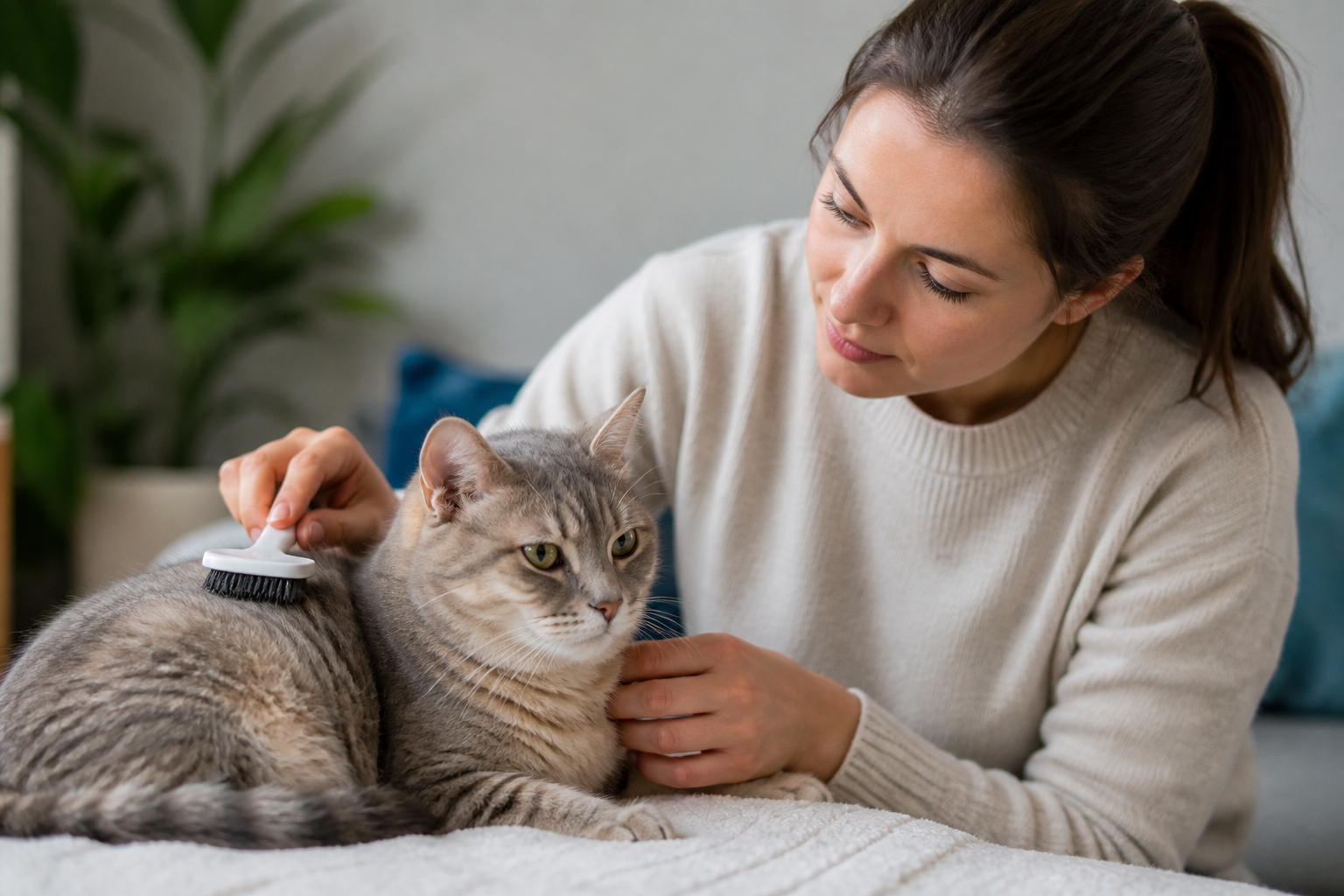
Step 1: Brush the coat. / This removes loose hair and breaks up large clumps of flakes before you apply the product.
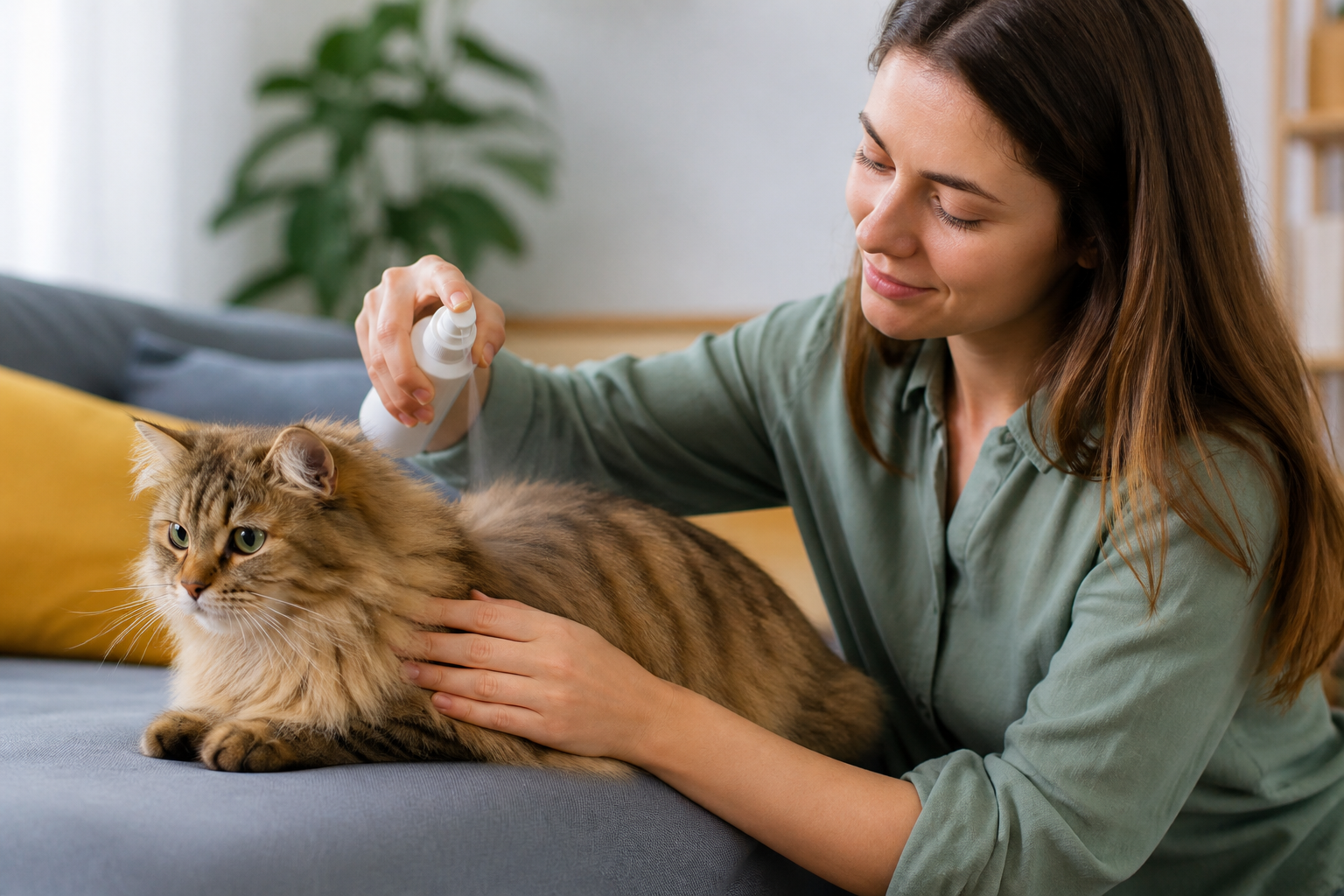
Step 2: Apply the shampoo. / For foams, pump a small amount into your hands first. For powders, sprinkle a light layer over the affected areas.
Step 3: Massage it in. / Use your fingers to work the product down to the skin. This is where the dandruff originates.
Step 4: Let it sit. / Most foams need about sixty seconds to work. Avoid letting the cat lick the area immediately.
Step 5: Towel and brush. / Use a clean towel to wipe away excess moisture or powder. Follow up with a final brushing to lift away the loosened flakes.
Bottom line: Proper application ensures the product reaches the skin where it can actually address the flaking.
Addressing the Underlying Causes of Dandruff
If you use dry shampoo but the flakes return the next day, you may need to look deeper. Skin health is a reflection of internal health. A cat's diet plays a massive role in the quality of their coat. Cats require specific levels of animal proteins and fats to maintain a shiny, flake-free coat.
Nutritional Support
Low-quality fillers in some commercial foods can lead to dull fur and dry skin. Switching to a premium diet rich in omega-3 and omega-6 fatty acids can help. Supplements like fish oil are also popular for supporting skin hydration from the inside out. We offer a wide selection of skin and coat health products that target skin and coat wellness.
The Role of Hydration
Cats have a low thirst drive. Chronic mild dehydration can lead to less elastic, drier skin. Encourage your cat to drink more by using a pet fountain. You can also add wet food to their diet. This increases their overall water intake. For more feline wellness ideas, explore our guide on building a strong feline immune system.
Environmental Humidity
During the winter, the air in most US homes is incredibly dry. This pulls moisture right out of your cat's skin. Running a humidifier in the room where your cat sleeps can make a noticeable difference in their dandruff levels.
Key Takeaway: A combination of topical dry shampoo and internal nutritional support is the most effective way to eliminate persistent dandruff.
When to Visit the Vet and the BaxterBoo Pharmacy
Dandruff is sometimes a secondary symptom of a systemic health issue. If your cat is overweight, they might have trouble reaching their back to groom. Obesity is a medical concern that your vet can help manage. Similarly, senior cats with arthritis may find it painful to twist and groom. This leads to matted fur and dandruff.
Our pharmacy provides access to FDA-approved medications and prescription pet foods. If your veterinarian diagnoses your cat with a condition like hyperthyroidism or diabetes, these illnesses can often manifest as poor coat quality. Having a trusted source for prescription diets and medications makes managing these chronic conditions much simpler.
Signs Your Cat Needs a Professional Checkup
- The dandruff is thick and yellow rather than white and fine.
- Your cat is over-grooming or biting at their skin.
- You notice bald patches or thinning hair.
- The skin feels hot to the touch or looks bright red.
- Your cat seems lethargic or has a change in appetite.
Vet Tip: Never start a medicated treatment for skin issues without a diagnosis. What looks like simple dandruff could be an allergy that requires a specific prescription diet or antihistamine. Always work with your vet to create a tailored health plan.
The Importance of Regular Brushing
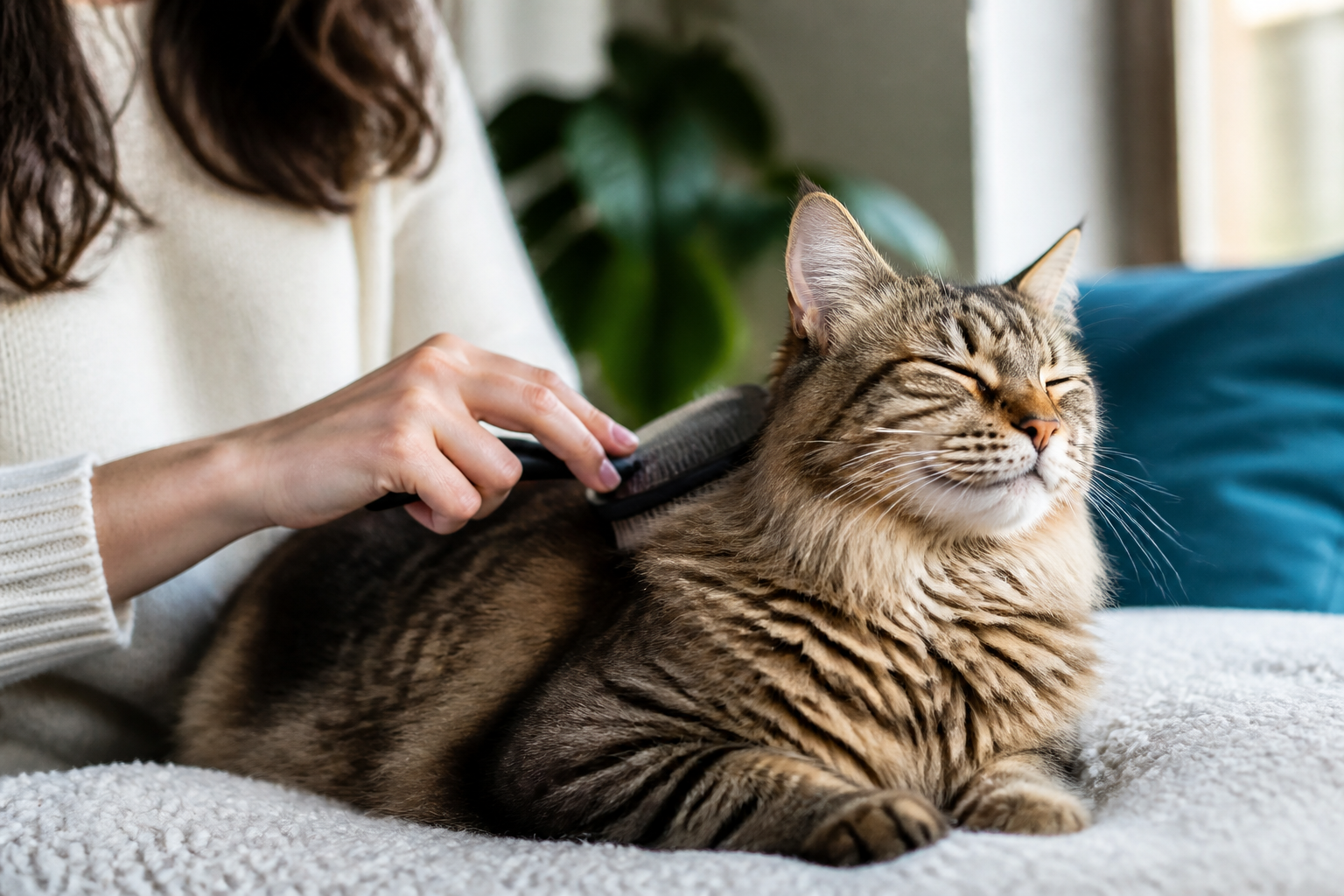
Dry shampoo works best when paired with a consistent brushing routine. Brushing does more than just remove hair. It stimulates the skin and distributes natural oils across the entire coat. For many cats, a daily five-minute brushing session is enough to keep dandruff at bay.
Using a soft slicker brush or a rubber grooming tool is usually best for cats with sensitive skin. These tools gently massage the skin without scratching it. If you have a long-haired cat, you may need a comb to reach the undercoat where dead skin cells get trapped. Browse our cat grooming supplies for brushes, combs, shampoos, and other coat-care essentials.
Bottom line: Consistent grooming is the first line of defense against flakes and mats.
Creating a Flake-Free Routine
Managing cat dandruff does not have to be an uphill battle. By combining the right products with a steady routine, you can keep your cat comfortable and your furniture clean. Most owners find that using a dry cat shampoo once or twice a week is sufficient for maintenance.
Start by evaluating your cat's environment and diet. Ensure they are getting enough moisture and high-quality protein. Use dry shampoo for those moments when the flakes become visible. This proactive approach keeps your cat's coat looking its best and allows you to spot potential health issues early.
We invite you to explore our curated selection of grooming supplies. Our team at BaxterBoo is committed to helping you find the right tools for your pet's specific needs. Whether you are dealing with a senior cat or a messy kitten, we have the gear to help.
Summary of Dandruff Management
Keeping your cat's skin healthy involves a balance of topical care and internal wellness. Dry shampoo is a convenient and effective way to manage surface flakes.
- Choose cat-specific formulas with soothing ingredients like oatmeal.
- Use dry shampoo to target areas the cat cannot reach.
- Monitor for signs of underlying health issues like allergies or parasites.
- Support skin health with high-quality nutrition and proper hydration.
- Maintain a regular brushing schedule to distribute natural skin oils.
Our pharmacy and wide range of specialty products are here to support you every step of the way. Signing up for our Autoship programme can also save you time and money on the grooming supplies and food your cat needs most.
Bottom line: Dry cat shampoo is a practical, stress-free tool that helps manage dandruff while strengthening the bond between you and your cat.
FAQ
Can I use human dry shampoo on my cat for dandruff?
No, you should never use human dry shampoo on a cat. Human products are formulated for a different skin pH and often contain chemicals, fragrances, or alcohols that are toxic to cats if licked. Always use a product specifically labeled for feline use to ensure safety.
How often should I use dry cat shampoo for dandruff?
For most cats, using dry shampoo once or twice a week is plenty for managing dandruff. Over-using any product can potentially dry out the skin further or lead to a buildup of residue. If the dandruff persists despite weekly use, consult your veterinarian to check for underlying health issues.
Will dry shampoo get rid of cat dandruff forever?
Dry shampoo is a topical treatment that removes existing flakes and oils. It is not a permanent cure. To keep dandruff away for good, you must also address the cause, such as low humidity, poor diet, or a lack of regular grooming. It is a tool for ongoing maintenance rather than a one-time fix.
Is dry foam or dry powder better for cat dandruff?
The choice depends on your cat's specific skin type. Foam is generally better for cats with dry, flaky skin because it adds a bit of moisture and penetrates thick fur. Powder is often preferred for cats with oily skin because it excels at absorbing excess grease that can cause flakes to clump.