
 Save 15% on your 1st Autoship learn more

 Email us
 Live Chat
 FAQs





Introduction
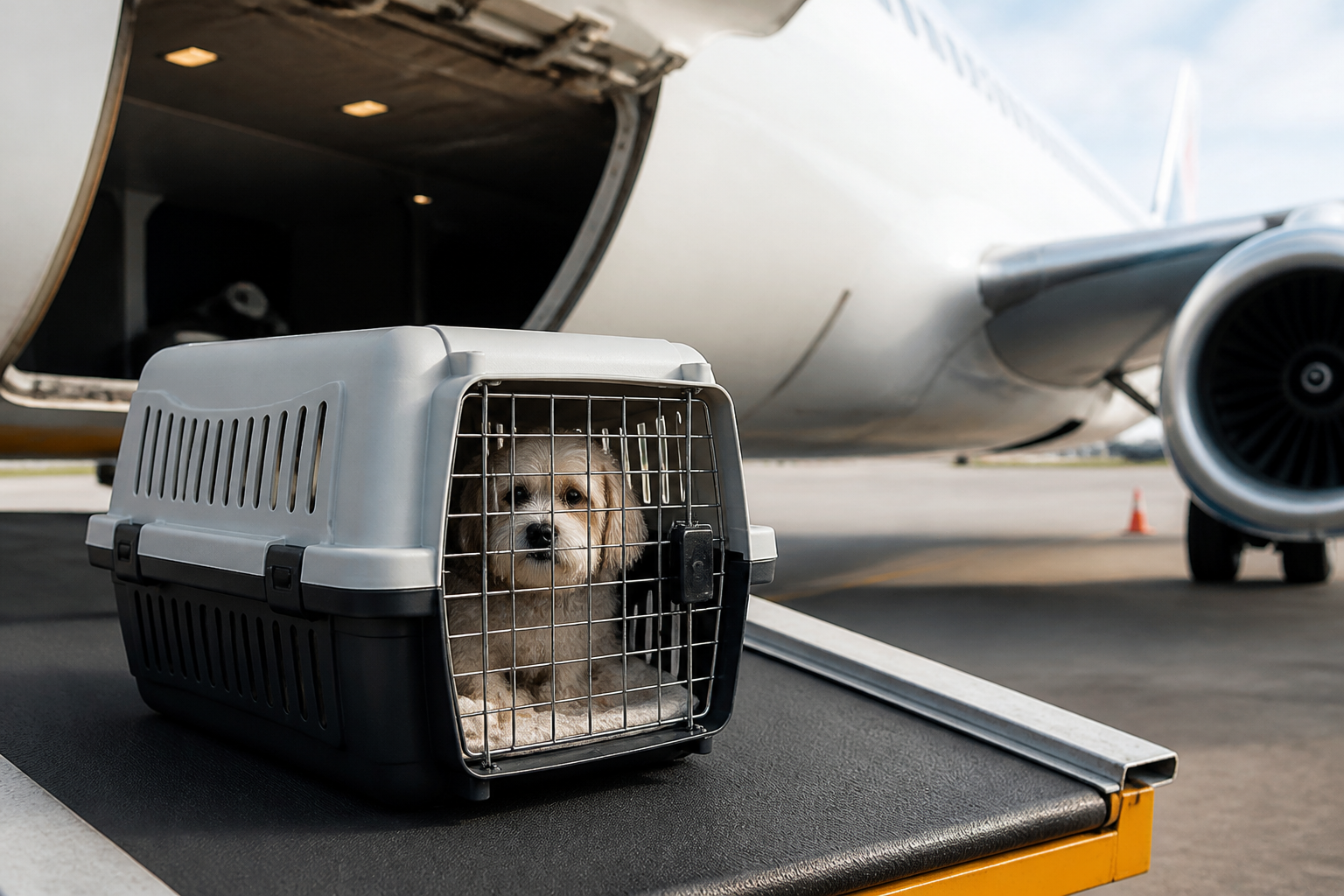
Preparing for a long-distance move or an international trip with a pet often brings a high level of stress. You might be staring at your dog or cat and wondering how they will handle several hours in the belly of a plane. One of the most critical steps in this process is selecting a crate that keeps them safe and complies with strict aviation standards. If your pet is too large to fit under the seat in the cabin, they must travel as checked baggage or manifest cargo.
At BaxterBoo, we know that safety is your top priority when your pet is out of your sight. This article covers the specific construction requirements for cargo crates, how to measure your pet for the perfect fit, and the necessary accessories to ensure airline acceptance. Choosing the right airline approved pet carrier cargo is not just about following rules: it is about ensuring your pet arrives at your destination healthy and comfortable.
Quick Answer: A cargo-approved carrier must be a rigid, hard-sided crate with 4-way ventilation and metal hardware securing the shell. It must be large enough for your pet to stand, turn around, and lie down naturally without touching the top of the unit.
Understanding Cargo Travel Standards
The term "airline approved" is often used as a marketing catchphrase, but it is important to understand that no single agency "approves" a specific brand. The International Air Transport Association (IATA) sets the Live Animals Regulations (LAR). These regulations provide the blueprint for what makes a container safe for flight. Individual airlines then use these standards to set their own specific policies.
While soft-sided carriers are excellent for in-cabin travel, they are strictly prohibited in the cargo hold. A cargo crate must be a "Container Requirement 1" (CR1) device. This means it must be constructed of rigid plastic, metal, or wood that cannot be easily breached or collapsed. Most modern travelers opt for heavy-duty plastic kennels because they are lightweight yet incredibly strong.
Airlines have the final say at the check-in counter. If your crate has plastic clips instead of metal bolts, or if it lacks ventilation on all four sides for international travel, the airline can refuse to board your pet. This is why checking the specific hardware and construction of your kennel before the day of travel is vital. For a look at carriers intended for air travel, browse our airline-approved dog travel selection.
Airline Approved Pet Carriers


Physical Construction Requirements
When you are shopping for a cargo kennel, you need to look past the color and the handle. The structural integrity of the crate is what protects your pet during turbulence or loading procedures. The shell of the crate should be made of high-quality, impact-resistant plastic. It should consist of two halves that are joined together securely.
One of the most frequent reasons for rejection at the airport is the type of hardware used to join those two halves. Many crates come with plastic "dial" latches or snap clips for easy assembly. While these are fine for home use or car travel, they are often rejected for cargo. You should look for metal nuts and bolts. If your kennel came with plastic hardware, you can usually purchase a metal hardware kit to swap them out.
Ventilation and Visibility
Airflow is the most important factor for a pet's safety in the cargo hold. For domestic flights, many airlines require ventilation on at least three sides. However, for international travel, IATA standards require ventilation on all four sides. This includes the back wall of the crate.
- The door must be made of metal, not plastic.
- Ventilation holes should be small enough that a pet cannot get their nose or paws stuck.
- The openings should be distributed across the top half of the kennel to allow heat to escape.
- The door must have a secure locking mechanism that cannot be easily bumped open.
Door Security
The door is the most vulnerable part of the crate. Cargo-ready kennels typically feature a chrome or steel wire door. It should have a spring-loaded latch that requires a specific motion to open. Some pet owners add zip ties to the corners of the door for extra security during transit. If you do this, make sure they are attached in a way that ground crew can cut them in an emergency.
Key Takeaway: Cargo crates must be held together by metal nuts and bolts and feature a metal door with a secure latch to be considered flight-ready.
How to Measure Your Pet for the Crate
Sizing is the area where most pet owners run into trouble. Airlines are very strict about the "stand and turn" rule. If your dog’s ears touch the top of the crate while they are standing naturally, the crate is too small. If they cannot turn around without getting stuck, the airline will likely deny boarding.
To find the right size, you need four specific measurements of your dog or cat. Use a firm measuring tape and have a second person help you keep the pet still.
- Length (A): Measure from the tip of the nose to the base of the tail. Do not include the full length of the tail.
- Leg Height (B): Measure from the ground to the elbow joint.
- Width (C): Measure across the widest part of the shoulders.
- Standing Height (D): Measure from the floor to the top of the head or the tips of the ears, whichever is higher.
Once you have these measurements, you can apply the IATA formula to find the minimum internal dimensions of the crate.
| Measurement Description | Formula for Crate Size |
|---|---|
| Minimum Internal Length | Length (A) + Half of Leg Height (B) |
| Minimum Internal Width | Width (C) x 2 |
| Minimum Internal Height | Standing Height (D) |
For general carrier options, see our dog carrier selection, but confirm the specific crate’s design and dimensions with your airline before booking.
Calculating for Brachycephalic Breeds
If you are traveling with a "snub-nosed" breed like a Pug, Bulldog, or Persian cat, the rules are even tighter. These pets are more susceptible to respiratory distress under stress or in high temperatures. Many airlines require these breeds to travel in a crate that is one size larger than the standard formula suggests. This provides extra air volume around the pet to help them stay cool.
Vet Tip: Before booking a cargo flight for a snub-nosed breed, consult your veterinarian to discuss the specific risks of respiratory stress during travel.
Required Accessories for Airline Acceptance
A crate alone is rarely enough to get your pet on a plane. You must outfit the carrier with specific items that allow the airline staff to care for your pet without opening the door. Safety is the priority, so these accessories must be attached firmly.
Food and Water Bowls
Every cargo crate must have two separate dishes for food and water. These must be "clip-on" style bowls that attach to the metal wire door. They must be accessible from the outside of the crate so that airport staff can refill them through the wire mesh without opening the door.
It is a common practice to freeze the water in the bowl the night before the flight. This prevents the water from splashing out during the loading process. As the ice melts during the flight, your pet has a steady supply of fresh water.
Absorbent Bedding
The floor of the crate must be covered with absorbent material. While a plush bed might seem more comfortable, many airlines prefer shredded paper, puppy pads, or a thin crate mat with a leak-proof bottom. This ensures that if your pet has an accident, they aren't sitting in moisture for the duration of the flight.
Documentation and Labeling
You must clearly label the crate so that there is no confusion about who the pet is or where they are going. Most airlines provide "Live Animal" stickers, but it is a good idea to have your own.
- Affix "Live Animal" labels with letters at least one inch high on the top and sides.
- Place "This Way Up" arrows on at least two sides.
- Attach a clear plastic pouch to the top of the crate containing a copy of the health certificate and your contact information.
- Include a small bag of food taped to the top of the crate in case of flight delays.
Key Takeaway: Correct labeling and external-access bowls are non-negotiable requirements for manifest cargo pet travel.
Health and Wellness Considerations for the Hold
The environment in the cargo hold is pressurized and temperature-controlled, just like the cabin. However, it can still be a noisy and unfamiliar place. Preparing your pet physically and mentally for the trip is a major part of a successful journey.
Veterinary Consultations and Health Certificates
Most airlines and destination countries require a Certificate of Veterinary Inspection (CVI). This document must usually be issued within 10 days of travel. Your vet will check for signs of infectious disease and ensure that vaccinations, especially rabies, are up to date.
If your pet suffers from severe travel anxiety, you may be tempted to ask for sedation. However, most airlines and veterinary associations strongly advise against sedating pets for cargo travel. Sedatives can interfere with a pet's ability to regulate their body temperature and maintain balance. Instead of heavy sedation, talk to your vet about mild calming aids or pheromone sprays that might help take the edge off the stress. You can also explore our selection of dog calming products.
Our pharmacy at BaxterBoo offers various support options for pets managing travel stress. Through our partnership with Pet's Choice, we provide access to FDA-approved medications and prescription diets that may be necessary for pets with chronic conditions traveling long distances. Always consult your veterinarian before starting any new medication or supplement, especially before a flight. Find our pet pharmacy for dogs if your veterinarian recommends a prescription option.
Acclimation to the Crate
You should never put a pet in a brand-new crate on the day of the flight. They need time to view the kennel as a safe "den" rather than a cage. This process should start at least four to six weeks before your departure date. For more ideas about easing a dog through a move, read these tips for helping your dog transition.
Step 1: Set up the crate.
Place the kennel in a common area of your home with the door removed or tied open. Put your pet’s favorite blanket and some high-value treats inside to encourage them to explore it on their own terms.
Step 2: Feed meals inside the crate.
Start by placing their food bowl just inside the door. Over several days, move the bowl further back until they are comfortable eating all their meals inside the kennel.
Step 3: Practice closing the door.
Once they are comfortable eating inside, briefly close the door while they eat. Gradually increase the time the door remains closed after they finish their meal.
Step 4: Short durations of confinement.
Encourage your pet to spend time in the crate while you are in the room. Slowly increase the duration and begin leaving the room for short periods. This helps them understand that you will always return.
Bottom line: Proper crate acclimation is the most effective way to reduce your pet's stress levels during a cargo flight.
Weather and Temperature Restrictions
Airlines have strict "pet-safe" temperature windows. If the temperature at your departure city, your layover, or your destination is too high or too low, the airline will not allow the pet to fly in the cargo hold. These limits are usually set between 45 and 85 degrees Fahrenheit.
Some breeds have even tighter restrictions. For example, many airlines will not fly snub-nosed dogs if the temperature exceeds 75 degrees. If you are traveling during the height of summer or the middle of winter, you may need to book a flight that departs late at night or early in the morning when temperatures are more moderate. Always check the weather forecast for every stop on your itinerary 48 hours before travel.
Essential Cargo Crate Checklist
Before you head to the airport, run through this checklist to ensure you won't face any surprises at the gate.
- Metal nuts and bolts are tightened and secure.
- Ventilation is present on all four sides (especially for international).
- Food and water bowls are clipped to the inside of the door.
- "Live Animal" and "This Way Up" stickers are clearly visible.
- A copy of the health certificate is attached to the crate.
- Pet can stand up without their head or ears touching the top.
- Absorbent bedding is flat and covers the entire floor.
- No toys or hard objects are inside the crate that could cause injury during turbulence.
Managing Travel Stress and Anxiety
While physical safety is paramount, emotional wellbeing matters too. The noise of the jet engines and the movement of the plane can be frightening. Some pet owners find success using calming collars or pheromone-infused wipes inside the crate. These products mimic the natural calming scents produced by mother dogs or cats.
Maintaining a routine leading up to the travel day can also help. Try to keep exercise and feeding schedules as normal as possible. A tired pet is often a calmer pet, so a long walk or a vigorous play session before heading to the airport can help them settle into their crate for the duration of the flight.
If your pet has a history of motion sickness or digestive upset during travel, consult your vet about prescription options. We carry specialized diets and medications through our pharmacy that can help manage these issues. Being prepared for your pet's specific health needs makes the transition to your new home much smoother for everyone involved. For veterinarian-recommended prescription support, visit our dog pharmacy.
Conclusion
Selecting an airline approved pet carrier cargo is one of the most important investments you will make for your pet's travel. By focusing on rigid construction, metal hardware, and proper sizing, you provide your pet with the best possible protection during their journey. Remember that the crate is their home for the duration of the flight: it should be a place of security and comfort.
- Always measure your pet accurately using the IATA formula.
- Swap out plastic clips for metal nuts and bolts.
- Start the acclimation process weeks in advance to reduce stress.
- Double-check all airline-specific rules regarding breed restrictions and weather.
Key Takeaway: Preparation is the antidote to travel anxiety. When you take the time to choose the right gear and acclimate your pet, you ensure a safer, more predictable experience for your dog or cat.
If you are getting ready for an upcoming trip, take a look at our dog travel and carrier collection for travel accessories. Check airline rules before choosing any carrier, since the linked options may not meet cargo requirements.
FAQ
Does "airline approved" mean it will work for every airline?
No, the term is a general guideline used by manufacturers to show the crate meets common industry standards. Every airline has its own specific rules regarding dimensions and hardware, so you must always verify the crate with your specific carrier before flying.
Can my pet wear a collar or leash inside the cargo crate?
Most airlines require that you remove the leash, as it can become a strangulation hazard inside the crate. Your pet should wear a flat collar with an ID tag that will not get caught on the crate's wire mesh. You can tape the leash to the top of the crate so it is ready for you at your destination.
Why do some airlines require metal nuts and bolts instead of plastic?
Plastic clips can become brittle in cold temperatures or snap under the pressure of shifting luggage. Metal nuts and bolts provide a much more secure connection between the two halves of the crate, ensuring it stays together even if it is bumped or dropped during the loading process.
Is it safe for my pet to have a toy in the cargo hold?
Generally, it is safer to avoid hard toys or small items that could be swallowed or cause injury if the crate moves suddenly. A soft, familiar t-shirt that smells like you is often a better choice for comfort, provided it is not large enough to cause a tangled hazard.





- Site & Contents BaxterBoo.com. BaxterBoo is located in the United States.
- Privacy & Security
- Terms of Use
- Accessibility Statement
