
 Save 15% on your 1st Autoship learn more

 Email us
 Live Chat
 FAQs
FAQs





Introduction
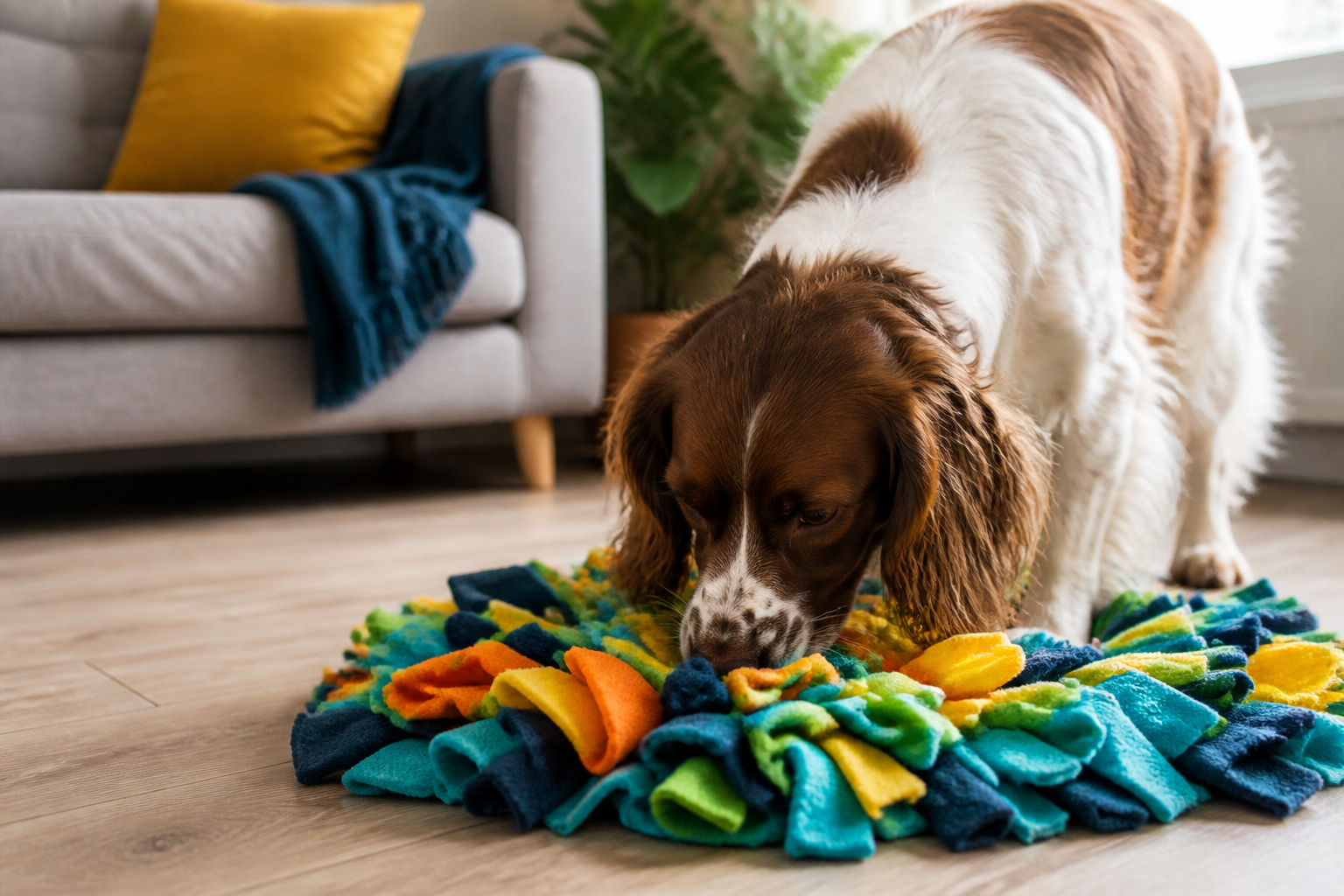
You walk into the living room to find what looks like a colorful snowstorm. Your dog is standing over the remains of their brand new fleece snuffle mat. Small strips of fabric are scattered everywhere. This is a common sight for owners of "power chewers" who want to provide mental enrichment without the toy ending up in pieces. At BaxterBoo, we know how frustrating it is to spend money on puzzles that do not last more than five minutes. This guide covers why standard mats fail, what materials actually stand up to strong jaws, and how to train your dog to use their nose instead of their teeth. We want to help you find an enrichment tool that provides hours of focus rather than a mess to clean up. Choosing the right snuffle mat for heavy chewers requires looking beyond the basic fleece designs found at most big box stores.
Why Standard Snuffle Mats Fail Strong Dogs
The primary issue with most enrichment mats is the construction material. Most are made from lightweight polar fleece. This fabric is soft on the nose, which is great for gentle sniffers. However, fleece has very low tensile strength. A dog that decides to "cheat" the puzzle by picking the mat up and shaking it will quickly rip the fabric strips.
Many mats are also built on a plastic or rubber grid. For a heavy chewer, these grids represent a choking hazard if they are exposed. Once a dog realizes they can pull a strip through the hole, the entire structural integrity of the toy vanishes. This often leads to the ingestion of fabric or plastic bits.
Destructive behavior during enrichment often stems from a lack of understanding. If a dog gets frustrated because the treats are too hard to find, they may resort to chewing to get to the reward. This is why durability must be paired with the right design and proper introduction.
Quick Answer: A snuffle mat for heavy chewers should be made from reinforced materials like leash-grade webbing or heavy-duty oxford cloth. Avoid thin fleece mats and always supervise your dog to ensure they are sniffing rather than chewing or shaking the toy.
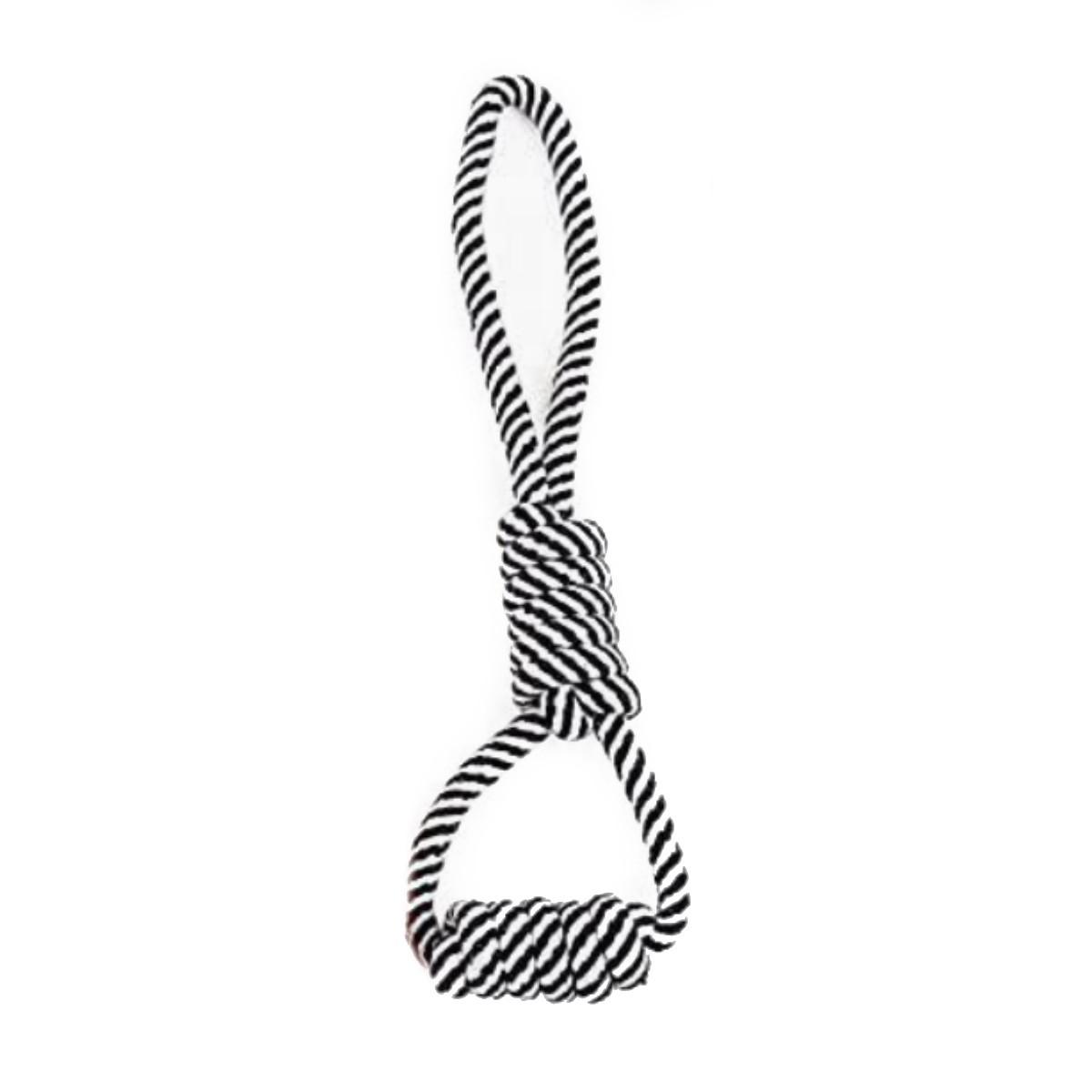
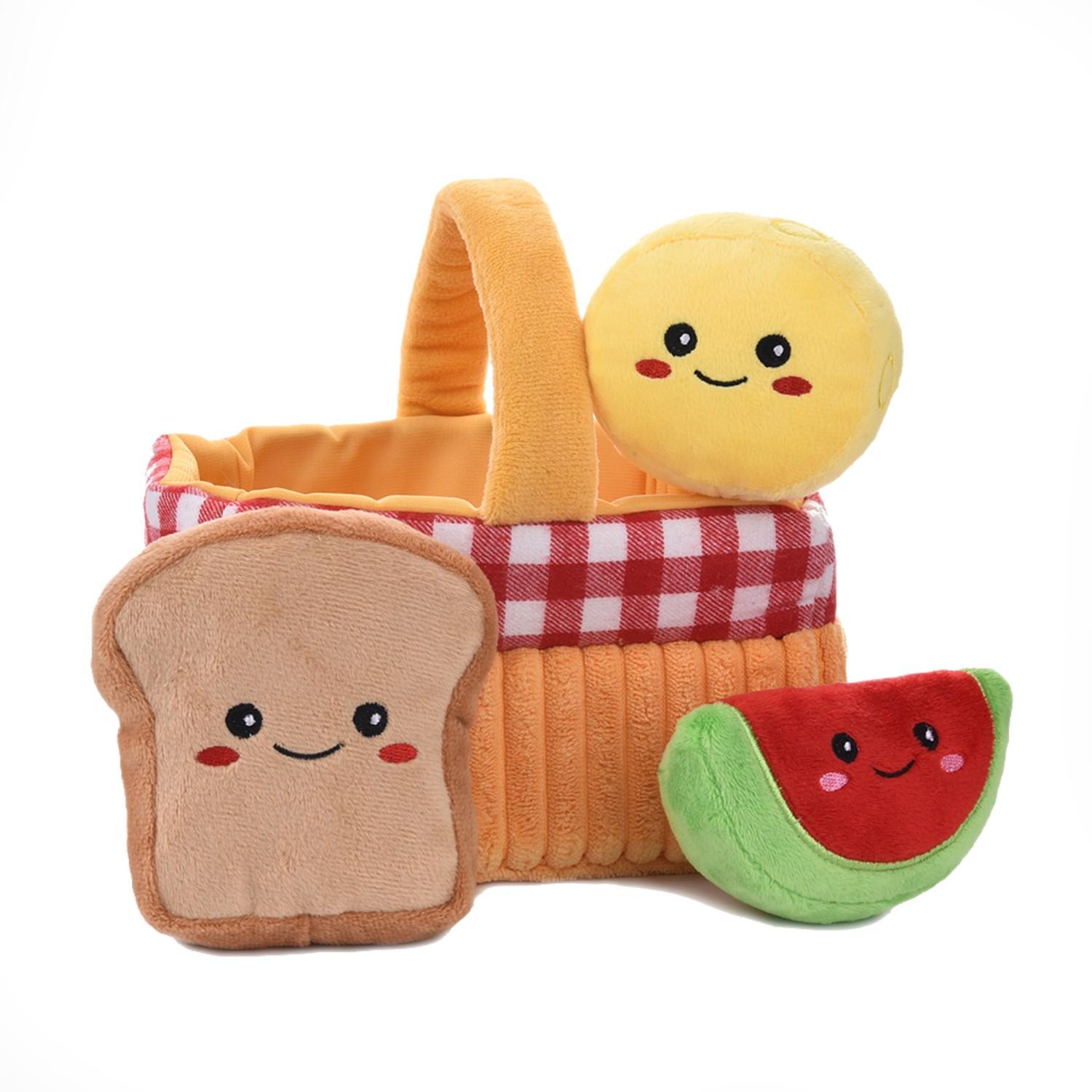
Interactive & Treat Dog Toys







Comparing Materials for Durability
When you are shopping for a tough enrichment toy, the label usually says "durable." However, durability is relative. You need to know exactly what the fabric is and how it is attached to the base.
Fleece vs. Leash-Grade Webbing
Fleece is the industry standard because it is cheap and easy to work with. It works for 80 percent of dogs. For the other 20 percent, it is essentially a disposable item. Leash-grade webbing, often made from a cotton-polyester blend, is a much better choice. This is the same material used for high-quality dog leashes and harnesses. It resists fraying and is much harder to puncture with a tooth.
Silicone vs. Fabric
Silicone mats are often marketed as indestructible. While they are very easy to clean, they do not offer the same "foraging" experience as fabric. In a silicone mat, the food is usually visible. This makes it more of a slow feeder than a true scent puzzle. Silicone can also be torn if a dog gets a good grip on a corner.
Reinforced Bases
A heavy mat is a safer mat. If the base is flimsy, a big dog will simply flip it over to dump the treats out. Look for mats with weighted bottoms or strong suction cups. Some high-end mats use a heavy rubberized backing that stays flat on the floor even when a dog is pawing at it.
| Material | Durability Level | Best Use Case | Cleaning Method |
|---|---|---|---|
| Standard Fleece | Low | Gentle seniors or small puppies | Machine wash cold |
| Oxford Cloth | Medium | Moderate chewers | Wipe down or machine wash |
| Leash-Grade Webbing | High | Powerful breeds and active dogs | Machine wash in mesh bag |
| Food-Grade Silicone | High | Wet food or messy treats | Dishwasher safe |
The Dangers of Ingestion and Pica
We have to talk about safety because a destroyed mat is not just a waste of money. It is a health risk. When a dog swallows fleece or webbing, it can lead to a gastrointestinal blockage. This is a serious medical emergency that often requires surgery.
If your dog constantly tries to eat non-food items, they may have a condition called pica. This can be caused by nutritional deficiencies or behavioral issues like deep-seated anxiety. In these cases, enrichment toys should only be used under the strictest supervision.
Vet Tip: If your dog ingests pieces of a toy or shows signs of lethargy and vomiting after a chewing session, contact your veterinarian immediately. For dogs with chronic anxiety that leads to destructive chewing, we recommend discussing behavioral health with your vet. Our pharmacy offers FDA-approved calming medications and prescription diets through our partnership with Pet's Choice to support your pet's long-term wellness.
Features to Look for in a Tough Snuffle Mat
When browsing our selection at BaxterBoo, keep these specific features in mind. They make the difference between a toy that lasts a week and one that lasts a year.
Multiple Layers of Stitching
Look for "box stitching" or reinforced seams. The places where the fabric meets the base are the weakest points. If you can see the threads easily, a dog's tooth can get under them. High-quality brands like Pet Life often use industrial stitching techniques to keep the components secure.
Difficulty Levels
A mat that is too easy will be finished in seconds. A mat that is too hard might lead to frustration and chewing. The best snuffle mats for heavy chewers have adjustable features. This might mean "pockets" you can close or layers you can fold.
Non-Slip Bottoms
A mat that slides across the kitchen floor encourages the dog to "hunt" it down. This movement can trigger a high prey drive, leading the dog to pounce on and "kill" the mat. A stable, non-slip base keeps the focus on the nose work.
Key Takeaway: Look for mats with weighted bases and leash-grade webbing instead of thin fleece. The goal is to keep the mat on the floor and the dog's focus on their nose.
How to Teach Your Dog to Sniff, Not Shred
Even the toughest mat can be destroyed if a dog is left to their own devices. Training is the most important part of the process. You have to teach them that the mat is a tool, not a plush toy.
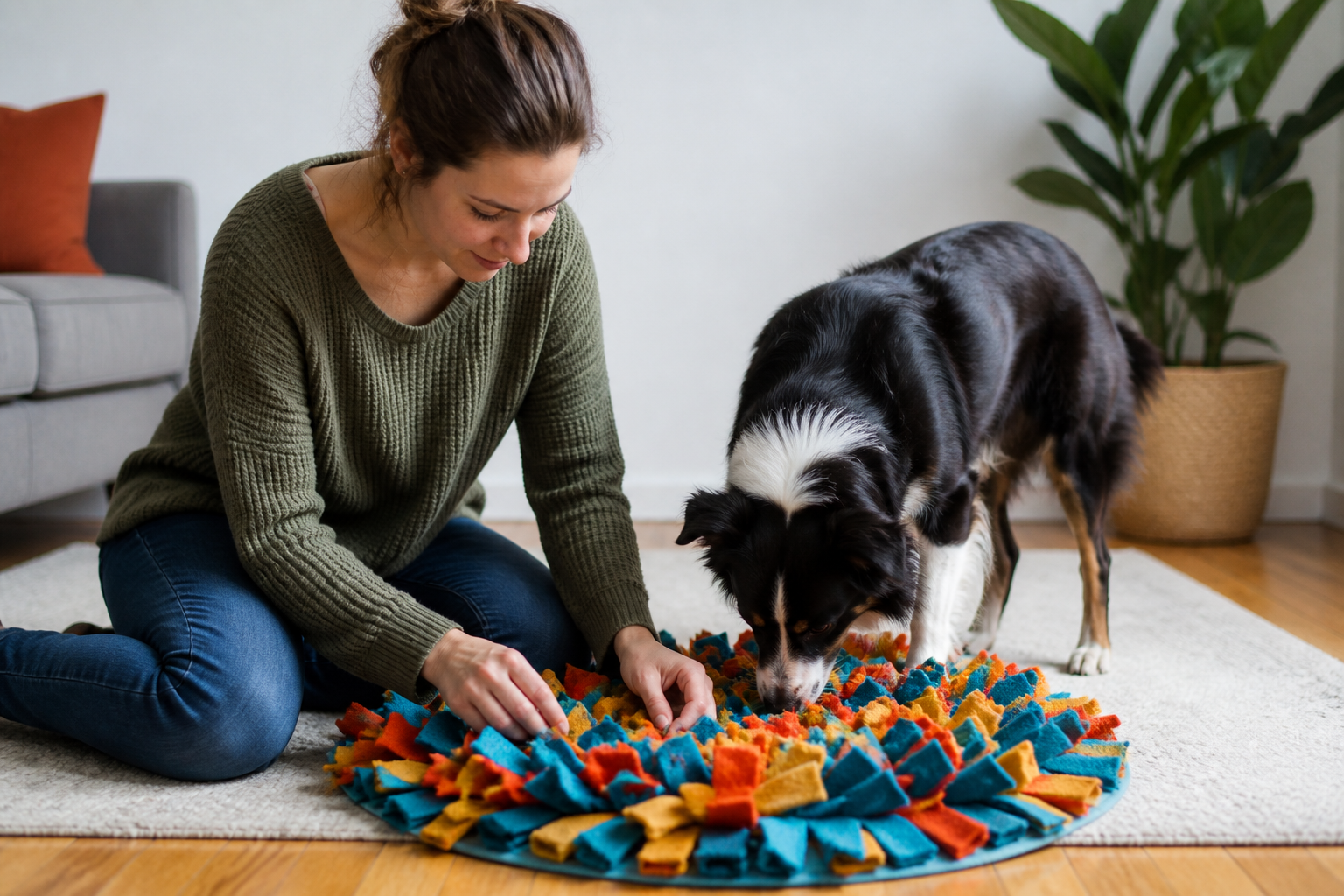
Step 1: Start with high-value treats. / Use something very smelly like freeze-dried dog treats or small pieces of jerky. Place them right on top of the fabric where they are clearly visible.
Step 2: Use a "find it" cue. / Release your dog to the mat and say "find it." Let them eat the treats quickly.
Step 3: End the session early. / As soon as the last treat is gone, pick the mat up. Do not let them linger and start pawing or nibbling at the empty mat.
Step 4: Increase the difficulty. / Once they understand the game, start tucking the treats slightly under the fabric strips.
Step 5: Redirect chewing immediately. / If you see your dog's jaw close on the fabric, say "uh-oh" and pick the mat up. Wait a minute and try again. They will learn that chewing makes the game stop.
Bottom line: Controlled, short sessions are better than leaving a mat out all day, as this prevents the dog from getting bored and destructive.
Beyond the Mat: Other Enrichment for Power Chewers
If your dog is simply too rough for any fabric mat, you may need to look at other ways to engage their brain. We carry several brands that specialize in "extreme" durability.
Heavy-Duty Rubber Puzzles
Brands like Kong offer rubber toys that can be stuffed with kibble or treats. While not technically a "snuffle mat," these require the same problem-solving skills. They are much harder for a heavy chewer to destroy.
Treat-Dispensing Balls
A hard plastic ball that drops kibble as it rolls is a great alternative. It provides physical movement along with the mental challenge. Since these are usually made of thick, hard plastic, they are very difficult to bite into.
Natural Foraging
If the weather is nice, you can toss kibble directly into clean, short grass in your backyard. This is the ultimate "natural" snuffle mat. It costs nothing and provides a massive scent field for your dog to explore.
Managing Anxiety and Destructive Chewing
Sometimes, a dog is a "heavy chewer" because they are stressed. If your dog is destroying toys, bedding, and furniture, the snuffle mat might just be a band-aid. Enrichment is a great tool for managing mild stress, but some dogs need more help.
We see many owners who find that their dogs settle down once they address underlying anxiety. This might involve working with a professional trainer or using calming supplements like those from Zesty Paws or Honest Paws. These products can help take the edge off so the dog can focus on the enrichment task at hand.
For more severe cases, your veterinarian may prescribe specific medications. Our pet pharmacy can fill these prescriptions through our partnership with Pet's Choice. Whether it is for separation anxiety or noise phobias, getting the right medical support can make enrichment activities more successful.
Maintenance and Care for Longevity
To keep a durable mat in top shape, you must clean it regularly. Food oils and saliva can build up, making the mat smell rancid and attracting bacteria.
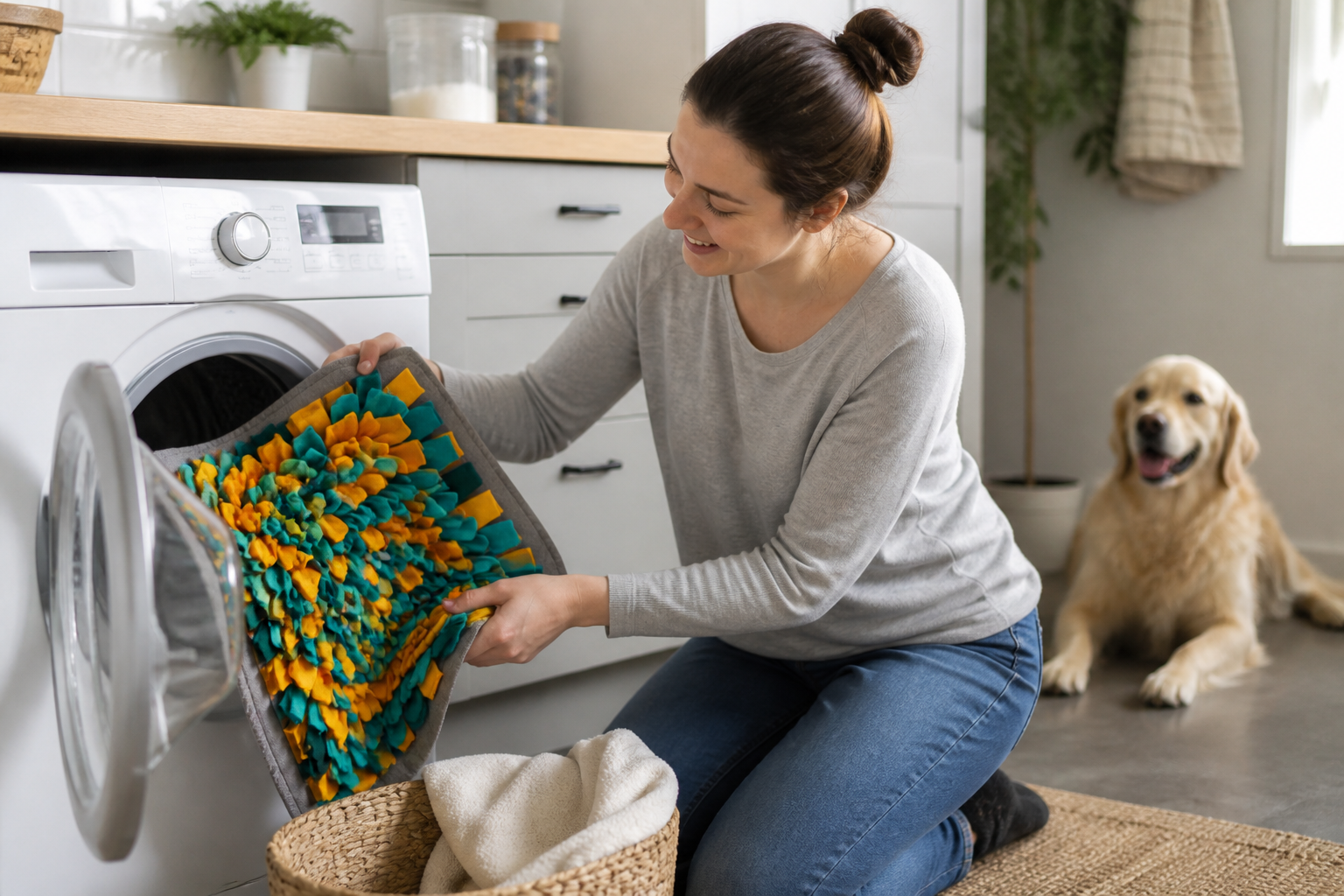
- Use a Laundry Bag: Always put webbing or fabric mats in a mesh laundry bag. This prevents the strips from getting caught in the agitator of your washing machine.
- Air Dry Only: High heat can melt the non-slip backing or make synthetic fibers brittle. Hang the mat to dry in a well-ventilated area.
- Inspect Regularly: Before every use, check the mat for loose threads or small tears. If you see a weak spot, fix it or retire the mat before your dog can exploit it.
- Rotation is Key: Do not use the same mat every day. Rotating through 2 or 3 different puzzles keeps the challenge fresh and reduces wear and tear on a single item.
Why Quality Matters More Than Price
It is tempting to buy the cheapest mat you find online. However, we have found that budget mats often use unsafe dyes and low-quality fibers that shed. A high-quality mat from a trusted brand like RC Pets or Pet Life might cost more upfront, but it will save you money in the long run.
By investing in a mat designed for durability, you are also investing in your dog's safety. Our curated selection at BaxterBoo focuses on brands that prioritize non-toxic materials and robust construction. Plus, when you join our MVP Rewards program, you earn points on every durable toy purchase, which helps offset the cost of high-quality gear.
Key Takeaway: Investing in one high-quality, durable mat is more cost-effective than replacing multiple cheap fleece mats that your dog shreds in minutes.
Encouraging Natural Foraging
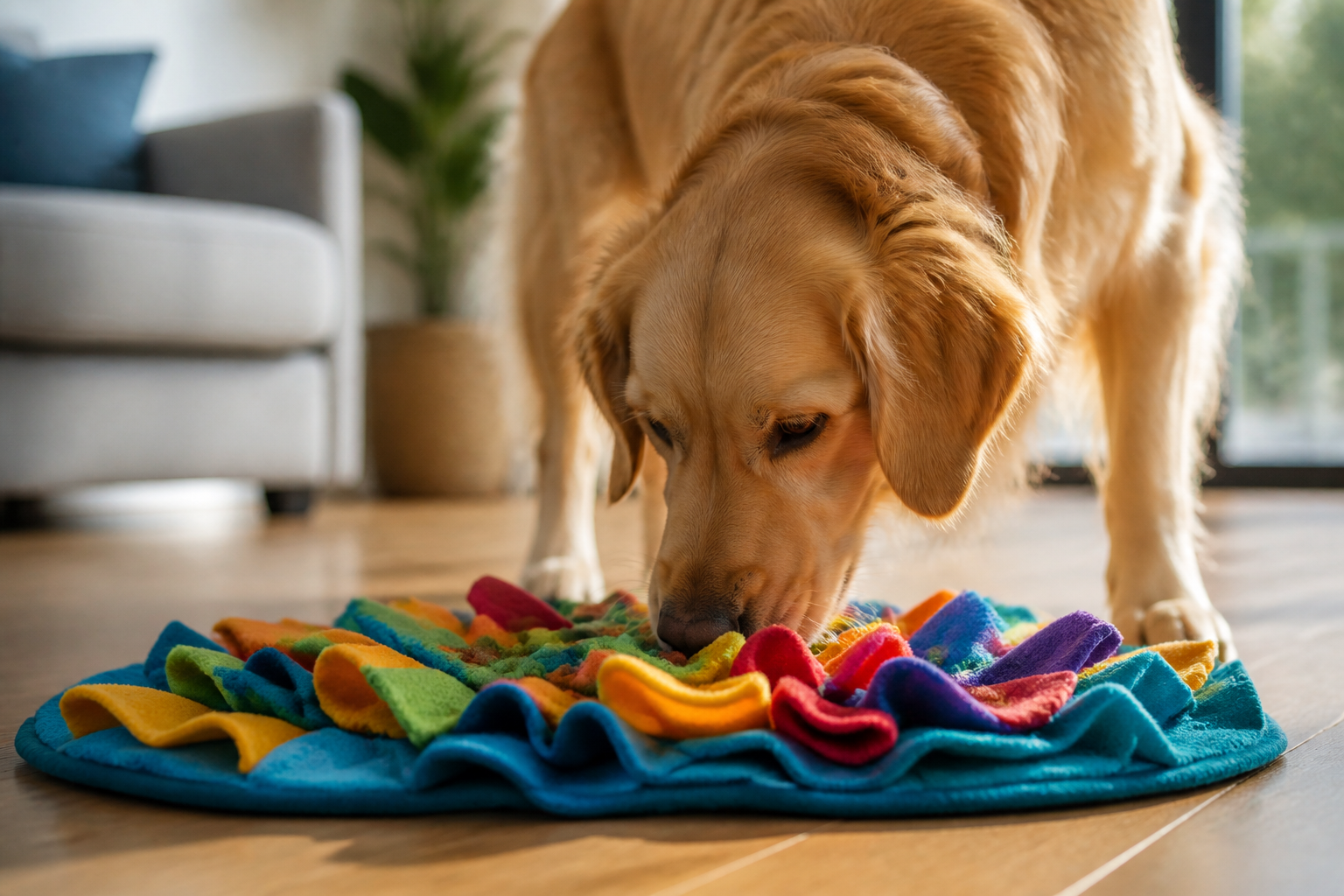
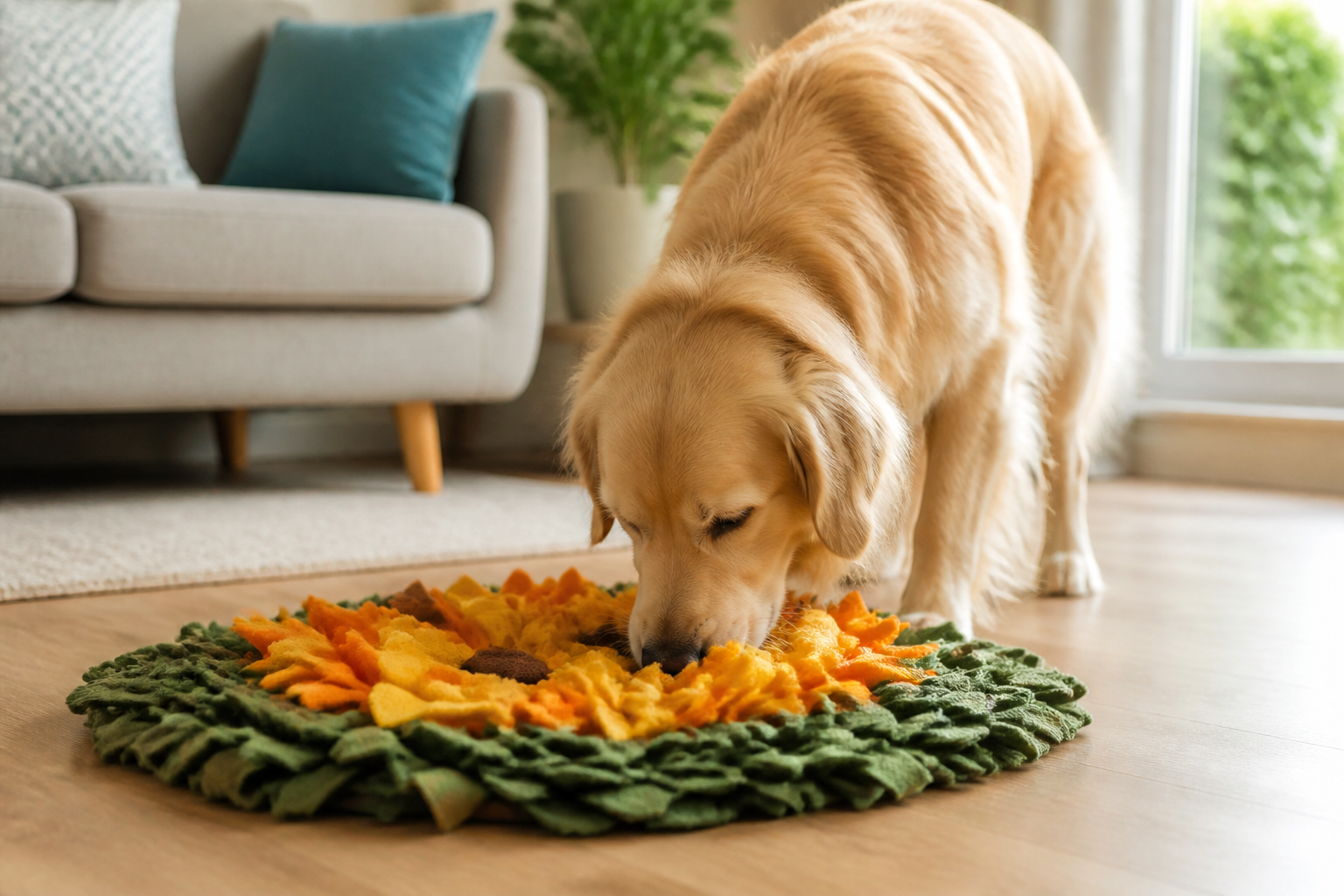
Dogs have about 300 million olfactory receptors in their noses. For comparison, humans have about 6 million. When a dog uses a snuffle mat, they are exercising a part of their brain that rarely gets a workout during a standard walk or fetch session.
For heavy chewers, this "brain work" is exhausting. Ten minutes of intense sniffing can be as tiring as a long walk. This makes durable snuffle mats an excellent tool for rainy days or for dogs recovering from surgery who cannot exercise physically. For more ideas, explore brain games and nose-work activities for dogs.
Transitioning to the Right Gear
Finding the right snuffle mat for heavy chewers is a process of trial and error. You have to match the toy to your dog's specific chewing style. Some dogs are "shredders" who want to pull things apart, while others are "gnawers" who want to grind things down.
If you are unsure where to start, we recommend looking at our Medical & Mobility section if your dog is older, or our Training & Behavior section for active adults. We have spent years hand-picking products that meet the needs of real pet owners. Whether you are shopping in our Vernon Hills warehouse or ordering online for home delivery, our goal is to provide you with gear that actually works. You can also browse our dog toys and interactive treat toys for more enrichment options.
FAQ
Can any snuffle mat be 100 percent chew-proof?
No, there is no such thing as a truly chew-proof fabric toy. If a dog is determined enough and has enough time, they can damage any material. The goal of a "heavy chewer" mat is to be resistant enough to survive the occasional nip while you supervise the session.
What should I do if my dog tries to flip the mat over?
Fipping the mat is a sign that the dog is looking for a shortcut. Use a mat with suction cups or a heavy rubber base to keep it stuck to the floor. You can also try placing the mat on a rug to increase friction or hold one side of the mat while they sniff.
How do I know if my dog is too frustrated by the puzzle?
If your dog starts barking at the mat, pawing at it aggressively, or walking away, the puzzle might be too difficult. Make it easier by placing more treats on the surface. Enrichment should be a confidence-building activity, not a source of stress.
Are there snuffle mats for cats that chew?
Yes, while we usually focus on dogs for this topic, some cats are also enthusiastic foragers. Cat snuffle mats are typically smaller and use shorter fabric loops. If your cat is a heavy chewer, look for mats made from heavy felt or woven cotton rather than thin synthetic fleece.
Conclusion
A durable snuffle mat is a fantastic investment in your dog's mental health. By choosing materials like leash-grade webbing and reinforced stitching, you can provide the enrichment your dog craves without the constant destruction. Remember to keep sessions short, supervise every interaction, and use high-value treats to keep them focused. If your dog's chewing seems related to stress, do not hesitate to reach out to your vet. Our pharmacy and Pet's Choice partnership are here to help with any behavioral health needs. Check out our selection of snuffle mats and dog toys to find the perfect match for your powerful pup.
Bottom line: Proper material choice combined with active training turns a potential mess into a successful mental workout.
FAQ
What is the best material for a durable snuffle mat?
Leash-grade webbing or heavy-duty oxford cloth are the best materials for dogs that are rough on their toys. These fabrics are much denser than standard fleece and can withstand the pressure of a dog's teeth without immediately shredding. Look for products that feature reinforced stitching at every seam.
How can I stop my dog from chewing the mat during use?
The most effective way to stop chewing is through active supervision and immediate redirection. If your dog begins to bite the fabric, use a verbal cue like "no" or "uh-oh" and lift the mat out of reach. Wait for your dog to calm down before placing it back on the floor to restart the session.
Are snuffle mats safe for puppies who are teething?
Puppies can use snuffle mats, but they require 100 percent supervision because their sharp teeth can easily snag fabric. Use the mat to teach them focus and calm behavior during their "zoomie" hours. It is also a great way to slow down puppies who tend to inhale their food too quickly.
Can I put a snuffle mat in the washing machine?
Most high-quality mats are machine washable, but you should always check the manufacturer's instructions. To protect the mat and your machine, place the toy inside a mesh laundry bag and use a cold, gentle cycle. Air drying is always recommended to prevent the fibers and backing from degrading in high heat.


- Site & Contents BaxterBoo.com. BaxterBoo is located in the United States.
- Privacy & Security
- Terms of Use
- Accessibility Statement
