
 Save 15% on your 1st Autoship learn more

 Email us
 Live Chat
 FAQs
FAQs





Introduction
You lean in for a cuddle, and your dog meets you with an enthusiastic lick. Instead of feeling the love, you find yourself pulling back because of that unmistakable, fishy, or metallic odor. Most of us have been there. While brushing is the gold standard for oral care, many dogs simply will not tolerate a toothbrush in their mouth. At BaxterBoo, we know that keeping your pup’s mouth healthy requires a realistic approach. This guide covers effective ways to tackle oral hygiene through snacks, water additives, and specialized gear. You can improve your dog’s breath significantly even if the toothbrush stays in the drawer. We will look at why the smell happens and how to fix it naturally.
Quick Answer: You can freshen your dog’s breath without brushing by using dental chews, water additives, and crunchy vegetables like carrots. These tools work by mechanically scraping away plaque or using enzymes to break down bacteria in the mouth.
The Common Culprits Behind Stinky Breath
Before you can fix the smell, you need to understand where it comes from. Most bad breath in dogs comes from the same source as it does in humans: bacteria. When your dog eats, food particles mix with saliva to form plaque. If that plaque stays on the teeth for more than a few days, it hardens into tartar. This hard substance provides a perfect home for more bacteria to grow.
Bacteria release foul-smelling gases as they thrive in the mouth. This is the primary cause of what we call dog breath. However, the smell can also come from other places. Sometimes it is about what they are eating. If your dog enjoys "snacking" in the cat’s litter box or rummaging through the kitchen trash, the cause is obvious.
In other cases, the smell is internal. Digestive issues can cause gas to rise from the stomach. If the odor is persistent and very strong, it might be more than just a hygiene issue. It could be a sign of gum disease or even an infection. For additional warning signs, read about hidden dental problems in dogs.
Key Takeaway: Plaque and tartar are the most frequent causes of bad breath. These substances trap bacteria that release smelly gases.
Using Dental Chews as a Mechanical Cleaner
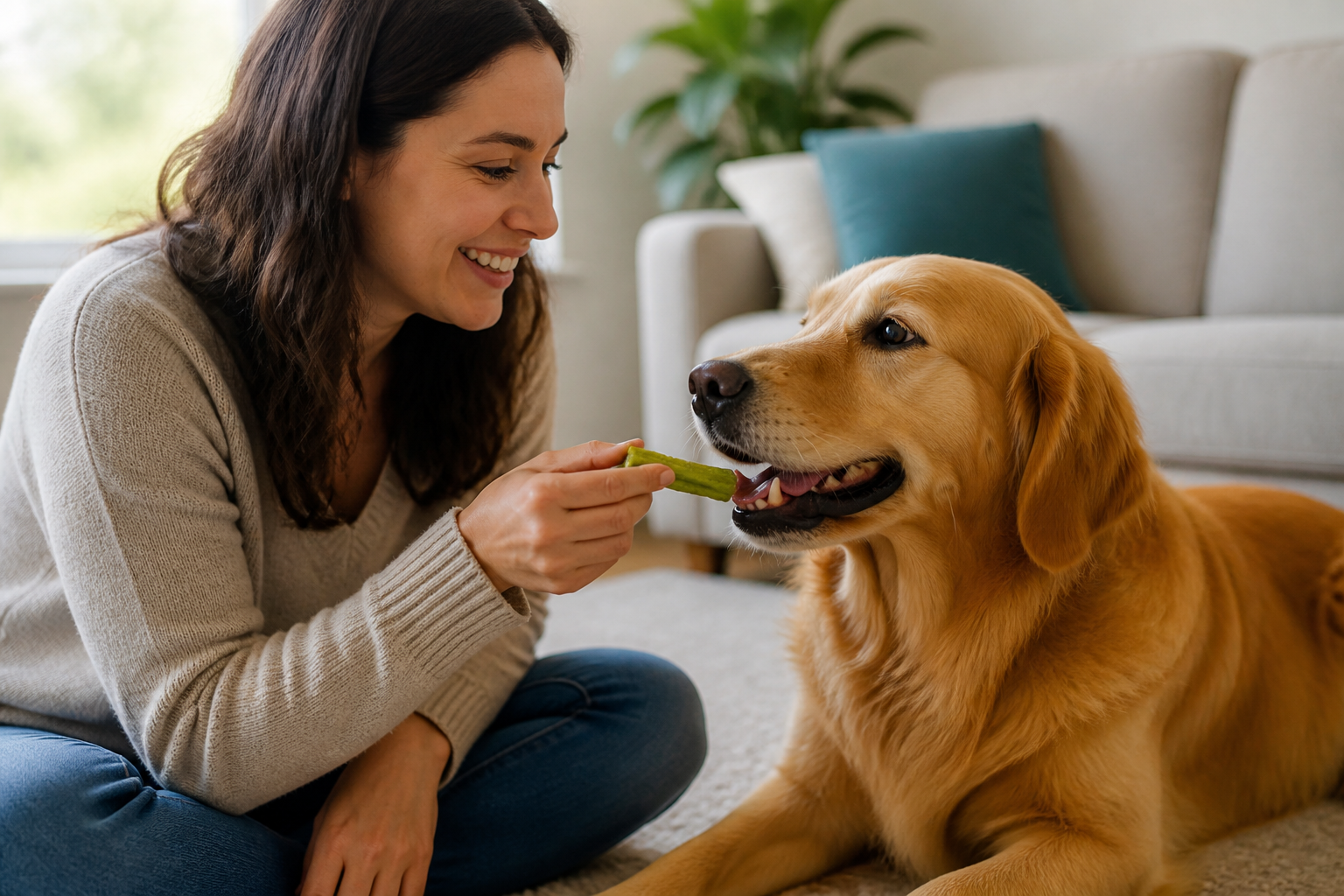
Dental chews are one of the most popular ways to clean teeth without a brush. These treats are designed with specific textures that help scrape the surface of the teeth as the dog chews. This mechanical action is very effective at removing soft plaque before it hardens into tartar. You can explore our dental treats for dogs to compare different textures and options.
Brands like Greenies or RedBarn offer edible chews that are formulated to be firm but flexible. As your dog’s teeth sink into the treat, the material rubs against the enamel. This is similar to the way a squeegee cleans a window. It is important to choose the right size for your dog. A chew that is too small might be swallowed whole, which provides no dental benefit and could be a choking hazard. Our selection of Greenies products includes dental options in different sizes.
When choosing a chew, look for those with a dense texture. The longer it takes your dog to finish the treat, the more cleaning action occurs. Some chews also contain ingredients like chlorophyll or cinnamon to help neutralize odors instantly. For more ideas, see these 10 dental chews for dogs.
- Select the correct size based on your dog's weight.
- Monitor your dog while they chew to ensure they do not gulp large pieces.
- Look for the VOHC (Veterinary Oral Health Council) seal on the packaging.
- Factor the calories of the treat into your dog's daily meal plan.
The Role of Hard Rubber Toys
Not every cleaning tool has to be edible. Many dogs love to chew on rubber toys, and these can be excellent for breath health. Kong toys and other durable rubber products often have ridges or nubs. These designs are not just for looks. They are meant to massage the gums and scrape the teeth. You can find more options in our dog dental care collection.
You can make these toys even more effective by adding a bit of pet-safe toothpaste or coconut oil into the grooves. As the dog works to lick the toy clean, their tongue and teeth are treated to a deep clean. This provides the benefits of brushing without the stress of a traditional toothbrush.
Water Additives for Easy Maintenance
Water additives are a favorite for busy pet owners. They are often called "liquid gold" for dental health because they require almost no effort. You simply add a small amount of the solution to your dog’s water bowl every time you refill it. Options such as Dental Fresh water additives for dogs can fit easily into a daily routine.
These additives usually contain enzymes or minerals that break down the biofilm on the teeth. Biofilm is the sticky layer where bacteria live. By breaking this layer down, the additive makes it much harder for plaque to form. Most quality additives are tasteless and odorless, so your dog will not even know it is there.
It is important to be consistent. Water additives work best when they are used every single day. If you skip days, the biofilm has a chance to reform. This is a great option for senior dogs who might have sensitive gums that make physical chewing or brushing painful.
Vet Tip: While water additives are great for maintenance, they cannot remove thick layers of existing tartar. If your dog has brown or orange buildup on their teeth, a professional cleaning by a veterinarian is likely necessary.
Natural Remedies from the Kitchen
You might already have some of the best breath fresheners in your refrigerator. Certain fresh foods are naturally abrasive and can help clean teeth while providing a healthy snack.
Crunchy Vegetables
Carrots and celery are excellent for dogs. They are low in calories and very crunchy. When a dog crunches on a large carrot, the fibrous texture helps wipe away food particles. Celery also has a high water content, which can help wash away bacteria. Always cut these into safe sizes to prevent choking, especially for small breeds.
Fresh Herbs
Small amounts of fresh parsley or mint can act as a natural breath mint. Parsley contains chlorophyll, which is a known odor neutralizer. You can finely chop a teaspoon of parsley and sprinkle it over your dog’s food. Be sure to use curly parsley rather than the spring-leaved variety, as some types can be toxic in very large amounts. Mint is also refreshing, but only use plain, fresh mint leaves. Never use essential oils or human mint candies.
Coconut Oil
Coconut oil has natural antibacterial and antifungal properties. Many owners find that adding a small spoonful to their dog's food helps reduce the population of bad bacteria in the mouth. Most dogs love the taste, so it is an easy sell.
Dietary Changes and Digestive Health
What goes into your dog's stomach eventually affects their breath. If your dog eats a very "fishy" diet or a diet low in quality nutrients, their breath will reflect that. Sometimes, simply switching to a higher quality kibble can make a difference.
Dry kibble is generally better for dental health than wet food. The crunching action of the dry biscuits provides some minor scraping of the teeth. Wet food tends to stick to the teeth and gums, providing a feast for bacteria. If your dog must eat wet food, consider mixing in some dry kibble or giving a dental chew immediately after their meal.
Probiotics can also play a role. Bad breath can sometimes start in the gut. If your dog has an imbalance of bacteria in their digestive system, it can cause smelly gas to come up. Adding a dog-specific probiotic or a spoonful of plain, unsweetened yogurt to their diet can help balance their internal flora. For more information, explore this pet supplement guide.
Bottom line: A healthy diet combined with crunchy textures helps prevent food particles from lingering in the mouth.
How to Introduce a New Dental Routine
If you want to start freshening your dog’s breath without brushing, it is best to introduce one thing at a time. This allows you to see what works and ensures your dog does not have an upset stomach from too many new treats.
Step 1: Start with a water additive. / This is the least invasive method. Add it to their water for one week to ensure they are still drinking their normal amount.
Step 2: Introduce a daily dental chew. / Pick a high-quality brand like Greenies. Give it at the same time every day so it becomes a habit.
Step 3: Add crunchy snacks. / Replace one of their regular treats with a piece of carrot or an apple slice (with no seeds).
Step 4: Monitor the results. / Check your dog’s breath after two weeks. You should notice a significant decrease in odor.
When Bad Breath Signals a Medical Problem
There are times when no amount of dental chews or parsley will help. If your dog has persistent, foul breath, it is time to look closer. Flip up their lips and look at the gums. Healthy gums should be pink. If they are bright red, bleeding, or receding, your dog likely has periodontal disease.
Some smells are very specific and indicate issues outside of the mouth:
- Sweet or Fruity Breath: This is often a sign of diabetes.
- Ammonia or Urine Smell: This can indicate kidney problems.
- Extremely Foul or "Death" Smell: This could be a sign of liver disease or a severe infection in the mouth.
If you notice any of these specific odors, you must consult your veterinarian immediately. At BaxterBoo, we partner with Pet's Choice to provide a full pet pharmacy of FDA-approved medications. If your vet discovers an infection or a chronic condition like diabetes, our pharmacy carries the necessary prescription medications and specialized diets.
Vet Tip: Bad breath is frequently the first sign of a painful dental infection. If your dog is also pawing at their face, drooling more than usual, or dropping food, they need a professional exam to check for abscesses or broken teeth.
Using Supplements for Long-Term Health
Supplements can be a powerful tool for maintaining a fresh mouth. Some supplements are designed specifically for oral health, while others support the immune system, which helps the body fight off oral bacteria.
Vitamin C and antioxidants are often used to support gum health. You can find these in many of our supplement lines at BaxterBoo. We carry brands like Zesty Paws and Honest Paws that offer chewable supplements formulated to support both the gut and the mouth.
Another option is a dental powder. These are similar to water additives but are sprinkled directly onto the food. They are often made from a specific type of brown seaweed that has been shown to reduce plaque and tartar buildup from the inside out.
Professional Cleaning and Veterinary Care
While home care is essential, it does not replace the need for professional veterinary visits. Most dogs will eventually need a professional dental cleaning, usually once a year or every two years. For more guidance, review these pet dental care tips.
During a professional cleaning, the vet will put your dog under anesthesia. This allows them to clean under the gum line, where the most dangerous bacteria live. They can also take X-rays to see if there are problems with the roots of the teeth that you cannot see from the surface.
Once your dog has a clean slate from the vet, your home routine of chews and additives will be much more effective. Think of it like this: the vet does the deep cleaning, and you do the daily maintenance to keep it that way.
Understanding the Cost of Neglect
It might seem like a lot of work to manage your dog's breath, but the alternative is much more expensive. Dental disease does not just stay in the mouth. The bacteria from infected gums can enter the bloodstream. From there, it can travel to the heart, liver, and kidneys, causing permanent damage.
By investing in a few dental toys, water additives, and healthy treats now, you are saving yourself from massive veterinary bills later. More importantly, you are saving your dog from the pain of tooth decay and systemic illness.
Conclusion
Freshening your dog’s breath without brushing is entirely possible with the right tools. By combining mechanical cleaning from chews, chemical cleaning from water additives, and a healthy diet, you can keep the stinky smells at bay. Start by checking your dog's mouth for any signs of redness or heavy tartar. If their mouth looks healthy but smells less than fresh, begin introducing dental treats and water additives. Remember that consistency is the most important factor in oral health. For dogs with persistent issues or specific health concerns, our pharmacy is available to provide the medications your veterinarian prescribes. We are here to help you keep those doggy kisses fresh and your pet's health on track. To make keeping up with your pet's needs easier, consider our Autoship programme for your favorite dental chews and additives.
FAQ
Why does my dog’s breath smell like fish?
Fishy breath is often caused by bacteria associated with plaque and tartar buildup. It can also occur if your dog has recently licked their anal glands, which produce a very strong, fishy-smelling fluid. If the smell persists after a meal or a dental chew, consult your vet to rule out an anal gland issue or a specific type of oral infection.
Are dental chews as effective as brushing?
Dental chews are very helpful, but they are generally not as effective as manual brushing. Brushing allows you to reach the tiny crevices and the back molars more accurately. However, a high-quality dental chew used daily is a fantastic alternative for dogs that will not tolerate a brush, providing significant mechanical cleaning.
Can I use human mouthwash in my dog’s water bowl?
No, you should never use human mouthwash for a dog. Many human mouthwashes contain alcohol or artificial sweeteners like xylitol, which is extremely toxic to dogs and can be fatal. Only use water additives and oral rinses that are specifically formulated for pets and clearly labeled as safe for dogs.
How long does it take for water additives to work?
You will usually start to notice a difference in your dog’s breath within one to two weeks of consistent use. Water additives work by gradually breaking down the biofilm in the mouth. To see the best results, you must use the additive in every bowl of water your dog drinks throughout the day.






