Save 15% on your 1st Autoship learn more

 Email us
 Live Chat
 FAQs
FAQs





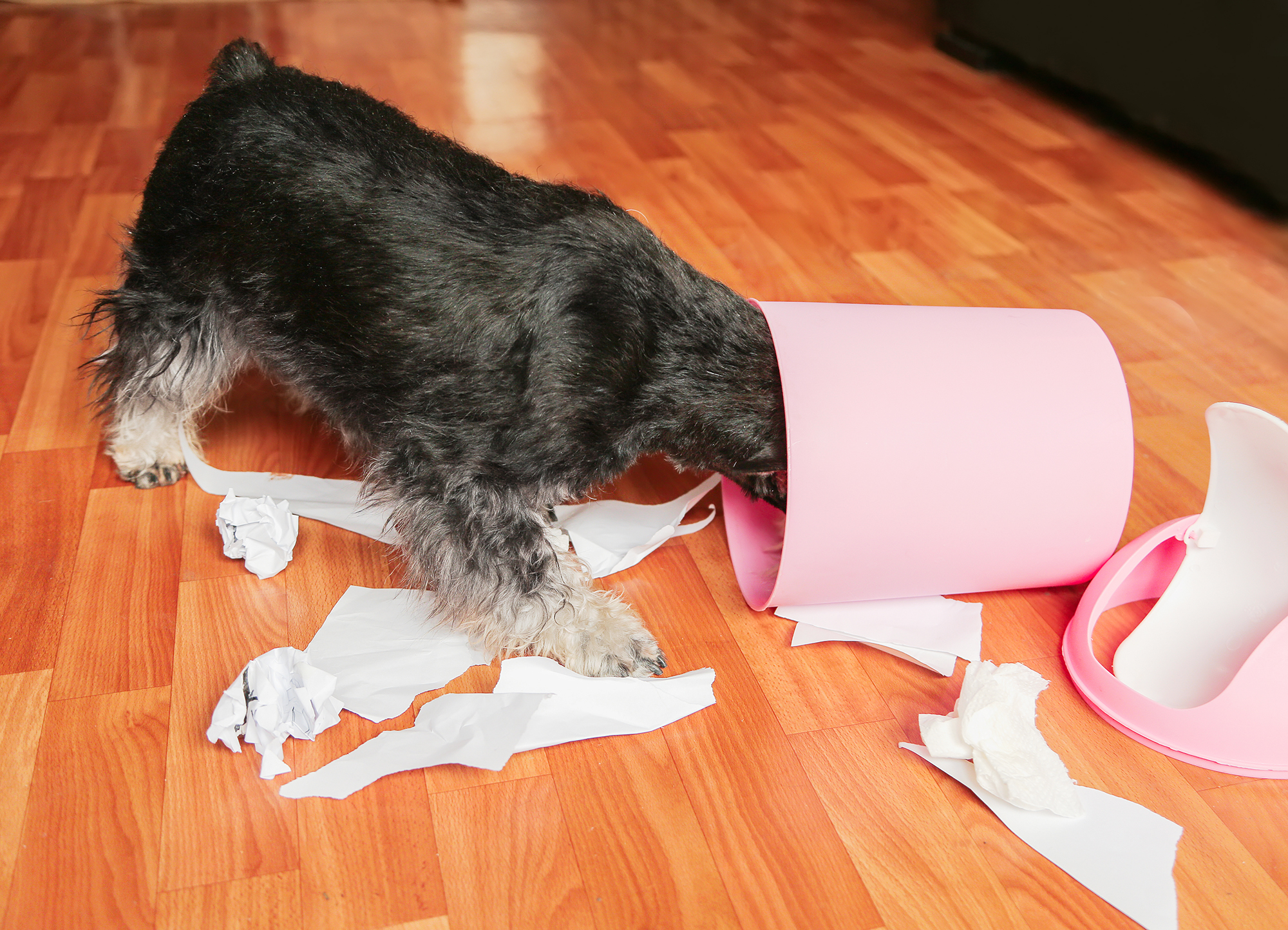
Dogs bring a lot of joy into their owners' lives; however, sometimes dog behavior can be frustrating. One of the most common behavior problems is getting into the trash when the owner isn't around to watch. This behavior not only leaves an unpleasant mess for the owner to clean up but can be dangerous for the dog due to the risk of the dog ingesting a foreign object or a toxic substance.
Why Do Dogs Get in the Trash?
Some dogs nose through the trash because they are bored. However, most of the time dogs get in the trash because that smelly leftover food seems like a gourmet dinner to them. Additionally, many dogs enjoy chewing on or shredding objects such as paper towels, cardboard boxes and metal cans. In most cases, your dog isn't doing this to annoy you. Dogs are scavengers by nature and looking through the garbage for something tasty to eat or fun to play with is in their nature.
How Do I Stop My Dog From Getting in the Trash?
There are a variety of methods you can try for training your dog to stay away from the trash. It can be helpful to know what motivates your dog to get in the trash in the first place.
1. Use a Physical Barrier
Until you are confident that your dog will not get in the trash while you are gone, make it impossible, or least difficult for your dog to accomplish. If you have the space, you can put your trash can in a cabinet or a room with a door you can close. Pet or baby gates can also be used to block off areas where the trash is kept. You can try putting a tight-fitting lid on the can. It may be helpful to combine these methods. For instance, if your dog gets in the trash because something smells tasty in there, a tight-fitting lid may reduce the smell coming from the can, while putting the can behind a closed-door prevents your dog from getting to the can if he still smells it.
2. Crate Train Your Dog
If you can't easily put your garbage can where the dog can't access it, try using a crate. Crates are valuable tools for many reasons and there's no need to fear that your dog will feel neglected or abused. Dogs are naturally motivated to burrow into a den-like structure. A properly crate-trained dog will come to view the crate as his den. Putting your dog in his crate when you have to leave the house not only keeps the dog out of your trash but keeps him safe from other hazards he might get into while you aren't home.
3. Train Your Dog To Stay Out of the Trash
This is probably the most difficult solution, but teaching your dog the impulse control it takes to keep him out of the trash will make him a better overall pet. There are many different training methods. Many methods rely on teaching the dog commands such as "leave it," or "off." These methods can often be useful for preventing your dog from getting in the trash when you are home, but may not work as well when no one is around to give the command.
A more useful tactic may be to reward your dog for choosing not to get in the trash. You can train this behavior by placing something you know your dog wants, such as a training treat or a toy, on top of the trash can. Stand near the can and wait to see what your dog does. Most likely, the dog will attempt to take what he wants. If he does, cover the object with your hand.
When your dog moves away from the object, uncover it and repeat until your dog no longer attempts to take the object. You can then reward your dog with a treat or some playtime with the toy. Avoid the temptation to jerk the object away from your dog. This just makes it a game of keep-away. You will likely need to repeat this training with different temptations and with you standing further away from the object until the behavior is ingrained enough that your dog no longer tries to take things from the trash.
4. Keep Your Dog Occupied
Some dogs become destructive when they are bored or don't get enough exercise. You may be able to curb this behavior by making sure your dog gets enough exercise every day and providing mental stimulation for your dog. How much exercise your dog needs depends on your dog's breed and size. A large active breed may need one to two hours of exercise every day. Smaller or less active breeds may require a half-hour to an hour. Taking your dog on a walk is a good option. If you have an enclosed space to play in, you can play fetch, throw a frisbee, do agility exercises, play dog sports or even set up a swimming pool for your dog.
Mental stimulation is also important. Training your dog is one way to provide mental stimulation. This is particularly true of working and herding breeds that often crave a job to do. You can also provide your dog with puzzle toys and treat dispensing toys to give his brain a workout.
Keeping your dog from raiding the trash can be a challenging problem. However, there are a variety of ways to tackle it and once you have the problem solved, you will have a better overall relationship with your pet.