
 Save 15% on your 1st Autoship learn more

 Email us
 Live Chat
 FAQs
FAQs





Introduction
You lean in for a happy morning greeting from your dog, but instead of sweet puppy breath, you are met with a sharp, metallic smell. You might notice a yellow-brown film creeping up from the gumline or see your dog pawing at their muzzle after eating. These moments are more than just a grooming inconvenience. Dental hygiene is a cornerstone of overall canine wellness. At BaxterBoo, we have spent years helping pet owners navigate the transition from stinky breath to sparkling smiles. This guide covers everything from the basics of brushing to high-tech water additives and professional veterinary care. While brushing is the gold standard, a healthy mouth is achievable through a mix of mechanical cleaning, specialized diets, and consistent routines. Explore our dog dental and breath care collection to find supplies for your dog's routine.
The Reality of Canine Dental Health
Plaque starts forming on your dog's teeth within hours of a meal. If it is not removed through mechanical action or chemical breakdown, it mixes with minerals in the saliva and hardens into tartar. This process happens fast, often in less than two days. Once tartar forms, it creates a rough surface that attracts even more bacteria. This cycle eventually leads to inflammation of the gums, known as gingivitis.
If left alone, bacteria can travel under the gumline. This is where the real trouble starts. It can damage the structures that hold the teeth in place and even enter the bloodstream. Research suggests that chronic dental disease can put a strain on your dog's heart, liver, and kidneys. Because our dogs cannot tell us when their mouth aches, we have to be proactive about their care. For additional warning signs, read our guide to recognizing hidden dental problems in dogs.
Quick Answer: The most effective way to clean a dog's teeth is daily brushing with dog-safe toothpaste. If brushing is not possible, a combination of VOHC-accepted dental chews, water additives, and professional veterinary cleanings can maintain oral health.
How to Brush Your Dogs Teeth at Home
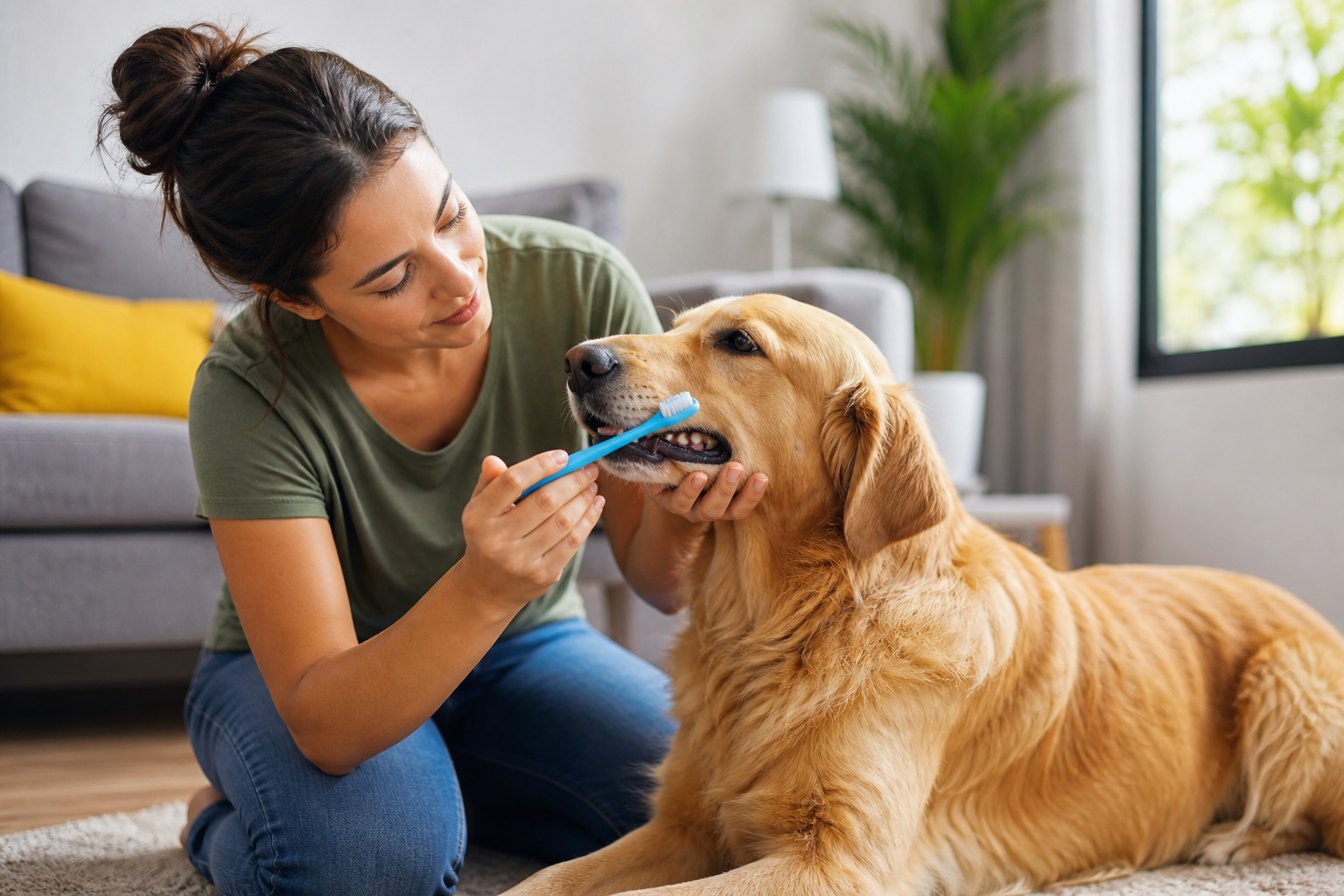
Brushing does not have to be a struggle. The goal is to make it a positive experience so your dog looks forward to the routine. Never use human toothpaste. It often contains fluoride or xylitol, both of which are toxic to dogs. Pet-specific toothpastes come in flavors like poultry or beef to make the process more like a treat. A dog-safe option is Virbac C.E.T. Enzymatic Pet Toothpaste.
Step 1: Get them used to the taste. / Put a small amount of pet toothpaste on your finger and let your dog lick it off. Do this for a few days without trying to touch their mouth.
Step 2: Introduce mouth handling. / Gently lift your dog's lip and rub your bare finger along their gums. Keep these sessions very short and follow them with a high-value treat.
Step 3: Introduce the brush. / Use a soft-bristled dog toothbrush or a silicone finger brush. Let them sniff it and lick toothpaste off the bristles.
Step 4: Start brushing. / Aim for a 45-degree angle toward the gumline. Focus on the outside surfaces of the teeth, as this is where most plaque accumulates. You do not need to worry as much about the inside surfaces, as the tongue does a decent job of cleaning those.
Step 5: Reward and repeat. / Always end on a high note. Even if you only brushed two teeth, give them praise and a reward. Consistency is more important than perfection in the beginning.
Key Takeaway: Daily brushing is the most effective way to disrupt plaque before it mineralizes into permanent tartar.
Alternatives for Dogs Who Hate Brushing
We know that not every dog will tolerate a toothbrush. For senior dogs with sensitive mouths or rescue dogs with handling aversions, you need a different plan. Fortunately, there are several effective tools that work with your dog's natural behaviors. For more ideas, see our pet dental care tips.
Dental Chews and Treats
Products like Greenies or KONG dental toys are designed to scrape the teeth as your dog chews. The texture is key. It needs to be firm enough to provide resistance but flexible enough for the tooth to sink in, allowing the treat to scrub the gumline. Browse our dental chews for dogs for options suited to different chewing styles.
Water Additives and Powders
Water additives are liquid solutions you mix into your dog's daily water bowl. They often contain enzymes that help break down the biofilm of plaque. Powders like ProDen PlaqueOff work systemically. Once ingested, the active ingredients move through the bloodstream and into the saliva, where they help soften existing tartar and prevent new plaque from sticking. One option is ProDen PlaqueOff Powder Dog and Cat Teeth Care.
Dental Wipes
If your dog allows you to touch their mouth but hates the feel of a brush, dental wipes are an excellent middle ground. These are pre-moistened pads that you wrap around your finger. They allow you to physically wipe away slime and debris with more control than a bulky brush.
Choosing the Right Food for Dental Support
What goes into the bowl matters as much as what you do after the meal. Many owners wonder if kibble is better for teeth than wet food. While dry food provides some mechanical scraping, it is not a complete solution. Most dogs swallow kibble whole or break it into only a few pieces, which does not provide enough friction to clean the entire tooth.
Specialized dental diets are different. Brands like Royal Canin, Hill's, and Farmina Vet Life offer prescription and specialized formulas. These kibbles are often larger and have a fibrous structure that does not shatter immediately. This forces the dog to chew more, creating a scrubbing effect. Our BaxterBoo pharmacy carries many of these specialized prescription diets through our partnership with Pet's Choice. If your vet recommends a specific dental food, our pet pharmacy can help you manage those orders for home delivery.
Vet Tip: If you notice your dog is suddenly dropping food or only chewing on one side of their mouth, skip the dental treats and head to the vet. These are common signs of a fractured tooth or a painful abscess that requires professional intervention.
Signs of Dental Disease to Watch For
It is helpful to perform a "flip the lip" check once a week. This helps you get familiar with what is normal for your dog so you can spot changes early. Healthy gums should be a consistent pink color. If you see a bright red line where the tooth meets the gum, that is a sign of inflammation. Our article on dog dental warning signs offers another checklist for monitoring changes.
Watch for these common red flags:
- Persistent bad breath that does not go away after a meal
- Visible yellow or brown crust on the teeth
- Bleeding from the mouth or blood left on chew toys
- Excessive drooling
- Reluctance to eat hard kibble or play with firm toys
- Loose or missing teeth
If you see these signs, it is time for a professional assessment. While home care can prevent disease, it cannot cure an existing infection or remove thick layers of tartar.
The Role of Professional Veterinary Cleanings
Even with the best home care, most dogs will eventually need a professional dental cleaning. This is a medical procedure performed by a veterinarian. Unlike "anesthesia-free" cleanings, which only address the visible part of the tooth, a professional cleaning involves scaling and polishing both above and below the gumline.
Anesthesia is necessary for a few reasons. It allows the vet to take dental X-rays to see the health of the roots. It also keeps your dog still and stress-free while sharp instruments are used near the sensitive gums. During these visits, the vet can identify and remove teeth that are diseased or causing pain.
After a professional cleaning, your dog's teeth are a blank slate. This is the perfect time to start a new home care routine to maintain those results. If your vet prescribes antibiotics or pain relief after a dental procedure, our pharmacy can fulfill those prescriptions to help your dog recover comfortably.
Bottom line: Home cleaning is about prevention, while veterinary cleaning is about treatment and deep maintenance.
Creating a Sustainable Dental Routine
The best dental plan is the one you can actually stick to. Do not feel guilty if you cannot brush every single day. Start with a goal of three times a week and supplement with other tools on the off days. If you regularly purchase dental supplies, our Autoship programme can help keep routine items on schedule.
A well-rounded routine might look like this:
- Monday, Wednesday, Friday: Brush with flavored toothpaste.
- Tuesday, Thursday, Saturday: Give a VOHC-accepted dental chew.
- Daily: Use a water additive or dental powder in their morning meal.
- Yearly: Schedule a dental exam with your veterinarian.
We carry over 500 trusted brands at BaxterBoo, which makes it easy to find the specific tools that fit your dog's personality. Whether you need a finger brush for a puppy or a specialized diet for a senior, having the right supplies on hand is half the battle.
| Method | Effort Level | Effectiveness | Best For |
|---|---|---|---|
| Brushing | High | Excellent | Prevention and plaque removal |
| Dental Chews | Low | Good | Mechanical cleaning and rewards |
| Water Additives | Very Low | Moderate | Reducing bacteria and bad breath |
| Prescription Diet | Low | High | Dogs with chronic dental issues |
| Professional Cleaning | Minimal (Owner) | Best | Deep cleaning and extractions |
Managing Dental Health as Your Dog Ages
Senior dogs often require more frequent dental attention. As they age, their immune systems may not fight off oral bacteria as effectively. Additionally, years of chewing can lead to worn enamel or small fractures. If your senior dog has underlying health issues like heart or kidney disease, maintaining a clean mouth is even more critical to reduce the systemic bacterial load. For more routine ideas, explore these dental care tips for pets at every life stage.
If you are worried about anesthesia for an older pet, talk to your vet about a pre-anesthetic blood panel. This helps ensure their organs are functioning well enough to process the medication. You can also look into "dental maintenance" supplements that support gum tissue health. Keeping your dog comfortable and pain-free in their golden years often starts with a healthy mouth.
Key Takeaway: Dental care is a lifelong commitment that evolves as your dog moves from puppyhood to their senior years.
Conclusion
Keeping your dog's teeth clean is a vital part of being a responsible pet owner. By combining daily efforts like brushing or dental chews with regular veterinary checkups, you can prevent pain and extend your dog's life. Remember that consistency is the most important factor. Even small steps, like adding a dental powder to their food or switching to a dental-support kibble, make a significant difference over time.
- Start slow and use positive reinforcement.
- Use only dog-safe products to avoid toxicity.
- Watch for signs of pain or infection.
- Consult your vet for professional cleanings and X-rays.
For all your dental care needs, from enzymatic toothpastes to prescription diets, we have you covered. Our BaxterBoo pharmacy and Pet's Choice partnership make it simple to get the professional-grade products your vet recommends. Explore our dental care collection today to find the perfect routine for your dog. You can also learn about benefits available through the MVP Rewards programme.
FAQ
Can I use baking soda to clean my dog's teeth?
It is best to avoid using baking soda because it has a very high alkaline content. If your dog swallows a significant amount, it can upset the acid balance in their stomach and lead to digestive distress. Pet-specific toothpastes are much safer and come in flavors that dogs actually enjoy, making the brushing process easier for both of you.
How often should my dog get a professional dental cleaning?
Most veterinarians recommend a professional dental exam and cleaning once a year, though some breeds may need them every six months. Smaller breeds, like Yorkies or Chihuahuas, are more prone to dental disease due to their crowded teeth and may require more frequent professional care. Your vet will provide a specific recommendation based on your dog's oral health and age.
Are dental chews enough to keep my dog's teeth clean?
While dental chews are a great tool for mechanical cleaning, they are usually not enough as a standalone solution. They are most effective when used as part of a larger routine that includes brushing or water additives. Think of dental chews like sugar-free gum for humans; they help, but they do not replace the need for a toothbrush.
What should I do if my dog's gums bleed during brushing?
Minor bleeding can occur if your dog has early-stage gingivitis, much like it does in humans who have not flossed lately. If the bleeding is light and stops quickly, continue brushing gently to help reduce the inflammation over time. However, if the bleeding is heavy, persistent, or accompanied by foul odors, stop brushing and schedule a veterinary exam to check for more serious periodontal disease.






