
 Save 15% on your 1st Autoship learn more

 Email us
 Live Chat
 FAQs
FAQs





Introduction
Standing in the pet food aisle can feel overwhelming. You look at the long list of ingredients on the back of a bag and wonder if there is a better way to provide for your dog. Perhaps you have a senior dog with a sensitive stomach or a puppy with specific allergies. You might just want the peace of mind that comes from knowing exactly what goes into your dog's bowl every day. At BaxterBoo, we talk to pet owners every day who are looking for more control over their dog's nutrition. Whether you want to understand how the big brands create those crunchy nuggets or you want to try your hand at a homemade version, the process is more scientific than it looks. This guide covers the various methods of making dry dog food to help you decide what is best for your household.
The Commercial Extrusion Process
Most of the dry food you find on store shelves is made through a process called extrusion. This method was adapted from the cereal industry in the 1950s. It allows manufacturers to create shelf-stable food that is easy to ship and store. It also ensures that every single piece of kibble contains a balanced mix of nutrients.
The process starts with a recipe designed by animal nutritionists. They combine dry ingredients like meat meals, grains, and legumes with wet ingredients like fresh meat and fats. This mixture forms a dough. The dough goes into a machine called an extruder. Inside the extruder, the dough is heated under intense pressure and pushed through a metal plate with holes. These holes are called dies. They determine the shape of the kibble, whether it is a small circle, a star, or a heart.
As the dough exits the die, the sudden change in pressure causes the kibble to expand or puff up. A rotating blade cuts the ribbons of dough into small pieces. These pieces are still wet and soft at this stage. They travel through a large dryer to remove moisture. This drying step is critical. It prevents the growth of mold and bacteria. Once the kibble is dry and cool, it often goes through a coating drum. Here, it is sprayed with fats or flavor enhancers to make it more appealing to your dog.
Baking vs Extruding
Some premium brands prefer baking over extrusion. This is a slower process that resembles making giant batches of cookies. The dough is rolled out, cut into shapes, and baked in long ovens at lower temperatures than extrusion.
Many owners prefer baked food because it does not puff up as much. It tends to be more dense. Because it is cooked at lower temperatures, some believe it retains more of the natural nutrients found in the raw ingredients. We carry several brands that focus on these alternative cooking methods to give your dog a variety of textures and nutrient profiles, including our selection of The Honest Kitchen products and our selection of Stella & Chewy's products.
Quick Answer: Commercial dry dog food is made by mixing wet and dry ingredients into a dough, which is then cooked under pressure in an extruder or baked in an oven. The final product is dried to remove moisture and often coated with fats for flavor and shelf stability.
How to Make Dry Dog Food at Home
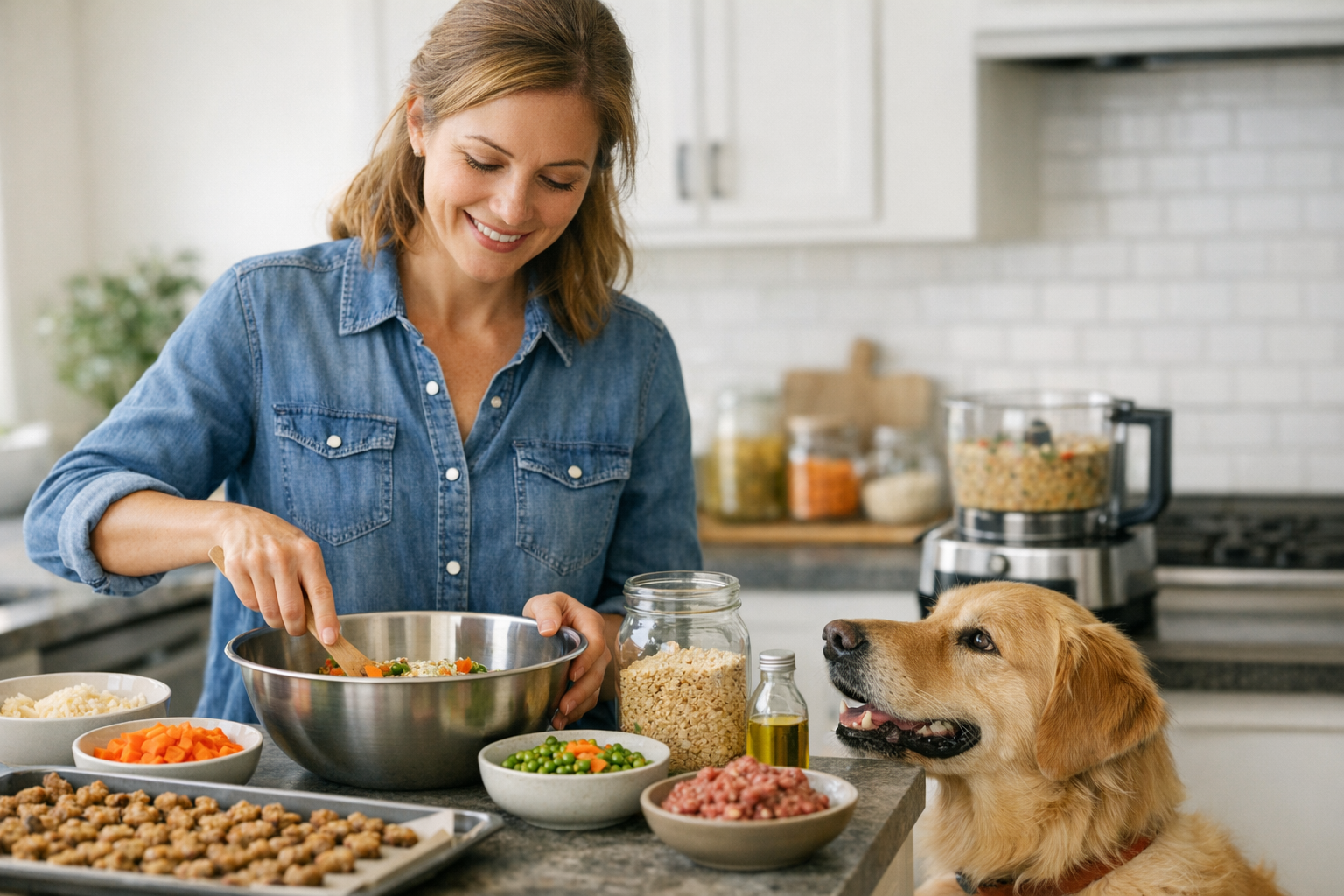
Making kibble in your own kitchen is a labor of love. It requires a lot of prep work and a very low oven setting. The goal is to create a food that is dry enough to be shelf-stable for a short period but nutritious enough to serve as a meal.
Selecting Your Ingredients
A healthy dog food needs a balance of protein, healthy fats, and carbohydrates. You should start with a high-quality protein like ground turkey, lean beef, or chicken. Avoid fatty cuts of meat. Fat can go rancid quickly in homemade dry food.
For carbohydrates and fiber, many owners use sweet potatoes, carrots, lentils, or brown rice. You can also add dog-safe fruits like apples or blueberries for extra antioxidants. Avoid onions, garlic, grapes, and raisins, as these are toxic to dogs.
The Puree Method
The most common way to make homemade kibble is to create a thick puree. This ensures that your dog cannot pick out the meat and leave the vegetables behind.
Step 1: Cook your proteins and grains separately until they are soft. Step 2: Steam your vegetables until they are tender. Step 3: Combine the cooked ingredients in a food processor. Step 4: Add a small amount of oil, such as fish oil or flaxseed oil, and pulse until you have a thick paste. Step 5: Spread the paste onto a parchment-lined baking sheet about a quarter-inch thick.
Baking and Drying
Preheat your oven to a low temperature, around 300 or 325 degrees Fahrenheit. Bake the sheet for about 45 minutes. At this point, the mixture should be firm enough to handle. Take it out and use a pizza cutter or a knife to slice the sheet into small, bite-sized squares.
Put the squares back in the oven and lower the temperature to 250 degrees. You want to dehydrate the pieces rather than brown them. This can take another hour or more. The final result should be hard and crunchy. It should feel like a thick cracker or a piece of dry pita bread.
Key Takeaway: Homemade dry food lacks the preservatives of commercial kibble. It must be stored in the refrigerator and used within ten days, or kept in the freezer for longer storage.
Dehydrating as an Alternative
If you are an active hiker or backpacker, you might want to make dehydrated dog food. This is slightly different from kibble. It focuses on removing as much water as possible from whole ingredients. This makes the food very light to carry. You can then rehydrate it with warm water on the trail.
For this method, you use lean meats sliced very thin. You can also use a jerky gun for ground meats. Dehydrate the meat at a high setting, usually around 160 degrees, for several hours. You can do the same with vegetables like green beans and sweet potatoes. When you are ready to feed your dog, simply soak the dried pieces in water until they soften, and consider browsing our freeze-dried dog food hub for a similar lightweight option.
The Importance of Nutritional Balance
One of the biggest risks of making your own dry dog food is nutritional deficiency. Commercial dog foods are formulated to meet AAFCO (Association of American Feed Control Officials) standards. These standards ensure that your dog gets the right ratio of calcium to phosphorus, as well as essential vitamins like D and E.
If you feed a purely homemade diet, your dog may miss out on trace minerals. This can lead to bone issues, skin problems, or organ dysfunction over time. Most experts recommend adding a high-quality multivitamin or a specific meal balancer to any homemade recipe.
Vet Tip: Before switching your pet to a homemade diet, consult with your veterinarian or a board-certified veterinary nutritionist. They can help you create a recipe that meets your dog's specific life stage and health needs, ensuring they receive all necessary nutrients.
Why Quality Ingredients Matter
Whether you buy your food or make it, the quality of the raw materials determines the health of your dog. We carefully curate the brands we carry to ensure they use trustworthy sources. Look for foods that list a specific meat as the first ingredient rather than a generic "meat by-product."
In commercial dry food, you will often see "meals" like chicken meal. This is actually a highly concentrated form of protein. The manufacturer has already removed the water from the meat before adding it to the dough. This allows for a higher protein content in each crunchy bite. If you are comparing simpler ingredient lists, take a look at our single ingredient dog treats for an easy place to start.
Managing Health Conditions with Diet
Sometimes, the reason you want to make your own food is to manage a medical condition. If your dog has chronic kidney disease, food allergies, or severe inflammatory bowel disease, their diet is their medicine.
For these situations, a homemade diet can be helpful because you can eliminate every possible trigger. However, it can be difficult to get the balance right. Our pet pharmacy offers a range of prescription diets through our partnership with Pet's Choice. These diets, such as Farmina Vet Life, are formulated for specific medical needs. They offer the convenience of dry food with the precision of medical science. If your vet has prescribed a specific diet, you can easily fulfill that need through us.
Storage and Safety
Storage is the most overlooked part of making dry dog food. Commercial kibble uses mixed tocopherols (Vitamin E) or other preservatives to keep the fats from spoiling. Homemade food does not have these protections.
- Always let homemade kibble cool completely before bagging it.
- Store homemade batches in the refrigerator for up to 10 days.
- For larger batches, use a vacuum sealer and store them in the freezer.
- If you notice a sour or "off" smell, throw the batch away immediately.
Rancid fats are not just unappealing. They can cause digestive upset and long-term health issues for your dog. If you are using commercial food, keep the bag inside a sealed plastic container to maintain freshness.
Choosing the Right Gear
If you decide to start making your own food or treats, you will need some basic kitchen equipment. A high-quality food processor is essential for getting the right consistency for kibble batter. You might also want a dedicated dehydrator if you plan on making a lot of dried snacks or trail meals.
For those who decide that the commercial route is better for their busy schedule, choosing the right bowls and storage bins is the next step. Our dog bowls and feeders collection also offers elevated feeders. These are great for older dogs who might find it difficult to lean down to a bowl on the floor.
Transitioning Your Dog to New Food
Regardless of how the food is made, you must never switch your dog's diet overnight. Their digestive systems are sensitive to sudden changes in protein sources and fiber levels. A sudden switch can lead to vomiting or diarrhea.
Step 1: Mix 25% of the new food with 75% of the old food for three days. Step 2: Move to a 50/50 mix for the next three days. Step 3: Feed 75% new food and 25% old food for another three days. Step 4: Transition to 100% of the new food.
Watch your dog's stool and energy levels during this time. If you notice any issues, slow down the transition. This is especially important when moving from a processed commercial diet to a fresh homemade diet. For more on switching routines, our Autoship programme can also help you keep a steady supply on hand.
Making Treats Instead of Meals
If the idea of balancing a full meal feels too daunting, consider making dry dog treats instead. This allows you to control the ingredients without the pressure of providing 100% of their daily nutrition. You can use the same baking and drying method to make biscuits or jerky. This is a great way to reward your dog with fresh, whole foods while still relying on a balanced commercial kibble for their main meals.
We carry a variety of healthy treats from brands like Stella and Chewy's and Zesty Paws that use similar high-quality ingredients. Combining homemade treats with a trusted commercial dry food often provides the best of both worlds for many owners, and our dog treats collection is a helpful place to browse options.
Bottom line: Making dry dog food at home requires careful pureeing, low-temperature baking, and a strict focus on nutritional balance to keep your pet healthy.
The Role of Supplements
Even the best homemade dry food can benefit from supplementation. Glucosamine and chondroitin are popular for joint health, especially in larger breeds. Omega fatty acids support a shiny coat and healthy skin. If you are making your own food, you can fold these supplements into the batter before baking, as long as the oven temperature remains low.
If you find that your dog needs more support than a standard diet provides, check out our dog healthcare category. From calming aids to digestive enzymes, we have options that can be easily added to your dog's daily routine.
Understanding Labels
When you are looking at how dry dog food is made, learning to read a label is a superpower. Ingredients are listed by weight. In commercial food, the first few ingredients represent the bulk of what your dog is eating.
Be wary of "split" ingredients. A manufacturer might list "corn gluten meal," "flour," and "whole corn" separately so that meat can stay at the top of the list. When added together, the corn might actually outweigh the meat. When you make your own food, you don't have to worry about these marketing tactics. You know exactly what the ratios are.
Summary of the Process
Creating dry dog food is all about removing moisture. Whether it is through the high-pressure environment of an extruder or the slow, dry heat of a home oven, the goal is the same. You want a product that provides crunch for dental health and stability for easy storage.
- Commercial food uses extrusion for efficiency and balance.
- Baked food offers a denser, less processed alternative.
- Homemade kibble requires pureeing ingredients and long drying times.
- Dehydration is perfect for lightweight, nutrient-dense travel food.
- Nutritional balance is the most critical factor for long-term health.
Making your own food can be a rewarding experience that strengthens the bond between you and your dog. It gives you a front-row seat to their nutrition and health. However, it is a significant time commitment and requires careful planning.
At BaxterBoo, we are here to support your journey, no matter which path you choose. We offer the high-quality foods, supplements, and gear you need to keep your dog thriving. If you find that the homemade route is too complex, our wide selection of trusted brands ensures you can still find a diet that meets your high standards. Our MVP Rewards programme also helps you save on these premium options, making it easier to provide the best for your pet.
FAQ
Is homemade dry dog food better than store-bought kibble?
Homemade food allows you to control every ingredient, which is excellent for dogs with severe allergies or sensitivities. However, store-bought kibble is scientifically formulated to be nutritionally complete and balanced. If you choose to make your own, you must work with a vet to ensure your dog is not missing essential vitamins and minerals.
How long does homemade dry dog food last?
Because it lacks the specialized preservatives and packaging of commercial food, homemade dry dog food is not shelf-stable at room temperature. You should store it in the refrigerator for no more than ten days. For longer storage, keep it in the freezer and thaw small portions as needed.
Can I make dry dog food without an oven?
The most effective way to make dry food at home without an oven is to use a food dehydrator. A dehydrator uses low heat and consistent airflow to remove moisture over several hours. This is actually preferred by some owners as it preserves more heat-sensitive nutrients than a standard oven might.
What is the most important ingredient in dry dog food?
High-quality animal protein is the most important component for most dogs. This provides the essential amino acids they need for muscle maintenance and immune function. When making your own or buying a bag, the protein source should be clear and identifiable, such as "deboned chicken" or "lamb meal."






