
 Save 15% on your 1st Autoship learn more

 Email us
 Live Chat
 FAQs
FAQs





Introduction
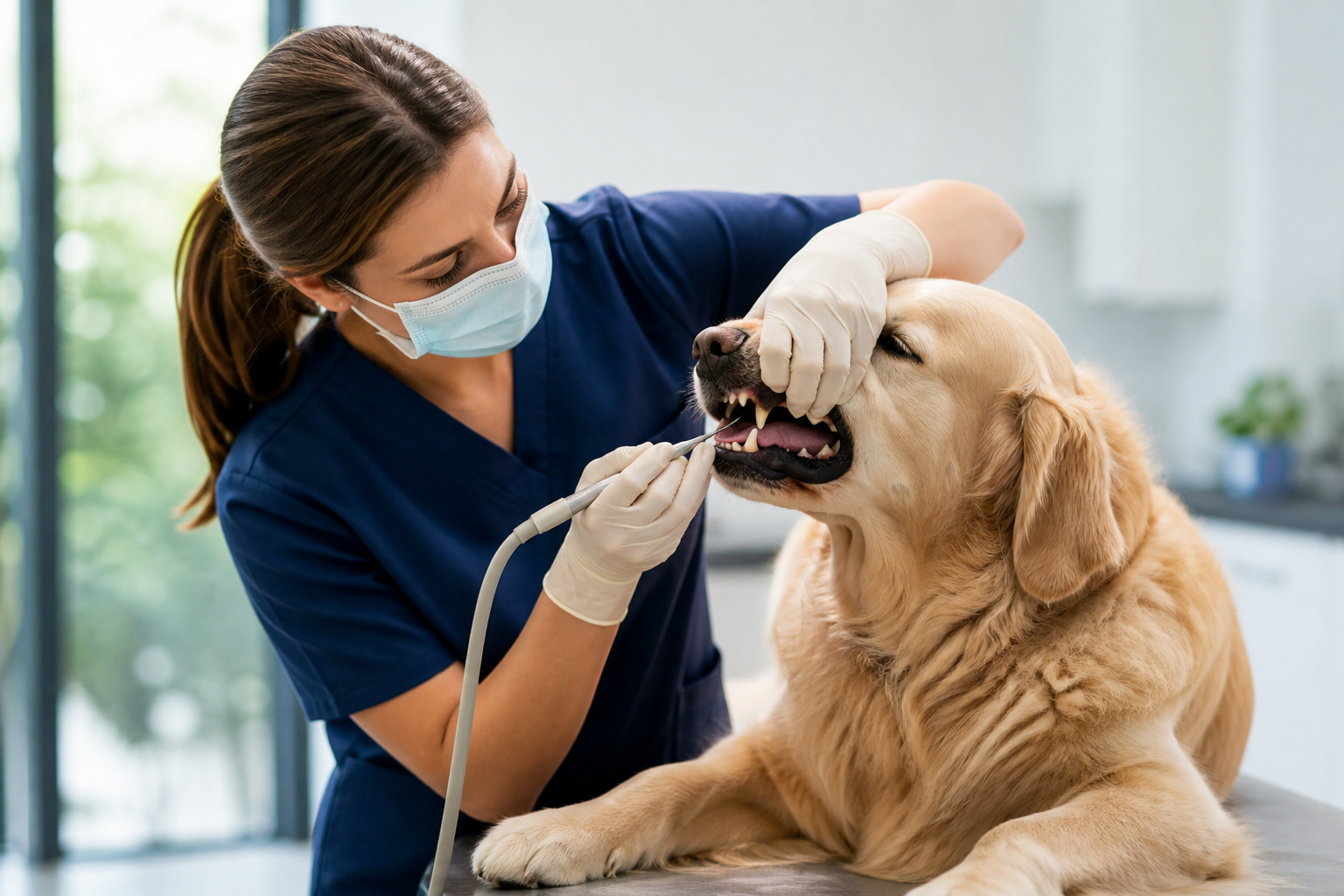
You might notice a change in your dog’s breath during a routine snuggle. That "dog breath" is often the first sign that plaque and tartar are building up. While brushing at home is helpful, it cannot reach the bacteria hiding under the gumline. A professional dental cleaning is the only way to remove hardened tartar and prevent serious health issues like tooth loss or infections. At BaxterBoo, we know that scheduling a veterinary dental visit can feel overwhelming for many pet owners. This guide explains exactly what happens during the procedure and why it is a vital part of your dog's wellness routine. Understanding the process helps you make the best decisions for your dog’s long-term health.
Quick Answer: A veterinary dental cleaning involves a multi-step process including an oral exam, digital X-rays, and scaling to remove tartar above and below the gumline. The procedure is performed under general anesthesia to ensure the dog remains still, pain-free, and safe while the vet uses specialized tools to polish and clean every tooth.
Why Anesthesia Is Necessary for Dental Cleaning
One of the most common questions we hear is why dogs must be put under anesthesia for a cleaning. Humans can sit still in a dentist’s chair and follow instructions to "open wide." Dogs cannot. Anesthesia allows the veterinary team to do a thorough job without causing your dog stress or pain.
Safety is the primary reason for anesthesia. When a vet scales a dog's teeth, they use sharp instruments and ultrasonic tools. If a dog moves suddenly, those tools could cause serious injury to the gums or tongue. Additionally, anesthesia allows the vet to place an endotracheal tube. This tube protects your dog's airway from the water and debris generated during the cleaning process.
Without anesthesia, it is impossible to clean beneath the gumline. This is where the most damaging bacteria live. A "non-anesthetic" cleaning might make the teeth look white, but it leaves the dangerous plaque behind. This can give owners a false sense of security while dental disease continues to progress out of sight. For additional context about warning signs, read about how dogs can hide dental disease.
Vet Tip: Always ask your veterinarian about their specific anesthesia monitoring protocols. A professional team will monitor your dog’s heart rate, blood pressure, and oxygen levels throughout the entire procedure to ensure they stay safe and stable.
The Pre-Dental Preparation Phase
The process starts long before your dog enters the surgical suite. Your vet will perform a physical exam to check for any immediate concerns. They will also look at your dog’s heart and lungs to ensure they are healthy enough for the procedure.
Blood work is a standard part of the preparation. These tests check your dog’s liver and kidney function. Since these organs process the anesthesia, the vet needs to know they are working correctly. If the blood work shows any abnormalities, the vet might adjust the anesthesia protocol or postpone the cleaning.
Once the vet clears your dog for the procedure, they often administer a sedative. This helps your dog relax before the general anesthesia is started. Many clinics also use local nerve blocks if they anticipate needing to pull a tooth. This allows for a lower level of general anesthesia and a more comfortable recovery.
The Step-by-Step Procedure
Once your dog is safely under anesthesia, the detailed work begins. The veterinary technician and the vet work together to evaluate every part of the mouth. You can also explore our dog dental care category for products that support oral care between professional visits.
Step 1: Digital Dental X-Rays
The vet often starts with X-rays. Since 60 percent of a dog's tooth is hidden beneath the gumline, a visual exam is not enough. X-rays can reveal abscesses, bone loss, and broken roots that are invisible to the naked eye. This step is crucial for identifying painful conditions that the dog may be hiding.
Step 2: Scaling Above and Below the Gumline
The vet uses an ultrasonic scaler to vibrate tartar off the teeth. This tool uses high-speed vibrations and a cooling water spray. The technician carefully cleans the visible surfaces of the teeth. Then, they use hand scalers to reach under the gums. Removing this subgingival plaque is the most important part of the cleaning.
Step 3: Probing and Charting
The vet uses a dental probe to measure the "pockets" around each tooth. Deep pockets indicate that the attachment between the tooth and the gum is breaking down. The vet records these measurements in a dental chart, similar to how a human dentist tracks your oral health.
Step 4: Polishing
Scaling leaves microscopic scratches on the tooth enamel. These rough spots are the perfect place for new plaque to attach. To prevent this, the vet polishes the teeth using a specialized paste. This creates a smooth surface that is harder for bacteria to grip.
Step 5: Final Irrigation and Assessment
The mouth is rinsed to remove any remaining debris or polishing paste. The vet then does a final check of every tooth. If any teeth are severely diseased or fractured, the vet will determine if an extraction is necessary.
Managing Extractions and Advanced Care
During the cleaning, the vet may find a tooth that is beyond repair. This usually happens if there is significant bone loss or an infection at the root. In these cases, the tooth must be removed to stop the pain and prevent the infection from spreading.
Extractions are surgical procedures. The vet will use local anesthesia to numb the area and carefully remove the tooth. They often close the site with dissolvable stitches. While it sounds scary to have a dog lose a tooth, they are much happier and more comfortable once a diseased tooth is gone.
If your dog requires antibiotics or specialized pain medication after an extraction, our pet pharmacy can help. Through our partnership with Pet's Choice, we offer FDA-approved medications and prescription diets. Having these items delivered to your door makes the recovery process much easier for you and your dog.
Key Takeaway: A professional dental cleaning is a medical procedure, not just a cosmetic one. It addresses the health of the entire mouth, including the structures hidden beneath the gums that cause the most pain and inflammation.
Post-Procedure Recovery and Aftercare
Most dogs go home the same day as their dental cleaning. They may be a little groggy for 12 to 24 hours as the anesthesia wears off. Your vet will provide specific instructions for feeding and activity.
If your dog had a routine cleaning with no extractions, they can usually go back to their regular dry food. However, if teeth were removed, you may need to feed soft food for several days. This allows the surgical sites to heal without irritation. You should also skip hard chew toys or bones for a week or two.
Keep an eye on your dog for any signs of discomfort. While some lethargy is normal, they should still be interested in water and light snacks. If you notice any redness, swelling, or unusual discharge from the mouth, contact your vet immediately.
- Offer small amounts of water frequently.
- Feed a soft meal or softened kibble as directed.
- Keep your dog in a quiet, indoor space.
- Monitor for any pawing at the mouth.
- Follow the full course of any prescribed medications.
Comparing Professional Cleaning vs. At-Home Care
It is helpful to understand how professional visits work alongside your daily routine. Both are necessary, but they serve different purposes. For more ideas, review pet dental care tips for brushing, treats, and water additives.
| Feature | At-Home Brushing | Professional Cleaning |
|---|---|---|
| Purpose | Prevents new plaque buildup | Removes hardened tartar |
| Reach | Visible surfaces only | Above and below the gumline |
| Frequency | Daily is best | Usually every 1–2 years |
| Equipment | Pet toothbrush and paste | Ultrasonic scalers and X-rays |
| Pain Relief | None needed | Anesthesia and nerve blocks |
How Often Does a Dog Need a Cleaning?
The frequency of dental cleanings depends on your dog’s age, breed, and genetics. Smaller breeds like Pugs, Yorkies, and Chihuahuas often need more frequent cleanings. Their teeth are crowded into small mouths, which allows plaque to build up quickly.
Most vets recommend an annual dental checkup. During this exam, they can tell you if it is time for a professional cleaning. Some dogs may go two years between cleanings, while others need them every six to nine months.
Starting cleanings early is a smart financial move. It is much less expensive to maintain a healthy mouth than it is to treat advanced periodontal disease. Regular cleanings prevent the need for multiple extractions and long courses of antibiotics later in life.
Supporting Oral Health Between Visits
Once your dog’s teeth are clean and polished, the goal is to keep them that way for as long as possible. Plaque begins to reform within hours of a cleaning. Daily brushing is the gold standard for home care. You must use a toothpaste specifically made for dogs, as human toothpaste contains ingredients like xylitol that are toxic to pets.
In addition to brushing, you can use dental chews and treats. Brands like Greenies, which we carry at BaxterBoo, are designed to help scrub the teeth as the dog chews. These treats are a great way to reward your dog while supporting their oral health.
You can also look for water additives or dental wipes if your dog is resistant to a toothbrush. While these are not as effective as brushing, they are better than doing nothing. The most important thing is consistency. Every bit of plaque you remove at home is plaque that won't turn into tartar. For more product ideas, see these dental chews for dogs.
Bottom line: Professional cleanings remove the "debt" of tartar buildup, while at-home care manages the daily "interest" of new plaque.
Signs Your Dog Needs a Dental Appointment
Do not wait for your dog to stop eating before scheduling a dental exam. Dogs are incredibly stoic and will often eat even when they have severe dental pain. You have to look for more subtle signs that something is wrong.
Bad breath is the most obvious indicator. If the smell is strong enough to notice from across the room, there is likely an infection or significant tartar present. You may also see yellow or brown deposits on the teeth near the gumline.
Other signs include red or bleeding gums. If you notice blood on a chew toy or in their water bowl, that is a sign of gingivitis. Some dogs may also drop their food or tilt their head while chewing. If you see any of these behaviors, it is time to consult your veterinarian for a professional assessment.
- Foul odor from the mouth.
- Loose or missing teeth.
- Discolored teeth (brown or grey).
- Receding gumline.
- Swelling under the eye (often a sign of a root abscess).
Conclusion
A professional veterinary dental cleaning is an essential part of keeping your dog healthy and comfortable. By removing tartar from below the gumline and identifying hidden problems with X-rays, your vet can prevent pain and systemic health issues. While the procedure requires anesthesia, the safety protocols used by modern veterinary clinics make it a very low-risk process. We recommend talking to your vet about your dog’s specific dental needs during their next wellness exam. To help keep those teeth clean between visits, check out our collection of dental treats and toothbrushes at BaxterBoo. Our MVP Rewards program also helps you earn points on every dental care purchase, making it easier to stay consistent with your dog's at-home routine.
FAQ
How much does it cost to have a vet clean a dog's teeth?
The cost of a dental cleaning varies based on your location and the complexity of your dog's needs. A basic cleaning typically includes anesthesia, the exam, scaling, and polishing. If your dog needs blood work, X-rays, or extractions, the total cost will increase accordingly.
Is anesthesia safe for my older dog?
Age is not a disease, but it does mean your vet will take extra precautions. For senior dogs, vets often perform more comprehensive pre-anesthetic blood work and may use different types of anesthesia. Most senior dogs handle the procedure very well and feel much better once dental pain is addressed.
Can I clean my dog's teeth myself without a vet?
You can and should brush your dog's teeth at home to prevent plaque. However, you cannot perform a professional cleaning yourself. Only a veterinarian has the training and equipment to safely remove tartar from under the gumline and perform the necessary X-rays to check for hidden disease.
How long does a dog dental cleaning procedure take?
A routine cleaning usually takes between 45 and 90 minutes. This includes the time for the vet to perform the exam, take X-rays, and complete the scaling and polishing. If the vet finds problems that require extractions, the procedure may take longer to ensure the surgery is done correctly.






