
 Save 15% on your 1st Autoship learn more

 Email us
 Live Chat
 FAQs
FAQs





Introduction
You are reaching into the pantry to scoop out breakfast for your dog. You notice the kibble feels a bit more oily than usual. Perhaps the scent is slightly off, like old paint or stale crackers. You wonder exactly how long that bag has been sitting open. It is a common scenario for pet parents who buy in bulk to save money or time. At BaxterBoo, we know that providing the best nutrition starts with understanding how to keep that food fresh. For a place to compare options, start with our dry dog food category. This post explains the actual timeline for kibble safety and how to protect your dog from spoiled meals. Knowing when to toss a bag is essential for your dog's health and your own peace of mind. We will cover storage secrets, signs of spoilage, and how to manage your pet's food supply effectively.
The Standard Timeline for Kibble Freshness
The general rule for dry dog food is to use it within four to six weeks after opening the bag. While many people believe dry kibble is shelf stable for months, the reality is much shorter. The moment air hits the food, the countdown begins.
The 6-Week Golden Rule
Most manufacturers design their packaging to keep food fresh until the seal is broken. Once you open that bag, oxygen begins to degrade the nutrients. Vitamins can lose their potency. Fats begin to oxidize and turn rancid. While the food might not look different after eight weeks, the quality has dropped significantly. If you have a small dog, you may find that a large bag lasts much longer than six weeks. In these cases, it is often safer to buy smaller bags more frequently. This ensures your dog gets the full nutritional benefit of every morsel.
Why the Best By Date Changes Once Opened
Every bag of food we sell has a "best by" date printed on the side or bottom. This date refers only to the unopened package. Manufacturers use nitrogen flushing or specialized seals to keep oxygen out during shipping and storage. These methods keep the food at peak quality for 12 to 18 months. As soon as you cut the top of the bag, that date essentially becomes irrelevant. You should treat the opening date as the new starting point for your timeline.
Quick Answer: Dry dog food should be consumed within 4 to 6 weeks after opening to ensure maximum freshness and safety. While it may not look spoiled immediately, the fats and vitamins begin to degrade as soon as the bag is unsealed.
The Three Enemies of Dry Dog Food
To understand why food goes bad, you have to look at the environment. Three main factors accelerate the spoilage of kibble. These are oxygen, moisture, and heat. Controlling these elements is the key to making your dog's food last as long as possible.
Oxygen and Oxidation
Oxygen is the primary cause of food spoilage. When oxygen interacts with the fats in dog food, it causes a chemical reaction called oxidation. This process creates free radicals and causes the fats to become rancid. Rancid fats do more than just taste bad. They can lead to digestive upset or more serious long term health issues. Most premium dog foods use natural preservatives like vitamin E (mixed tocopherols) or rosemary extract. These are healthier for your dog than chemical preservatives, but they do not last as long once exposed to air.
Humidity and Moisture
Moisture is another major concern. If you store your dog's food in a damp area like a basement or a garage, you are inviting trouble. High humidity can cause the kibble to absorb moisture. This creates the perfect breeding ground for mold and bacteria. Mold is not always visible to the naked eye in its early stages. Mycotoxins, which are toxic substances produced by fungi, can develop in moist dog food and cause severe illness.
Heat and Light
Storage temperature plays a huge role in how fast food degrades. You should keep your dog's food in a cool place, ideally under 80 degrees Fahrenheit. High heat causes fats to break down much faster. It also provides a better environment for any lingering bacteria to multiply. Direct sunlight is also a problem. Light can degrade certain vitamins and cause the temperature inside the bag or container to spike.
Key Takeaway: Oxygen, heat, and moisture are the primary drivers of food spoilage. Keeping kibble in a cool, dry, and dark environment is the best way to preserve its nutritional integrity.
How to Tell if Dog Food Has Gone Bad
You cannot always rely on your eyes to tell if food is safe. Sometimes the changes are subtle. Being proactive about checking the food at every meal can save your dog from a bellyache or a trip to the vet.
The Smell Test
Your nose is your best tool. Fresh dog food usually has a nutty or meaty aroma. As fats go rancid, the smell changes. It might start to smell like old oil, sour cardboard, or even metallic. If the scent makes you wrinkle your nose, it is likely past its prime. Do not assume your dog will refuse bad food. Some dogs will eat almost anything, even if it is spoiled.
Visual Changes and Pests
Look for any signs of mold, which may appear as white, green, or black fuzz. You should also check for "clumping" of the kibble. If the pieces are sticking together, moisture has gotten into the bag. Check for pests like grain mites or weevils. These tiny insects thrive in grain based foods that have been open too long. If you see any movement in the bag, the entire contents must be discarded.
Your Dog’s Intuition
If your dog is usually an enthusiastic eater but suddenly turns their nose up at the bowl, pay attention. Dogs have a much stronger sense of smell than we do. They may detect rancidity or mold long before you can. Never force a dog to eat food they are rejecting. Inspect the bag immediately and check the opening date.
Vet Tip: If your dog shows signs of vomiting, diarrhea, or lethargy after eating, consult your veterinarian immediately. These could be symptoms of food-borne illness or mycotoxin poisoning from spoiled kibble.
Proper Storage Techniques for Maximum Freshness
How you store the food is just as important as how fast you use it. Many pet owners make common mistakes that actually shorten the life of the kibble. Following a few simple steps can keep the food crunchy and safe.
Why the Original Bag Is Best
It is tempting to dump the kibble directly into a large plastic bin. However, we recommend keeping the food inside its original bag. Manufacturers spend a lot of money developing bags with specialized liners. These liners are designed to keep the fats inside and the oxygen out.
When you dump food into a plastic container, the oils from the kibble can seep into the plastic. Over time, these oils turn rancid. Even if you wash the container, some residue can remain and contaminate the next batch of food.
Step 1: Keep the food in the original bag. Step 2: Roll the top of the bag down tightly to remove excess air. Step 3: Use a heavy duty clip to seal the bag shut. Step 4: Place the entire bag inside an airtight container for extra protection.
Using Airtight Containers Correctly
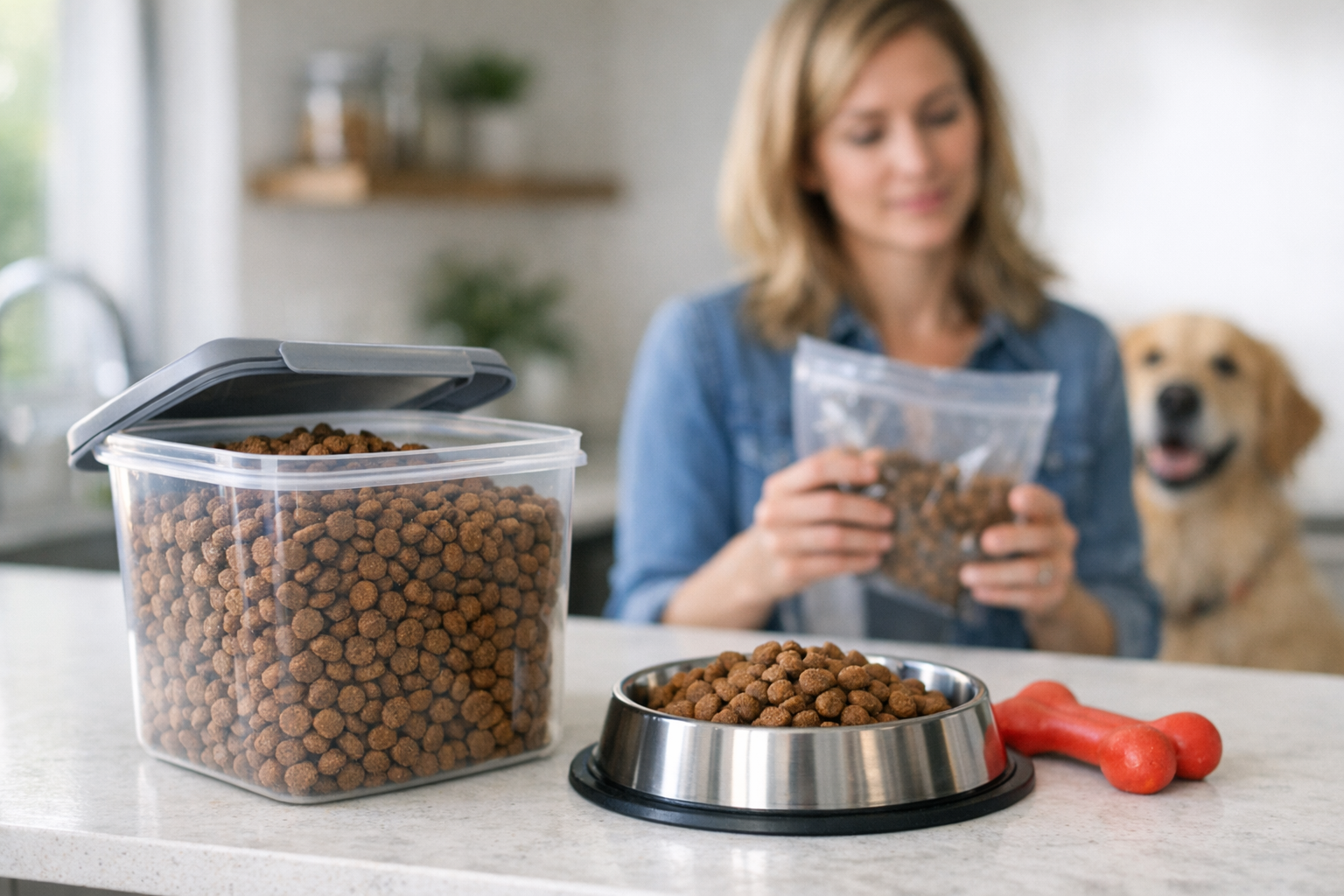
An airtight container is a great second line of defense. It keeps out pests and prevents your dog from sneaking extra snacks. Choose a container made of BPA-free plastic or stainless steel. The most important feature is a rubber gasket on the lid. This seal creates a true barrier against the environment. If you do choose to pour food directly into a container, you must wash it with hot, soapy water and dry it completely before every new bag. Never "top off" an old batch of food with a new one.
Location Matters
Where you put the container is vital. Avoid the garage, as temperature swings and exhaust fumes can ruin the food. A kitchen pantry or a climate controlled closet is the best choice. Keep the container off the floor if possible to prevent moisture from wicking up from the ground.
Key Takeaway: Always keep kibble in its original bag and place that bag inside an airtight container. Store the container in a cool, dry area of your home rather than a garage or basement.
Health Risks of Spoiled Food
Feeding expired or spoiled food is not just about a bad taste. It poses real health risks to your canine companion. Bacteria like Salmonella and E. coli can grow in food that has been exposed to moisture or pests. These pathogens can cause severe gastrointestinal distress for your dog. They can also be passed to human family members who handle the food.
Mycotoxins from mold are even more dangerous. These toxins can cause liver failure or neurological issues in dogs. Because you cannot always see the mold, sticking to the six week timeline is your best defense. Additionally, rancid fats can lead to chronic inflammation. This may contribute to issues like skin allergies or joint pain over time. If you want a broader next step for wellness support, browse our dog healthcare category.
Prescription Diets and Special Health Needs
If your dog has a sensitive stomach or a chronic health condition, they might be on a specialized diet. These foods often contain specific ratios of fats and fibers that can be even more sensitive to oxidation. For dogs managing allergies, kidney issues, or obesity, food freshness is a critical part of their treatment plan.
Our pharmacy for dogs offers a wide selection of prescription pet foods and medications. If your dog has a reaction to spoiled food or requires a therapeutic diet, we can help you manage those needs. Always talk to your vet about which prescription diet is right for your dog's specific symptoms.
How to Manage Your Food Supply
Preventing waste is good for your wallet and your dog's health. The goal is to ensure the last scoop in the bag is as fresh as the first. This requires a bit of planning and the right shopping habits.
Buying the Right Bag Size
It is often much cheaper per pound to buy the largest bag available. However, if that bag takes your dog three months to finish, you are not actually saving money. You are likely feeding stale, nutritionally depleted food for the last six weeks of that bag.
Calculate how much your dog eats per day. Multiply that by 30 to see how much food you need for a month. Buy the bag size that most closely matches that number. For small breeds, this might mean buying 5-pound bags. For large breeds, a 30-pound bag might be perfect.
The Benefits of Autoship
One of the easiest ways to ensure freshness is to use our Autoship programme. Instead of buying a massive bag to avoid trips to the store, you can set up recurring deliveries of smaller, fresher bags. You will save on every order and receive a free MVP Gold membership. This allows you to time your deliveries so a new, fresh bag arrives just as the old one is hitting that six week mark.
Our MVP Rewards programme also helps you earn money back on these frequent purchases. It is a great way to prioritize your dog's health without overspending. By shopping more often, you guarantee that the kibble in your pantry is always at its peak.
Summary of Freshness Tips
Bottom line: Stick to a 6-week window for opened dry food and keep it in the original bag to protect your dog's health and the food's nutritional value.
- Check the "best by" date before buying.
- Note the date you open the bag on a piece of tape.
- Seal the original bag with a clip.
- Store food in a cool, dry pantry.
- Wash food bowls and storage containers regularly.
- Never mix old food with a fresh bag.
- Watch for changes in smell, texture, or your dog's appetite.
FAQ
Can I store dry dog food in the refrigerator to make it last longer?
While refrigeration can slow down the oxidation of fats, it is generally not recommended for dry kibble. The constant opening of the fridge door introduces humidity and condensation. This moisture can lead to mold growth inside the bag. It is much safer to store the food in a cool, dry pantry in an airtight container.
Is it safe to feed dog food that is a few days past the best by date if the bag is unopened?
The "best by" date is a manufacturer's estimate of peak quality, not necessarily a hard expiration date. If the bag is completely sealed and has been stored in a cool, dry place, the food is likely safe for a short period after that date. However, the nutritional value may begin to decline. Always inspect the food for off-smells or signs of pests before feeding.
Why does the original bag keep food fresher than a plastic bin?
Pet food bags are engineered with multiple layers, including grease-resistant liners and oxygen barriers. Plastic bins often allow oils to soak into the surface, where they can become rancid and contaminate future batches of food. Keeping the bag inside the bin provides the best of both worlds: the manufacturer's barrier and the bin's protection from pests.
Can I freeze dry dog food to extend its shelf life?
You can freeze dry dog food to keep it fresh for several months. However, you must ensure the bag is sealed completely to prevent freezer burn and moisture intake. When you take the food out to use it, let it reach room temperature before opening the bag. This prevents condensation from forming on the cold kibble, which could lead to mold.






