
 Save 15% on your 1st Autoship learn more

 Email us
 Live Chat
 FAQs
FAQs





Introduction
You stand in the pantry and look at the half-empty bag of kibble that has been sitting there for a few weeks. You might wonder if those crunchy nuggets are still as nutritious and tasty as they were when you first broke the seal. At BaxterBoo, we hear this question frequently from pet parents who want to balance the value of a large bag with the health of their dog. This post covers the specific timeline for kibble freshness and the best practices for storage. We will explain how to spot spoilage and how to keep your dog’s meals safe. Understanding these simple rules helps prevent food waste and ensures your dog gets the high quality nutrition they deserve.
Quick Answer: Most dry dog food remains fresh for 4 to 6 weeks once the bag is opened. While the manufacturer best by date applies to sealed bags, oxygen and moisture begin to degrade the food immediately after opening.
The Standard Timeline for Opened Kibble
Once you open a bag of dry dog food, the countdown for peak freshness begins. Most experts and manufacturers recommend using the entire bag within 6 weeks. Some brands may remain stable for up to 8 weeks if stored in perfect conditions, but the 4 to 6 week window is the safest for your dog.
The date printed on the bag is a best by date, not a true expiration date. This date refers to how long the food stays fresh while it is still factory sealed. Once that seal is broken, the food is exposed to the environment. Oxygen, light, and humidity all work together to break down the ingredients. If you want to compare options, start with our dry dog food collection.
If you have a small dog, it is often tempting to buy a 40 pound bag of food because it is more cost effective. However, if that bag lasts your dog four months, the food will likely be stale and less nutritious by the time you reach the bottom. It is better to buy a bag size that your dog can finish within about 30 to 45 days.
Why Freshness Matters for Your Dog
Freshness is not just about the crunch or the taste. It is primarily about the nutritional integrity of the ingredients. When dog food sits open for too long, the vitamins and minerals can begin to degrade. This means your dog might not be getting the full benefit of the premium diet you have chosen for them.
Fats and oils are particularly sensitive to time. Most high quality dog foods, such as those from brands like our selection of NutriSource products, contain healthy fats that are essential for skin and coat health. When these fats are exposed to air, they begin to oxidize. This process makes the fats turn rancid, which can lead to a sour smell and a bitter taste that might cause your dog to refuse their meals.
Key Takeaway: Aim to finish any opened bag of dry dog food within 6 weeks to ensure your dog receives the full nutritional value of the ingredients.
The Science of Oxidation and Rancidity
Oxidation is a chemical reaction that occurs when oxygen interacts with the fats in the kibble. This is the same process that causes an apple to turn brown or a piece of metal to rust. In dog food, oxidation is the primary enemy of shelf life.
Manufacturers use preservatives to slow this process down. Many premium brands use natural preservatives like tocopherols, which are forms of Vitamin E. While these are healthier for your dog than synthetic chemicals, they do not last forever. Once the bag is open, the tocopherols begin to work overtime to protect the fats. Eventually, they are used up, and the oxidation speeds up.
Humidity is another factor that accelerates spoilage. In a damp environment, moisture can enter the bag and encourage the growth of mold or bacteria. This is why we recommend keeping food in a climate controlled area of your home rather than a damp basement or a hot garage.
The Importance of the Original Packaging
It is a common mistake to pour the entire bag of dog food into a large plastic bin. While bins are great for keeping out pests, the bag itself is actually a highly engineered piece of technology. Modern pet food bags are designed to be a barrier against oxygen and moisture. Many have specialized linings that help keep the oils inside the kibble from seeping out.
When you pour food directly into a plastic container, the plastic can actually absorb the fats from the kibble. Over time, these fats can become rancid within the pores of the plastic. Even if you wash the bin, the residue can linger and spoil the next batch of fresh food you pour in.
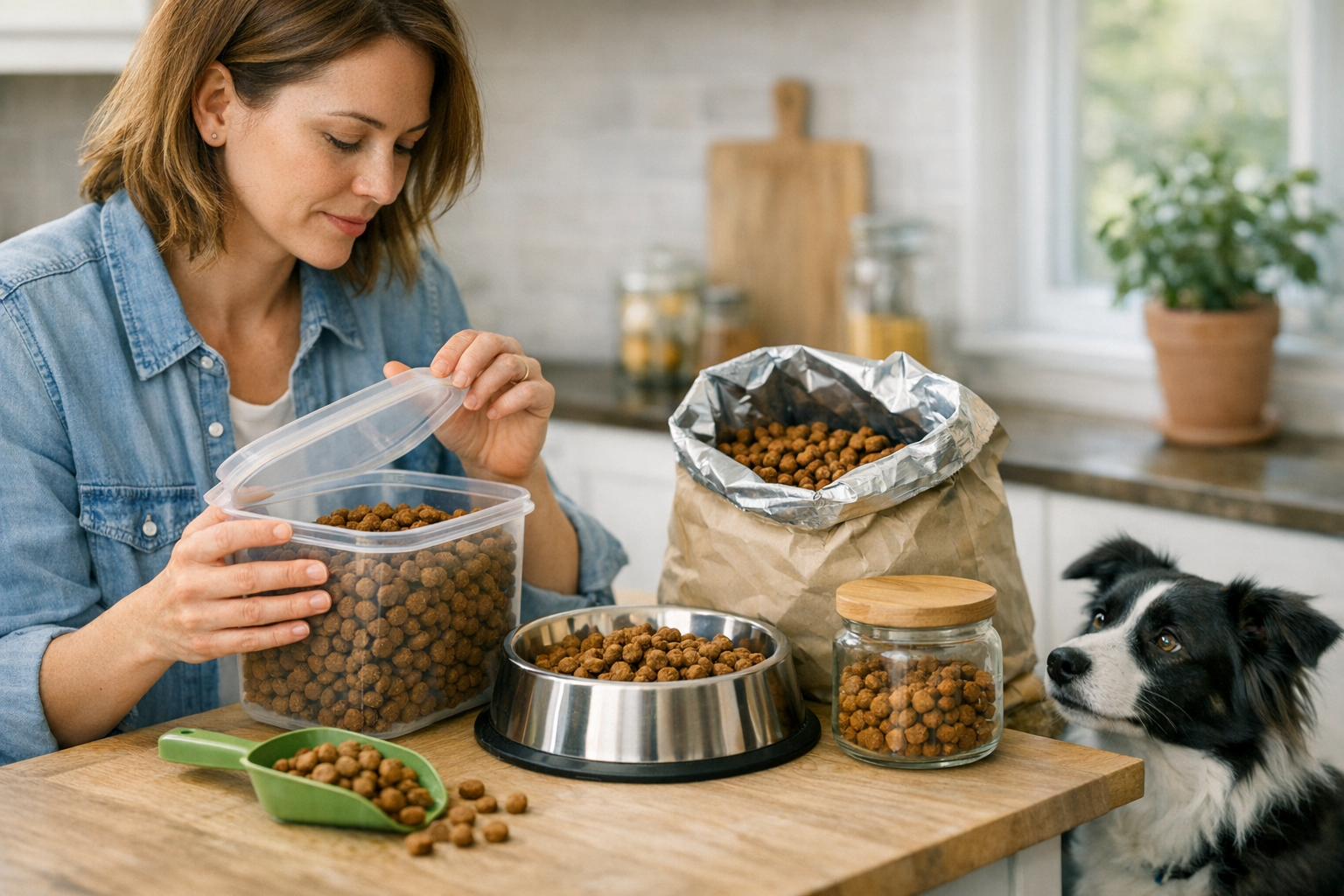
We recommend keeping the food inside the original bag and then placing the entire bag inside an airtight container. This gives you two layers of protection. It also keeps the bag handy so you can reference the lot number and best by date if there is ever a product recall. For dogs with special dietary needs, our pet pharmacy can be a helpful place to look for prescription options.
Benefits of Keeping the Original Bag
- Maintains the manufacturer's moisture barrier.
- Keeps the lot number and expiration date accessible.
- Prevents fat and oil buildup on the inside of storage bins.
- Provides a cleaner storage solution that requires less frequent bin scrubbing.
Where You Store Food Matters
The environment surrounding your dog's food bag is just as important as the container itself. Heat is a major catalyst for spoilage. If you store dog food in a spot that gets direct sunlight or near a hot appliance like a dishwasher, the fats will go rancid much faster.
The ideal storage location is a cool, dry, and dark place. A kitchen pantry or a dedicated closet is usually the best choice. Avoid storing food on the floor in a garage or shed. These areas experience wide temperature swings and are often high in humidity. They are also much more accessible to rodents and insects that are looking for a free meal.
Vet Tip: If your dog suddenly refuses to eat their usual food, check the bag for a sour or "paint-like" smell. Dogs have a much stronger sense of smell than humans and can often detect rancid fats before we can see or smell any change.
Identifying Spoiled Dog Food
Sometimes food can go bad before the 6 week mark if the storage conditions were poor. You should perform a quick check of the food every few days as you scoop it out. Use your senses to look for signs that something is wrong.
The most common sign is a change in odor. Fresh kibble usually has a mild, grainy, or meaty scent. If the bag starts to smell like old oil, sour milk, or chemicals, it is time to throw it away. You should also look for physical changes. Mold might appear as a fuzzy growth or a white, dusty coating on the nuggets.
Check for signs of pests as well. Small moths, weevils, or tiny black beetles can sometimes find their way into a poorly sealed bag. If you see any movement or fine webbing in the corners of the bag, the food is contaminated and should not be fed to your dog.
Risks of Feeding Expired or Stale Food
Feeding your dog food that is past its prime can lead to several health issues. At the very least, stale food is unpalatable. Your dog might skip meals, which can be a concern for puppies or senior dogs who need consistent calories.
More seriously, rancid fats can cause digestive upset. This often manifests as vomiting or diarrhea. In some cases, consuming rancid fats over a long period can lead to more significant health concerns, such as vitamin deficiencies or internal inflammation.
Moldy food is the most dangerous risk. Certain types of mold produce mycotoxins, which are poisonous to dogs. If a dog eats moldy kibble, they can experience tremors, seizures, or liver failure. If you suspect your dog has eaten spoiled food and they are acting lethargic or sick, you should contact your veterinarian immediately.
Key Takeaway: Spoiled food is not just a waste of money. It is a genuine health risk that can lead to severe gastrointestinal distress or toxicity.
Practical Tips for Maintaining Freshness
Keeping dog food fresh does not have to be a chore. A few small habits can make a big difference in how long your kibble stays high quality. We suggest following a simple routine every time you buy a new bag.
Step 1: Check the bag at the store. / Ensure there are no small rips or punctures before you buy.
Step 2: Note the opening date. / Write the date you opened the bag on a piece of tape and stick it to the front.
Step 3: Seal it tight. / Squeeze out as much air as possible before rolling the top down and using a heavy duty clip.
Step 4: Use a clean scoop. / Avoid using a dirty cup or your bare hands to scoop food, as this introduces bacteria and moisture.
For pet owners managing chronic conditions, our pharmacy offers prescription diets from brands like Royal Canin and Farmina Vet Life. These specialized foods are often more expensive, making proper storage even more critical to protect your investment in your dog's health.
The Role of Small Bags and Autoship
One of the easiest ways to ensure freshness is to stop buying more food than you need. While the price per pound is lower on giant bags, the cost of throwing away spoiled food can quickly cancel out those savings.
Calculate how much your dog eats per day and multiply that by 30 or 45. That is the ideal bag size for your household. If you find that you are constantly running to the store for smaller bags, consider using our Autoship programme. This allows you to have fresh food delivered on a schedule that matches your dog’s appetite. It ensures you always have a fresh bag waiting just as the old one is nearing its 6 week limit.
Bottom line: Matching your purchase size to your dog's actual consumption rate is the most effective way to prevent food spoilage.
Conclusion
Managing the freshness of your dog’s dry food is a simple but vital part of pet ownership. By keeping food in its original bag, sealing it tightly, and using it within 6 weeks, you protect the nutrients your dog needs to thrive. Remember to store the bag in a cool, dry place and always look for signs of spoilage before filling the bowl. If you are ever unsure about the safety of a bag of food, it is always better to err on the side of caution. For your next bag of premium kibble or to set up a recurring delivery, visit our dog food collection or check out our Autoship programme for extra savings and convenience.
FAQ
Can I store dry dog food in the garage?
It is not recommended to store dog food in the garage because of extreme temperature changes and high humidity. These conditions cause the fats in the food to go rancid much faster and can lead to mold growth. It is much better to keep the food in a climate controlled pantry or closet inside your home.
Should I pour the food out of the bag and into a bin?
No, it is best to keep the food inside the original bag and place the entire bag into an airtight container. The bag provides a specialized barrier against oxygen and moisture that plastic bins cannot match. This also keeps your storage bin cleaner and prevents rancid oil buildup on the plastic walls.
Is it okay to feed my dog food that smells a little bit off?
You should never feed your dog food that has a strange or sour smell. Dogs have highly sensitive noses and a change in odor usually indicates that the fats have oxidized and become rancid. Feeding rancid or spoiled food can cause stomach upset, vomiting, and diarrhea in your pet.
Does the best by date still matter after the bag is opened?
The best by date on the packaging only applies to the food while the bag is still factory sealed. Once you open the bag, the food is exposed to the air and the quality begins to decline. You should aim to use the food within 4 to 6 weeks of opening, regardless of how far away the best by date is.






