
 Save 15% on your 1st Autoship learn more

 Email us
 Live Chat
 FAQs
FAQs





Introduction
You are likely standing in your kitchen or at the store, looking at a bag of kibble and trying to do the math. Maybe you are planning a trip and need to bag up enough meals. Or perhaps you just bought a new 30-pound bag and want to know if it will actually fit in your storage container. At BaxterBoo, we talk to pet owners every day who are trying to balance their budget while keeping their dogs healthy. Knowing exactly how many cups are in a pound of food is the first step toward accurate feeding. This guide will help you understand the weight to volume ratio of various dog foods. We will cover how kibble size impacts your measurements and how to ensure your dog gets the right amount every time.
The Weight to Volume Ratio: How Many Cups Are in a Pound?
The most common answer is that one pound of dry dog food contains about 4 cups of kibble. This is a solid rule of thumb for standard, medium sized kibble. If you have a bag of food and no scale, using this 1:4 ratio will get you close enough for general planning. However, the range can actually fall anywhere between 3 and 5 cups per pound.
This variation happens because "cup" is a measure of volume while "pound" is a measure of weight. Think about a cup of lead pellets versus a cup of popcorn. They take up the same amount of space, but the weight is drastically different. Dog food works the same way. A dense, meat heavy kibble will weigh more per cup than a lighter, airier formula.
Quick Answer: On average, there are about 4 cups of dry dog food in one pound. This varies by brand and kibble size, but 4 cups is a reliable estimate for most standard recipes.
Why Kibble Density Changes Your Measurements
Density is the reason your neighbor might feed their dog two cups of food while you feed yours three, even if the dogs are the same size. Manufacturers use different processes to create kibble. Some brands use a process called extrusion that creates a more porous, puffed up texture. Other brands, like our selection of Carna4 products, or certain air dried options, are much more compact.
Kibble Size and Shape
Small breed formulas often have very tiny pieces. These small bits pack together tightly in a measuring cup with very little air between them. Because there is less empty space, a cup of small breed kibble usually weighs more than a cup of large breed kibble. Large breed kibble often comes in big, chunky shapes like triangles or large rounds. These shapes do not fit together perfectly, leaving gaps of air in your measuring cup.
Ingredient Composition
Ingredients also play a role in how much a cup of food weighs. Foods that are high in fiber often have more "bulk" but weigh less. High protein formulas that use concentrated meat meals tend to be heavier and denser. This is why a high performance food might require a smaller serving size than a standard grocery store brand.
Key Takeaway: Always look at the weight listed on your dog food bag. If you switch brands, do not assume the volume of the old food matches the volume of the new food.
Measuring by Weight vs. Measuring by Volume
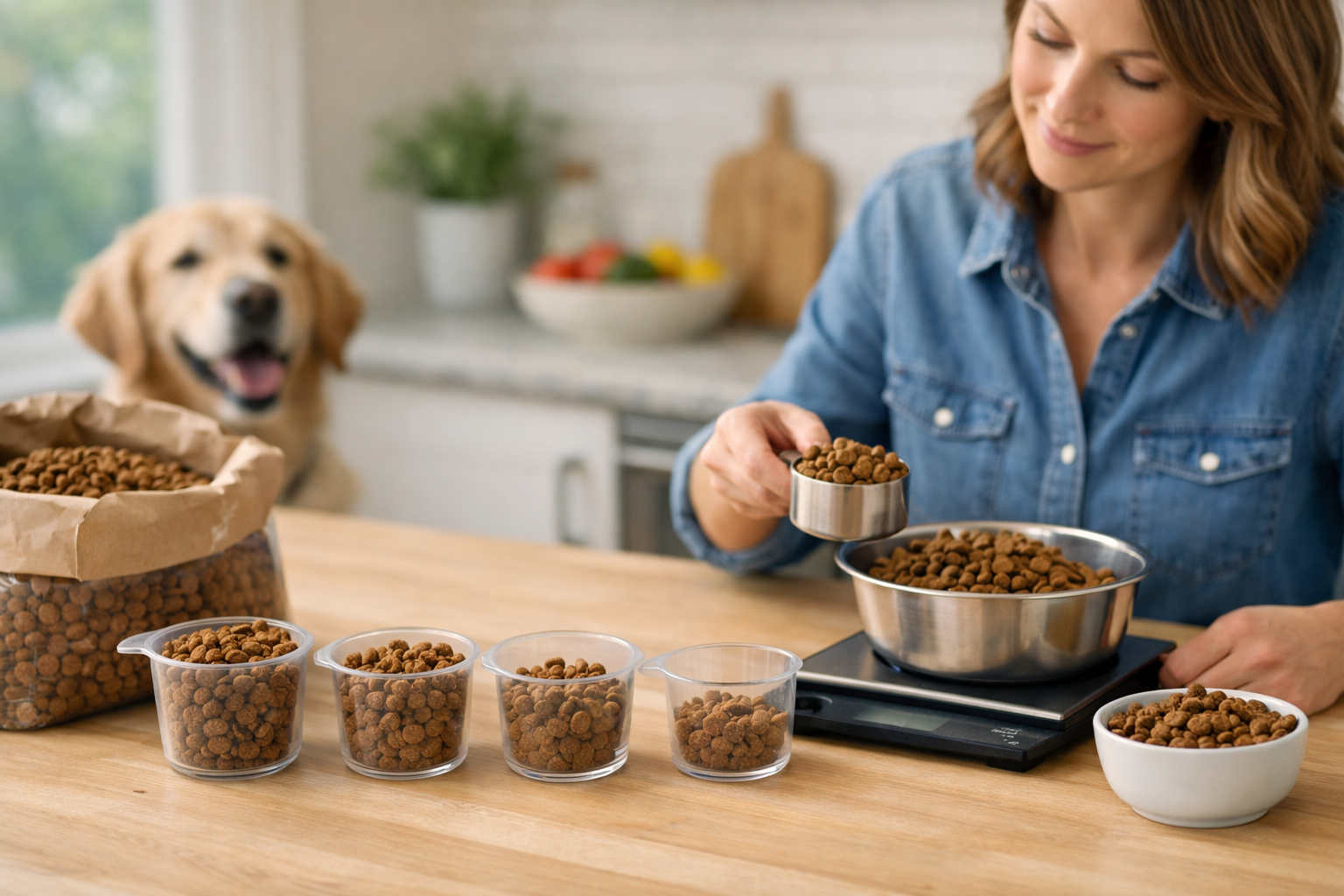
Most pet owners use a plastic scoop or a kitchen measuring cup. While this is convenient, it is not the most accurate method. Studies have shown that pet owners can be off by as much as 20 percent when using a scoop. You might be "over scooping" by leaving a slight mound on top, or "under scooping" by not filling the corners of the cup.
The Case for the Kitchen Scale
If you want to be precise, a digital kitchen scale is your best friend. Weighing your dog's food in grams or ounces ensures they get the exact same amount of calories every single day. This is especially important for small dogs. For a 10 pound dog, an extra quarter cup of food is a massive percentage of their daily caloric needs. Over time, that small error leads to weight gain.
Using the Right Cup
If you prefer using a cup, make sure it is a standard 8 ounce dry measuring cup. Avoid using coffee mugs, plastic stadium cups, or old yogurt containers. These are rarely accurate measures of volume. When you scoop, use a flat edge to level off the top of the cup. This removes the "heaping" variable that often leads to overfeeding.
How Long Will Your Bag Last?
Planning your shopping trips or your Autoship programme schedule is much easier when you know the total cup count in a bag. Use the following chart as a general guide for standard kibble.
| Bag Weight (Pounds) | Estimated Total Cups |
|---|---|
| 5 lbs | 15 to 20 cups |
| 10 lbs | 30 to 40 cups |
| 15 lbs | 45 to 60 cups |
| 20 lbs | 60 to 80 cups |
| 25 lbs | 75 to 100 cups |
| 30 lbs | 90 to 120 cups |
To find the specific count for your brand, look for the "Calories per Cup" or "Grams per Cup" information on the back of the bag. If the bag says there are 100 grams in a cup, and the bag weighs 5 kilograms (about 11 pounds), you know you have exactly 50 cups of food.
Bottom line: A 30 pound bag usually provides about a month of food for a large dog or several months for a small dog.
Calculating Your Dog's Daily Portion
Once you know how many cups are in the bag, you need to know how many should go in the bowl. Every dog is an individual. The feeding chart on the back of the bag is only a starting point. It is based on an average adult dog with moderate activity.
Assessing Activity Levels
A dog that walks three miles a day needs more fuel than a dog that spends the afternoon on the sofa. If your dog is a "couch potato," you might need to feed slightly less than the bag suggests. If you have an active hunting dog or an agility competitor, they will likely need more.
Life Stage Adjustments
Puppies are growing rapidly and require more calories per pound of body weight than adults. They often need three to four smaller meals a day to maintain their energy levels. If you are feeding a young dog, our Puppy Shop is a helpful place to explore life-stage options. Senior dogs often have slower metabolisms. They may benefit from senior specific formulas that are lower in calories but higher in joint support ingredients like those found in Cosequin.
The Body Condition Test
The best way to know if you are feeding the right amount is to look at your dog. You should be able to feel their ribs easily under a thin layer of fat. When you look at them from above, they should have a visible waistline. If they look more like a cylinder, it is time to trim the portions back.
Vet Tip: If your dog is gaining weight despite following the feeding guide, consult your veterinarian. They can help you calculate exact caloric needs and rule out underlying issues like thyroid problems.
Managing Weight and Special Dietary Needs
Sometimes, standard kibble measurements are not enough to manage a dog's health. If your dog is struggling with obesity, chronic allergies, or kidney issues, they may require a prescription diet. These foods are formulated with very specific nutrient profiles that must be monitored closely by a professional.
Our pet pharmacy offers a wide range of prescription pet foods and health products. Through our selection of Royal Canin products and Farmina products, we carry options designed for specific needs and precise feeding instructions.
Transitioning to Prescription Food
When a vet prescribes a new diet, you must transition slowly. Start by mixing a small amount of the new food with the old food. Over 7 to 10 days, slowly increase the portion of the new food. This helps prevent the digestive upset that can occur with sudden diet changes.
Step 1: Mix 25% new food with 75% old food for two days. Step 2: Mix 50% new food with 50% old food for two days. Step 3: Mix 75% new food with 25% old food for two days. Step 4: Serve 100% new food.
Storage and Freshness
How you store those cups of food matters just as much as how many there are. Once a bag of dry dog food is opened, the fats inside begin to oxidize when exposed to air. This can lead to the food going rancid, which affects both the taste and the nutritional value.
Keep the Bag
Many people pour their kibble directly into a plastic bin. We recommend keeping the food inside the original bag and then placing the bag inside a sealed container. The bags are designed with special liners to keep fats fresh. Additionally, if there is ever a product recall, you will need the lot number and expiration date printed on the bag.
Climate Control
Store your dog food in a cool, dry place. Avoid keeping it in a hot garage or a damp basement. Heat and moisture accelerate spoilage and can encourage the growth of mold. If you buy large 30 or 40 pound bags for a single small dog, be aware that the food might lose its freshness before the dog can finish it. Aim to buy a bag size that your dog can finish within six to eight weeks.
For more practical storage help, our dog food storage collection is a useful next stop.
The Role of Treats and Toppers
When you calculate how many cups of food your dog needs, do not forget about the extras. Treats, dental chews, and table scraps all add up. A single large dental chew can have as many calories as half a cup of kibble.
If you like to add wet food or fresh toppers to your dog's meal, you must reduce the dry kibble portion accordingly. A common mistake is adding a "topper" on top of a full serving of dry food. This is an easy way for a dog to become overweight without the owner realizing why.
If treats are part of your routine, our dog treats category can help you find options that fit your feeding plan.
Key Takeaway: Treats and toppers should never make up more than 10 percent of your dog's total daily calorie intake.
Summary of Feeding Success
Feeding your dog correctly is a mix of math and observation. While 4 cups per pound is the standard estimate, your specific brand and your dog's unique needs will dictate the final number. By using consistent measuring tools and monitoring your dog's body condition, you can ensure they stay at a healthy weight for years to come.
- Use a standard dry measuring cup or a kitchen scale for accuracy.
- Check the density of your specific kibble brand.
- Adjust portions based on activity, age, and health status.
- Store food properly to maintain nutritional integrity.
- Consult your vet for any sudden weight changes or specialized health needs.
If your dog requires a specific diet for weight management or other health concerns, our MVP Rewards programme is a great way to add value to your regular purchases. We carry a variety of trusted brands like NutriSource products, Farmina, Royal Canin, and more to help you provide the best care possible. You can also save time and money by using our Autoship programme, which ensures you never run out of those essential cups of food.
FAQ
Does the shape of the kibble really change how many cups are in a pound?
Yes, the shape of the kibble creates different amounts of air space in a measuring cup. Large, irregularly shaped pieces like stars or large triangles do not nest together, leading to more air and fewer pounds per cup. Small, round kibble packs together tightly, meaning a cup of small kibble usually weighs more than a cup of large kibble.
Is it better to measure dog food in cups or grams?
Measuring in grams is much more accurate than measuring in cups. A kitchen scale removes the human error of overfilling a scoop and accounts for differences in kibble density. If your dog is on a strict weight loss plan, weighing the food is the best way to ensure they are receiving the correct number of calories every day.
How many cups are in a 30 pound bag of dog food?
A 30 pound bag of dry dog food typically contains between 110 and 120 cups of kibble. This estimate is based on the average ratio of 3.5 to 4 cups per pound. If you are feeding a large dog 4 cups a day, a 30 pound bag will last you approximately 30 days.
Should I change how many cups I feed if I add wet food?
Yes, you should always adjust the dry food portion if you are adding wet food or toppers. Wet food is often calorie dense, and adding it on top of a full serving of kibble can lead to obesity. Check the caloric content of both the wet and dry food to create a balanced meal that meets your dog's daily requirements without exceeding them.






