
 Save 15% on your 1st Autoship learn more

 Email us
 Live Chat
 FAQs
FAQs





Introduction
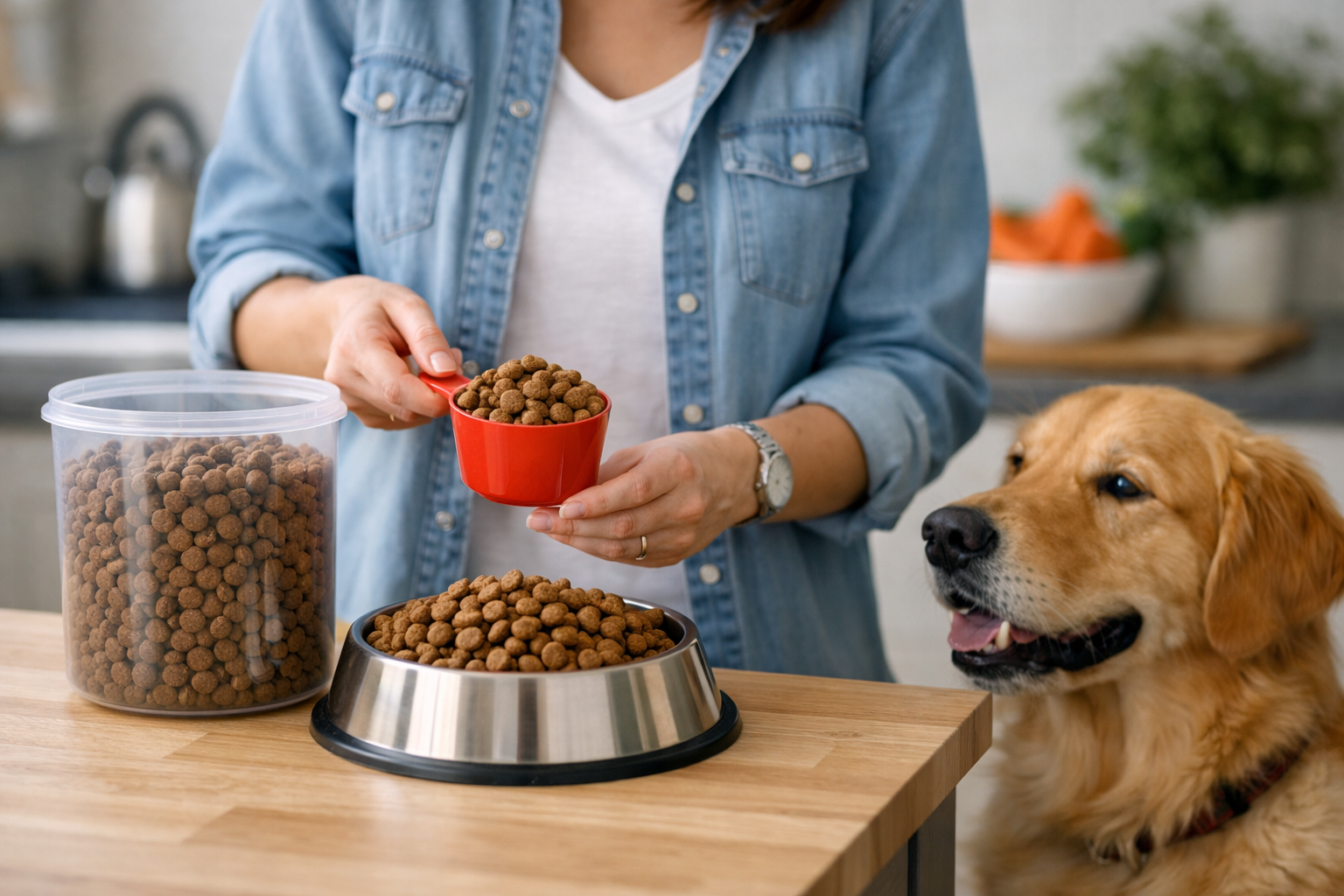
You are standing in the kitchen with a heavy bag of kibble that you just lugged from the car. Your dog is already circling your feet because they know dinner is coming soon. You look at the feeding chart on the back of the bag and see it recommends two cups a day. Now you find yourself wondering how long this twenty pound bag will actually last. At BaxterBoo, we hear this question from pet parents all the time. Knowing how many cups are in a pound of food helps you manage your budget and ensure your dog never misses a meal. This post covers the math behind kibble volume, why different brands vary in weight, and how to use this information to schedule your deliveries. Understanding these measurements is the first step toward perfect portion control.
Quick Answer: On average, one pound of dry dog food contains about 4 cups of kibble. This can range between 3 and 5 cups depending on the size, shape, and density of the specific formula.
The Basic Math of Kibble Volume
The most common estimate used by pet food manufacturers and veterinarians is that one pound of standard dry dog food equals 4 cups. This is a helpful rule of thumb when you are standing in the aisle trying to decide between two bag sizes. If you have a thirty pound bag, you can expect it to yield roughly 120 cups of food. For a dog eating 2 cups a day, that bag should last approximately 60 days.
However, it is important to remember that this is an average. Not all kibble is created equal in terms of weight and volume. A heavy, meat-dense kibble will take up less space in a measuring cup than an airy, puffed kibble designed for weight management. Because we carry over 500 brands, we see these differences daily. A cup of a nutrient-dense brand like our Orijen selection or our Acana selection might weigh more than a cup of a grocery store brand that uses more carbohydrate fillers.
The physical size of the kibble also plays a massive role. Small breed formulas often feature tiny, round pellets that pack tightly together in a cup. Large breed formulas may have massive, crunchy pieces that leave a lot of air gaps between them. These gaps mean you are getting less weight per cup. If you switch from a small kibble to a large kibble, you might find that your usual bag does not last as long as it used to.
Why Density Changes Your Measurements
Density is the relationship between the weight of the food and the space it occupies. This is where most pet owners get tripped up. Imagine a cup filled with lead weights versus a cup filled with feathers. They both occupy one cup of volume, but their weights are vastly different. Dog food works on a smaller version of this principle.
High-protein diets often use concentrated meat meals. These ingredients are heavy and dense. When you scoop a cup of high-protein food, you might be feeding more calories and more weight than a cup of a "lite" formula. Light or senior formulas often use fiber and air to create volume. This helps your dog feel full without consuming too many calories. In these cases, you might need 5 cups to reach a pound of weight.
The shape of the kibble also dictates how it settles. Round kibble tends to settle more uniformly. Triangular or star-shaped kibble creates more "bridge" points where the pieces lean against each other. This creates larger pockets of air. If your dog food looks like a bag of puffed cereal, you are likely looking at a lower weight per cup.
Factors That Influence Density
- Protein sources: Real meat and meat meals are heavier than plant-based proteins.
- Fat content: Fats are calorie-dense but do not always add significant bulk.
- Fiber levels: High fiber often leads to lighter, more porous kibble.
- Manufacturing process: The extrusion process determines how much the kibble "puffs" during cooking.
Key Takeaway: Never assume every bag of food follows the 4 cups per pound rule exactly. Always check the weight-to-calorie ratio on the label for the most accurate feeding.
Bag Size Conversion Guide
To help you plan your shopping, we have broken down the estimated cup counts for common bag sizes. These numbers assume the standard 4 cups per pound average. Use these as a baseline for your monthly pet food budget.
- 5 Pound Bag: Approximately 20 cups. This is usually enough for a small dog for about three weeks.
- 10 Pound Bag: Approximately 40 cups. Ideal for medium dogs or small dogs with high activity levels.
- 15 Pound Bag: Approximately 60 cups. A common size for many premium brands.
- 20 Pound Bag: Approximately 80 cups. This is the sweet spot for many medium to large breed owners.
- 30 Pound Bag: Approximately 120 cups. These larger bags offer better value but require proper storage to stay fresh.
- 40 Pound Bag: Approximately 160 cups. Often used for multi-dog households.
Vet Tip: If your dog is on a prescription diet for weight loss or kidney health, the kibble density may be very different from standard food. Consult your veterinarian about the exact gram weight per meal to ensure they are getting the correct therapeutic dose of nutrients.
Measuring for Accuracy: Cups vs. Scales
Most of us use a plastic scoop or a standard measuring cup to feed our dogs. While this is convenient, it is not the most accurate method. A "cup" of food can vary by as much as 20 percent depending on how you scoop it. If you dip the cup into the bag and pack it against the side, you are getting more food. If you loosely scoop and let it mound on top, you are getting even more.
The most accurate way to measure dog food is by weight using a kitchen scale. Most high-quality brands like Farmina or The Honest Kitchen provide feeding guidelines in grams alongside cup measurements. Weighing the food eliminates the variables of kibble shape and air pockets. It ensures that 100 grams of food is always 100 grams, regardless of whether the kibble is round or square.
If you prefer using a cup, make sure you are using a standard dry-ingredient measuring cup. Do not use a coffee mug or a large plastic drinking cup. These are not calibrated and can lead to significant overfeeding. Over time, an extra quarter-cup of food per day can lead to weight gain. Obesity in dogs is linked to joint issues, heart disease, and a shortened lifespan.
How to Measure Properly with a Cup
Step 1: Use a dedicated dry measuring cup that is level at the top. Step 2: Scoop the food gently out of the bag without packing it down. Step 3: Level off the top of the cup with a flat edge, like the back of a spoon. Step 4: Dump the food into the bowl and repeat if necessary.
Bottom line: Weighing food is the only way to be 100 percent consistent, but a leveled dry measuring cup is the next best option.
Managing Health with Precise Portions
Properly calculating your cups per pound is not just about convenience. It is a critical part of managing your dog’s health. This is especially true for dogs with chronic conditions. Many dogs require prescription diets for issues like urinary crystals, allergies, or gastrointestinal sensitivity.
Our pet pharmacy for dogs offers a wide range of prescription dog medicines and food options. Brands like Royal Canin and Farmina Vet Life offer specific formulas where the density is carefully controlled to deliver specific nutrients. When feeding a medical diet, the "cups per pound" math becomes even more important. You need to know exactly how much you are feeding to ensure the medical treatment is effective.
If your dog is struggling with sudden weight gain or loss despite you measuring the same "cups" every day, it might be time for a veterinary checkup. Sometimes a change in the manufacturing of the food can change the density. Other times, an underlying health issue might be affecting their metabolism. Always talk to your vet if you notice a change in your dog’s body condition.
Life Stages and Caloric Density
As your dog ages, their nutritional needs and the density of their food will likely change. Puppies need calorie-dense food to support their rapid growth. A pound of puppy food might look smaller in volume than a pound of adult food because it is packed with more fats and proteins.
Senior dogs often move to "Senior" or "Mature" formulas. These are frequently less dense. They often contain more fiber to help the dog feel full while consuming fewer calories. This helps prevent the weight gain that often comes with a slower metabolism in older age. If you switch from a puppy formula to an adult formula, or adult to senior, do not assume the cup measurements will stay the same.
Always read the back of every new bag you buy. Manufacturers occasionally update their recipes. A small change in the ingredient list can change the weight of the kibble. If the bag says 350 calories per cup today but the new bag says 380 calories per cup next month, you will need to adjust your scoop size to keep your dog at a healthy weight.
Checklist for Switching Foods
- Compare the calories per cup between the old and new food.
- Check the gram weight per cup on the new label.
- Transition slowly over 7 to 10 days to avoid upset stomachs.
- Monitor your dog's weight for the first month after the switch.
- Adjust the portion size if you see any rib coverage changes.
Using the Math to Save with Autoship
Once you know how many cups are in a pound and how many cups your dog eats daily, you can master your ordering schedule. This is where you can save time and money. By calculating the "days per bag," you can set up a recurring delivery that ensures you never run out of food.
At BaxterBoo, our Autoship programme is designed for this exact purpose. When you know a 30 pound bag lasts exactly 60 days, you can set your frequency to 8 weeks. This saves you from those late-night trips to the store when you realize the bag is empty. Plus, our Autoship customers receive savings on their first order and a free MVP Gold membership.
The MVP Rewards programme further adds value to your calculated feeding plan. Since you know exactly how much food you need for the year, you can see how quickly your rewards will stack up. Most pet parents find that earning up to 5 percent back on every purchase makes a significant dent in their annual pet care costs. Knowing your measurements means you are a more informed and efficient shopper.
Storing Your Dry Dog Food
Now that you know how much volume a pound of food takes up, you need to store it correctly. A common mistake is pouring the food out of the bag and into a plastic bin. While this looks neat, it can actually cause the food to spoil faster. The fats in the kibble can oxidize when they touch the plastic, and the bin may hold onto old fats that turn rancid.
If you want a practical tool for portioning and storage, our Messy Mutts Melamine Dog Food Scoop - Gray is a handy option. It helps you measure consistently while keeping your feeding routine simple.
The best way to store your food is to keep it inside the original bag and then place the entire bag into a sealed container. The bags are designed to provide a barrier against moisture and air. Keeping the bag also ensures you have the lot code and expiration date handy in case there is ever a product recall.
If you are buying 40 or 50 pound bags to save money, make sure you can use the food within six weeks of opening. After six weeks, the nutritional value begins to decline, and the risk of mold or bacterial growth increases. If a 50 pound bag contains 200 cups and your dog only eats one cup a day, that bag is going to be open for over six months. In that case, buying smaller bags is much safer for your dog’s health.
Key Takeaway: Proper storage preserves the weight and nutritional integrity of the kibble you have carefully measured.
Conclusion
Calculating how many cups are in a pound of dry dog food is more than a math exercise. It is a vital part of being a responsible pet owner. While 4 cups per pound is the standard average, factors like kibble size, density, and ingredients can change that number. By taking the time to measure accurately, you protect your dog from obesity and ensure they get the nutrients they need to thrive. Whether you are managing a prescription diet through our pharmacy or just trying to time your next delivery, this knowledge puts you in control. We invite you to explore our dry dog food category and our blog post on discounted dog food to get the most value for your pet care budget.
FAQ
How many cups of dog food are in a 30 lb bag?
A 30 pound bag of dry dog food typically contains about 120 cups of kibble. This estimate is based on the average of 4 cups per pound. If the kibble is very large or very light, the bag may contain closer to 130 or 140 cups, whereas a very dense food might only have 105 to 110 cups.
Is a cup of dog food always 8 ounces?
In terms of volume, a cup is always 8 fluid ounces, but in terms of weight, a cup of dog food usually weighs about 4 ounces. This is because kibble is much less dense than water. This common confusion is why it is always better to look at the weight in grams on the bag rather than relying on fluid ounce measurements.
Does kibble shape affect how many cups are in a bag?
Yes, kibble shape significantly affects volume because it changes how much air is trapped in the measuring cup. Round or small kibbles pack closely together with very little air space. Irregular shapes like stars or triangles create large air pockets, meaning you get fewer pieces of food in a single cup.
How do I calculate how long a bag of dog food will last?
First, multiply the bag's weight in pounds by 4 to get the total estimated cups. Then, divide that total number of cups by the amount you feed your dog each day. For example, a 20 pound bag has about 80 cups; if you feed 2 cups a day, the bag will last for 40 days.






