
 Save 15% on your 1st Autoship learn more

 Email us
 Live Chat
 FAQs
FAQs





Introduction
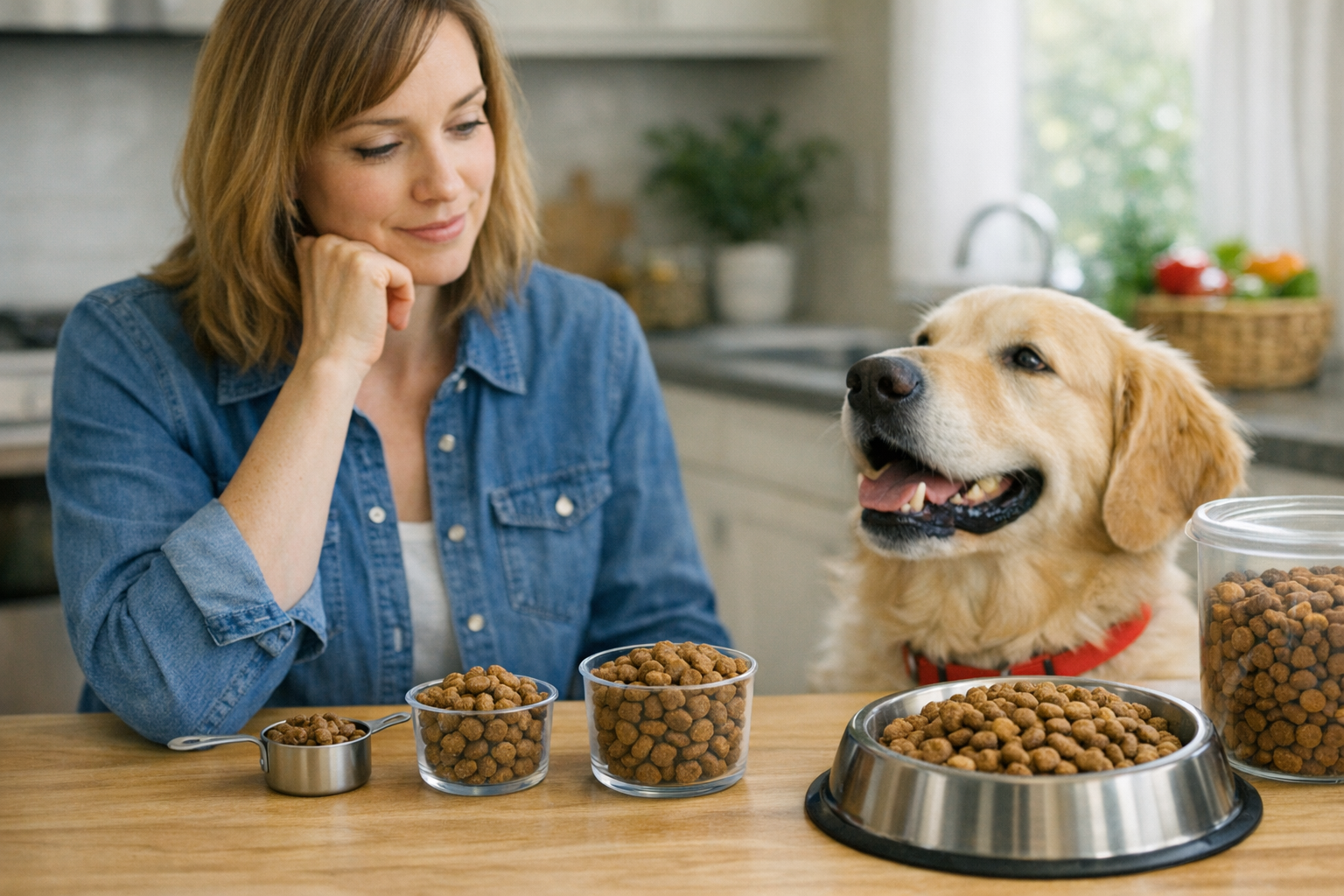
Standing in your kitchen with a measuring scoop can feel like a guessing game. You want to provide enough fuel for your dog to thrive without accidentally causing unhealthy weight gain. At BaxterBoo, we talk to pet owners every day who are balancing the needs of growing puppies, active adults, and slowing seniors. Determining the right portion of dry food is not just about following a chart on a bag. It involves looking at your dog's age, weight, activity level, and overall health. This guide will help you move past the guesswork and calculate exactly how many cups of food your friend needs. Our goal is to ensure your dog maintains an ideal body condition through every stage of life, starting with our dog food category.
Quick Answer: Most healthy adult dogs require between one and four cups of dry food per day, depending on their weight and activity level. Smaller dogs need less total food but more calories per pound, while larger dogs require higher volumes of food with lower calorie density.
Factors That Influence Daily Portions
No two dogs have the identical nutritional needs. A high-energy breed like a Border Collie will burn through calories much faster than a more relaxed breed like a Basset Hound. Even within the same breed, individual metabolism plays a major role in how much food a dog can handle. We carry over 500 trusted brands that offer different calorie counts, which adds another layer to the calculation.
Age and Life Stage
Puppies are in a rapid growth phase. They require more calories, protein, and minerals per pound than adult dogs. Because their stomachs are small, they often need these calories delivered in multiple small meals throughout the day. Adults are in a maintenance phase where the goal is to keep their weight steady. Seniors often experience a slowing metabolism. They may become less active and require fewer calories to avoid putting stress on their joints, so it can help to browse our Puppy Shop when you're feeding a young dog.
Activity Level and Exercise
If your dog spends their day hiking or working in the field, they need significantly more fuel. A dog that takes a brisk thirty-minute walk once a day is considered moderately active. Sedentary dogs that spend most of their time napping on the couch have much lower caloric requirements. You must adjust the cup count based on how much energy your dog actually uses.
Spay and Neuter Status
Many pet owners are surprised to learn that reproductive status affects appetite and metabolism. Spayed and neutered dogs generally have a slower metabolic rate than intact dogs. They may require up to twenty percent fewer calories to maintain the same weight. If your dog was recently fixed, keep a close eye on their waistline and adjust their portions downward if they start to fill out too much.
Key Takeaway: Portions are not permanent. You should re-evaluate how many cups you feed whenever your dog’s age, activity level, or health status changes.
Reading the Dog Food Label Correct
The feeding chart on your dog food bag is the best place to start. Every brand we stock, from NutriSource to Royal Canin, provides a chart based on the weight of the dog. However, these charts often provide a wide range. They are based on average dogs, and your dog might not be average.
Understanding Calorie Density
The number of calories in a cup of food varies wildly between brands. One brand might have 350 calories per cup, while a high-performance formula might have over 500. This is why you cannot simply switch brands and keep the cup count the same. If you move to a more calorie-dense food, you must decrease the number of cups you scoop, especially when comparing formulas from our selection of NutriSource products.
Using the Right Measuring Tools
A common mistake is using a random coffee mug or a large plastic cup to scoop food. These are rarely accurate eight-ounce measuring cups. To keep portions consistent, use a standard dry measuring cup. Consistency is the only way to accurately adjust your dog's intake over time.
Step 1: Identify your dog’s ideal weight. Use their target weight rather than their current weight if they need to lose a few pounds.
Step 2: Locate the daily feeding chart on the back of your dry food bag. Find the weight row that matches your dog.
Step 3: Start with the lower end of the recommended range. It is easier to add a little more food later than it is to help a dog lose weight.
Step 4: Divide the total daily amount by the number of meals you plan to feed. Most owners choose two meals per day.
Portions by Weight and Size
Small and large dogs have very different relationships with their food. Smaller breeds have faster metabolisms and may need more frequent meals to prevent drops in blood sugar. Large breeds are prone to joint issues and bloat, making portion control and meal timing even more critical.
Small and Toy Breeds
A dog weighing between 3 and 12 pounds usually needs 1/2 to 1 1/4 cups of dry food per day. Because these dogs are so small, even an extra quarter-cup of food can lead to significant weight gain. Many small-breed formulas are made with smaller kibble pieces to make chewing easier and safer.
Medium and Large Breeds
Dogs in the 20 to 50-pound range typically require 1 3/4 to 3 cups per day. Giant breeds weighing over 100 pounds may need 4 1/2 cups or more. For these large dogs, we recommend formulas that support bone and joint health. Maintaining a lean weight is the best way to protect their mobility as they age, and our dog health category can be a helpful place to explore related options.
Vet Tip: If your dog is consistently leaving food in the bowl or gaining weight, consult your veterinarian to rule out thyroid issues or other metabolic conditions. They can provide a specific calorie count tailored to your dog's body condition score.
Puppy Feeding Requirements
Puppies need a specific balance of nutrients to support bone development and brain health. Most puppy feeding charts are based on the expected adult weight of the dog. This can be tricky with mixed breeds. You can use a DNA test or look at the size of their paws to get a general idea of their future size.
Puppies aged 1.5 to 6 months usually need about twice the calories of an adult dog of the same weight. From 6 to 12 months, this requirement starts to taper off. Large breed puppies need to grow slowly to avoid orthopedic problems. We carry several large-breed puppy formulas designed to manage this growth rate carefully, including options from our selection of Open Farm products.
- Puppies 0-4 months: Feed 3 to 4 times per day.
- Puppies 4-12 months: Feed 2 to 3 times per day.
- Always use a formula specifically labeled for puppies to ensure the right calcium and phosphorus levels.
Bottom line: Puppy portions change almost monthly, so check the bag frequently as your puppy grows.
Senior Dog Nutritional Needs
A dog is generally considered a senior between the ages of 7 and 12, depending on their size. Large breeds age faster and reach senior status earlier. Senior dogs often need fewer calories because they move less. However, some seniors may actually need more calories if they have trouble absorbing nutrients or are losing muscle mass.
Senior-specific dry foods often have lower calorie counts but higher fiber levels to help your dog feel full. Some also include supplements like glucosamine for joint support. If your senior dog is healthy and maintains their weight on adult food, you may not need to change the cup count. If they are gaining weight, switching to a senior formula or reducing the daily cups is a smart move, and our dog food category is a good place to start.
Managing Weight and Prescription Diets
Obesity is a major health concern for dogs in the United States. It can lead to diabetes, heart disease, and decreased life expectancy. If your dog is carrying extra weight, you should work with your vet to create a safe weight-loss plan. Simply cutting their current food in half can lead to nutritional deficiencies.
Our pharmacy for dogs offers prescription pet foods and medications for dogs who need specialized support. If your vet prescribes a weight-management diet, our pharmacy for dogs can help you get the exact formula your dog needs delivered to your door.
Key Takeaway: Prescription diets are highly regulated and should only be used under the guidance of a veterinarian who can monitor your dog's progress.
The 10 Percent Treat Rule
Treats are an important part of training and bonding, but they contain calories too. Many owners forget to account for the biscuits and dental chews they give throughout the day. Treats should never make up more than 10 percent of your dog's total daily caloric intake.
If you are training heavily and using many treats, you must reduce the amount of dry food you put in their bowl. Some owners set aside a portion of the daily kibble to use as training rewards. This ensures the dog gets their nutrients without exceeding their calorie limit, while still leaving room to shop our dog treats category for the right reward.
- Choose low-calorie treats like carrots or green beans for dogs on a diet.
- Always check the calorie count on treat packaging.
- Subtract the calories from treats from the total daily "cup budget."
Feeding Schedules and Frequency
While the total number of cups per day matters most for weight, frequency matters for digestion and energy. Most adult dogs do well with two meals per day. This helps prevent the stomach from becoming too empty, which can lead to bile vomiting in some dogs.
Consistent mealtimes also help with house training and digestive regularity. If you feed your dog at the same time every morning and evening, their bathroom breaks will become predictable. For dogs prone to bloat, which is a life-threatening condition, multiple small meals may be safer than one large one. Using a slow-feeder bowl can also help by preventing your dog from gulping down their cups of food too quickly.
Conclusion
Determining how many cups of dry dog food per day your pet needs is an ongoing process of observation and adjustment. Start with the guidelines on the bag but remain flexible based on your dog's body condition and energy. At BaxterBoo, we have been helping pet owners find the right nutrition since 2006. Whether you are managing a puppy's growth or a senior's weight, we provide the brands and pharmacy services necessary to support your dog’s health. If you find a food that works perfectly, consider using our Autoship programme to save on every order and ensure you never run out of your dog’s favorite kibble.
- Start with the label guidelines as a baseline.
- Adjust for activity and life stage.
- Account for treats within the daily calorie limit.
- Consult your vet for an accurate body condition assessment.
Bottom line: Your dog’s ribs should be easy to feel but not highly visible, and they should have a clear waistline when viewed from above.
FAQ
How do I know if I am feeding my dog too much?
The best indicator is your dog's body shape and weight. If you can no longer feel your dog's ribs under a thin layer of fat or if their waist has disappeared, you are likely feeding too many cups per day. You should also watch for soft stools, which can sometimes be a sign of overfeeding.
Can I just use a regular cup from my kitchen to measure?
It is much better to use a standard eight-ounce dry measuring cup. Kitchen mugs and drinking glasses vary significantly in size, making it impossible to be consistent with portions. Small errors in measurement every day can lead to significant weight gain or loss over several months.
Does the calorie count change between different brands?
Yes, calorie counts vary widely based on the ingredients and the purpose of the food. A weight-management formula will have far fewer calories per cup than a high-protein puppy or performance formula. Always check the kcal/cup listing on a new bag of food when you switch brands.
My dog always acts hungry even after eating their full portion. What should I do?
Some dogs are naturally highly motivated by food and will act hungry regardless of how much they eat. You can try adding low-calorie, high-fiber toppers like steamed green beans or canned pumpkin to their bowl. If the hunger seems excessive or sudden, consult your veterinarian to rule out underlying health issues like parasites or diabetes.






