
 Save 15% on your 1st Autoship learn more

 Email us
 Live Chat
 FAQs
FAQs





Introduction
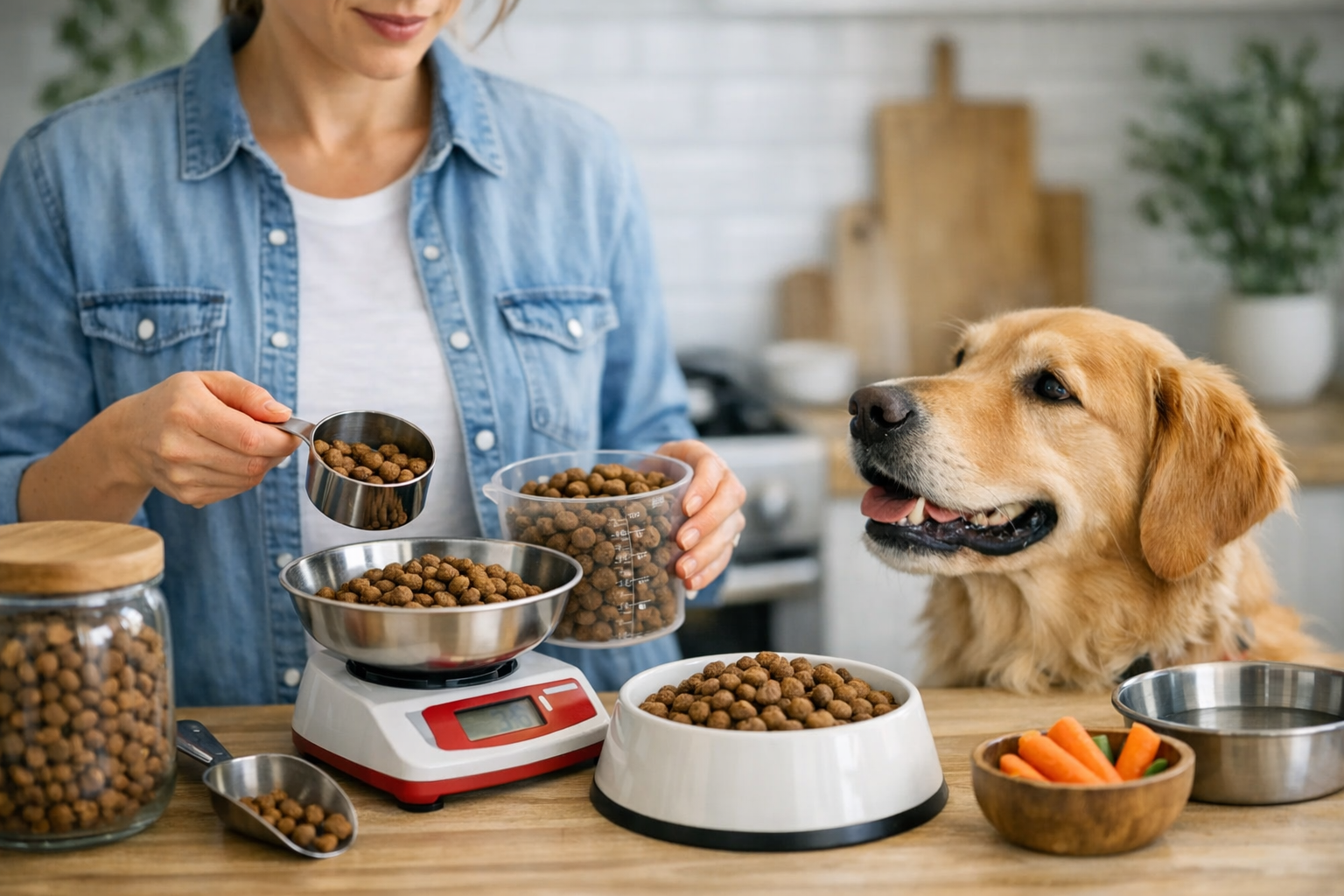
You are standing in your kitchen at mealtime while your dog performs an enthusiastic dance at your feet. You grab a plastic scoop and dip it into the bag. You might wonder if that slightly rounded scoop is actually the "one cup" the bag recommends. At BaxterBoo, we see this common struggle every day. Measuring by volume is the standard way most owners feed their pets, but it is often the least accurate. Small errors in your daily scoop can lead to significant weight gain or nutritional gaps over time. This guide will help you understand how many grams are in a cup of dry dog food and why weighing your kibble is the best way to keep your dog healthy. If you’re comparing options, our dry dog food category is a good place to start. Precision in the kitchen leads to a longer and more vibrant life for your best friend.
Why the Word Cup Is Confusing
In the United States, we use "cups" for almost everything in the kitchen. A standard measuring cup holds eight fluid ounces. This measurement works perfectly for water, milk, or broth. These liquids fill the space completely. Kibble is different because it is a solid object with a specific shape.
When you drop kibble into a measuring cup, the pieces do not fit together perfectly. There are small pockets of air between each nugget. The size and shape of the kibble determine how much air is in that cup. A large breed puppy food with big chunks will have more air gaps than a small breed kibble with tiny pieces. This means a cup of large kibble might weigh much less than a cup of small kibble.
Most people also use random containers as scoops. You might use an old coffee mug, a plastic stadium cup, or a scoop provided by a different brand of food. These rarely equal exactly eight fluid ounces. Even if you use a real measuring cup, the way you scoop matters. A "heaping" cup can contain 20 percent more food than a "level" cup.
Quick Answer: On average, one standard 8-ounce measuring cup of dry dog food weighs between 90 and 115 grams. The exact weight depends on the density and size of the kibble.
The Average Weight of Dog Food by Grams
While the average is around 100 grams, the range is wider than most owners realize. Some lightweight, air-puffed kibbles might only weigh 85 grams per cup. Dense, high-protein formulas or dehydrated foods can weigh 120 grams or more.
To give you an idea of the variety, consider the different types of food we carry. A high-protein, meat-heavy food like Orijen is often denser than a budget-friendly grocery brand. These premium foods pack more nutrition into a smaller physical space. If you switch from a lighter food to a dense one and keep using the same scoop, you might accidentally overfeed your dog by hundreds of calories per week.
Gram Weight Estimates by Kibble Type
| Kibble Type | Estimated Grams per Cup | Characteristics |
|---|---|---|
| Standard Adult Kibble | 95g - 105g | Medium size, round or triangle shapes. |
| Small Breed Kibble | 105g - 115g | Tiny pieces that pack tightly with less air. |
| Large Breed Kibble | 85g - 95g | Large chunks with significant air gaps between them. |
| High-Protein / Dense | 110g - 125g | Heavy ingredients with very little air expansion. |
| Baked or Dehydrated | 115g - 130g | Very dense, often needs to be weighed for safety. |
Key Takeaway: You cannot assume that one cup of a new food weighs the same as your old food. Always check the bag for a gram measurement or weigh a sample cup yourself.
Why Grams Are Better Than Ounces
When you look at a dog food bag, you will see measurements in cups, ounces, and grams. Using grams is the gold standard for accuracy. Ounces can be confusing because there is a difference between fluid ounces (volume) and ounces by weight. A measuring cup is eight fluid ounces, but the kibble inside usually only weighs about 3.5 to 4 ounces.
Grams are a much smaller unit of measurement. This allows for extreme precision. If your veterinarian tells you to feed 105 grams of food, you can hit that target exactly on a digital scale. Trying to find "1.1 cups" on a plastic scoop is almost impossible.
Weighing food is especially important for small dogs. For a five-pound Chihuahua, an extra ten grams of food is a massive percentage of their daily caloric intake. It is the equivalent of a human eating an extra cheeseburger every single day. Using a scale removes the guesswork and protects your dog from "portion creep."
How to Find the Gram Count on Your Bag
Most premium pet food manufacturers now include the gram weight of a "standard cup" on the packaging. Look at the feeding guidelines or the nutritional analysis panel. You will often see a line that says "1 cup = 100g" or something similar.
If the information is not on the bag, you can find it online. Brands like Royal Canin and The Honest Kitchen are very transparent about their calorie counts and weights. You can usually find a detailed nutritional profile on their websites.
If you still cannot find the gram count, you can calculate it yourself.
Step 1: Find the "kcal/kg" number on the bag. This tells you how many calories are in one kilogram (1,000 grams) of food.
Step 2: Find the "kcal/cup" number. This tells you the calories in one measured cup.
Step 3: Divide the kcal/cup by the kcal/kg.
Step 4: Multiply that result by 1,000 to get the grams per cup.
Vet Tip: If your dog is struggling with weight management, ask your vet for their Daily Energy Requirement (DER) in calories. Once you have the calorie goal, use the gram weight on the bag to calculate the exact weight of food they need.
The Danger of Inaccurate Measuring
The primary result of inaccurate measuring is pet obesity. This is a growing epidemic in the United States. Many owners do not realize that their "generous" scoop is the reason their dog is gaining weight. Obesity leads to many secondary health issues.
- Joint strain and arthritis, especially in senior dogs.
- Increased risk of diabetes.
- Heart and respiratory stress.
- Reduced lifespan.
If your dog has reached a point where they need a prescription weight-loss diet, our pet pharmacy can help. You will need a valid prescription from your veterinarian to order these specialized foods.
How to Transition to Weighing Your Food
Switching from a scoop to a scale is easier than it sounds. You do not need an expensive laboratory scale. A simple digital kitchen scale that can switch between ounces and grams is perfect. You can find these at most big-box stores or online for a very low cost.
Step 1: Place your dog's empty bowl on the digital scale. / Press the "tare" or "zero" button so the scale ignores the weight of the bowl.
Step 2: Check your dog food bag for the recommended grams per day. / Divide this by the number of meals you feed.
Step 3: Slowly pour the kibble into the bowl. / Stop when the scale reaches the exact gram count for that meal.
Step 4: Repeat for every meal. / This ensures your dog gets the exact same amount of energy every single day.
Consistent weighing helps you notice changes in your dog's appetite. If you always feed 110 grams and your dog suddenly starts leaving 20 grams in the bowl, you will know immediately. This can be an early warning sign of dental pain or other health issues that require a vet visit.
Factors That Change Your Dog's Calorie Needs
The number on the back of the bag is only a starting point. Every dog is an individual. Their metabolism, activity level, and age all play a role in how much they should eat.
For example, a working farm dog burning calories all day needs more food than a retired dog who sleeps on the sofa. Spayed and neutered dogs generally have slower metabolisms and need about 20 percent fewer calories than intact dogs. Even the weather matters. Dogs living in cold climates use more energy just to keep their bodies warm.
At BaxterBoo, we recommend checking your dog's body condition score every month. You should be able to feel their ribs easily without a thick layer of fat covering them. When looking from above, your dog should have a visible waistline. If they start to look like a cylinder, it is time to reduce the number of grams you put in the bowl.
Bottom line: The feeding chart on the bag is an estimate for an average dog, so you must adjust the weight based on your dog's real-world activity and body condition.
Using Technology to Simplify Feeding
If you have a busy schedule, it can be hard to stay consistent. This is where modern gear can help. Some automated feeders allow you to set specific portions by weight or small increments. However, the most reliable tool remains the kitchen scale.
If you want to make sure you never run out of your dog's specific formula, consider our Autoship programme. This ensures your food arrives on a regular schedule. It also saves you money on your first order and grants you a free MVP Gold membership. Consistency in the food brand is just as important as consistency in the weight. Frequent changes in protein sources or brands can upset a dog's stomach and make weight tracking more difficult.
Managing Multiple Pets
Weighing food is a lifesaver in multi-pet households. If you have three dogs, they likely have three different nutritional needs. Using a "one scoop fits all" approach often results in one dog being too thin and another being overweight.
By using grams, you can tailor every bowl. One dog might need 125 grams of a high-calorie puppy formula, while your senior dog needs 90 grams of a weight-management diet. This precision prevents "food theft" because you know exactly how much went into each bowl. If you are managing chronic health conditions alongside weight, our MVP Rewards programme can also help you earn rewards on eligible purchases.
The Role of Treats in Gram Counting
Many owners are perfect at weighing dinner but forget about the treats. Treats are often very calorie-dense. If you give your dog a few biscuits throughout the day, those calories must be subtracted from their main meals.
A good rule of thumb is that treats should never make up more than 10 percent of your dog's daily calories. If your dog's daily goal is 500 calories, 50 of those can come from treats. This might only be one or two large biscuits. If you are training a new puppy and using many rewards, you may need to reduce their dinner weight significantly to compensate.
- Choose low-calorie treats like freeze-dried lung or green beans.
- Break larger treats into tiny pieces.
- Use a portion of their weighed daily kibble as training rewards.
- Always keep a fresh bowl of water available, as high-protein treats can increase thirst.
If you want to browse smarter snack options, our dog treats category is a helpful next stop.
Understanding Density and Quality
Not all kibbles are created equal. High-quality brands like NutriSource or Open Farm focus on nutrient density. This means you feed less volume to get the same nutrition. When you look at a cheaper bag of food, the first few ingredients are often fillers like corn or soy. These ingredients are light and airy. You have to feed much more of that food to meet your dog's basic needs.
When you switch to a premium brand from BaxterBoo, you might be shocked at how small the portion looks. A cup of premium food might look like "not enough" compared to a big bowl of cheap kibble. This is why the scale is so important. It proves to you that the weight and nutrient content are correct, even if the volume looks small. Trust the grams, not your eyes.
Common Mistakes to Avoid
Even with a scale, there are a few traps you can fall into. The most common is the "zeroing" error. Always make sure the scale reads zero with the empty bowl on it before you add food. If you forget, you are adding the weight of the ceramic or metal bowl to the food weight, which results in significant underfeeding.
Another mistake is mixing different brands of food in the same container. Since different brands have different densities, a scoop from a mixed bin will have an unpredictable weight. Keep your food in its original bag if possible. This keeps it fresh and ensures you always have the correct feeding guidelines and gram counts handy.
Key Takeaway: Precision feeding requires a dedicated process. Avoid mixing foods and always tare your scale to ensure the weight you see is only the food.
Summary of Feeding by Weight
Weighing your dog's food in grams is the most effective way to manage their health. It removes the variables of kibble size, air gaps, and scoop inaccuracy. While it takes an extra 30 seconds at mealtime, the long-term benefits for your dog are immense. You will have a leaner, more energetic pet with fewer joint problems and a lower risk of chronic disease.
If your dog is currently overweight, do not panic. Small changes today lead to big results in a few months. Start by finding a digital scale and checking your food bag for the gram measurement. If you find that your dog needs a more specialized approach, consult your veterinarian about prescription weight management options available through our pharmacy.
At BaxterBoo, we are committed to helping you provide the best care possible. Whether you are looking for premium kibble from brands like NutriSource and Open Farm or need support for a senior dog's mobility, we have the expertise to guide you. Join our MVP Rewards programme to earn points on every bag of food and scale you purchase. Your dog relies on you to be their nutritionist. By switching to grams, you are taking a major step toward being the best pet parent you can be.
FAQ
Is a cup of dog food always 8 ounces?
In terms of volume, a standard measuring cup is always 8 fluid ounces. However, dog food is a solid, not a liquid. Because of the air spaces between kibble pieces, the actual weight of the food in that cup is usually between 3 and 4 ounces.
How do I convert the feeding chart from cups to grams?
Check the bag for a weight conversion, usually found near the nutritional information. If it says 1 cup equals 100 grams, simply multiply the number of cups recommended by 100. If the bag does not list grams, you can use a kitchen scale to weigh one level, standard 8-ounce measuring cup of your specific food to find your own conversion rate.
Why does my dog seem hungry if I weigh the food correctly?
Kibble is very concentrated, so the physical volume in the bowl might look small. Some dogs are "volume eaters" and feel empty even if they have had enough calories. You can try adding low-calorie "toppers" like canned green beans or a little warm water to the kibble to help them feel more full without adding significant weight.
Does the weight per cup change as the bag gets old?
The weight of the individual kibble pieces does not change, but the pieces at the bottom of the bag may be broken into smaller bits or "fines." These smaller pieces pack together more tightly than whole kibble. This means a cup from the bottom of the bag might weigh more than a cup from the top, which is another reason why using a scale for every meal is more accurate.
Bottom line: Weighing your dog's food in grams is the only way to ensure 100% accuracy in their daily nutrition and weight management.






