
 Save 15% on your 1st Autoship learn more

 Email us
 Live Chat
 FAQs
FAQs





Introduction
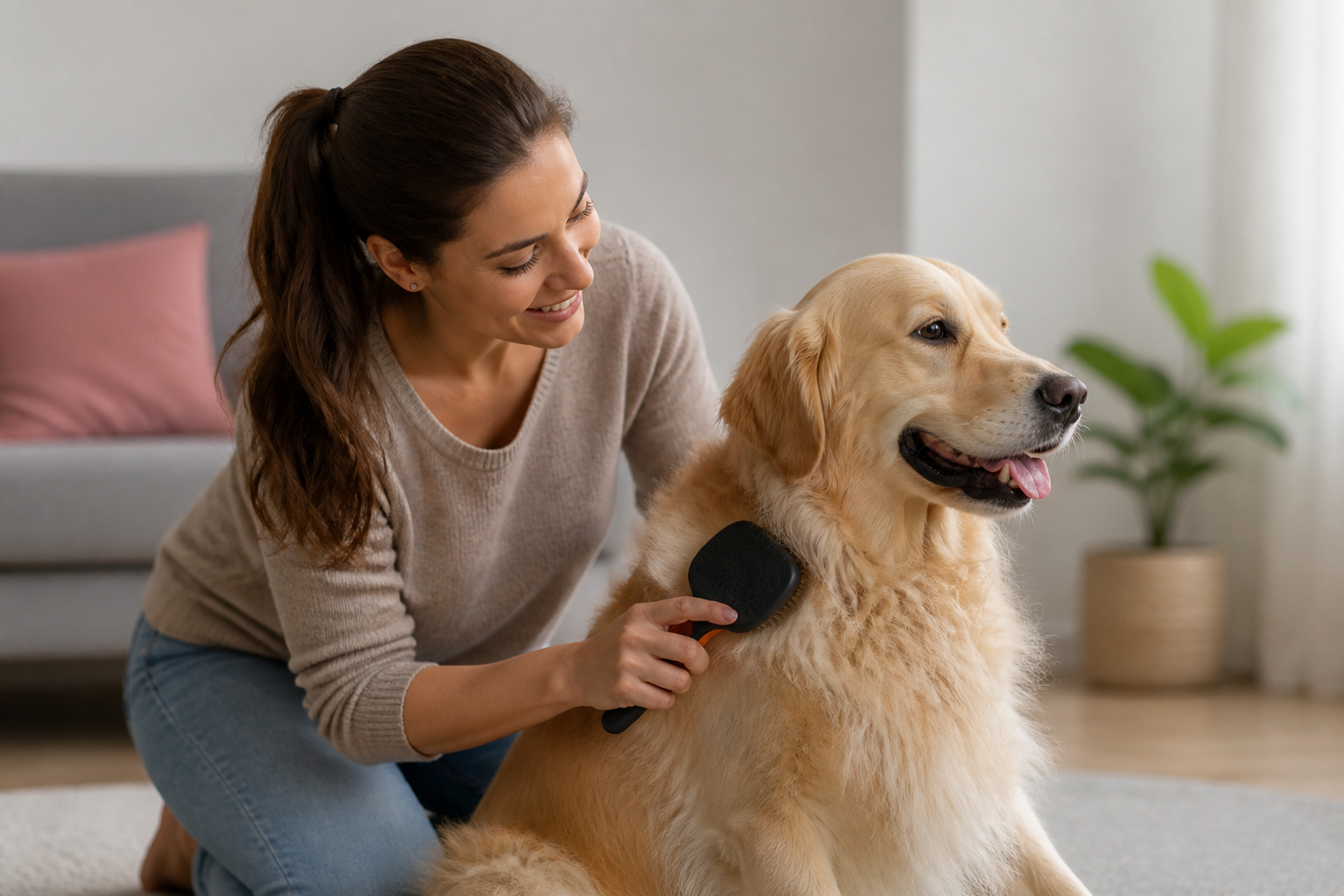
You are sitting on the rug after a long walk, and as you pet your dog, you notice a small, tight knot forming behind their ears. Or perhaps you have noticed that every time your Labrador shakes, a literal cloud of fur drifts onto your clean coffee table. These moments are when every pet owner asks the same question: how many times should I brush my dogs hair to keep them comfortable? At BaxterBoo, we have spent years helping owners find the right tools for every coat type, from the sleekest Boxer to the fluffiest Goldendoodle. Brushing is not just about aesthetics: it is a fundamental part of skin health, temperature regulation, and bonding. This guide will break down the ideal brushing frequency based on your dog's specific coat and needs.
Quick Answer: Most dogs require brushing 1 to 3 times per week to remove debris and distribute natural oils. However, dogs with long, curly, or double coats often need daily attention to prevent painful matting and manage heavy shedding.
Factors That Determine Brushing Frequency
There is no single answer that fits every dog. A short-haired Greyhound has vastly different needs than a Great Pyrenees. When we talk to customers at our warehouse, we explain that frequency usually boils down to three main factors: coat type, lifestyle, and the current season.
The Influence of Coat Type
The structure of the hair determines how easily it tangles. Dogs with a "hair" coat, like Poodles, do not shed in the traditional sense. Instead, the dead hair gets trapped in the curls, which leads to immediate matting if not brushed out daily. Conversely, smooth-coated dogs shed constantly but rarely tangle, meaning they can often go longer between sessions.
Lifestyle and Activity Level
If your dog is a "hiking buddy" who loves crashing through underbrush or swimming in local ponds, they will need more frequent brushing than a pampered lap dog. Outdoor adventures bring in burrs, seeds, and dried mud that can irritate the skin. We recommend a quick "once-over" with a brush after any significant outdoor excursion to catch debris before it settles.
Seasonal Changes
Most dogs "blow" their coats twice a year, usually in the spring and fall. During these transitions, the amount of loose fur increases dramatically. Even a dog that usually only needs a weekly brush might require daily sessions for a few weeks to keep the house from being buried in fur.
Key Takeaway: Your dog’s coat type is the primary driver of grooming frequency, but lifestyle and seasonal shedding will require you to adjust your routine as needed.
Brushing Frequency by Coat Type
To make it simple, we have broken down the standard recommendations for the most common coat categories.
| Coat Type | Common Breeds | Brushing Frequency |
|---|---|---|
| Short and Smooth | Boxers, Pugs, Beagles | 1 time per week |
| Short/Medium Double | Labs, German Shepherds | 2 to 3 times per week |
| Long Double | Goldens, Huskys, Pomeranians | 3 to 5 times per week |
| Curly or Wavy | Poodles, Doodles, Bichons | Daily (or every other day) |
| Silky or Straight | Yorkies, Maltese, Shih Tzus | Daily to 3 times per week |
Short and Smooth Coats
These dogs are the easiest to manage, but do not mistake "easy" for "never." Breeds like Boxers, Weimaraners, and Dalmatians have a single layer of short hair. We suggest brushing them at least once a week. This session is less about removing tangles and more about distributing the natural oils across the skin. This keeps the coat shiny and helps remove the fine, "needle-like" hairs that stick to furniture.
Short or Medium Double Coats
This category includes some of the most popular breeds, such as Labrador Retrievers and Beagles. These dogs have a soft, insulating undercoat and a tougher outer layer. They shed year-round. Brushing them 2 to 3 times a week is ideal. Using a tool like a rubber curry brush or a slicker brush from our dog brushes and combs collection helps pull out the dead undercoat before it ends up on your rug.
Long Double Coats
If you own a Golden Retriever, Newfoundlander, or an Australian Shepherd, you know that fur is a lifestyle. These dogs have long guard hairs and a thick, woolly undercoat. Because the hair is long, it is prone to matting in high-friction areas like the armpits and behind the ears. We recommend a minimum of 3 sessions per week, though daily is better during the high-shedding months. For more shedding guidance, read how Australian Shepherds shed and how to manage their coats.
Curly, Wavy, and Wire Coats
This group includes Poodles, Doodles, and various Terriers. These coats are often labeled "hypoallergenic," but they are actually high-maintenance. Because the hair does not fall out on its own, it twists around the live hair. If you do not brush these dogs daily, the hair will eventually form "pelts" of mats against the skin. These mats are painful and can trap moisture, leading to skin infections.
Silky and Straight Coats
Yorkshire Terriers and Maltese have hair that is very similar to human hair. It grows continuously and is very fine. To keep it from tangling, a quick daily brush with a pin brush is best. If you keep your dog in a "puppy cut" (short all over), you can usually scale this back to twice a week.
The Right Way to Brush Your Dog
Frequency matters, but technique is just as important. If you only brush the very top layer of a thick coat, mats can still form hidden underneath near the skin. This is a common issue we see with long-haired breeds.
The Line Brushing Technique
For any dog with a medium to long coat, we recommend "line brushing." This ensures you are reaching the skin.
- Use one hand to push the hair upward, exposing a "line" of skin.
- Use the brush in your other hand to brush the hair downward, away from that line.
- Move your hand up an inch and repeat the process.
- Work your way from the paws up toward the spine and from the tail toward the head.
Handling Sensitive Areas
Dogs have certain "friction zones" where mats are most likely to occur. Even if you are doing a quick maintenance brush, always check these spots:
- Behind the ears (where collars rub)
- The armpits
- The "trousers" (the back of the thighs)
- The base of the tail
- Where the harness or collar sits
Vet Tip: If you discover a mat that is tight against the skin, do not try to cut it out with scissors. A dog’s skin is very thin and moves easily: it is incredibly easy to accidentally cut the dog. Use a dedicated dematting tool or consult a professional groomer to safely shave the area.
Essential Tools for Your Grooming Kit
At our Vernon Hills warehouse, we stock hundreds of grooming tools because we know one brush does not fit all. Having the right kit makes the job faster and more comfortable for your dog.
The Slicker Brush
This is the workhorse of the grooming world. It has fine, short wires close together. It is perfect for removing loose hair and breaking up small tangles in double coats and curly coats. The Master Grooming Tools Self-Cleaning Slicker Brush is designed to remove loose hair, dirt, debris, mats, and tangles.
The Rubber Curry Brush
For short-haired dogs like Pugs or Labs, the rubber curry brush is king. The rubber nubs massage the skin, stimulating blood flow and pulling away loose hair. Most dogs find this very relaxing, making it a great tool for dogs that are nervous about grooming. The KONG Zoom Groom Natural Rubber Dog Grooming Brush is a classic example that we frequently recommend.
The Undercoat Rake
During shedding season, a standard brush is not enough. An undercoat rake has long tines that reach through the topcoat to pull out the "dead" woolly hair underneath. This is essential for Huskies, Malamutes, and German Shepherds.
The Steel Comb
A simple greyhound-style steel comb is the best way to check your work. After brushing, run the comb through the coat. If it catches, there is still a tangle that needs attention. This is the "gold standard" for ensuring your dog is truly tangle-free.
Why Brushing Matters for Health
Brushing is more than a beauty routine: it is a health check. When you spend ten minutes brushing your dog, you are also performing a physical exam.
Identifying Parasites
Regular brushing is the easiest way to spot fleas or ticks before they become a major problem. As you part the hair, look for "flea dirt" (small black specks) or the actual parasites. If you find signs of pests, our dog healthcare collection includes products for skin, coat, flea, and tick care.
Spotting Lumps and Bumps
By feeling your dog's body regularly, you will notice new lumps, skin tags, or fatty tumors immediately. Most of these are benign, but catching a suspicious growth early can be life-saving.
Managing Skin Conditions
Brushing helps distribute sebum, the natural oil that keeps skin hydrated and creates a protective barrier. It also allows you to see if the skin is red, flaky, or greasy. If you notice persistent redness, a foul odor, or excessive itching, it is time to consult your veterinarian. They may recommend medicated shampoos or treatments which you can then conveniently fulfill through our pet pharmacy.
Key Takeaway: Regular grooming sessions allow you to monitor your dog's body for health changes, parasites, and skin irritations that might otherwise go unnoticed.
Brushing Before and After a Bath
A common mistake is putting a matted dog into a bath. Water acts like glue for tangles. When a mat gets wet and then air-dries, it tightens significantly, often pulling the skin and causing pain.
- Before the bath: Always perform a thorough brush-out. Remove as much loose hair and as many mats as possible.
- During the bath: Use a high-quality shampoo suited for your dog's skin type.
- After the bath: Once the dog is dry, brush them again. The hair is often more "pliable" after a bath, and a post-bath brush-out helps remove any remaining loose fur that the water loosened up.
For additional bathing guidance, see these dos and don'ts for bathing your dog.
How to Help a Dog Who Hates Being Brushed
Not every dog loves the brush. If your dog runs away the moment they see the grooming kit, you need to rebuild that trust slowly.
Use High-Value Rewards
Keep a bag of small, delicious treats nearby. Show the dog the brush, and give a treat. Touch the dog with the back of the brush (not the bristles), and give a treat. Gradually work up to a single stroke.
Keep Sessions Short
You do not have to brush the whole dog in one sitting. If your dog is stressed, do one leg and call it a day. Five minutes of a positive experience is much better than thirty minutes of a struggle.
Choose the Right Time
Do not try to brush a high-energy puppy when they are ready to play. Wait until they are tired after a long walk or a meal. A sleepy dog is much more likely to tolerate being handled.
Seasonal Shedding Maintenance
Twice a year, the "fur-pocalypse" happens. This is when the undercoat sheds in large clumps to prepare for the changing temperature. During this time, the rules change.
- Increase Frequency: Double your brushing sessions. If you usually brush twice a week, move to daily.
- Use a Deshedding Tool: Tools specifically designed for deshedding can remove up to 90% of loose hair. However, use these carefully: over-using them in one spot can cause "brush burn" or skin irritation.
- Blow-Dry: If you have a high-velocity dryer, using it on a dry coat (outdoors!) can help "blow out" the loose undercoat before you even start brushing.
Bottom line: Adjusting your grooming frequency during the spring and fall will save your vacuum cleaner and keep your dog's skin from becoming irritated by trapped dead hair.
Final Thoughts
Determining how many times should I brush my dogs hair depends on your dog's unique coat, but consistency is always the most important factor. Whether it is a weekly massage for a Boxer or a daily routine for a Doodle, staying on top of grooming prevents pain, keeps your home cleaner, and strengthens your bond with your pet. We carry a massive selection of over 500 brands at BaxterBoo to ensure you have exactly what you need for a professional-level groom at home.
If you find that grooming reveals skin issues, allergies, or persistent scratching, remember to check with your veterinarian for a professional diagnosis. For any prescription needs, our pharmacy is ready to help with FDA-approved medications delivered right to your door. You can also make recurring grooming and healthcare purchases easier with our Autoship programme.
FAQ
Can I brush my dog too much?
While rare, you can over-brush if you use the wrong tools or too much pressure. This can cause "brush burn," which is characterized by red, irritated skin or even bald spots. Always use a gentle touch and ensure the tool you are using is designed for your dog's specific coat type.
What should I do if my dog has a very large mat?
If a mat is larger than a grape or tight against the skin, it is safest to have a professional groomer handle it. Attempting to brush out a severe mat can be very painful for the dog and may cause them to develop a fear of grooming. In many cases, the most humane option is to safely shave the mat.
Do short-haired dogs really need to be brushed?
Yes, short-haired dogs benefit from weekly brushing. It helps remove dead skin cells and loose "stiff" hairs that can irritate their skin. It also distributes natural oils, which provides a natural shine and keeps the skin's moisture barrier intact.
How do I know if I am using the right brush?
A good sign of a correct brush is that it effectively removes loose hair without causing your dog distress or skin redness. If the brush seems to glide over the top without catching any loose fur, or if your dog yelps during use, you likely need a different tool. You can always check our categorized grooming section for recommendations based on breed size and coat.






