
 Save 15% on your 1st Autoship learn more

 Email us
 Live Chat
 FAQs
FAQs





Introduction
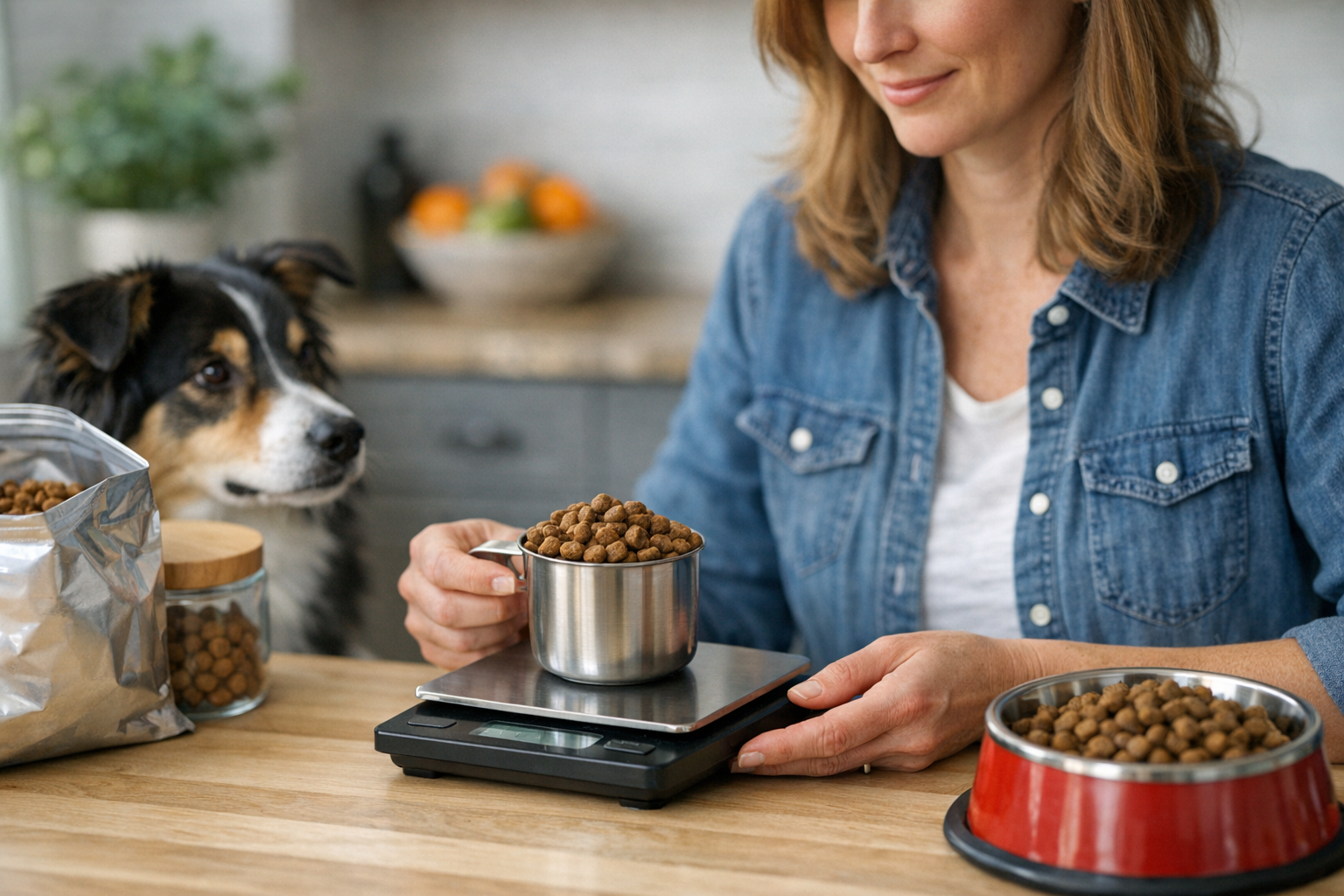
You stand in your kitchen with a plastic scoop in one hand and a bag of kibble in the other. You look at the feeding chart on the back of the bag. It says to feed your dog two cups per day. You fill the scoop twice and dump it into the bowl. It seems simple, but this moment is where many pet owners accidentally overfeed their dogs. At BaxterBoo, we talk to pet parents every day who are surprised to learn that a cup of food is not a universal unit of weight. Because kibble comes in so many shapes and sizes, one cup of one brand might weigh significantly more than another. If you are comparing options, our dry dog food category is a good place to start. This article covers why weight matters more than volume, how to convert measurements accurately, and why a digital scale is your best friend. Understanding these differences is the first step toward better weight management for your dog.
Quick Answer: On average, a standard 8-ounce measuring cup holds between 3 and 5 ounces of dry dog food by weight. The exact weight depends on the density, size, and shape of the kibble. Most standard dry foods average around 3.5 to 4 ounces per cup.
The Difference Between Volume and Weight
The most common mistake pet owners make is confusing fluid ounces with weight ounces. A standard measuring cup is designed to hold 8 fluid ounces of liquid. This is a measure of volume, or how much space something takes up. However, dog food is a dry solid. Dry goods do not settle like water. They have air pockets between the individual pieces.
When you use a measuring cup for kibble, you are measuring volume. The weight of that volume changes based on how much air is in the cup. If you have large, heart-shaped kibble, there will be big gaps between the pieces. If you have tiny, round pellets, they will pack together tightly. Even though both fill the same cup, the tiny pellets will weigh much more. This is why "one cup" is an unreliable measurement for nutrition.
The 8-Ounce Myth
Most people see "8 oz" on a measuring cup and assume that one cup of dog food weighs 8 ounces. In reality, a cup of dry dog food almost never weighs 8 ounces. Most kibbles are much lighter than water. If you feed your dog based on the assumption that a cup is 8 ounces of weight, you could be doubling their caloric intake without realizing it.
Why Kibble Measurements Vary
There is no industry standard for kibble size or density. Every manufacturer uses a unique recipe and a different extrusion process. This process determines how much the food "puffs" up when it is cooked. Here are the primary factors that change how much a cup of food weighs.
Kibble Shape and Air Gaps
Geometric shapes play a huge role in weight. Round or square kibble tends to settle more evenly. Irregular shapes like stars, triangles, or "X" shapes create larger air pockets. These air pockets take up space in your measuring cup but provide zero calories. A cup full of star-shaped kibble will almost always weigh less than a cup of small round kibble.
Density and Ingredients
Ingredients affect the weight of the food. Recipes with heavy meat meals and fats are often denser. Formulas that are high in fiber or designed as "weight plus" diets are often lighter. They are formulated to be "airy" so the dog feels full while consuming fewer calories. If you switch from a standard adult maintenance food to a high-protein performance food, the weight per cup will likely increase significantly.
Moisture Content
Even dry dog food contains a small amount of moisture, usually around 10 percent. If a bag of food is left open in a humid environment, the kibble can absorb a tiny bit of extra moisture. This makes the food heavier without adding any nutritional value. Conversely, in very dry climates, kibble can lose weight. While these changes are small, they contribute to the inconsistency of volume-based measuring.
Key Takeaway: Measuring by volume is inherently inaccurate because it ignores the density and shape of the kibble. Weighing food on a scale is the only way to ensure your dog gets the exact amount of nutrition required.
Common Weights for Trusted Brands
Different brands have different standards for what they consider a "cup." Some brands, like Orijen or Stella and Chewy's, produce very dense, nutrient-rich kibble. Other brands may have lighter, larger pieces. According to industry data and shared standards from manufacturers:
- The Honest Kitchen: Their dehydrated grain-free clusters often weigh around 4.0 ounces per cup. Browse our selection of The Honest Kitchen products if you want to compare options.
- Orijen: Their biologically appropriate kibble is dense, often weighing around 4.2 ounces per cup. See our selection of Orijen products for more choices.
- Ziwi Peak: Their air-dried food is extremely dense. Because it lacks the "puff" of traditional kibble, a small amount weighs much more than standard dry food. Explore our selection of Ziwi Peak products to see the difference.
- Standard Grocery Brands: Many mass-market brands are less dense, often weighing closer to 3.2 or 3.5 ounces per cup. You can also compare our selection of NutriSource products for another example of how formulas can vary.
The Risks of Inaccurate Measuring
The primary concern with measuring by the "scoop" is pet obesity. Many veterinarians believe that small, daily overages in food are the leading cause of the obesity epidemic in dogs. If you overfeed by just 10 percent every day, your dog could gain several pounds over a year.
Health Complications
Excess weight puts immense strain on a dog's body. It can lead to:
- Osteoarthritis and joint degeneration.
- High blood pressure and heart disease.
- Type 2 diabetes.
- Respiratory issues.
- Decreased lifespan.
If your dog is already struggling with weight or joint issues, we recommend speaking with your veterinarian about a prescription diet. Our dog healthcare category carries options for related wellness needs.
Vet Tip: If you can no longer easily feel your dog's ribs or see a defined waistline, they may be overweight. Consult your veterinarian before starting a restricted calorie diet to ensure there are no underlying metabolic issues like hypothyroidism.
How to Calculate Calories Using Weight
The most accurate information on a dog food bag is the calorie density. This is usually listed as kcal/kg (kilocalories per kilogram). Because a kilogram is a fixed unit of weight, this number never changes, regardless of the kibble shape.
Converting kcal/kg to Ounces
To find out how many calories are in an ounce of food, you can use a simple math formula. A kilogram is approximately 35.27 ounces. Divide the kcal/kg number on the bag by 35.27.
For example, if a bag of NutriSource food says it has 3,800 kcal/kg: 3,800 / 35.27 = 107.7 calories per ounce.
Once you know the calories per ounce, you can weigh out the exact amount your dog needs. If your vet recommends 540 calories per day, you would feed exactly 5 ounces of that specific food.
Step-by-Step: Transitioning to a Food Scale
Switching from a plastic scoop to a digital scale is the best thing you can do for your dog's long-term health. It takes less than ten extra seconds per meal.
Step 1: Determine the daily caloric goal. / Ask your veterinarian how many calories your dog should consume daily based on their ideal weight and activity level.
Step 2: Calculate the weight. / Use the formula above to figure out how many ounces (or grams) of your specific food equal that caloric goal.
Step 3: Tare the scale. / Place your dog's empty bowl on the digital scale and press the "tare" or "zero" button so the scale ignores the weight of the bowl.
Step 4: Pour and adjust. / Pour the kibble into the bowl until the scale hits your target weight.
Step 5: Monitor and refine. / Track your dog's body condition for two to four weeks. If they are losing weight too fast or still gaining, adjust the weight by a quarter ounce.
bottom line: Using a digital scale removes all the guesswork and variability caused by kibble shape and size.
Tools for Accurate Feeding
We carry a variety of tools to help you get the measurement right. While we love a good scoop for convenience, we always recommend pairing it with a scale for accuracy.
Digital Kitchen Scales
Any basic digital scale that measures in grams and ounces will work. Look for one with a large enough platform to hold your dog's bowl without covering the display screen.
Calibrated Scoops
If you prefer not to use a scale for every meal, you can use a scale once to "calibrate" a scoop. Mark a line on a clear plastic scoop that corresponds to the exact weight of your dog's meal. Remember that if you change brands or flavors, you must recalibrate the line.
Automatic Feeders
Some high-quality automatic feeders allow you to program meals by weight or small increments. These are excellent for pets that need multiple small meals throughout the day to manage hunger or blood sugar.
Factors Beyond the Bag
While the weight of the food is the most important factor, your dog's lifestyle dictates how much that weight should be. Every dog has a different metabolic rate.
Activity Levels
A working Border Collie and a senior Pug might weigh the same, but their caloric needs are worlds apart. The feeding guidelines on the bag are just a starting point. They usually assume a moderately active dog. If your dog mostly sleeps on the couch, you may need to reduce the weight of their daily food by 10 to 20 percent.
Age and Life Stage
Puppies need significantly more calories per ounce of body weight than adult dogs. They are building bone, muscle, and brain tissue. Conversely, senior dogs often have slower metabolisms. For older dogs, we often suggest looking into supplements like Cosequin or Senilife to support joint and cognitive health as they age.
Spaying and Neutering
Metabolism often slows down after a dog is spayed or neutered. Hormonal changes can lead to weight gain if the food portion isn't adjusted. Many owners find they need to reduce the weight of the daily meal by about 10 percent following these procedures.
Why the "Standard" Cup Varies by Brand
You might notice that a cup of Royal Canin feels different than a cup of Farmina. This is because companies use different extrusion temperatures and pressures. Higher pressure usually results in a denser kibble. Some brands also "top-dress" their kibble with fats and flavor enhancers after cooking. This adds weight to the outside of the kibble without changing the size. If you are comparing dense or air-dried options, our selection of Stella & Chewy's products is worth a look.
The "Heaping" vs. "Level" Problem
Even if two people use the same cup, they will measure different amounts. One person might "heap" the scoop, while another might shake it until it is level. A heaping cup can contain up to 25 percent more food than a level cup. Over time, this inconsistency makes it impossible to know why a dog is gaining or losing weight.
Managing Multi-Pet Households
Feeding becomes even more complex when you have multiple dogs. It is tempting to use one scoop for everyone, but this often leads to the smaller dog becoming overweight.
- Use separate, labeled bins for different foods.
- Weigh each dog's portion individually.
- Feed in separate rooms if one dog tends to steal food from others.
- Track the weight of the food in a notebook or app if multiple family members handle feeding duties.
Consistency across the household is key. If the kids are scooping and the parents are weighing, the dog's caloric intake will fluctuate wildly. Everyone should be trained to use the scale.
Summary of Feeding Accuracy
Taking the time to understand the weight of your dog's food pays off in fewer vet visits and a longer life for your pet. While the bag gives you a range, your scale gives you the truth.
- A cup of food usually weighs between 3 and 5 ounces.
- Volume (cups) is less accurate than weight (ounces/grams).
- Kibble shape creates air gaps that skew volume measurements.
- Obesity is a major health risk that starts with over-scooping.
- Use the kcal/kg info on the bag to find the exact weight needed.
We are here to help you navigate your pet's nutritional journey. Whether you are looking for the best premium kibble or need to manage a health condition through our pharmacy, we have the expertise to guide you. For the most convenience, many of our customers use our Autoship programme. It ensures you never run out of food and provides savings on your orders, along with a free MVP Gold membership.
Bottom line: Stop measuring by the scoop and start measuring by the ounce to help your dog stay fit and healthy.
FAQ
How many cups are in a 30-pound bag of dog food?
On average, a 30-pound bag contains approximately 120 cups of food. This is based on a standard weight of 4 ounces per cup. If your kibble is very light, the bag may contain closer to 140 cups, while a very dense food might only yield 100 cups.
Is a dog food scoop the same as a kitchen measuring cup?
Not necessarily. Many promotional dog food scoops are not accurately calibrated to US standard cup measurements. Some are larger or smaller to encourage certain feeding habits. Always check your scoop against a standard kitchen measuring cup or a digital scale to ensure accuracy.
Does 1 cup of puppy food weigh more than 1 cup of adult food?
Puppy food is often denser and higher in fat, which can make it weigh more per cup. However, some puppy kibbles are made into very small pieces that pack tightly, while others are puffed up to be easier for small teeth to crunch. Always weigh a cup of new food when transitioning from puppy to adult formulas.
Why does the feeding chart on the bag give a range instead of a single number?
The range accounts for the fact that every dog has a different activity level and metabolism. A 50-pound dog that runs five miles a day needs more food than a 50-pound dog that stays indoors. Use the lower end of the range for less active dogs and the higher end for athletes.
More ways to keep portions on track
If you want to tighten up your feeding routine, our blog post on how many cups are in 24 pounds of dry dog food can help you plan bag timing and meal portions.
Feeding freshness matters
If your dog finishes bags slowly, our guide to dry dog food freshness is a helpful follow-up for storage and shelf-life basics.
Dry and freeze-dried options
For readers comparing different textures, our freeze-dried dog food guide explains why serving size can look very different from traditional kibble.
Air-dried alternatives
If you are weighing denser formulas, our air-dried dog food article is another useful read.
Portioning for smaller dogs
If you are feeding a toy breed or a small companion, our feeding guide for a 15 pound dog can help you translate cup counts into daily meals.
Smarter savings on repeat purchases
Once you find the right formula, our MVP Rewards programme can help you keep earning back on the food you buy most often.






