
 Save 15% on your 1st Autoship learn more

 Email us
 Live Chat
 FAQs
FAQs





Introduction
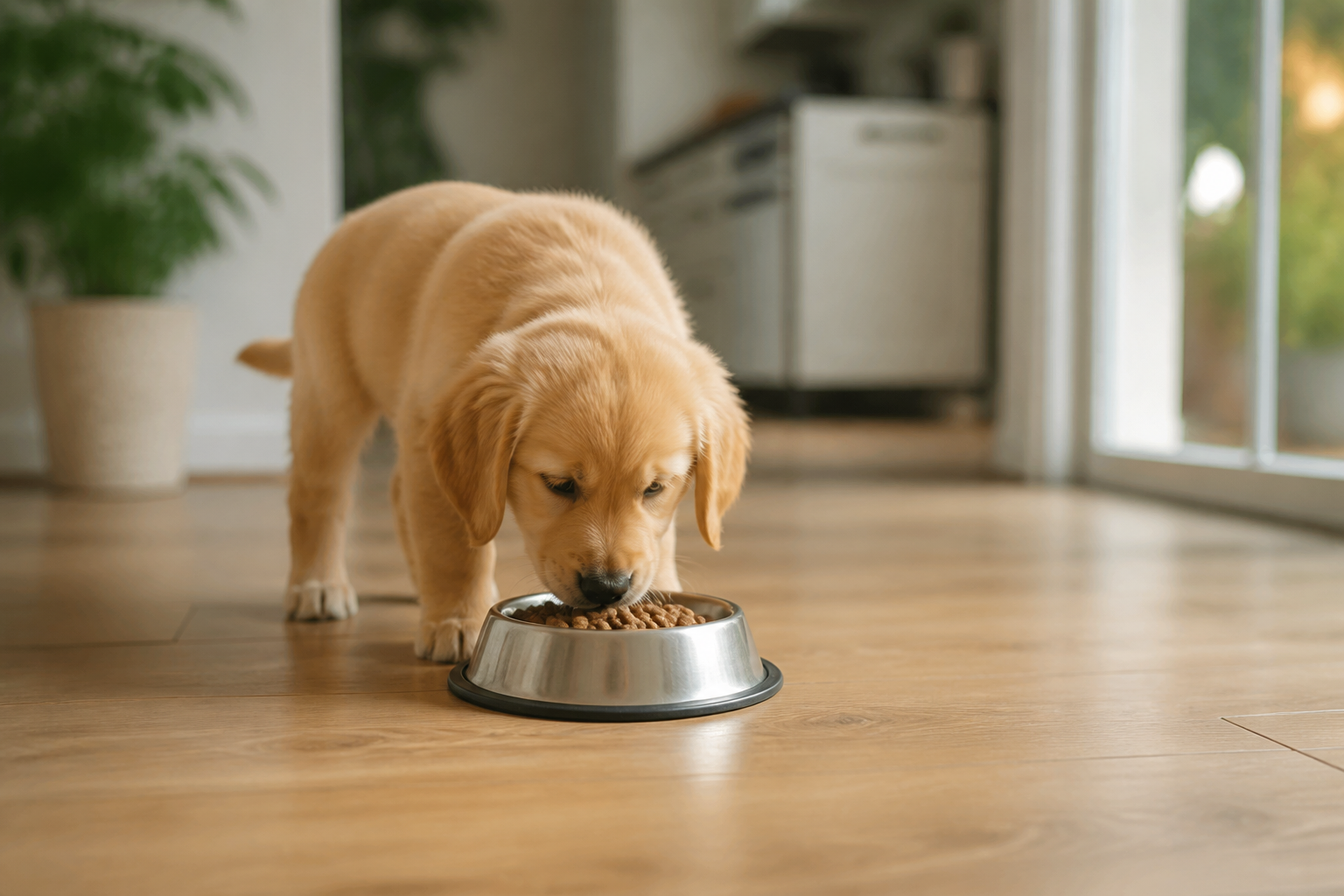
Bringing a new puppy home involves a whirlwind of excitement, chewed slippers, and the inevitable question of what belongs in the food bowl. You stand in the kitchen with a measuring scoop in hand, wondering if those eager eyes mean your pup is actually hungry or just hoping for a second breakfast. At BaxterBoo, we know that getting puppy nutrition right is one of the most important jobs you have as a new pet parent. The amount you feed now serves as the literal building blocks for their future bone density, muscle tone, and immune health. This guide will walk you through how to calculate daily portions, understand feeding charts, and adjust for your puppy as they grow. We want to help you move past the guesswork and feel confident that you are fueling your newest family member for a long, healthy life.
Quick Answer: Most puppies require between one half cup and three cups of dry food daily, divided into three or four small meals. The specific amount depends entirely on their current weight, their expected adult size, and the calorie density of the specific brand you choose.
Why Puppy Nutrition Requires a Specific Approach
Puppies are not just smaller versions of adult dogs. Their bodies are undergoing rapid biological changes that require a different balance of nutrients than a mature dog needs. When you browse the shelves at our warehouse or online, you will notice that puppy-specific formulas are higher in protein and fat. This is because growing puppies can require up to twice the energy intake of an adult dog of the same size.
They also need specific levels of calcium and phosphorus for skeletal development. This balance is especially delicate for large breed puppies. If they grow too quickly, they can develop joint and bone issues later in life. Brands like our NutriSource selection, Open Farm, and Orijen focus on these precise ratios to ensure steady, healthy growth rather than a dangerous growth spurt.
Furthermore, many premium puppy foods include DHA, an omega-3 fatty acid found in mother's milk. This nutrient is essential for brain and vision development. While an adult dog can maintain health on a maintenance diet, your puppy needs these "growth" nutrients to reach their full potential.
Factors That Influence Daily Portions
No two puppies are identical, even if they come from the same litter. Several variables will dictate exactly how much you should put in the bowl each morning.
Expected Adult Weight
This is the most significant factor in puppy feeding. Most feeding charts on the back of a bag are organized by how much your dog will weigh when they are fully grown. A Chihuahua puppy and a Great Dane puppy might weigh the same at eight weeks old, but their nutritional paths will diverge almost immediately.
Current Age and Metabolic Rate
Puppies burn through calories at an incredible rate during their first six months. As they approach one year, their metabolism begins to stabilize. You will likely find that you are feeding more food per pound of body weight at four months old than you will at ten months old.
Activity Level
A puppy who spends their afternoon at a doggy daycare or hiking in the woods will naturally need more fuel than a puppy who prefers napping on the rug. If your pup is exceptionally active, you may need to increase their daily intake by ten or fifteen percent.
Breed Size Specifics
- Small and Toy Breeds: These pups have very high metabolic rates and small stomachs. They are prone to low blood sugar if they go too long without eating.
- Medium Breeds: These dogs generally follow a standard growth curve and are the easiest to track using general feeding charts.
- Large and Giant Breeds: These puppies stay on puppy food longer and require controlled calorie intake to prevent them from becoming too heavy while their joints are still soft.
How to Read a Puppy Feeding Chart
The chart on the back of your dry food bag is your primary tool, but it can be confusing. Most people make the mistake of looking at the current weight only. Instead, follow these steps to find the right baseline.
Step 1: Determine the expected adult weight. / If you have a purebred, this is easy to find. For mixed breeds, ask your veterinarian for an estimate or use a DNA kit to see the breed makeup.
Step 2: Locate the age column. / Find the section that matches your puppy’s current age in months.
Step 3: Find the intersection. / Look for where the expected adult weight meets the current age. This number is usually the total amount for the entire 24 hour period, not per meal.
Step 4: Divide the total. / If the chart says two cups and you feed three times a day, give roughly two thirds of a cup at each meal.
Key Takeaway: Feeding charts are starting points, not rules. Your puppy’s individual metabolism may require you to adjust the amount up or down by ten percent to maintain a healthy body condition.
Recommended Feeding Frequency by Age
Because puppies have small stomachs, they cannot handle their entire daily calorie needs in one or two sittings. Spreading the food out helps maintain steady energy levels and aids digestion.
| Puppy Age | Daily Frequency | Reason |
|---|---|---|
| 6 to 12 weeks | 4 meals per day | Smallest stomachs, highest energy needs. |
| 3 to 6 months | 3 meals per day | Sustained growth, slightly better stomach capacity. |
| 6 to 12 months | 2 meals per day | Approaching adult metabolism and size. |
| 12+ months | 1 to 2 meals per day | Transitioning to adult maintenance schedules. |
Following a consistent schedule also makes house training much easier. Puppies usually need to go outside fifteen to thirty minutes after eating. If you know exactly when they eat, you will know exactly when they need a potty break.
Monitoring Your Puppy’s Body Condition
The scale is not the only way to tell if you are feeding the right amount. In fact, looking at and feeling your puppy is often more accurate. You want your puppy to have a "tuck" at the waist when viewed from above.
You should be able to feel their ribs easily under a thin layer of fat, similar to how the back of your hand feels. If you can see the ribs clearly, they likely need more food. If you cannot feel the ribs at all, or if they look round like a sausage, it is time to slightly reduce the portion.
Vet Tip: Rapid weight gain in large breed puppies can lead to developmental orthopedic diseases. Always consult your veterinarian if you are unsure about your puppy’s growth rate or if they seem to be gaining weight too quickly for their frame.
The Role of Treats in the Daily Count
It is hard to resist those puppy eyes, and treats are essential for training. However, these calories count toward the daily total. We recommend following the 90/10 rule: ninety percent of daily calories should come from balanced puppy food, and only ten percent should come from treats.
If you are doing a heavy training session, consider using a portion of their daily dry kibble as the reward. This ensures they get the nutrients they need without overshooting their calorie goals. High quality brands we carry, such as our Stella & Chewy's selection, offer nutrient dense treats that can complement a healthy diet, but they should never replace the main meal.
When to Switch to Adult Food
Knowing when to stop feeding puppy food is just as important as knowing how much to give. Feeding puppy food for too long can lead to obesity or nutrient imbalances in adults.
- Small Breeds: Usually reach maturity between 9 and 12 months.
- Medium Breeds: Typically transition around 12 months.
- Large Breeds: May need puppy or "all life stages" food until 18 or even 24 months.
When you make the switch, do it gradually over a week. Mix 25 percent of the new adult food with 75 percent of the puppy food for two days. Move to a 50/50 split for the next two days, then 75 percent adult food for the final two days. This prevents the stomach upset that often comes with sudden diet changes.
Special Nutritional Needs and Prescription Diets
Sometimes, a standard bag of dry food is not enough. Some puppies have sensitive stomachs, food allergies, or specific health conditions that require a more tailored approach. If your puppy is struggling with chronic loose stools, skin irritations, or slow growth, a prescription diet might be necessary.
Through our partnership with Pet's Choice, the BaxterBoo pharmacy offers access to FDA approved medications and prescription pet foods. Brands like Farmina Vet Life offer specialized formulas for weight management or gastrointestinal support that can be vital for puppies with unique medical needs. These diets are formulated under strict clinical guidelines to address health issues while still providing the growth nutrients a puppy requires.
Signs Your Puppy Might Need a Different Food
- Frequent vomiting or extremely soft stools.
- Excessive itching or red, inflamed skin.
- Lack of interest in food or very low energy levels.
- Failure to gain weight despite eating the recommended amount.
If you notice these signs, your first step should be a visit to the veterinarian. They can determine if the issue is a simple fix or if your pup requires a specialized diet from our pet pharmacy.
Checklist for New Puppy Owners
- Choose a high quality puppy formula from a trusted brand like Acana, NutriSource, or Royal Canin.
- Verify your puppy's expected adult weight with your vet.
- Purchase a standard measuring cup to ensure portions are exact every time.
- Set a feeding schedule and stick to it to help with potty training.
- Monitor body condition weekly and adjust portions by small amounts as needed.
- Enroll in a rewards program like the MVP Rewards programme to save on the frequent purchases of the first year.
Key Takeaway: Consistency is the secret to a healthy puppy. Feeding at the same times and using precise measurements prevents the digestive upsets and weight fluctuations that can stall development.
Managing the Cost of Puppy Growth
Puppies eat a lot, and the costs can add up quickly during that first year of rapid growth. We offer several ways to make high quality nutrition more affordable. Our Frequent Buyer Program allows you to earn free products on participating brands that you are already buying. Additionally, setting up an Autoship order ensures you never run out of food and provides savings on your orders. Since puppies need to eat consistently, having their favorite dry food arrive at your door on a schedule is both a time saver and a budget friendly choice.
Common Feeding Mistakes to Avoid
Even the most well intentioned pet owners can fall into common traps. One of the most frequent mistakes is "free feeding," which involves leaving a full bowl of food out all day. This makes it impossible to track how much your puppy is actually eating and can lead to overeating and obesity.
Another mistake is adding too many toppers or "people food" to the kibble. While a little bit of plain cooked chicken is fine, rich table scraps can cause pancreatitis or simply make your puppy a picky eater who refuses their balanced dry food. Stick to the kibble as the foundation.
Bottom line: Your puppy's nutritional needs will change every few weeks during their first year, so stay observant and ready to adjust their portions.
The Importance of Fresh Water
While we focus heavily on the dry food, hydration is equally important. Puppies are active and can dehydrate quickly. Always ensure your puppy has access to a clean bowl of fresh water. If you notice your puppy is not drinking much, you can slightly moisten their dry kibble with warm water. This not only adds hydration but also brings out the aroma of the food, which can be helpful for teething puppies with sore gums.
Conclusion
Feeding your puppy is about more than just filling a bowl: it is about providing the foundation for a lifetime of health. By understanding your puppy's expected adult weight, following a consistent schedule, and monitoring their body condition, you can ensure they grow at a safe and steady pace. We carry over 500 trusted brands to ensure you have access to the best possible nutrition for your specific breed and lifestyle. Whether you are browsing our warehouse in Vernon Hills or ordering online for home delivery, our goal is to provide the expert guidance you need. For puppies with specific health challenges, remember that our pharmacy for dogs is available to provide prescription diets and support.
Next Step: Browse our puppy food category or set up our Autoship programme to ensure your growing pup never misses a meal.
FAQ
How do I know if I am overfeeding my puppy?
If your puppy loses their visible waistline and begins to look round or barrel-shaped, you are likely overfeeding. Another sign is the presence of very soft or loose stools, which can indicate the digestive system is overwhelmed by too much food. Adjust the portion size down by ten percent and monitor their condition for a week.
What should I do if my puppy is always acting hungry?
Puppies often act hungry even when they have had enough calories because they are naturally opportunistic eaters. Ensure you are using a high-quality, nutrient-dense food that keeps them full longer. If they are maintaining a healthy weight and energy level, resist the urge to add more food, as overfeeding can lead to skeletal issues.
Can I feed my puppy adult dog food if I run out?
In an absolute emergency, a single meal of adult food will not harm them, but it should not become a habit. Adult food lacks the higher levels of protein, fat, and minerals like calcium that puppies need for development. If you find yourself running low frequently, our Autoship programme can help ensure you always have puppy-specific food on hand.
When is the best time to switch from three meals a day to two?
Most puppies are ready to move to two meals a day around six months of age. By this time, their stomach capacity has increased, and their growth rate is beginning to slow slightly. If you have a toy breed, you might wait a little longer to ensure their blood sugar remains stable throughout the day.






