
 Save 15% on your 1st Autoship learn more

 Email us
 Live Chat
 FAQs
FAQs





Introduction
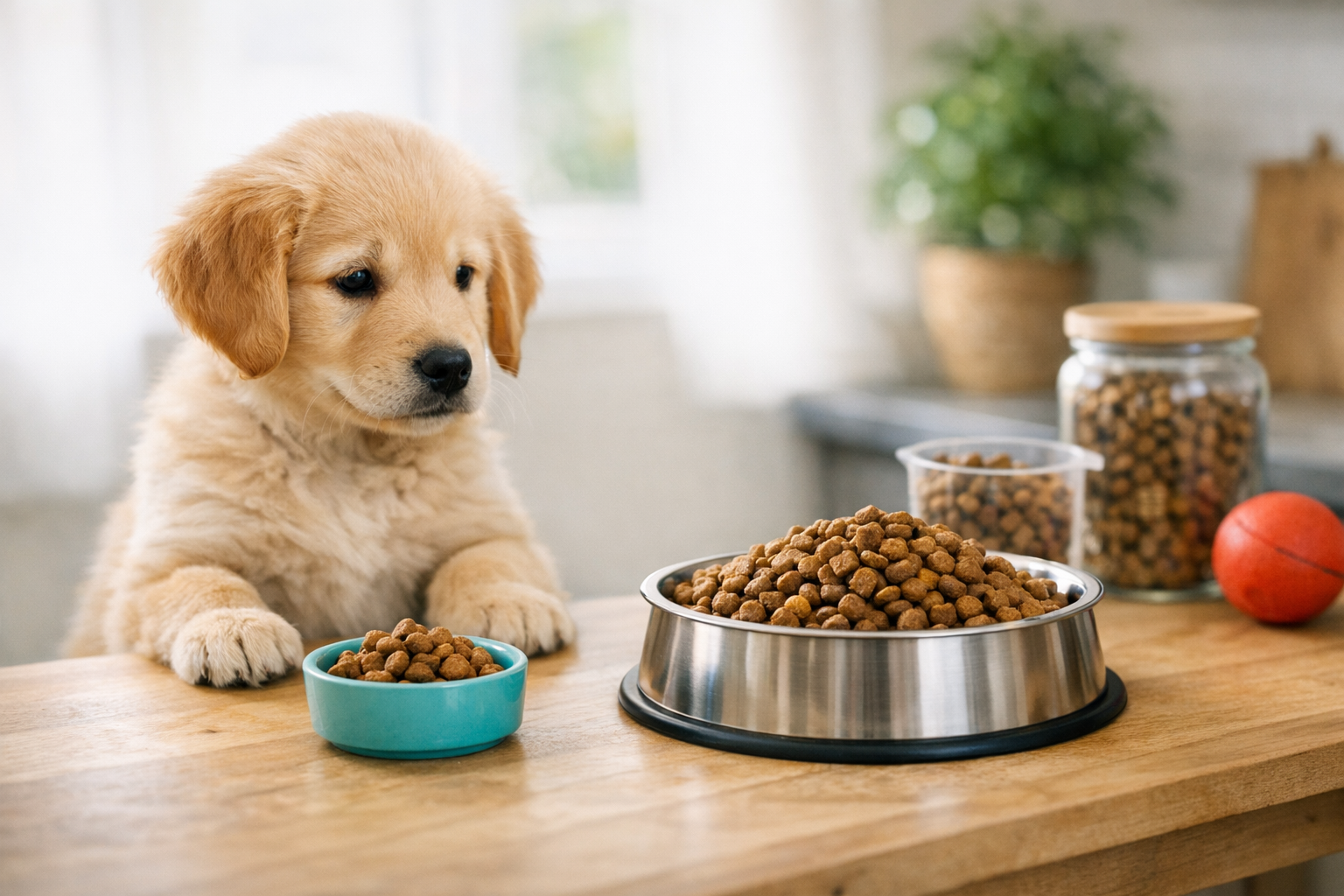
Bringing a new puppy home is a whirlwind of wagging tails and sharp little teeth. But the moment you stand over a food bowl with a measuring scoop, the pressure sets in. You want to provide enough fuel for those zoomies without overfeeding your new best friend. At BaxterBoo, we know that getting the portion size right is about more than just a full belly. It is the foundation for healthy joints, a strong heart, and a shiny coat. This guide covers how to use feeding charts, how to adjust for breed size, and how to spot the signs that your puppy needs a little more or less in their bowl. Our goal is to take the guesswork out of mealtime so you can focus on training and bonding.
Quick Answer: Most puppies need between 1/2 cup and 4 cups of dry food daily, divided into three or four meals. The exact amount depends on their current age and their expected weight as an adult dog.
Understanding the Factors of Puppy Nutrition
The amount of food your puppy needs is not a static number. It changes almost weekly during the first six months of life. Several factors influence how much kibble should go into that bowl. Unlike adult dogs, puppies are building bone, muscle, and organ tissue all at once. This requires a much higher caloric intake per pound of body weight than a mature dog needs.
Expected Adult Weight
This is perhaps the most important factor. A Chihuahua puppy and a Great Dane puppy may look similar in size at a very young age. However, their nutritional paths are wildly different. We categorize puppies by their "weight at maturity." This helps determine if they need a standard puppy formula or a large breed specific diet. Large breeds need controlled growth to prevent orthopedic issues. Small breeds need calorie dense kibble to fuel their high metabolisms.
Age and Growth Stages
A puppy’s needs peak during their most rapid growth phases. For most dogs, this happens between two and six months of age. During this window, they may actually eat more than they will as an adult. As their growth slows down, their caloric requirements will level off.
Activity Level
Just like humans, a puppy who spends all day wrestling in the yard burns more fuel than one who prefers long naps. While most puppies are naturally active, you should observe their energy. If your puppy seems lethargic, they might not be getting enough calories to support both growth and play.
Key Takeaway: Always feed based on the expected adult weight of your dog rather than just their current puppy weight. This ensures they get the right balance of nutrients for their specific frame.
The Puppy Feeding Chart
Most high quality dry dog foods provide a feeding chart on the back of the bag. These charts are helpful starting points. However, they are often based on broad averages. You should use them as a baseline and then adjust based on your puppy’s individual body condition.
| Weight at Maturity | 1.5 to 3 Months | 4 to 5 Months | 6 to 8 Months | 9 to 11 Months |
|---|---|---|---|---|
| 3 to 12 lbs | 1/2 to 1 cup | 2/3 to 1.3 cups | 1/2 to 1.5 cups | Adult Food |
| 13 to 20 lbs | 1/2 to 1.25 cups | 1.1 to 2 cups | 3/4 to 1.3 cups | 1 to 1.5 cups |
| 21 to 50 lbs | 1/2 to 1.5 cups | 1.5 to 2.75 cups | 1.1 to 2.3 cups | 2 to 3 cups |
| 51 to 75 lbs | 5/8 to 2.3 cups | 1.5 to 4 cups | 1.5 to 3.75 cups | 2.5 to 4.75 cups |
| 76 to 100 lbs | 1 to 2.6 cups | 2.8 to 3.75 cups | 2.8 to 6.3 cups | 3.8 to 7 cups |
These amounts represent the total daily intake. You must divide this total by the number of meals you serve each day. For example, if the chart recommends 1 cup and you feed three times a day, each meal should be roughly 1/3 of a cup.
How to Estimate Adult Weight
If you have a purebred puppy, your breeder or a breed standard chart can give you a target weight. For mixed breeds, it can be a bit more of a guessing game. A common rule of thumb is to look at the size of their paws and the amount of loose skin they have. You can also ask your veterinarian for an estimate during your first wellness check.
Adjusting for Caloric Density
Not all dry foods are created equal. One cup of a premium brand like Orijen may have significantly more calories than a cup of a budget grocery store brand. Always check the "kcal/cup" measurement on the label. If you switch brands, you must re-calculate the portion size even if the bag weight is the same.
Vet Tip: If you are unsure about your puppy's growth rate, ask your vet to show you how to check their Body Condition Score. You should be able to feel their ribs easily but not see them. A visible waistline when looking from above is a sign of a healthy weight.
How Often Should a Puppy Eat?
Frequency is just as important as quantity. Puppies have very small stomachs. They cannot process their entire daily caloric requirement in one or even two sittings. Spreading meals out helps maintain steady blood sugar levels and prevents digestive upset.
Step 1: Determine the daily total. / Use the feeding chart on your bag or the table provided above to find the total cups per day. Step 2: Divide by age requirements. / Younger puppies need more frequent, smaller meals to stay energized. Step 3: Establish a routine. / Feed at the same times every day to help with house training and digestion.
Feeding Schedule by Age
- 6 to 12 weeks: Four meals per day. This is the stage where they are growing the fastest and have the least stomach capacity.
- 3 to 6 months: Three meals per day. Most puppies can handle slightly larger portions by this point.
- 6 to 12 months: Two meals per day. This is the transition period toward an adult feeding schedule.
Small Breed Specifics
Toy and small breeds like Yorkies or Chihuahuas are prone to hypoglycemia. This is a dangerous drop in blood sugar. Because of this risk, they may need to stay on a four meal per day schedule longer than larger dogs. Keeping a small amount of food in their system throughout the day is a vital safety measure.
Bottom line: Consistent meal times help regulate your puppy's bathroom schedule and keep their energy levels stable throughout the day.
Choosing the Right Dry Food Formula
The ingredients in the kibble dictate how much your puppy needs to eat to feel full and stay healthy. Puppies require specific levels of certain nutrients that adult dog food simply does not provide. We carry over 500 trusted brands at BaxterBoo to ensure you can find the specific formula that fits your puppy’s needs.
Key Nutrients for Puppies
- Protein: Look for high quality animal proteins like chicken, beef, or lamb. This supports muscle development.
- DHA: This is an omega-3 fatty acid often found in fish oil. It is essential for brain and vision development.
- Calcium and Phosphorus: These must be in a specific ratio. Too much calcium can cause bone deformities in large breeds, while too little can lead to weak bones.
- Healthy Fats: These provide the concentrated energy puppies need for growth.
Dry vs. Wet Food
While this guide focuses on dry food, many owners choose to mix in a bit of wet food. Dry kibble is excellent for dental health as the crunching helps scrape away plaque. It is also more cost effective and easier to store. If you do mix in wet food, remember to reduce the amount of dry kibble accordingly. A standard 13 ounce can of wet food often replaces about one cup of dry kibble.
Key Takeaway: High quality puppy food is more nutrient dense. This means you can often feed smaller portions than you would with a lower quality brand while still meeting all nutritional needs.
When to Use Prescription Puppy Food
Sometimes a standard puppy formula is not enough. Some puppies have sensitive stomachs, severe allergies, or growth related health conditions. In these cases, your veterinarian might recommend a prescription diet. These foods are formulated to manage specific medical issues while still providing the growth nutrients a puppy needs.
Our pet pharmacy provides access to FDA approved prescription pet foods through our partnership with Pet's Choice. If your vet prescribes a specific diet from brands like Farmina Vet Life or Royal Canin, we can help you get those specialized meals delivered to your door. This is a common path for puppies who struggle with chronic diarrhea or skin issues that do not resolve with standard over the counter options.
Managing Weight Issues
If your puppy is gaining weight too quickly, do not simply put them on a "lite" adult food. This can deprive them of essential growth minerals. Instead, talk to your vet about a prescription weight management puppy food. These formulas are designed to keep a puppy feeling full while strictly controlling fat and calorie intake.
Vet Tip: Never switch your puppy to a prescription diet or a restrictive weight loss plan without consulting a professional. Puppies need a delicate balance of nutrients that should only be altered under veterinary supervision.
The 90/10 Rule for Treats and Snacks
It is incredibly hard to resist those puppy eyes. However, overdoing treats is a fast way to unbalance a puppy’s nutrition. Treats are often high in calories but low in the essential vitamins and minerals your puppy needs for development.
To keep your puppy on track, follow the 90/10 rule. At least 90 percent of their daily calories should come from their balanced puppy kibble. The remaining 10 percent can come from treats. This includes training rewards, dental chews, and the occasional bite of dog safe fruit.
Healthy Training Rewards
- Small pieces of freeze dried liver.
- Crunchy baby carrots or green beans.
- A few pieces of their regular kibble taken out of their daily meal portion.
- Specialized puppy training treats that are low in calories.
If you are in a heavy training phase, remember to subtract the caloric value of those treats from their dinner bowl. This prevents "calorie creep" that can lead to early onset obesity.
Transitioning to Adult Food
Knowing when to stop feeding puppy food is just as important as knowing how much to give. Feeding puppy food for too long can lead to unnecessary weight gain. Most dogs are ready to switch to adult food when they reach about 80 to 90 percent of their adult size.
Timing the Switch
- Small breeds: Usually ready between 9 and 12 months.
- Medium breeds: Usually ready around 12 months.
- Large and giant breeds: May need puppy food for 18 to 24 months to support slow bone growth.
How to Transition
Do not swap the food overnight. A sudden change can cause significant stomach upset and diarrhea. Instead, use a seven day transition period.
- Days 1 and 2: 75% puppy food, 25% adult food.
- Days 3 and 4: 50% puppy food, 50% adult food.
- Days 5 and 6: 25% puppy food, 75% adult food.
- Day 7: 100% adult food.
During this week, keep a close eye on your dog’s stool. If it becomes soft or loose, slow the transition down and give their digestive system more time to adjust.
Bottom line: Transitioning to adult food is a major milestone that should be timed based on your dog's specific breed size and maturity rate.
Conclusion
Feeding your puppy the right amount of dry food is one of the most impactful things you can do for their long term health. By using a feeding chart as a baseline, monitoring their body condition, and sticking to a consistent schedule, you set them up for a vibrant life. Remember that every puppy is an individual. What works for one might need adjustment for another. We invite you to explore our dog food category to find the perfect match for your pet's needs. Whether you choose a grain free option, a large breed formula, or a prescription diet through our pharmacy partnership, we are here to support your journey. To make things even easier, consider signing up for our Autoship programme. You will save on your first order and ensure you never run out of the food your growing puppy depends on.
FAQ
How do I know if I am underfeeding my puppy?
If your puppy’s ribs, spine, or hip bones are clearly visible, they likely need more calories. Other signs include a dull coat, extreme lethargy, or a constant search for food even after eating. Always check with a vet if you see these signs, as they can also indicate parasites or malabsorption issues.
Can I leave food out all day for my puppy?
Free feeding is generally discouraged for puppies because it makes house training much harder. When you feed at set times, you can predict when your puppy will need to go outside. It also allows you to monitor exactly how much they are eating, which is vital for spotting early signs of illness.
Why is my puppy always hungry even though I feed the recommended amount?
Puppies go through intense growth spurts where their energy needs skyrocket. If they are maintaining a healthy weight but still seem ravenous, you might need to increase their portion slightly. However, if they are gaining weight too fast, the hunger might just be a behavioral trait common in certain breeds like Labradors.
What should I do if my puppy refuses to eat dry kibble?
Try softening the kibble with a little bit of warm water or low sodium chicken broth. Teething can make hard kibble painful to chew for some puppies. If the refusal lasts for more than two meals or is accompanied by vomiting or lethargy, contact your veterinarian immediately to rule out health problems.






