
 Save 15% on your 1st Autoship learn more

 Email us
 Live Chat
 FAQs
FAQs





Introduction
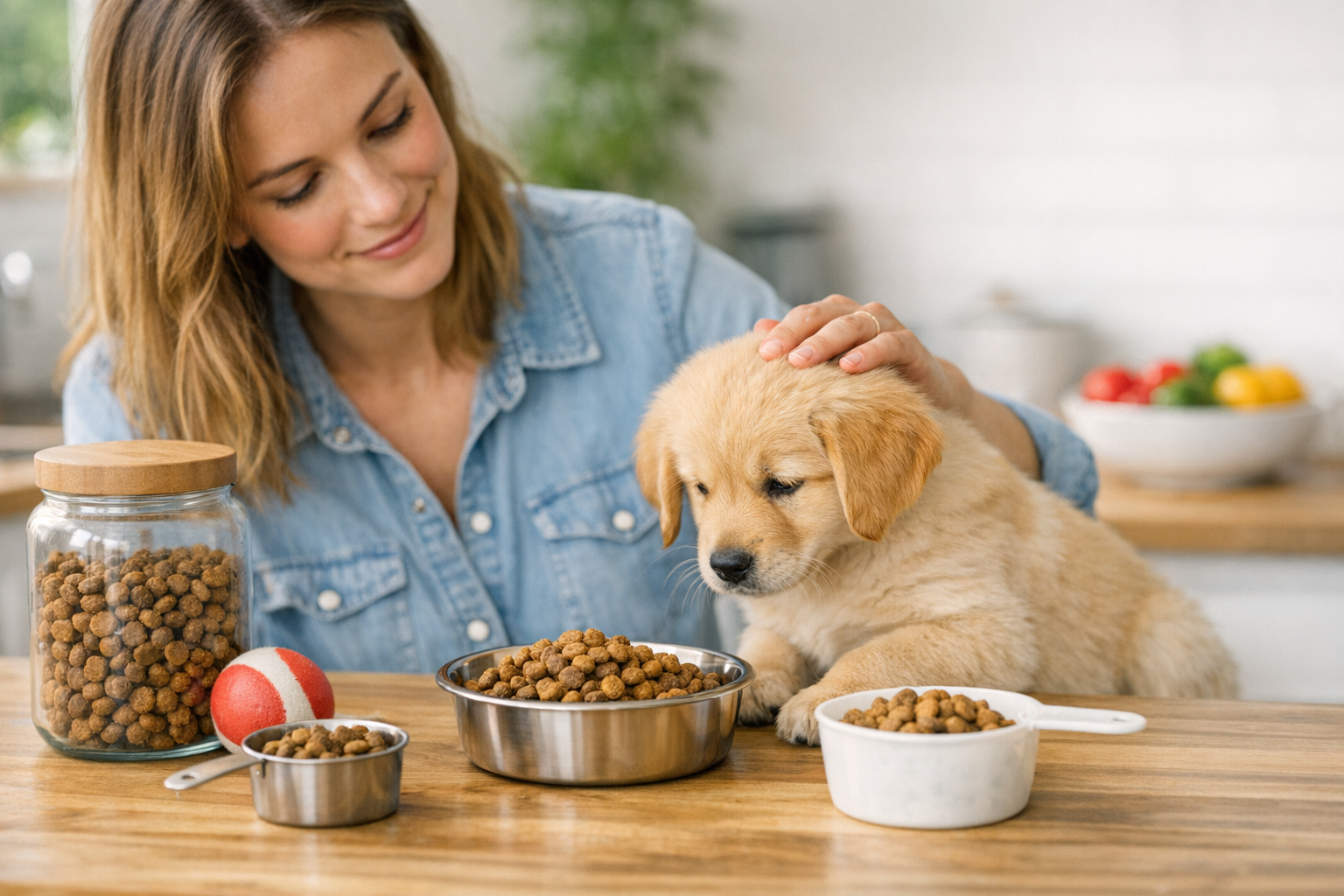
You are standing in the kitchen with a fresh bag of kibble and a wiggly, hungry puppy. It is one of the most common moments of uncertainty for new pet owners. You want to provide enough fuel for those zoomies and growth spurts, but you also worry about overfeeding. Getting the portion size right is essential for bone development and long term health. At BaxterBoo, we have helped thousands of pet parents navigate these early stages since 2006. This guide will help you understand how to read feeding charts and adjust for your pup's specific needs. We will cover breed sizes, calorie density, and when to reach out for professional advice. Our goal is to make mealtime the easiest part of your day.
If you want a broader starting point, our dog food category is a helpful place to browse while you compare puppy formulas.
Quick Answer: Most puppies need between one half cup and three cups of dry food per day, divided into multiple meals. The exact amount depends on their current weight, expected adult size, and the calorie density of the specific brand you choose.
The Basics of Puppy Nutrition
Puppies are not just small dogs. They are biological machines building bone, muscle, and organs at a rapid pace. Because of this, they require a higher concentration of protein and fat than adult dogs. Most puppy formulas include extra calcium for skeletal growth and DHA for brain development. Brands like Royal Canin and Farmina Vet Life offer specific formulas that target these needs precisely.
If you feed too little, your puppy might experience stunted growth or a weakened immune system. If you feed too much, they can grow too fast. Rapid growth is especially dangerous for large breeds because it puts immense pressure on developing joints. This can lead to mobility issues later in life. We recommend choosing a high quality dry food that lists a clear protein source as the first ingredient.
Why Dry Food Works Well
Dry kibble is a practical choice for most puppy owners. It is easy to measure with a standard cup, which ensures consistency. Kibble also helps with dental health by reducing plaque buildup as the puppy chews. Many owners at our Vernon Hills warehouse choose dry food for its shelf stability and convenience during training. You can easily tuck a few pieces of kibble into your pocket for a quick reward.
Calorie Density Matters
Not all dry foods are created equal. One cup of a premium brand like Orijen or Acana may contain significantly more calories than a budget brand. This is why you cannot simply use a generic "one cup" rule for every bag. You must look at the kilocalories per cup listed on the packaging. If a food is more nutrient dense, you will feed a smaller volume to meet your puppy's daily requirements.
Using a Puppy Feeding Chart
Every bag of puppy food features a feeding chart. This is your primary roadmap. These charts are usually organized by the puppy’s current age and their expected adult weight. If you have a mixed breed and are unsure of their final size, your veterinarian can provide an estimate based on their current paw size and bone structure.
Key Takeaway: Feeding charts provide a starting point based on averages. You should always adjust the portion based on your puppy's individual energy level and body condition.
How to Read the Chart
Most charts show a daily total. This means if the chart says "1 cup," and you feed three times a day, you give roughly one third of a cup at each meal. Do not make the mistake of giving the full amount at every sitting. This leads to severe overfeeding and digestive upset.
Adjusting for Weight
As your puppy grows, you will need to check the chart every two to four weeks. A puppy can gain several pounds in a single month. If you stay on the same portion for too long, they may begin to lose weight or act lethargic. Keep a small log of your puppy's weight to make these transitions easier.
Factors That Influence Feeding Amounts
While the chart is helpful, it does not know your puppy’s daily life. A puppy who spends all day playing in a yard will burn more energy than one who naps in a crate. You must be observant and willing to tweak the numbers.
- Activity Level: High energy breeds like Border Collies or Labradors often need the higher end of the recommended range.
- Metabolism: Just like humans, some dogs naturally burn calories faster than others.
- Environment: Puppies living in colder climates may require more food to maintain their body temperature.
- Spaying and Neutering: These procedures can slightly slow a puppy's metabolism. You might need to reduce their intake by about 10 percent after surgery.
Breed Size Specifics
Small breed puppies, like Chihuahuas, have incredibly high metabolic rates. They can actually suffer from low blood sugar if they go too long without eating. They often need smaller, more frequent meals. Large breed puppies, like Great Danes, need controlled growth. Many brands like NutriSource or Stella and Chewy’s offer large breed specific formulas. These help manage the calcium to phosphorus ratio to prevent bone deformities.
Vet Tip: If you notice your puppy is gaining weight too quickly or seems constantly ravenous, consult your veterinarian. They can help rule out underlying issues like intestinal parasites or nutritional imbalances.
Meal Schedules and Frequency
Puppies have small stomachs that cannot handle a large amount of food at once. Spreading their calories across several meals keeps their energy stable. It also makes potty training much easier to manage.
Step 1: Establish a routine. / Feed your puppy at the same times every day to regulate their digestive system.
Step 2: Determine meal frequency. / Puppies under four months usually need four meals. Puppies from four to six months typically do well with three meals.
Step 3: Monitor the "potty window." / Most puppies need to go outside 15 to 30 minutes after eating. A consistent schedule helps you predict these moments.
The Importance of Consistency
Try not to vary the meal times by more than thirty minutes. This consistency reduces anxiety for the puppy. They learn when to expect food, which can decrease begging behavior at the dinner table. If you have a busy schedule, an automatic feeder can help maintain this routine.
Bottom line: Divide the daily total from the feeding chart into three or four equal servings to support steady growth and stable blood sugar.
Monitoring Your Puppy's Growth
The best way to tell if you are feeding the right amount is to look at the puppy. You should not rely solely on the scale. Use a hands-on approach to check their body condition every week.
The Rib Test
You should be able to feel your puppy’s ribs easily without pressing hard. However, the ribs should not be poking out or clearly visible from a distance. If you cannot feel the ribs at all, your puppy is likely carrying too much weight. A healthy puppy should also have a visible waistline when viewed from above.
Growth Spurts and "Lanky" Phases
Puppies often go through awkward phases where they look thin or leggy. This is usually normal as their bones grow faster than their muscle mass. Do not panic and overfeed during these times. As long as they are energetic and their coat is shiny, they are likely on the right track. If the coat looks dull or they seem tired, it is time for a vet checkup.
Treats and Training Rewards
Training is a huge part of puppyhood. Most owners use treats to reward good behavior, but these calories add up quickly. If you are not careful, treats can account for a significant portion of the daily caloric intake.
The 90/10 Rule
At least 90 percent of your puppy's daily calories should come from balanced puppy food. The remaining 10 percent can come from treats. If you use a lot of treats for a long training session, reduce their next meal slightly. This prevents the puppy from becoming overweight during their most critical growth months.
Healthy Alternatives
You can use a portion of their daily dry kibble as training rewards. This ensures they get the nutrition they need without extra calories. If you want something more exciting, look for low calorie treats from brands like Honest Paws or Zesty Paws, or browse our dog treats category for training-friendly options.
Common Feeding Challenges
Not every puppy is a vacuum when it comes to food. You might encounter picky eaters or puppies with sensitive stomachs. Handling these issues early prevents long term habits.
Picky Eating
If your puppy turns their nose up at dry food, try adding a tablespoon of warm water. This releases the aroma and softens the texture. Avoid the temptation to immediately switch to table scraps. This teaches the puppy that refusing their food results in a "better" reward.
Digestive Upset
Soft stools can be a sign of overfeeding. When the digestive system is overloaded, it cannot process everything efficiently. If you see persistent diarrhea, consult your vet immediately. It could be a sign of a more serious health issue or a food sensitivity.
Our pet pharmacy carries prescription diets and medications for puppies who need a more specialized feeding plan.
When to Switch to Adult Food
Knowing when to stop feeding puppy food is just as important as knowing how much to give. Most dogs finish the majority of their skeletal growth between 10 and 18 months.
- Small Breeds: Typically transition around 10 to 12 months.
- Medium Breeds: Usually ready for adult food at 12 months.
- Large Breeds: May need puppy formula until 18 or even 24 months.
Making the Transition
Never switch foods overnight. This causes significant stomach upset. Spend seven to ten days gradually mixing the new adult food into the puppy food. Start with 25 percent adult food and 75 percent puppy food. Slowly increase the ratio every few days until the transition is complete.
Identifying Maturity
You will notice your puppy's appetite might level off as they reach maturity. They may start leaving a little food in the bowl. This is often a sign that their growth is slowing down and their calorie needs are decreasing. It is a natural time to discuss the transition to adult maintenance food with your veterinarian.
Managing Health with Our Pharmacy
Sometimes, a standard bag of dry food is not enough for a puppy with specific health hurdles. Some pups deal with chronic allergies, skin conditions, or gastrointestinal sensitivities that require medical intervention. Through our pharmacy, we provide access to prescription pet foods and medications.
If your vet prescribes a diet like Farmina Vet Life for a specific condition, you can easily source it through us. We also carry essential health products like Cosequin for joint support and various flea and tick preventives. Keeping your puppy on a consistent health regimen is the best way to ensure they reach adulthood in top shape.
Key Takeaway: Proper nutrition and preventative care work together. Use our pharmacy services for any prescription needs or chronic health management your vet recommends.
Conclusion
Feeding your puppy the right amount of dry food is a balancing act that changes as they grow. By using the feeding chart as a guide and adjusting for your pup's activity and breed, you set them up for a lifetime of wellness. Remember to monitor their body condition frequently and keep treats to a minimum. Consistency in scheduling and portion control will help your puppy thrive.
We invite you to explore our wide selection of over 500 brands at BaxterBoo. Whether you need high protein kibble, training treats, or prescription support through our pharmacy, we are here to help. To make things even easier, consider signing up for Autoship. You will save on your first order and receive a free MVP Rewards membership, ensuring you never run out of your puppy's favorite food.
FAQ
How do I know if I am overfeeding my puppy?
The most common sign of overfeeding is soft or loose stools. You may also notice your puppy losing their visible waistline or failing the "rib test." If their belly looks bloated long after a meal, try reducing their portion slightly and see if their digestion improves.
What should I do if my puppy is always hungry?
Puppies go through intense growth spurts where they may seem ravenous. First, ensure you are measuring the food accurately with a real measuring cup. If they are maintaining a healthy weight but still acting hungry, you can try splitting their daily total into more frequent, smaller meals to keep them satisfied.
Can I mix wet food with my puppy's dry food?
Yes, many owners mix wet and dry food to improve palatability or hydration. If you do this, you must account for the calories in the wet food. Usually, a small amount of wet food replaces a portion of the dry kibble to keep the total daily calories the same.
Is it okay to leave food out all day for my puppy?
Free feeding is generally discouraged for puppies because it makes potty training and monitoring appetite difficult. It can also lead to obesity. Scheduled mealtimes help establish a routine and allow you to notice immediately if your puppy loses interest in eating, which can be an early sign of illness.






