
 Save 15% on your 1st Autoship learn more

 Email us
 Live Chat
 FAQs
FAQs





Introduction
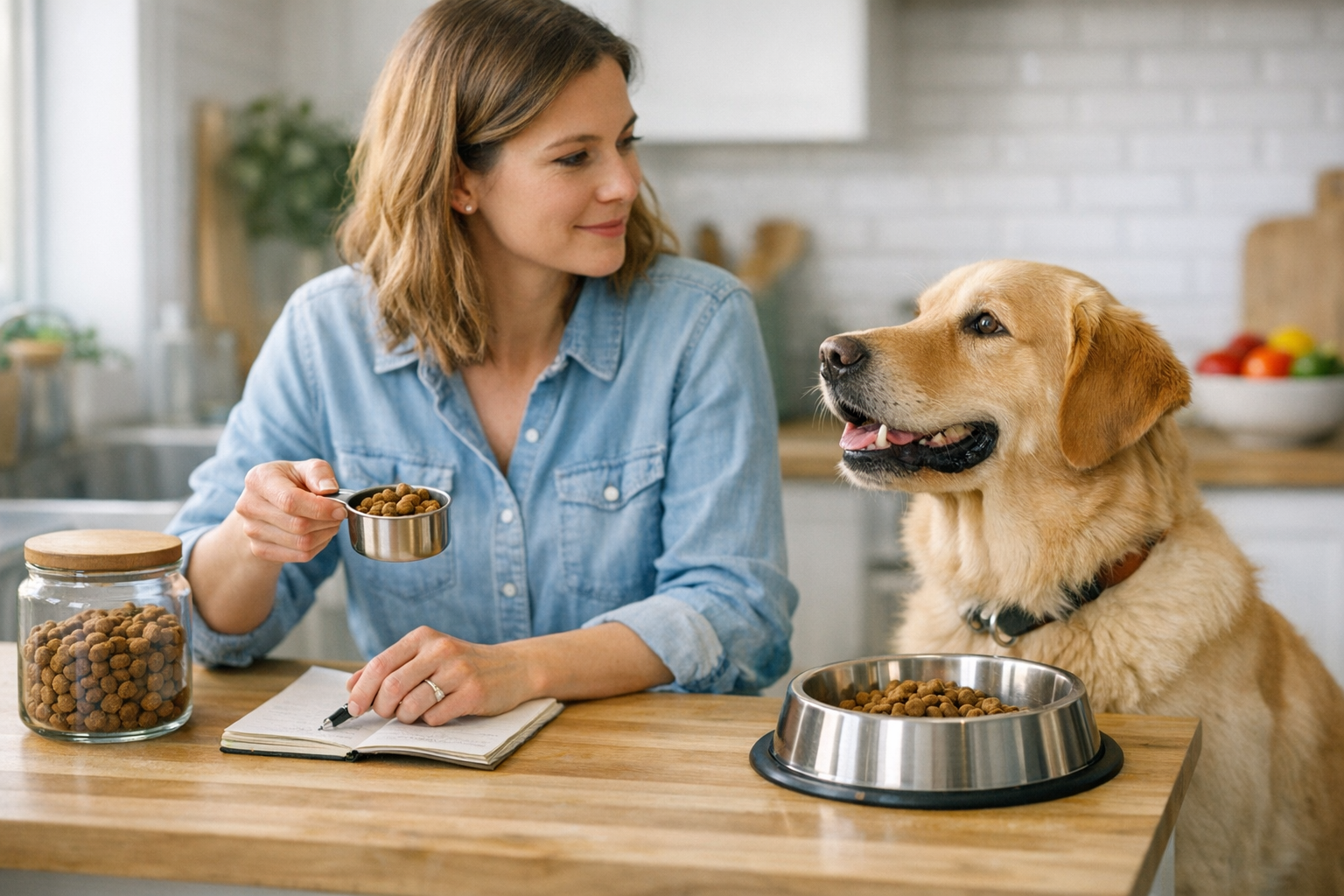
Standing in the pet food aisle with a 40-pound bag of kibble can feel overwhelming. You look at the feeding chart on the back of the bag. It gives you a wide range of cups to serve. You wonder if your 75 lb dog needs the minimum amount or the maximum. Feeding too much leads to weight gain and joint stress. Feeding too little leaves your dog hungry and short on nutrients. At BaxterBoo, we know that every dog is an individual. A 75 lb Labrador has different energy needs than a 75 lb senior Greyhound. This article provides a practical breakdown of how to calculate the right amount of dry food for your large dog. We will look at calorie counts, activity levels, and life stages to help you find the perfect portion size.
Quick Answer: Most 75 lb adult dogs need between 3 and 4.5 cups of dry food per day. This depends heavily on the calorie density of your specific kibble and your dog's daily activity level. Always check the kcal per cup listed on your food bag for the most accurate calculation.
Factors That Influence Your Dog's Daily Portions
Weight is only the first part of the feeding equation. Two dogs can weigh exactly 75 lbs but have very different nutritional requirements. You must consider their lifestyle and physical condition.
Daily Activity Levels
Exercise is the biggest variable in calorie burning. A dog that goes on a three-mile run every morning needs more fuel than a dog that stays in the yard. Working dogs or those in active training may require significantly more food. We often categorize activity into three groups:
- Low Activity: Typical for senior dogs or pets that get short walks only.
- Moderate Activity: Most family pets that get about an hour of active play or walking daily.
- High Activity: Working dogs, hiking companions, or those who run several miles a day.
Metabolism and Breed
Breed genetics play a role in how a dog uses energy. Some breeds are known for being "easy keepers" who gain weight on very little food. Others have a high metabolic rate and stay lean even with larger portions. A stocky 75 lb Bulldog may need fewer calories than a lanky 75 lb Pointer.
Neutering Status
Spaying or neutering changes a dog’s hormone levels. This often leads to a slightly slower metabolism. Most neutered adult dogs require about 20% fewer calories than intact dogs. If you notice weight gain after a procedure, you may need to trim back their daily scoops.
Environmental Factors
The temperature where your dog lives can impact their hunger. Dogs that spend a lot of time outside in cold weather burn calories to stay warm. Conversely, extreme heat might make a dog less active. This results in a lower need for food during the peak of summer.
Calculating Caloric Needs for a 75 lb Dog
Veterinarians use a specific measurement called the Resting Energy Requirement (RER). This is the number of calories a dog burns just by existing. It covers basic functions like breathing and heart rate. For a 75 lb dog, the RER is approximately 1,000 calories.
To find the actual daily goal, we apply a multiplier to the RER. A typical neutered adult dog needs 1.6 times their RER. This brings the total to about 1,600 calories per day. If your dog is very active, that multiplier might jump to 2.0 or higher. This could mean they need 2,000 calories or more to maintain their weight.
The Role of Calories vs. Volume
Never judge a food solely by the size of the bag or the size of the kibble. One brand might have 300 calories per cup. Another might have 500 calories per cup. If you switch brands without checking the calories, you could accidentally overfeed your dog by a large margin.
Key Takeaway: Always calculate based on calories first, then translate that into cups. A 75 lb dog typically needs between 1,400 and 1,900 calories daily.
Decoding the Dog Food Label
Every bag of dry food is required to list its calorie content. You will usually find this near the ingredient list or the feeding chart. Look for the term "ME" which stands for Metabolizable Energy. It is usually expressed as kcal/kg or kcal/cup.
How to Convert Calories to Cups
Once you know your dog's daily calorie goal, the math is simple. If your dog needs 1,600 calories and your food has 400 kcal per cup, they need 4 cups per day.
Step 1: Identify your dog's activity level and daily calorie target. / A 75 lb moderate-activity dog usually needs around 1,600 calories. Step 2: Locate the kcal/cup on your food bag. / This number varies wildly between brands like our selection of NutriSource products or our selection of Acana products. Step 3: Divide the daily calorie goal by the kcal per cup. / For example, 1,600 divided by 400 equals 4. Step 4: Split that total into two or more meals. / This helps with digestion and keeps energy levels steady.
Why Bag Guidelines Are Often High
Pet food manufacturers often provide ranges on their bags that lean toward the generous side. They want to ensure no dog is underfed. However, if your 75 lb dog is a "couch potato," the high end of the bag's range will likely cause weight gain. Always treat the bag chart as a starting point, not a hard rule.
Vet Tip: If you can no longer feel your dog's ribs easily, you are likely overfeeding. Consult your veterinarian for a Body Condition Score assessment to determine if your dog's weight is healthy.
Feeding for Different Life Stages
A 75 lb dog has different needs depending on their age. A large breed puppy at 75 lbs is still growing bone and muscle. A 75 lb senior dog may be managing joint issues and a slower heart rate.
Large Breed Puppies
Large breed puppies grow rapidly. If a puppy reaches 75 lbs while still under 18 months old, they need a specific nutrient balance. They require enough calories for growth but not so many that they grow too fast. Rapid growth can put stress on developing joints. We carry brands like NutriSource and Acana that offer specific large-breed puppy formulas. These help regulate growth speed with the right calcium-to-phosphorus ratio.
Senior Dogs
As dogs reach their senior years, their energy needs drop. A 75 lb senior dog might only need 1,200 to 1,300 calories. Overfeeding an older dog is dangerous because excess weight puts pressure on aging joints. Many senior foods include supplements like glucosamine to support mobility.
If your senior dog struggles with stiffness or chronic health issues, we recommend looking into specialized support. Through our pet pharmacy for dogs, our BaxterBoo pharmacy provides access to prescription options and diets for dogs with specific health requirements. These products can help manage health conditions that impact a dog's appetite and metabolism.
Bottom line: Adjust your dog's food intake as they age to prevent obesity-related health problems.
Monitoring Your Dog's Weight at Home
The scale is a helpful tool, but it does not tell the whole story. You should perform a physical check on your dog once a month. This helps you catch weight changes before they become serious.
The Rib Test
Run your hands along your dog's sides. You should be able to feel the ribs under a thin layer of fat. If the ribs are poking out and visible from a distance, your dog might be underweight. If you have to press firmly to find the ribs, your dog is likely overweight.
The Waistline Check
Look down at your dog from above. They should have a visible waistline that tucks in behind the ribs. If your dog looks like a straight cylinder or an oval from above, they are carrying too much weight.
The Abdominal Tuck
Look at your dog from the side. Their belly should slope upward from the chest toward the hind legs. This is called an abdominal tuck. A flat or sagging belly is a common sign that it is time to reduce their daily dry food amount.
- Feel for ribs monthly
- Check the waistline from above
- Look for an upward slope in the belly
- Monitor energy levels and mobility
Managing Treats and Extras
It is easy to forget that treats have calories too. For a 75 lb dog, a few large biscuits can quickly add up to 200 or 300 extra calories. This is the equivalent of adding an extra half-cup of food to their bowl.
The 10% Rule
Treats should never make up more than 10% of your dog's daily caloric intake. If your dog needs 1,600 calories, only 160 of those should come from treats. If you use treats for training, you must subtract that same amount of calories from their dinner.
Healthy Low-Calorie Alternatives
If your dog always seems hungry, try using "filler" treats that are low in calories. Fresh green beans or plain canned pumpkin (not pie filling) are great options. These provide fiber and bulk without adding significant calories. This trick can help a dieting dog feel full while they lose weight.
Key Takeaway: Treat calories count. Always adjust the main meal size if you have been generous with rewards throughout the day.
Using the BaxterBoo Pharmacy for Health Needs
Sometimes, weight issues are not just about the amount of food. Medical conditions like thyroid imbalances or diabetes can cause a dog to gain or lose weight rapidly. If you notice a sudden change in your 75 lb dog's body condition, a vet visit is the essential first step.
Our pharmacy offers a wide range of prescription pet foods for dogs with specific health requirements. These diets are formulated to manage conditions like kidney disease, food allergies, or urinary crystals. Through our MVP Rewards programme, you can also earn on eligible purchases while shopping for everyday pet needs. This is part of our commitment to providing expert care for every stage of your dog's life.
Transitioning to a New Food Amount
If you determine that your dog needs a different amount of food, do not make the change overnight. A sudden drop or increase in food can cause digestive upset or hunger-related behavior issues.
Slow Adjustments
Change the portion size by about 10% every few days. This allows your dog's digestive system to adapt to the new volume. It also helps their metabolism adjust gradually.
Monitor Stools
Your dog's stool is a great indicator of their digestive health. If the stool becomes soft or loose during a feeding change, you may be moving too fast. Keep an eye on their bathroom habits whenever you adjust their dry food intake.
Consistency Is Key
Try to feed your dog at the same times every day. Use a standard measuring cup, not a random kitchen scoop or a coffee mug. Even a small "extra" bit in each scoop can lead to significant weight gain over a month.
The Benefits of Autoship and Rewards
Keeping a 75 lb dog fed is a big job. A large dog can go through a standard bag of food in about three to four weeks. To make this easier, we offer our Autoship programme. This ensures you never run out of kibble. You also get savings on your first order and a free MVP Gold membership.
Our MVP Rewards program lets you earn up to 5% back on your purchases. Since feeding a large dog is a significant ongoing expense, these rewards add up quickly. We carry over 500 trusted brands including Stella and Chewy's, Open Farm, and NutriSource. You can find the high-quality nutrition your dog needs while earning points for future treats and gear. If you prefer to keep favorite formulas in rotation, the Frequent Buyer Program can also help you work toward a free eligible item on select brands.
Feeding for Longevity
Feeding the right amount of food is one of the best ways to extend your dog's life. Obesity is linked to heart disease, respiratory issues, and shortened lifespans. By taking the time to calculate the right portion for your 75 lb dog, you are investing in their long-term health.
Remember that feeding guidelines are dynamic. As your dog gets older, recovers from an injury, or changes their activity level, you should revisit these calculations. A proactive approach to nutrition keeps your dog active and happy for years to come.
- Calculate calories based on RER
- Adjust for activity level
- Check the kcal/cup on the bag
- Monitor body condition monthly
- Limit treats to 10% of total calories
Vet Tip: Always consult your veterinarian before starting a weight loss plan for your dog. They can help you rule out underlying medical issues and set a safe weight goal for your dog's specific breed and frame.
Summary of Feeding a 75 lb Dog
Finding the right amount of dry food involves a mix of math and observation. Start with a baseline of about 1,600 calories for a typical adult. Check your specific food bag to see how many cups that equals. Watch your dog's body shape and energy levels closely. If they start to lose their waistline, trim the portions. If they seem lethargic or too thin, increase the food slightly.
Join us at BaxterBoo to find the best selection of premium dry foods for your large dog. Whether you need high-energy fuel for a working dog or a low-calorie senior formula, you can start with our dry dog food category to find the right fit for your pet.
FAQ
Is 4 cups of dry food too much for a 75 lb dog?
For many 75 lb dogs, 4 cups is a standard amount, but it depends on the calorie density of the food. If your kibble is high-calorie (over 450 kcal/cup), 4 cups might be too much for a less active dog. Always check the label to see how many calories are in each cup.
How many times a day should I feed my 75 lb dog?
Most large dogs do best with two meals per day, one in the morning and one in the evening. This helps prevent hunger and can reduce the risk of bloat in large breeds. Dividing the food into two servings also helps maintain steady blood sugar levels.
What if my 75 lb dog is always acting hungry?
Large dogs are often opportunistic eaters and will act hungry even if they have had enough calories. You can add low-calorie bulk like green beans or plain canned pumpkin to their meals to help them feel fuller. However, if the hunger is sudden and intense, consult your vet to rule out medical issues.
Should I use the feeding chart on the bag for my 75 lb dog?
The chart on the bag is a good starting point, but it is usually based on an active, intact dog. If your dog is neutered or has a low activity level, you may need to feed less than the bag suggests. Monitor your dog's body condition and adjust the amount based on their weight trends.






