
 Save 15% on your 1st Autoship learn more

 Email us
 Live Chat
 FAQs
FAQs





Introduction
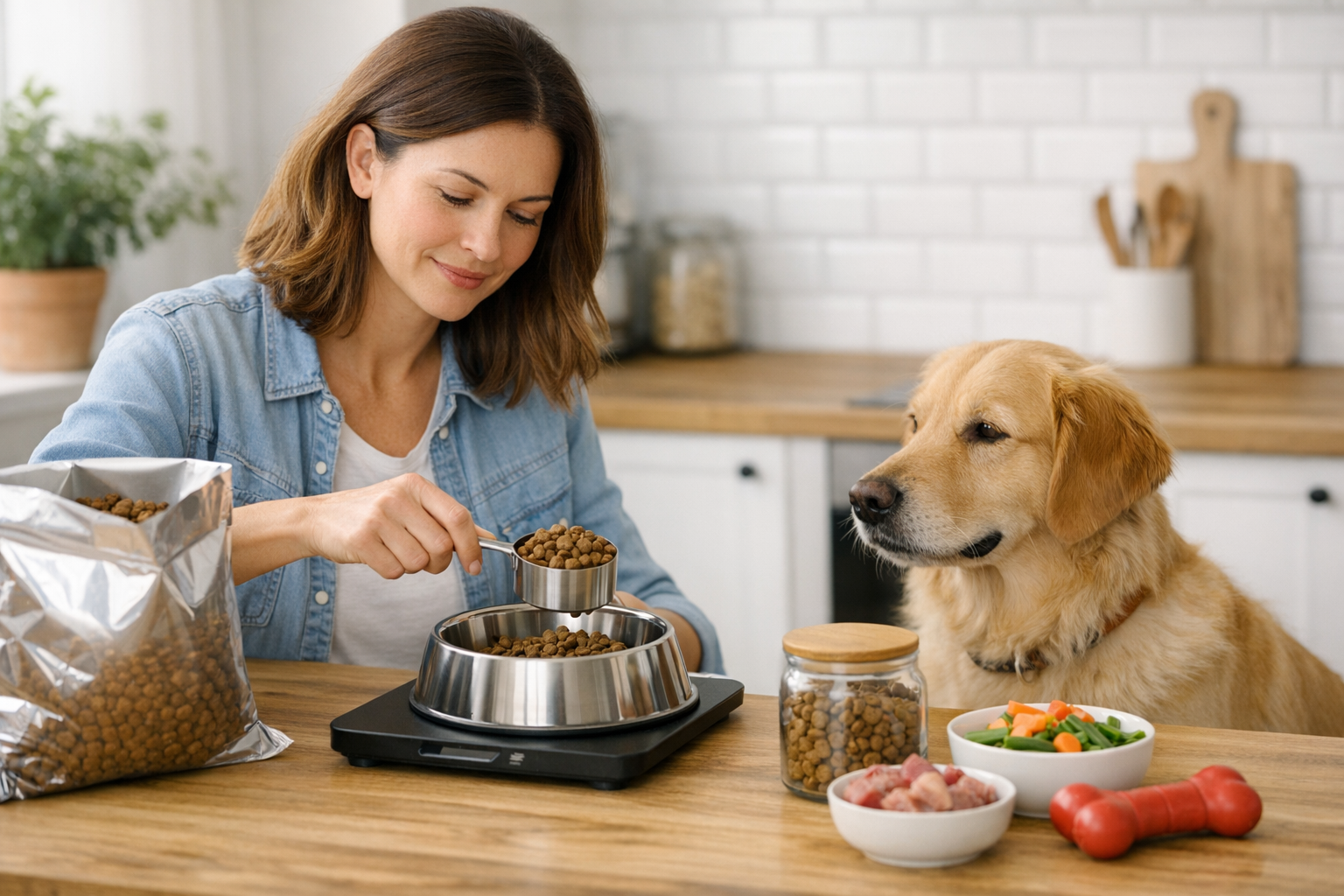
Standing in your kitchen with a measuring scoop in one hand and a hungry dog watching your every move can feel like a high-stakes guessing game. You want to provide enough fuel for those morning walks and backyard zoomies, but you also know that even a few extra kibbles every day can lead to unhealthy weight gain. At BaxterBoo, we talk to pet owners every day who are navigating this exact balance. Whether you have a growing puppy or a senior dog who has slowed down, getting the portion size right is one of the most effective ways to support a long and healthy life. This guide will help you move past the vague suggestions on the back of the bag to find the specific amount of dry food your unique dog actually needs.
Quick Answer: The ideal amount of dry food depends on your dog's age, weight, activity level, and the specific calorie density of the food. Start with the feeding chart on your dog's food bag as a baseline, but adjust by 10 to 20 percent based on their body condition and energy levels.
Understanding the Factors That Influence Feeding Amounts
No two dogs have the exact same caloric requirements. Even two dogs of the same breed and weight might need different amounts of food if one is a "couch potato" and the other is a working dog. To determine the right portion, you must look at the whole picture of your dog's lifestyle.
Life Stage and Growth
Age is perhaps the most significant factor in determining how much dry food goes into the bowl. Puppies are essentially little engines of growth. They require more protein, fat, and minerals per pound of body weight than adult dogs to build bone, muscle, and organ tissue. Because their stomachs are small, they often need these calories delivered in three or four small meals throughout the day.
Adult dogs have reached a maintenance phase. Their needs are more stable, focusing on maintaining muscle mass and supporting daily energy. Senior dogs, however, often experience a slowing metabolism. As they become less active, their caloric needs drop. If you continue to feed a senior dog the same amount they ate as a three-year-old, they will likely gain weight quickly.
Activity Levels and Energy Burn
Think of food as fuel. A dog that spends the afternoon hiking or playing fetch at the park burns significantly more energy than a dog that spends most of the day napping while you work from home. Working dogs, such as those used for herding or agility, may require up to double the amount of food recommended on a standard feeding chart.
Metabolism and Breed Specifics
Some breeds are known for having "slow" metabolisms. Breeds like Pugs or Basset Hounds tend to put on weight easily, even on small portions. On the other hand, high-energy breeds like Border Collies or Jack Russell Terriers might burn through calories even when they appear to be resting.
Key Takeaway: Feeding amounts are not static. You should expect to adjust your dog's portions as they transition through life stages or as their daily activity levels change with the seasons.
How to Read and Use Your Dog Food Label
The feeding chart on your dry food bag is a legal requirement, but it is also just an estimate. Most manufacturers base these charts on the needs of an unneutered, active adult dog. Because most pets are spayed or neutered and live relatively sedentary lives, the bag's recommendations are often slightly higher than what the average pet actually needs.
Finding the Calories per Cup
Dry dog food varies wildly in calorie density. One brand might have 320 calories per cup, while a premium performance formula might have over 500 calories per cup. This is why you cannot simply switch brands and keep using the same scoop without checking the label. Brands like our selection of Orijen products often have higher calorie counts because they are nutrient-dense.
The Importance of Actual Measuring
One of the most common mistakes we see at BaxterBoo is the use of a "coffee mug" or a "big scoop" rather than a standard measuring cup. A standard 8-ounce measuring cup is the only way to ensure consistency. Even being off by a quarter of a cup every day can add up to thousands of extra calories over a month, which is enough to cause noticeable weight gain in a small or medium dog.
Common Measuring Mistakes to Avoid:
- Using a scoop that is larger than a standard 8-ounce cup
- Heaping the food over the top of the cup instead of leveling it off
- Estimating the amount by eye instead of using a dedicated tool
- Allowing different family members to use different "scoops"
Bottom line: The feeding chart is your starting point, but the specific calorie count of the food and a standard measuring cup are your most important tools.
Calculating Portions for Different Life Stages
Feeding a dog is a journey that changes over time. To get the amount right, you have to adjust your strategy as your dog hits different milestones.
Feeding Your Puppy
Puppies usually start eating solid dry food around six to eight weeks of age. Because they are growing so fast, they need a high frequency of meals. For the first few months, you might divide their total daily amount into four meals. As they reach six months, you can usually move to three meals, and eventually two meals as they approach adulthood.
When looking at a puppy food chart, remember that it is often based on the puppy's expected adult weight. If you have a mixed-breed puppy, work with your veterinarian to estimate how large they will get. This ensures you are providing enough nutrients for their projected frame.
Maintenance for Adult Dogs
For most adult dogs, the goal is "metabolic balance." This means they are taking in exactly as much energy as they are spending. Most healthy adults do best with two meals per day, roughly twelve hours apart. This helps keep their blood sugar stable and prevents them from becoming overly hungry or "scavenging" between meals.
Adjustments for Senior Dogs
As dogs enter their senior years, their bodies change. They may lose muscle mass and their digestion might become less efficient. Many senior-specific dry foods, such as those from our selection of Orijen products, are formulated with lower calories but higher quality protein to protect muscle. If your senior dog is starting to look a bit rounder, it is time to slowly reduce the portion size or switch to a formula designed for older pets.
Vet Tip: If your dog is consistently leaving food in the bowl or gaining weight despite following the chart, consult your veterinarian. They can help you calculate the exact "Resting Energy Requirement" (RER) for your dog's specific weight and health status.
Monitoring Your Dog's Weight and Body Condition
Since feeding charts are only estimates, you need a way to tell if your dog is actually eating the right amount. The scale at the vet's office is helpful, but the "Body Condition Score" is something you can check at home every week.
The Rib Test
This is the simplest way to tell if your dog is at an ideal weight. Stand over your dog and place your hands on their ribcage. You should be able to feel the ribs easily under a thin layer of fat. If you have to press hard to find them, your dog is likely overweight. If the ribs are highly visible and there is no fat over them, your dog may be underweight and need a larger portion.
The Waistline Check
Look at your dog from above. They should have a noticeable tuck or "waist" behind the ribs. If they look like a solid rectangle from shoulders to hips, they are likely carrying too much weight. From the side, the belly should slant upward from the chest toward the hind legs. This is known as an abdominal tuck.
Adjusting the Scoop
If your dog fails the rib test, don't make a massive change overnight. Sudden drops in food can lead to irritability and nutritional gaps. Instead, reduce the daily portion by about 10 percent. Stay at that level for two weeks and then check the ribs again. Small, incremental changes are much safer and more sustainable for your dog's health.
Bottom line: Your dog's body shape is a much better indicator of proper feeding than the number on the scale or the words on the bag.
The Role of Treats and Toppers
One of the biggest hurdles in calculating "how much dry food for my dog" is everything else that goes into their mouth. Treats, dental chews, and table scraps all contain calories that many owners forget to count.
The 10 Percent Rule
Treats should never make up more than 10 percent of your dog's total daily caloric intake. If your dog needs 1,000 calories a day, only 100 of those should come from treats. If you are doing a heavy training session with lots of treats, you must reduce the amount of dry food you put in their bowl that evening to compensate.
Dry Food Toppers
Adding a scoop of wet food or a handful of freeze-dried raw nuggets as a topper is a great way to add variety and nutrition. However, these are not "free" calories. If you add a quarter-can of wet food, you need to remove an equivalent amount of dry food. Many brands like Stella and Chewy’s or Vital Essentials offer meal mixers that are very nutrient-dense, so a little goes a long way.
Healthy Low-Calorie "Add-Ins" to Bulk Up the Bowl:
- Plain canned pumpkin (not pie filling)
- Green beans (fresh or frozen)
- Sliced cucumbers
- A splash of unsalted bone broth
These additions can help a dog feel full if you are currently reducing their dry food portions for weight loss.
When Health Conditions Change the Feeding Equation
There are times when the standard rules for feeding dry food no longer apply. If your dog is diagnosed with a chronic health condition, their nutritional needs will shift. Conditions like kidney disease, diabetes, or severe food allergies often require a precise, consistent diet that differs from standard over-the-counter kibble.
Managing Health Through Nutrition
Weight management is one of the most common reasons pet owners need to adjust feeding. Obesity in dogs can lead to joint pain, heart issues, and a shorter lifespan. If your dog is struggling to lose weight even on small portions of standard dry food, they may need a prescription weight-management diet. These foods are specifically designed to help dogs feel full while consuming fewer calories.
For dogs with mobility issues or arthritis, maintaining a lean weight is critical. Every extra pound puts unnecessary stress on inflamed joints. We often see pet owners pairing a managed diet with joint supplements like Cosequin or Zesty Paws to help their seniors stay active.
Our Pharmacy and Prescription Support
If your veterinarian recommends a prescription diet for weight loss, allergies, or internal health, our pet pharmacy can help. Through our partnership with Pet's Choice, we offer a wide range of FDA-approved medications and prescription pet foods, including the Farmina Vet Life range. Having these items delivered through our site makes it easier to stay consistent with the specialized feeding plan your vet has created.
Vet Tip: Never start a significant weight loss plan or switch to a prescription diet without consulting your veterinarian. They need to rule out underlying issues like thyroid problems or Cushing’s disease that might be affecting your dog's metabolism.
Conclusion
Determining how much dry food to feed your dog is a mix of science and observation. By using the feeding chart as a baseline and adjusting for your dog's age, activity, and body condition, you can ensure they stay at a healthy weight. Remember to use a real measuring cup, keep treats to a minimum, and listen to what your dog's body is telling you.
- Use a standard 8-ounce measuring cup for every meal.
- Perform the "rib test" once a week to monitor body condition.
- Account for all treats and toppers within the daily calorie limit.
- Consult your vet for any sudden changes in appetite or weight.
If you are looking to simplify your routine, consider setting up our Autoship programme for your favorite dry food brands. It ensures you never run out of the specific formula your dog thrives on, and you’ll earn savings on your first order. Keeping your dog's bowl perfectly portioned is a daily act of love that pays off in years of extra health and happiness.
FAQ
Why does my dog always seem hungry even though I feed the recommended amount?
Some dogs are biologically driven to seek food even when their caloric needs are met. This is common in certain breeds like Labradors. If your vet confirms your dog is at a healthy weight, try adding low-calorie "bulkers" like green beans to their meal, or use a slow-feeder bowl to make the meal last longer and increase satiety.
Should I leave food out all day or feed at specific times?
Most experts recommend scheduled mealtimes rather than "free feeding." Scheduled meals allow you to monitor exactly how much your dog is eating and help you notice immediately if their appetite changes. It also prevents the overeating that often happens when a bowl is constantly refilled.
How do I adjust feeding if my dog is neutered or spayed?
Spaying or neutering can slow a dog's metabolism by about 20 to 30 percent. If your dog was recently fixed, watch their weight closely over the next few months. You will likely need to reduce their daily dry food portion slightly to prevent post-surgery weight gain.
Does the size of the kibble affect how much I should feed?
The physical size of the kibble doesn't change the nutritional requirements, but it can affect how you measure. Large kibble pieces have more air gaps in a measuring cup than small kibble. Always go by the weight-based recommendations or calorie counts provided by the manufacturer to ensure accuracy regardless of kibble size.






