
 Save 15% on your 1st Autoship learn more

 Email us
 Live Chat
 FAQs
FAQs





Introduction
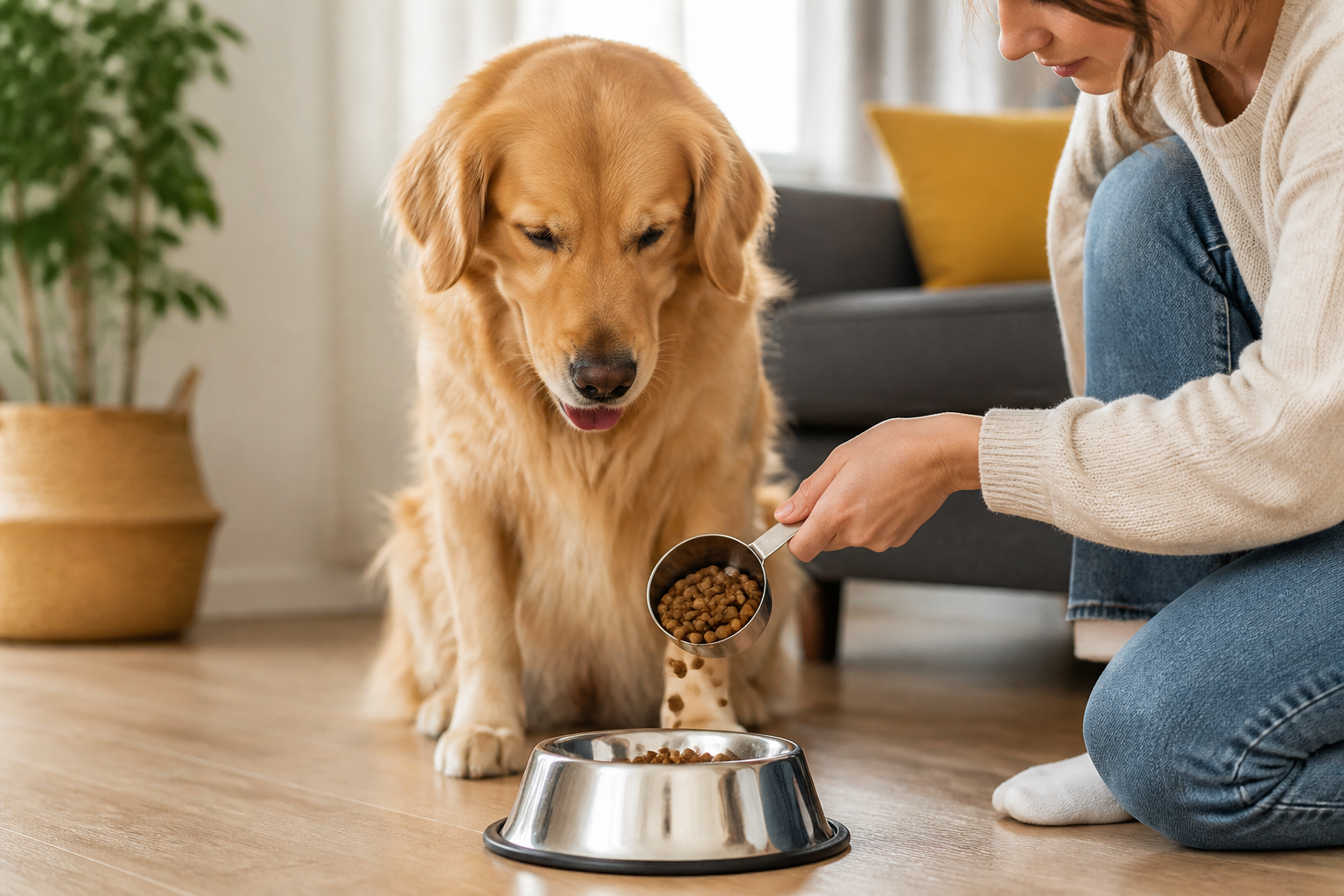
You stand in the kitchen with a measuring scoop in one hand and a hungry pup at your feet. Every morning feels like a bit of a guessing game. Is one scoop enough, or does your dog need a little more to stay fueled for the day? Getting the portion size right is one of the most important things you can do for your dog's long-term health. At BaxterBoo, we have helped pet owners navigate nutrition since 2006. We know that the answer to how much dry food to feed is rarely a single number. This guide will walk you through reading feeding labels, adjusting for activity levels, and recognizing the signs that your dog is at a healthy weight. The right amount of food depends on a balance of your dog's age, weight, and the calorie density of the specific kibble you choose.
Quick Answer: Most adult dogs require between 1/2 cup and 4 cups of dry food per day, depending on their weight and the food's calorie count. Always start with the feeding chart on your specific bag of food and adjust based on your dog's body condition and energy level.
Understanding the Feeding Chart on the Bag
Every bag of dry food comes with a feeding guideline. This chart is a legal requirement, but it is also a general estimate. Manufacturers calculate these numbers based on an average dog with a moderate activity level. If your dog spends most of the day napping on the couch, the "average" recommendation might be too high.
The chart usually lists weight ranges on one side and the daily total of food on the other. It is vital to remember that this number is the total for the whole day, not for each meal. If the bag says two cups and you feed your dog twice a day, you should give one cup in the morning and one cup in the evening.
Why Calorie Density Matters
Not all dry foods are created equal. One cup of a high-protein, grain-free formula like Orijen or Stella and Chewy’s might have significantly more calories than a standard maintenance kibble. This is why you cannot simply use the same measuring scoop when you switch brands.
When you look at the label, look for the kcal/cup measurement. Kcal is just another word for calorie. If a food has 450 kcal per cup, you will feed much less than a food that has 320 kcal per cup. Always check this number when starting a new bag, even if it is from the same brand you usually buy.
Key Takeaway: Feeding charts are a starting point, not a hard rule. Because calorie density varies between brands, you must re-evaluate the portion size every time you switch foods.
Factors That Change Your Dog’s Daily Needs
Your dog is an individual. Their metabolism is as unique as yours. Several factors can move the needle on how much they need to eat to maintain a steady weight.
Life Stage and Age
Puppies are growing machines. They need a higher concentration of protein and minerals to build bone and muscle. Because they are so active and growing so fast, they often eat more than an adult dog of the same weight.
Adult dogs need a maintenance diet. Their goal is to stay at a steady weight without gaining or losing. Once a dog reaches their senior years, their metabolism often slows down. They might also become less active due to joint stiffness. We often see senior dogs needing about 20 percent fewer calories than they did in their prime.
Activity Level
A working farm dog or an agility competitor burns through calories quickly. These dogs might need 50 percent more food than the feeding chart suggests. On the other hand, a senior dog who only goes for a short walk around the block needs very little fuel.
Spay and Neuter Status
It is a common observation among veterinarians that spayed or neutered dogs have lower energy requirements. The hormonal changes after the procedure can slow the metabolic rate. If your dog was recently fixed, keep a close eye on their waistline. You may need to trim back their portions by about 10 percent to prevent weight gain.
How Much to Feed Puppies
Puppies have small stomachs but huge energy needs. You cannot feed them a giant pile of food once a day. Their bodies cannot process it all at once, and it can lead to digestive upset or uneven growth rates.
Most puppies do best with three or four small meals per day. This keeps their blood sugar stable and provides a steady stream of nutrients. As they grow, you will gradually increase the amount of food while decreasing the frequency of meals.
Puppy Feeding Steps
Step 1: Identify the expected adult weight. / Most puppy charts are based on how big the dog will be as an adult, not just their current weight.
Step 2: Choose a puppy-specific formula. / Brands like Royal Canin or NutriSource offer puppy formulas designed for specific breed sizes. You can compare options in our puppy food collection.
Step 3: Measure accurately. / Use a standard measuring cup rather than a random plastic container to ensure you aren't overfeeding.
Step 4: Monitor growth. / You should be able to feel their ribs easily, but they should not be sticking out.
Vet Tip: Large breed puppies need very careful calorie management to prevent them from growing too fast. Growing too quickly can put immense strain on developing joints. Always consult your veterinarian to ensure your large breed puppy is on the right growth trajectory.
Feeding the Adult Dog
Once your dog reaches adulthood, usually between 12 and 24 months depending on the breed size, their needs stabilize. For most adult dogs, two meals a day is the standard. This helps with digestion and keeps them from feeling too hungry between meals.
If you are using a high-quality brand like Farmina or Open Farm, the nutrient density is high. This means the actual volume of food in the bowl might look small to you. Resist the urge to add "just a little more" because the bowl looks empty. For more options, browse our dry dog food category.
The Adult Dog Weight Range
- 3 to 12 pounds: 1/3 to 1 cup per day
- 13 to 20 pounds: 1 to 1-1/3 cups per day
- 21 to 35 pounds: 1-1/3 to 2 cups per day
- 36 to 50 pounds: 2 to 2-2/3 cups per day
- 51 to 75 pounds: 2-2/3 to 3-1/3 cups per day
- 76 to 100 pounds: 3-1/3 to 4-1/4 cups per day
These are general estimates for an average adult dog. If your dog is a toy breed with a very fast metabolism, they might need more per pound than a giant breed.
Bottom line: Adult dogs usually thrive on two measured meals per day based on their ideal weight rather than their current weight.
Adjusting for Senior Dogs and Health Needs
As dogs age, their nutritional needs shift. Senior dogs often benefit from foods that are lower in calories but higher in fiber to help them feel full. We also see many senior dogs requiring specialized support for their joints or brain health.
Brands like Senilife or Cosequin are excellent supplements to add to a senior dog's routine. If your senior dog is starting to put on weight, it might be time to transition to a senior-specific dry food. These formulas are designed to provide all the necessary vitamins without the caloric load of an adult maintenance diet.
Managing Chronic Conditions
Sometimes, the amount of food is less important than the type of food. If your dog has been diagnosed with a condition like kidney disease, diabetes, or severe allergies, a standard over-the-counter kibble might not be enough.
In these cases, your veterinarian might recommend a prescription diet. Our pet pharmacy carries a variety of FDA-approved prescription pet foods through our partnership with Pet's Choice. These diets are formulated to manage specific health markers while still providing a balanced meal. Using our pharmacy can make it easier to get these specialized foods delivered right to your door alongside your standard supplies.
How to Tell if You Are Feeding the Right Amount
The best way to know if your dog is eating the right amount of dry food is to look at the dog, not the bowl. You should use a Body Condition Score (BCS) to evaluate their physique.
The Rib Test
Place your hands on your dog’s sides. You should be able to feel their ribs easily under a thin layer of fat. If you have to press hard to find the ribs, your dog is likely overweight. If the ribs are highly visible and have no fat covering them, your dog may be underweight.
The Waistline View
Look at your dog from above. They should have a visible waistline that tucks in behind the ribs. If they look like a solid rectangle or an oval from above, they are carrying too much weight. From the side, their belly should tuck up toward their hind legs rather than hanging low.
Adjusting the Portions
If you find that your dog is getting a bit round, don't make a drastic change overnight. Cut their daily total by about 10 percent. Wait two weeks and check their ribs again. Small, incremental changes are much safer and more effective than sudden "crash diets" for pets.
Vet Tip: Sudden weight gain or loss can sometimes be a sign of an underlying medical issue like thyroid dysfunction or diabetes. If your dog's weight changes rapidly despite no change in their food amount, schedule a check-up with your veterinarian.
The Role of Treats in Daily Calorie Counts
It is easy to forget that treats have calories too. If you are training a new puppy or a stubborn adult dog, you might be going through a lot of treats every day. Those calories add up quickly.
The general rule is that treats should never make up more than 10 percent of your dog's total daily calories. If you give a lot of treats during a training session, you should reduce the amount of dry food you put in their bowl that evening.
Choosing Healthy Treats
Look for low-calorie options like freeze-dried liver or small training bites. Brands like Zesty Paws or Honest Paws offer functional treats that can support health while rewarding good behavior. You can also use a portion of their daily dry food as training rewards. This ensures they are working for their meal without adding extra calories to their day. For additional options, explore our dog treats category.
- Use high-value treats for new skills.
- Use standard kibble for practicing known skills.
- Avoid fatty table scraps like bacon or cheese.
- Keep a jar of pre-measured treats for the day to avoid over-serving.
Practical Tips for Accurate Feeding
Consistency is key when it comes to weight management. If multiple people in the house are feeding the dog, it is easy for mistakes to happen.
Use a Real Measuring Cup
Do not use a coffee mug or a scoop that came with a different product. Use a standard kitchen measuring cup. This ensures that "one cup" is actually eight ounces by volume. Even a small overage every day can lead to significant weight gain over a year.
Weigh the Food
If you want to be extremely precise, use a kitchen scale to weigh the dry food in grams. Volume can change if the kibble pieces are large or small. Weight is always the most accurate measurement. Most high-quality dog food bags will list the weight in grams per cup near the feeding chart.
Set a Schedule
Dogs thrive on routine. Feeding at the same time every day helps regulate their digestion and can even help with house training. It also prevents the "begging" behavior that often leads owners to give extra, unmeasured snacks.
Use Puzzle Feeders
If your dog gulps their food down in seconds, they might not feel full. Using a puzzle toy like a Kong or a slow-feeder bowl can make the meal last longer. This provides mental stimulation and gives their brain time to register that they have eaten.
When to Consult Your Veterinarian
While feeding charts and online guides are helpful, they are not a substitute for professional medical advice. Your vet knows your dog's health history and can provide a precise calorie count based on their specific needs.
If your dog is struggling with obesity, your vet may recommend a weight-loss plan that includes a specific metabolic diet. These are available through our pharmacy partnership with Pet's Choice. Managing weight is one of the best ways to prevent chronic issues like arthritis, heart disease, and mobility problems.
Key Takeaway: Every dog is different. While labels provide a baseline, your dog's body condition and energy level should be the ultimate guide for how much you scoop into the bowl.
Conclusion
Finding the perfect amount of dry food for your dog takes a little bit of observation and patience. By starting with the feeding chart on your bag and adjusting for your dog's age and activity, you can keep them at a healthy weight for years to come. Remember to check their body condition regularly and adjust portions as they enter different life stages. At BaxterBoo, we want to help you make the best choices for your pet's wellness. Whether you are looking for a high-quality kibble from brands like Acana or Orijen, or you need to manage a health condition with prescription food from our pharmacy, we are here to support you. To make life even easier, consider signing up for our Autoship programme. You will save on your first order and ensure you never run out of your dog’s favorite food. Plus, you will get a free MVP Gold membership to earn rewards on every purchase.
Bottom line: Monitor your dog's waistline, use a consistent measuring cup, and adjust for treats to ensure your dog stays fit and healthy.
FAQ
How many cups of dry food should a 50-pound dog eat?
An average 50-pound dog usually requires about 2 to 2-2/3 cups of dry food per day. However, this varies significantly based on the calorie density of the food, as some brands have much higher calories per cup than others. Always check the specific bag for the kcal/cup count to be sure.
Is it better to feed a dog once or twice a day?
For most adult dogs, feeding twice a day is the best approach. It helps keep their energy levels stable and prevents them from getting overly hungry and begging for treats. Puppies often require three or four smaller meals to support their rapid growth and smaller stomach capacity.
Why does the feeding chart on the bag seem like too much food?
Feeding charts are often based on active, intact adult dogs. If your dog is spayed or neutered, or if they are a "couch potato," they likely need about 10 to 20 percent less than the label suggests. Always use the chart as a starting point and adjust based on your dog's actual body condition.
Can I just leave dry food out all day for my dog?
Free-feeding, or leaving food out all day, often leads to obesity because most dogs will eat more than they need out of boredom. It also makes it harder to notice if your dog has a sudden loss of appetite, which can be an early sign of illness. Scheduled mealtimes are generally much better for weight management and monitoring health.






